Connect with us

Opinion

USA versus Iran: Two of a kind, six and half a dozen?

Published

on

Iran

By Bola Bolawole

adron lemon friday

Bola Bolawole examines the US–Iran conflict, arguing that global power politics often override morality and international law

Leo Tolstoy, Russian writer and thinker (1828 -1910) and author of “A Confession”, was famously quoted as saying that “Wrong does not cease to be wrong because the majority share in it.” In like manner, wrong does not cease to be wrong because the strong says it is not; neither does right cease to be right because the weak lacks the capacity to enforce it!

The debate between politics and morality which I first came across in my Philosophy and Political Theory classes in the university is as old as humanity itself.

Are they two parallel lines that never meet? Is there any truth in the saying that politics is a dirty game and those who cannot stand the heat should not venture near the fire-place? But as some thinkers have also posited, is there a place for morality in politics; nay, in all human endeavours? Should good morals, as some have described it, be the underpinning of all human endeavours?

Also read: PDP Urges Members to Prioritise Party Ahead of 2027

In his advice to the prince, Niccolo Machiavelli, the Italian defender of political machinations, posits that the end justifies the means. In other words, once you achieve your goal or end, how you do so – fair or foul – becomes justified! But should morality define this end or goal in the first place?

Carl von Clausewitz, the Prussian military strategist, describes war as politics continued by other means. That is to say, when diplomacy or peaceful means fails, nations or men resort to war to achieve the same goals that peaceful means had failed to deliver. Hard power is military prowess while soft power refers to diplomacy, influence and economic capacity.

Power relations and national interest being the pivots on which relations between nations revolve in the international political system, it has been said that the strong will always have their way while the weak will suffer their fate.

Hence, weak nations struggle to become strong (e.g. Iran’s determination to join the elite nuclear-nation club) or form alliances with the strong (e.g. NATO, BRICS) to protect their interests. Conversely, strong nations enforce their will, riding roughshod over international law and morality.

“Power corrupts, absolute power corrupts absolutely”, posits Lord Acton. Nothing demonstrates this better than our unipolar world where the United States of America imposes its will while the best anyone else can do is simply whimper!

“Make America Great Again” – MAGA – is the rallying cry of US President Donald Trump. The one way he seeks to achieve this is on the back of other countries and peoples. And what does it matter! The mantra is, “My country, right or wrong!”, as the United States Navy Officer, Stephen Decatur, once posited!

The consequence, however, is the realignment of forces, which threatens to re-shape the international political system more profoundly than any that we have witnessed since the end of the Thirty Years’ War in Europe and the resultant Treaty of Westphalia of 1648.

Nations, as posited by former British Prime Minister Lord Palmerson, have no permanent friends or enemies but permanent interests. When old or long-standing allies act inimically against those interests, what next?

The United States will be well advised to consult its 1776 Declaration of Independence! Whenever anyone – friend or foe – acts destructively of another’s core interests, it is “To your tents, O Israel”!

In a speech on March 8, 1983, the then US President Ronald Reagan referred to the Soviet Union as an “evil empire.” That empire collapsed in 1991, leaving only its rump, Russia. In his 2002 State of the Union address, US President George W. Bush also described Iran, Iraq and North Korea as the “axis of evil.” Today, however, the shoe, many will say, appears to be on the other foot! We shall soon come to that!

Strong nations usually conceal their real reasons for maltreating weaker nations. My hunch is because, whether or not this is admitted openly, they understand that there is a place for morals in behaviour, even on the international scene.

Now, compare the reasons given by President Trump for the rendition of the Venezuelan President Nicolas Maduro (for drug trafficking) and the bombardment of Iran (to destroy its nuclear weapons programme) with those given by a prominent member of Trump’s Republican Party:

“Senator Lindsey Graham has described the ongoing conflict in the Middle East as ‘a good investment.’

“The US will control almost a third of the world’s oil and reap record profits if it succeeds in toppling the Iranian government, hawkish Republican Senator Lindsey Graham (has) told Fox News… Graham made his comments as global oil prices surged past $100 per barrel, a rise that President Donald Trump dismissed as ‘a very small price to pay’ for the US-Israeli war against Iran, which was launched on February 28.

“Graham described the cost of the attacks on Iran as the ‘best money ever spent’, and argued that the war was meant to prevent the country from developing nuclear weapons – something Iran has long denied, insisting that its nuclear program is peaceful.

“‘When this regime goes down, we’re going to have a new Middle East, we are going to make a ton of money. Nobody will threaten the Strait of Hormuz again’, Graham said. He added that the US would install a ‘friendly’ government in Tehran.

“’Venezuela and Iran have 31% of the world’s oil reserves. We’re going to have a partnership with 31% of the known reserves. This is China’s nightmare. This is a good investment’, Graham said.”

So, war becomes a legitimate weapon that serves the United States’ economic interests. Loss of life becomes collateral damage. Dislocation of the world’s economy and misery brought upon the innocent worldwide becomes “a very small price to pay!”

But whether they act immorally and illegally or not, nations still try to justify their actions; hence, the United States’ seat of power, the White House, has reportedly released a long list of atrocities committed by Iran as sponsors of terrorism and Islamic fundamentalism all over the world.

It is hard to defend Iran. Its Shia Islamic fundamentalism tilts towards violent Islamic propagation all over the world. Apart from its eternal foe, Israel, moderate Islamic states are also repulsive to Iran’s Shittes. But in the die-hard commitment to the propagation of Islam, Iran is not alone.

All Islamic states vote a percentage of their resources to propagate Islam all over the world. And most times, radical, violent means are not exempted.

On the other hand, the internet also has, perhaps, a longer list of depositions, assassinations and attempted assassinations of world leaders and notable figures by the United States. Examples: Mohammad Mosaddegh, Iran (1953), Jacob Arbenz, Guatemala (1954), Salvador Allende, Chile (1973), Saddam Hussein, Iraq (2003), Manuel Noriega, Panama (1989); not forgetting Patrice Lumumba, the Congo, (1961), Ngo Dinh Diem, Vietnam (1963), Rafael Trujillo, the Dominican Republic (1961). Not to also forget Grenada (1983), Afghanistan (2001), Prime Minister Maurice Bishop (2006).

The list is endless! What of Osama bin Laden (2011), Muammar Gaddafi (2011) and the hundreds of assassination attempts targeted at the Cuban leader, Fidel Castro!

So, this can as well be a case of the pot calling the kettle black. The United States of America, the Jewish State of Israel, and radical Islamic nations and groups all over the world are the troublers of our peace.

The nuclear-power nations that are insistent on Iran not acquiring nuclear weapons want to keep it perpetually subjugated.

A nuclear-armed Iran will change the power equation in the Middle East. Iran that is insistent on acquiring the nukes wants to liberate itself, stand on equal footing with Israel and stop being the whipping boy in its never-ending conflicts with Israel and the West.

Iran has paid a huge price in its resolve to stand up to Israel and the United States. Will it say “Enough is now enough” and back down? Conversely, will it forge ahead until victory is achieved or the Iranian nation is completely annihilated? Time will tell!

FEEDBACK

On FCCPC and air travel for the poor

Electricity, water, good roads, etc. are not for the poor! What is for the poor in this country? We are gullible, covetous, and have been brainwashed! Poverty remains the major cause of all this nonsense! Our traditional religion remains the best! The Chinese, Japanese, Indians, Brazilians are excelling in the world because they have refused to be brainwashed by the Roman Catholics and Arabs! – Prince Samuel Ade-Akanbi.

Air travel was for the poor in the past. Without rich parents but armed with the Ondo State bursary award under the Adekunle Ajasin government in Ondo state, I first traveled by plane to Kano.

Also read: Iran Allows Women to Ride Motorcycles After Years

I was in the second year of a three-year Mass Communication degree program at the University of Lagos. That was in 1981. I was 22 years old.

Upon graduation, and in the course of fulfilling my NYSC, I again took a Nigerian Airways flight to Enugu. In those days, you did not need to be rich to enjoy traveling by air.

While phones were for the rich then, air travel was not beyond the reach of the poor. I think the narrative between phones and air travel has flipped in Nigeria.

Telephone is now for the poor while air travel is strictly the preserve of the rich! – Dr. Wole Agunbiade.

* Former editor of PUNCH newspapers, Chairman of its Editorial Board and Deputy Editor-in-chief, BOLAWOLE was also the Managing Director/Editor-in-chief of The Westerner news magazine.

He writes the ON THE LORD’S DAY column in the Sunday Tribune and TREASURES column in New Telegraph newspaper on Wednesdays. He is also a public affairs analyst on radio and television.

77 / 100 SEO Score

Opinion

Parliamentary oversight or coordinated smear? The unprocedural attack on NNPCL’s Dr. Mumuni Dagazau

Published

on

Parliamentary
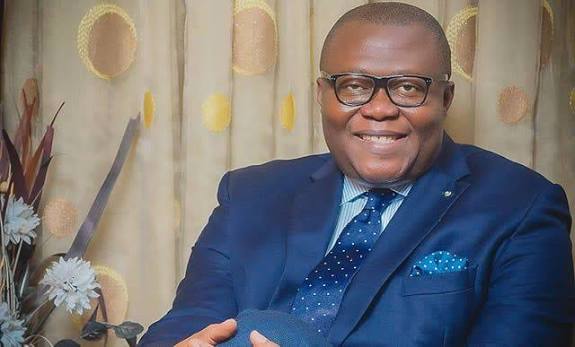
 By Jibrin Ateba — The oversight responsibilities of the National Assembly are vital to constitutional governance, as firmly anchored in Section 88 of the 1999 Constitution of the Federal Republic of Nigeria (as amended).

Also read: Rotary Urged To Prioritise Lasting Partnerships In West Africa

This provision empowers each chamber of the National Assembly to order investigations into any matter within its legislative competence, as well as the conduct of any person, authority, ministry, or government department entrusted with executing laws or administering public funds.

adron lemon friday

Furthermore, Section 62 provides the explicit constitutional foundation for establishing specialized committees, most notably the Committee on Public Petitions, to systematically receive, review, and investigate genuine citizen grievances.

To ensure these powers are exercised with order, discipline, and fairness, the legislature operates under clear Standing Orders formulated pursuant to Sections 60 and 101 of the Constitution.

While derived broadly from the investigative powers in Sections 88 and 128, the specific mechanisms, rules, and mandatory steps for receiving, vetting, hearing, and acting upon public petitions are meticulously detailed within these Standing Orders.

Having established this statutory background, it is essential to emphasize a fundamental principle: the constitutional mandate to receive and investigate petitions is an instrument of public accountability, not a weapon for personal vendettas, political witch-hunts, or legislative leverage.

It is within this context that the recent actions of the House of Representatives Committee on Petroleum Resources (Downstream) must be critically examined.

Its Chairman, Hon. Ikenga Ugochinyere Imo, disclosed at the House Committee Downstream Week that his committee had received a petition alleging money laundering and abuse of office against the Executive Vice President of the Nigerian National Petroleum Company Limited, Dr. Mumuni Dagazau.

A rigorous examination of this public disclosure reveals a glaring departure from standard parliamentary practice.

This entire affair bears all the hallmarks of a orchestrated campaign driven by deep-seated malice; a desperate attempt to smear the character of public officers who have steadfastly refused to cow to covert blackmail or compromise their official responsibilities.

If this petition possesses any legitimate substance, why did the Committee Chairman fail to reveal the identity of the petitioner? Going public with an unverified, anonymous document without first conducting a preliminary administrative inquiry, establishing a prima facie case, or according Dr. Dagazau his fundamental constitutional right to a fair hearing is deeply troubling.

By disclosing to the press with unbacked claims, the committee has bypassed established legislative protocol and effectively subjected an officer to a trial by media.

In doing so, the committee risks allowing itself to be used as a proxy for disgruntled elements seeking to undermine ongoing reforms in Nigeria’s downstream petroleum sector.

These interested parties appear unable to accept that the NNPC Limited of today operates under an entirely different paradigm from the NNPC Limited of the past. Under the Petroleum Industry Act (PIA), NNPC Limited is driven by financial prudence, corporate accountability, and strict integrity.

The days when public institutions could be coerced into handing out unearned benefits are over. Those who believe they can resort to character assassination to extract personal gain or force compliance will find that their blackmail falls on deaf ears.

Furthermore, the backdrop against which these remarks were made renders the Chairman’s comment even more disappointing.

At a major legislative gathering such as the “House Committee Downstream Week” a platform designed specifically to evaluate the health, security, and growth of Nigeria’s energy sector; the clear expectation of stakeholders, industry experts, and the general public was a forward-looking, substantive engagement.

National interest demanded that the committee focus its spotlight on critical industry dynamics: tracking progress made in local refining capacity, addressing persistent supply and bottlenecks, tackling crude oil theft, and formulating actionable legislative solutions to lower energy costs for everyday Nigerians.

Instead of seizing this vital platform to offer strategic direction and policy support, Hon. Ugochinyere Ikenga chose to reduce a high-level public gathering to a arena for personal attacks and unverified slurs against an executive officer.

Diverting public focus away from pressingly urgent structural challenges in the downstream sector to launch an unprovoked, uninvestigated attack on Dr. Mumuni Dagazau represents a severe misplacement of priorities.

It undermines the very essence of parliamentary responsibility, substituting constructive legislative leadership with sensationalism and targeted distraction at a time when the nation desperately needs solutions, not political theater.

While Dr. Dagazau reserves all legal rights to protect his hard-earned reputation against defamatory attacks and coordinated character assassination, the leadership of the House of Representatives should be urged to step in.

Also read: Rotary Urged To Prioritise Lasting Partnerships In West Africa

The National Assembly must protect the dignity of the parliament by ensuring that committee oversight remains grounded in fairness, thoroughness, and due process, rather than public spectacles driven by unverified petitions.

61 / 100 SEO Score
Continue Reading

Opinion

Rotary Urged To Prioritise Lasting Partnerships In West Africa

Published

on

Writer Ehi Braimah has called on Rotary clubs across West Africa to prioritise lasting partnerships over short-term projects as the region prepares for the 2026 West Africa Project Fair.

adron lemon friday

The Fair, hosted by Rotary International Districts 9111 and 9112, is scheduled to hold from November 10 to 17 at the Balmoral Convention Centre, Sheraton Hotel, Ikeja, Lagos.

It will be flagged off by Rotary International President Olayinka Babalola and is expected to draw clubs, Rotarians, Rotaractors and international partners from nine districts across the region.

Braimah noted that the theme, “Partnerships for Lasting Impact,” reflects a shift from simply launching projects to ensuring that interventions continue to serve communities long after commissioning.

He argued that many development challenges in West Africa — including healthcare, education, water, sanitation, food security and environmental issues — transcend national borders and require collaborative solutions.

According to him, a common weakness in development work is the “project mentality,” where attention focuses on starting and completing initiatives rather than guaranteeing their long-term usefulness.

Braimah stressed that true partnerships go beyond sponsorship. They involve shared responsibility, technical expertise, institutional support, monitoring and local ownership.

He said the Project Fair offers a marketplace for clubs seeking funding or technical help to connect with partners who can provide resources, knowledge or institutional backing.

The column concluded that lasting impact is achieved when Rotary’s community presence is combined with the strengths of governments, businesses and development organisations, creating solutions that communities can sustain.

61 / 100 SEO Score
Continue Reading

Opinion

Columnist Questions Future Of Tinubu Coastal Highway

Published

on

Columnist Ikeddy Isiguzo has raised fresh questions about the Lagos-Calabar Coastal Highway project and President Bola Tinubu’s second-term campaign strategy.

adron lemon friday

In his latest piece, Isiguzo criticised what he described as inconsistencies in explanations offered by Works Minister David Umahi regarding changes to the multi-billion-dollar highway.

He argued that the project, originally presented as a flagship infrastructure plan, has faced technical and financial challenges that were not adequately addressed at the outset.

Isiguzo recalled earlier concerns he raised in 2024 about the absence of detailed technical designs, environmental assessments and competitive bidding processes.

He also commented on the political dimensions of the project, noting recent statements by the minister linking adjustments to the route with presidential directives.

Turning to the 2027 elections, the columnist suggested that President Tinubu appears reluctant to campaign extensively across the country, preferring to rely on party structures and selected regional appearances.

Isiguzo listed proposed campaign locations and questioned the exclusion of certain states, interpreting the itinerary as a sign of limited political confidence.

He further criticised the ruling party’s internal dynamics, including competition among senior figures for future positions.

The column concluded with a brief reference to recent comments by the Edo State APC chairman on Peter Obi, describing them as extreme.

Isiguzo’s article continues his pattern of sharp commentary on governance and infrastructure under the current administration.

51 / 100 SEO Score
Continue Reading

Trending News