
News
Eid Controversy Deepens in Sokoto as Cleric Defies Sultan Directive

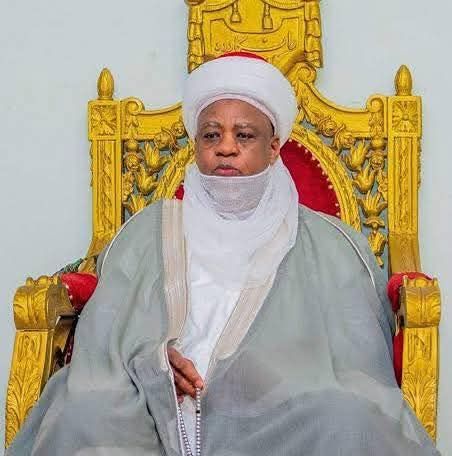
Sokoto Eid prayer defiance as cleric Sheikh Musa Lukuwa leads early Eid prayers despite Sultan of Sokoto’s directive over moon sighting

A religious disagreement has emerged in Sokoto State after Islamic scholar Sheikh Musa Lukuwa led his followers in Eid-el-Fitr prayers on Thursday, despite an earlier directive from the Sultan of Sokoto, Alhaji Sa’ad Abubakar III, who had announced Friday as the official Sallah day.
Also read: Eid al-Adha: Speaker Obasa Calls for Compassion for the Needy, Urges Nigerians to Unite as One
The Sokoto Eid prayer defiance unfolded at the cleric’s Mabera mosque, where Sheikh Lukuwa conducted the two-unit Eid prayer at about 9:10 a.m., following an overnight announcement to his followers regarding reported moon sighting claims.
The Sultan had earlier declared that the Shawwal crescent moon was not sighted anywhere in Nigeria, a position traditionally used to determine the official end of Ramadan and the celebration of Eid.
However, Sheikh Lukuwa justified his decision, citing reports of moon sighting from neighbouring Niger Republic, which he described as geographically close and therefore reliable for religious observance.
He explained that trusted contacts had confirmed the development, prompting his group to proceed with Eid prayers in line with their interpretation of Islamic teachings.
According to him, accepting verified sightings from a neighbouring country should not be controversial, especially when reports from distant Nigerian cities are also commonly considered in religious determinations.
The cleric stressed that his actions were not intended as a challenge to the authority of the Sultan of Sokoto, but rather an adherence to what he described as established religious principles guiding the sighting of the moon.
Sheikh Lukuwa further noted that his followers traditionally align with the Sultan’s directives at the beginning and end of Ramadan, but insisted that once credible moon sighting is confirmed, religious obligations must be observed accordingly.
He referenced historical practices in Islamic leadership in Nigeria, noting that the late Abubakar Mahmoud Gumi previously played a central role in announcing moon sightings before the responsibility was later unified under the Sultan for communal harmony.
The cleric maintained that the Sultan’s decision in this instance was, in his view, incorrect, adding that his followers would not comply with the Friday directive.
Separate accounts also suggest that Lukuwa informed his followers around midnight of the reported sighting and instructed them to assemble for early Eid prayers the following morning, leading to the observed gathering at the mosque.
Also read: Eid al- Fitri – Obasa Felicitates Muslims, Urges Support, Prayers for President Tinubu
The development highlights ongoing sensitivities around religious authority and moon sighting interpretation within parts of the Muslim community in Nigeria.


Ayodele Quits PRP Presidential Aspirants List after Prof. Oluwamuyiwa Favour Ayodele resigns over exclusion from PRP cleared candidates list

Eid ul Adha public holidays Nigeria: FG declares Wednesday and Thursday as holidays, urging prayers, reflection, and national unity

Justice Crack cybercrime trial begins as Federal Government opens amended charges and court reviews forensic evidence in Abuja case
-
Politics2 years ago
13 Ondo Assembly Members Disown Endorsement of Aiyedatiwa
-
Politics2 years ago
APC Group, Ondo Govt, Quarrel Over Money for Endorsement
-

 Trending News5 years ago
Stop unsavoury, inciting statements – DSS warns
-

 Others4 years ago
Adron Homes Celebrates 10 Years Of Housing Excellence
-

 Humanity4 years ago
President Buhari Commiserates With Ambassador Maureen Tamuno Over The Loss Of Her Father
-

 Others7 years ago
EX- CUSTOMS BOSS, IBRAHIM MERA’S DWINDLING FAME
-

 Business2 years ago
Bigi Carbonated Soft Drinks Treats 40 Consumers to an Epic Easter Movie Hangout
-

 Business2 years ago
Wema Bank Shines at Global SME Finance Forum Conference Awards 2024 …Awarded: • SME Financier of the Year (Africa) • Platinum Award for Best Financier for Women Entrepreneurs (Africa)