
News
How Rotary’s values, 4-Way Test can lift up Nigeria


Rotary International’s Four-Way Test emerges as a practical ethical guide for nation-building in Nigeria, inspiring thousands of Rotarians to champion integrity, service and good governance amid ongoing development challenges

The task of nation-building, as I have written in previous articles, belongs to all Nigerians – young or old. However, it has become evident that we need a “moral code” that can influence ethical leadership and promote good governance across all spheres of our national life.
Also read: Taipei 2026: A historic Rotary Convention and Nigeria’s moment on the global stage
That is where Rotary comes into the conversation. What is Rotary? Who are Rotarians?
Rotary International is a humanitarian service and fellowship organisation founded in 1905 by Paul P. Harris, a 37-year-old attorney who had moved from small-town Vermont to big-city Chicago, Illinois, USA. Harris felt lonely in the city – unlike his hometown where the people knew each other and did business on trust.
He decided to invite three friends and business associates to dinner. They were Silvester Schiele, (coal dealer), Gustavus Loehr (mining engineer), and Hiram Shorey (tailor).
That was the first Rotary meeting and the Rotary Club of Chicago – the first Rotary club in the world – was born on February 23, 1905.
The name “Rotary” came from their practice of rotating meetings among members’ offices each week.
Today, Rotary International has over 1.4 million members – including Rotaractors – in more than 46,000 Rotary clubs across over 200 countries and geographical territories.
What began as a businessmen’s fellowship club became a humanitarian service organisation. The 1917 creation of The Rotary Foundation turned service into funded projects worldwide.
Rotarians are therefore friends, neighbours, volunteers, leaders and problem solvers united in the ideal of service. Although Paul Harris passed away on January 27, 1947, his dream of a better world through humanitarian service lives on.
The 4-Way Test is Rotary’s ethical code that every Rotarian is expected to apply to thoughts, speech, and actions. Herbet J. Taylor created it in 1932 when he was trying to save his company, Club Aluminum, from bankruptcy during the Great Depression.
He posted it on the factory wall. Workers, suppliers, and customers embraced it, and the company survived. Rotary adopted the code in 1943 because it worked in real life, not just theory. Taylor later became Rotary International President in 1954-1955.
Nigeria stands at a defining moment in its history. Blessed with abundant natural resources, a youthful population, rich cultural diversity and entrepreneurial energy, the country possesses all the ingredients needed for greatness.
Yet, decades of corruption, poor governance, insecurity, ethnic divisions, weak institutions and declining public trust have prevented Nigeria from achieving its full potential.
As Nigerians continue to search for practical solutions to the nation’s challenges, the timeless 4-Way Test framework deserves greater attention – not from politics or economics alone, but from values.
The ideals promoted by Rotary International, particularly its Four-Way Test, offer a moral compass that can help rebuild trust, strengthen institutions and inspire a more prosperous Nigeria.
For more than 120 years, Rotary has united business and professional leaders across the world in the shared pursuit of “Service Above Self.”
Its members are not merely encouraged to perform acts of charity; they are expected to demonstrate integrity in their personal and professional lives while using their talents to improve their communities in Rotary’s seven areas of focus.
Nigeria has thousands of Rotarians spread across hundreds of Rotary clubs in six districts. Their collective influence extends beyond humanitarian service into education, healthcare, economic empowerment, peacebuilding, sustainability and ethical leadership.
If the principles that guide Rotary were embraced more widely by public officials, business leaders, civil servants and citizens, Nigeria could witness a profound national transformation.
At the heart of Rotary’s ethical philosophy lies the Four-Way Test, comprising 24 words. It asks four simple questions before we think, speak or act:
Is it the truth?
Is it fair to all concerned?
Will it build goodwill and better friendships?
Will it be beneficial to all concerned?
These four questions may appear simple, but they represent one of the most powerful ethical frameworks ever developed. If consistently applied across Nigerian society, they could reshape the country’s future.
The 4-Way Test is why Rotary can have a Christian, Muslim, and traditionalist in the same club, running projects together without conflict.
The first question – Is it the truth? – addresses one of Nigeria’s greatest deficits: honesty. Corruption often begins with deception.
False declarations, manipulated contracts, fake credentials, misinformation and broken promises have eroded public confidence in institutions.
A culture rooted in truth would encourage transparency in government, accountability in business and credibility in public communication. Investors are naturally attracted to societies where honesty prevails because trust reduces risk.
The second question – Is it fair to all concerned? – speaks directly to justice and equity. Nigeria’s diversity is one of its greatest strengths, yet it has too often been exploited for political advantage.
Fairness demands equal opportunities regardless of ethnicity, religion, gender or region. It requires merit-based appointments, transparent recruitment processes,
impartial law enforcement and equitable distribution of national resources. A society perceived as fair experiences fewer grievances and greater social stability.
The third question – Will it build goodwill and better friendships? – is especially relevant in today’s Nigeria, where divisions frequently dominate public discourse. Political campaigns often deepen ethnic and religious tensions. Social media amplifies hostility rather than understanding.
Rotary reminds us that lasting progress depends on relationships built on respect, dialogue and mutual trust. Goodwill encourages collaboration across political, regional and cultural divides.
It strengthens national unity by recognising that every Nigerian has a stake in the country’s success.
The final question – Will it be beneficial to all concerned? – promotes inclusive development. Policies should not enrich a privileged few while leaving millions behind.
Businesses should create value not only for shareholders but also for employees, customers and communities. Government decisions should prioritise long-term national prosperity over short-term political gains.
When decisions benefit the wider society, economic growth becomes sustainable and widely shared.
Beyond the Four-Way Test, Rotary’s guiding principle of “Service Above Self” carries enormous relevance for Nigeria.
Public office should be viewed as an opportunity to serve rather than accumulate wealth. Leadership is fundamentally about responsibility, sacrifice and stewardship. Nations flourish when leaders place national interest above personal ambition.
Fortunately, examples of Rotary’s impact already exist throughout Nigeria. Rotary clubs have funded boreholes that provide clean water to rural communities, supported maternal and child healthcare, equipped hospitals, awarded scholarships, promoted literacy, carried out tree-planting initiatives and invested in youth development.
These community-based interventions demonstrate that ordinary citizens can produce extraordinary change through collective action.
The Rotary Foundation, with the support of its partners, disbursed over US$300 million in the wild-polio eradication effort in Nigeria, leading to the World Health Organisation (WHO) certifying Nigeria free of the wild-polio virus on August 24, 2020.
In Nigeria, DRC, Mozambique, and Zambia, The Rotary Foundation has also invested US$30 million in a three-year initiative to reduce the deaths of children less than five years from the three leading killers – malaria, pneumonia, and diarrhoea – under the Rotary Healthy Communities Challenge (RHCC).
If we take into account what the Foundation has spent across maternal and child health interventions in Nigeria in the last three years, it is over US$20 million.
This is in addition to the various projects launched and commissioned by Rotary clubs and districts in Nigerian communities.
However, let it be known that every cent taken from The Rotary Foundation for projects in any part of the world is properly documented and accounted for in line with Rotary’s high ethical standard.
If the same spirit of volunteerism, service, transparency and accountability were replicated across government institutions, schools, universities, corporations and neighbourhood associations, our communities would become cleaner, schools better supported, healthcare more accessible and young people more engaged and motivated in nation-building.
Nigeria’s private sector also has much to gain from Rotary’s ethical values. Ethical businesses attract investors, loyal customers and talented employees.
Companies that embrace fairness, transparency and community engagement enjoy stronger reputations and greater long-term success.
In an increasingly competitive global economy, integrity has become a valuable economic asset.
The country’s young population presents perhaps the greatest opportunity. Millions of Nigerian youths are searching for role models and purpose. Rotary’s youth programmes – including Rotaract, Interact, Rotary Youth Leadership Academy (RYLA) and Youth Exchange – provide platforms where young people learn leadership, teamwork, ethics and community service.
These experiences nurture responsible citizens who are equipped not only to pursue personal success but also to contribute meaningfully to society.
Education likewise has a critical role. Schools and universities should incorporate ethics, civic responsibility and servant leadership into their curricula.
Teaching young Nigerians to evaluate decisions through the lens of the Four-Way Test could help cultivate a new generation of principled leaders committed to integrity and national development.
The media also bears responsibility as journalists can highlight stories of integrity, innovation, volunteerism and ethical leadership.
Positive examples inspire imitation. They remind citizens that honesty and service remain powerful forces for national renewal.
Ultimately, Nigeria’s greatest challenge is not the absence of resources but the shortage of values-driven leadership.
Roads, power plants, factories and technology are essential, but sustainable development begins with character. Institutions become stronger when the people who lead them embrace honesty, fairness, respect and service.
Rotary’s values offer no magic formula, nor do they replace sound economic policies or effective governance. They do, however, provide the ethical foundation upon which prosperous societies are built.
Nations that enjoy lasting peace and development are sustained not only by laws but by shared values that shape everyday decisions.
As Nigeria continues its journey toward becoming one of the world’s leading economies, it must also aspire to become one of the world’s most ethical societies.
The Four-Way Test is not merely a Rotary slogan; it is a practical guide for living and leading with integrity.
If every Nigerian paused before making a decision and sincerely asked: Is it the truth? Is it fair to all concerned? Will it build goodwill and better friendships?
Will it be beneficial to all concerned? – the answers could change not only individual lives but the destiny of the nation.
A better Nigeria begins with better values. Rotary has shown that when service, integrity and ethical leadership become a way of life, communities prosper.
There is every reason to believe that the same principles can help lift up Nigeria.
Also read: Nigeria’s Olayinka Babalola Becomes Rotary International President, Strengthening African Legacy
May God bless Nigeria.


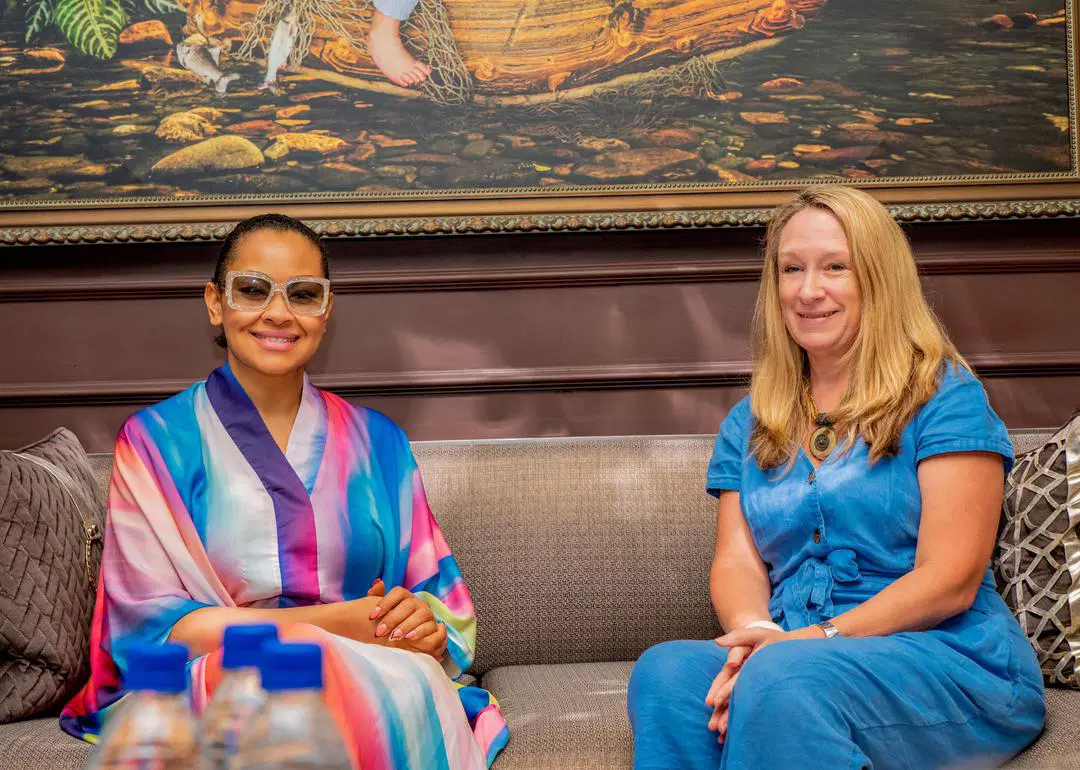
Kogi investment tour led by Natasha Akpoti-Uduaghan brought four European ambassadors to explore the state’s tourism, cultural heritage and local industries
Senator Natasha Akpoti-Uduaghan, representing Kogi Central, has hosted ambassadors from Belgium, Denmark, Italy and Spain on a tour of Kogi State aimed at attracting investment, promoting tourism and showcasing local industries.
Also read: Lula Wins Historic Fourth Term as Bolsonaro Challenges Brazil Vote
The visit featured tours of historical landmarks, cultural activities and interactions with artisans and community members, with discussions focused on potential investment and humanitarian partnerships that could create jobs, support local businesses and improve livelihoods.
According to a statement issued by the senator’s media aide, Mike Idoko, in Abuja on Monday, the delegation visited several attractions in the state to explore its economic potential and gain insight into the traditions and hospitality of the Ebira people.
The tour began at Lord Lugard’s Rest House on Mount Patti in Lokoja before the delegation visited the confluence of the Niger and Benue rivers.
The ambassadors subsequently travelled to Kogi Central for cultural activities and meetings with local communities.
Italy’s Ambassador to Nigeria, Roberto Mengoni, described the confluence as a symbol of national unity and expressed optimism about opportunities for collaboration with the state.
“Kogi is very rich, and we look forward to partnership,” Mengoni said, thanking Akpoti-Uduaghan for facilitating the visit.
Belgium’s Ambassador, Pieter Leenknegt, praised the experience, particularly a hiking expedition around the historic hills of Ihima.
He commended the opportunity to explore the region’s landscape, culture and local cuisine.
The cultural programme also included a visit to Obeiba Hill, where the diplomats sampled traditional foods, including akara, apapa and akamu.
The delegation observed indigenous production processes such as shea butter and palm kernel oil extraction, black soap making, pottery and traditional Ebira cloth weaving.
A masquerade performance further introduced the visitors to the community’s cultural identity and artistic traditions.
Denmark’s Ambassador, Jens Hansen, expressed admiration for the skills of local artisans, particularly women engaged in pottery, traditional clothing and other crafts.
He said the locally made products reflected the creativity and determination of the artisans, adding that their work offered opportunities for enterprise development and access to wider markets.
Addressing the delegation, Akpoti-Uduaghan said the tour was intended to demonstrate that Kogi Central’s economic prospects extended beyond tourism to include indigenous industries, skilled workers and entrepreneurial communities.
She said discussions with the ambassadors covered investment and humanitarian opportunities, expressing hope that the engagement would lead to partnerships with lasting benefits for residents.
“To attract investment, we must give people the chance to see our strengths for themselves: our skills, our enterprise, our culture and our people,” the senator said.
However, a planned visit to the Ajaokuta Steel Company did not take place because access to the facility was reportedly not approved, despite a written request by the senator.
Akpoti-Uduaghan said the delegation could only view the complex from outside its gates.
She expressed disappointment over the development and reiterated her call for the revival of the steel plant, describing it as essential to Nigeria’s industrial ambitions.
“Ajaokuta remains central to the industrial future we want for our people, and I will continue to advocate for its revival,” she said.
The Ajaokuta steel complex has long represented Nigeria’s unfulfilled industrial ambitions.
Its revival has been viewed as a potential avenue for expanding manufacturing, creating employment and strengthening domestic supply chains.
Despite successive government efforts to complete and operationalise the facility, the plant has yet to fulfil its intended role as a major driver of industrialisation.
The senator thanked community leaders, residents and artisans for welcoming the delegation, saying their hospitality had helped introduce the Ebira nation to an international audience.
She also thanked the four ambassadors, identifying them as Pieter Leenknegt of Belgium, Jens Hansen of Denmark, Roberto Mengoni of Italy and Félix Costales Artieda of Spain, for accepting the invitation and engaging with local communities.
Also read: Lula Wins Historic Fourth Term as Bolsonaro Challenges Brazil Vote
Akpoti-Uduaghan said the visit had provided an opportunity to promote Kogi Central’s tourism assets, cultural heritage and indigenous enterprises, expressing hope that the exposure would attract investment and partnerships to the area.


IG Olatunji Disu proposes 200% gratuity for retired police officers as the Federal Government considers reforms to address pension challenges
-
Politics3 years ago
13 Ondo Assembly Members Disown Endorsement of Aiyedatiwa
-
Politics3 years ago
APC Group, Ondo Govt, Quarrel Over Money for Endorsement
-

 Trending News5 years ago
Stop unsavoury, inciting statements – DSS warns
-

 Others5 years ago
Adron Homes Celebrates 10 Years Of Housing Excellence
-

 Humanity5 years ago
President Buhari Commiserates With Ambassador Maureen Tamuno Over The Loss Of Her Father
-

 Others7 years ago
EX- CUSTOMS BOSS, IBRAHIM MERA’S DWINDLING FAME
-

 Business3 years ago
Bigi Carbonated Soft Drinks Treats 40 Consumers to an Epic Easter Movie Hangout
-

 Business2 years ago
Wema Bank Shines at Global SME Finance Forum Conference Awards 2024 …Awarded: • SME Financier of the Year (Africa) • Platinum Award for Best Financier for Women Entrepreneurs (Africa)