
health
Ebola: NCDC Offers ₦100,000 Weekly Support to Contacts in Isolation

Nigeria plans Ebola treatment centres in high-risk states as identified contacts rise to 53, with the NCDC offering ₦100,000 weekly support
The Federal Government has begun plans to identify and equip Ebola treatment centres in states with designated ports of entry as the number of contacts linked to Nigeria’s confirmed case rises to 53.
Also read: Deadly Nigeria Floods Kill 245, Displace 214,997

The measures are part of efforts to strengthen the country’s preparedness against a possible spread of the disease, with health authorities assessing isolation capacity at the University of Abuja Teaching Hospital and planning an infection prevention and control assessment at Karu General Hospital in Abuja.
According to an Ebola situation report obtained on Sunday, the government is also working to establish referral arrangements for suspected cases, improve surveillance at international entry points and strengthen healthcare facilities’ ability to manage possible infections.
The development comes as the Nigeria Centre for Disease Control and Prevention (NCDC) introduced a weekly payment of ₦100,000 per person to support individuals placed in isolation or quarantine.
The NCDC Director-General, Dr Jide Idris, said the financial intervention followed complaints from contacts about the cost of feeding, accommodation and providing for their families while complying with public health monitoring requirements.
The situation report stated that the University of Abuja Teaching Hospital had undergone a needs assessment and optimisation to prepare it for isolation and treatment.
An infection prevention and control assessment is also planned for Karu General Hospital to determine its capacity to accommodate a possible increase in isolation requirements.
The government intends to identify and improve treatment facilities in states with designated ports of entry, ensuring that suspected cases detected outside the Federal Capital Territory can be referred promptly for appropriate care.
The report noted that referral arrangements would cover the movement of suspected cases from the point of detection to designated treatment centres.
The authorities are also strengthening infection prevention and control measures in healthcare facilities to minimise the risk of transmission to health workers, patients and others who may come into contact with suspected cases.
The planned measures include an infection prevention and control ring strategy designed to strengthen screening and isolation within designated areas.
The NCDC introduced the weekly payment after some contacts raised concerns about the financial difficulties associated with isolation and quarantine.
Idris explained that some individuals required assistance with feeding, accommodation and the cost of maintaining their families while under monitoring.
“We are paying for their accommodation; we are paying for their feeding. Some of them are asking for a stipend to maintain their families,” he said.
He added that the agency was providing ₦100,000 per person weekly to support their welfare during the period.
“This was not planned for, but it is an emergency. We will continue to review it as we go along,” Idris said.
The NCDC chief stressed that the responsibility for supporting contacts and managing public health emergencies should not rest solely with the FCT.
He urged state governments to make adequate financial and logistical provisions for contact tracing, isolation, surveillance and other emergency response activities.
“This is not the responsibility of the FCT alone. What we have to do for the FCT, we have to do for any other state, just in case,” he said.
The situation report stated that 53 contacts linked to the confirmed case had been identified, listed and categorised, with contact tracing and monitoring continuing.
The figure represents an increase from the initial 44 contacts announced after the case was reported in the FCT.
According to Idris, 44 of the 53 primary contacts were associated with the health facility where the patient received treatment. The remaining nine included household members and people who attended to her during an earlier visit to an emergency room.
Health officials are also identifying secondary contacts to determine whether any of the individuals already under monitoring may have exposed others.
Idris said the authorities would establish whom each contact had interacted with and monitor any additional people identified through the investigation.
The NCDC said contacts would be monitored daily, with anyone developing symptoms assessed promptly.
One contact who reported feeling unwell had tested negative, Idris disclosed, although surveillance and follow-up activities were continuing.
The agency has also revised its case definition for Ebola disease to help healthcare workers and surveillance teams identify suspected infections more effectively.
The criteria include people with sudden fever and specified symptoms who have relevant travel or epidemiological links, individuals with unexplained bleeding, and people who develop symptoms after contact with a confirmed or probable case.
Community members have also been urged to report unexplained deaths and symptoms suggestive of Ebola, particularly where possible exposure is involved.
The NCDC’s National Reference Laboratory and the African Centre of Excellence for Genomics of Infectious Diseases have completed genomic sequencing of the confirmed case, according to the situation report.
The next steps include sharing the sequencing report, continuing diagnostic testing and maintaining laboratory records.
The NCDC also plans to distribute additional laboratory reagents and supplies across the national laboratory network to support testing for Ebola virus disease.
The government is strengthening healthcare workers’ capacity through training and sensitisation, particularly in facilities that may be required to identify, stabilise or refer suspected cases.
Idris acknowledged that infection prevention and control expertise at state and local levels needed improvement, describing training as a key priority in preparing the country for infectious disease emergencies.
The report also stated that the national stockpile of personal protective equipment and other essential supplies had been increased.
An additional 500 donated laboratory testing kits had been incorporated into the stockpile, with more protective equipment and essential commodities expected to be positioned in high-risk states.
The government is expanding surveillance at airports and other ports of entry as part of efforts to detect potential infections early.
According to the report, Port Health Services had conducted an investigation with aviation stakeholders, while enhanced surveillance across all designated entry points would continue.
Authorities are also strengthening public communication and community engagement to address misinformation and encourage cooperation with contact-tracing teams.
The NCDC urged Nigerians to rely on official information, avoid spreading rumours and cooperate with public health officials.
The confirmed case involves a woman who travelled to Nigeria after visiting Uganda, following a trip to the Democratic Republic of the Congo.
According to information previously provided by health authorities, she developed symptoms on October 7, sought medical attention in Abuja on October 11 and tested positive for the Bundibugyo strain of Ebola virus on October 20.
The World Health Organisation has said investigations are continuing to establish the likely source of the infection.
Ebola can spread through direct contact with the blood, body fluids or tissues of infected people or animals, as well as contaminated materials.
Health authorities have therefore advised Nigerians to maintain good hand hygiene and avoid direct contact with the bodily fluids of anyone suspected of having the disease.
The NCDC also warned against stigmatising people placed under monitoring, stressing that their cooperation with public health authorities is essential to containing the outbreak.
Also read: Deadly Nigeria Floods Kill 245, Displace 214,997
The Federal Government said continued coordination among federal and state authorities, healthcare facilities and response partners would be crucial to identifying and managing suspected cases promptly.


FCCPC orders producers to comply with food fortification standards after a survey found inadequately fortified vegetable oil and salt in Nigerian markets
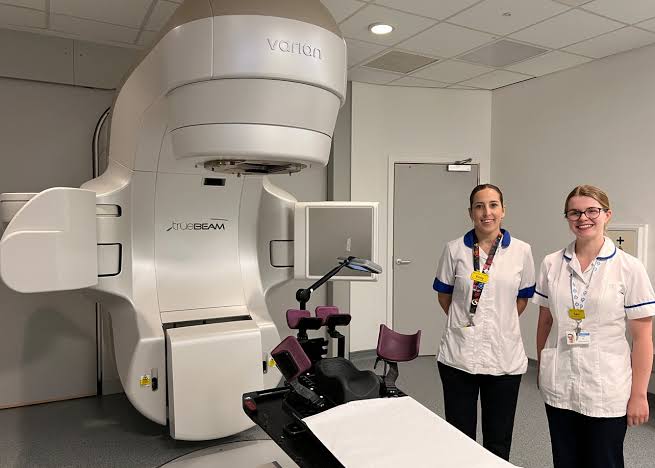
The UK is testing five-day breast cancer radiotherapy in a major trial that could reduce hospital visits and treatment costs for patients
The United Kingdom has launched a major clinical trial involving more than 1,000 participants to determine whether breast cancer radiotherapy can be shortened from three weeks to five days without compromising its effectiveness in preventing the disease from returning.
Also read: Grey CEO Urges Africa to Ditch Dollar for Trade
The government-funded FAST-Forward Boost trial, being conducted at 39 hospitals across the UK, will investigate whether a shorter course of radiotherapy combined with an additional targeted dose, known as a boost, can provide effective treatment for patients following breast cancer surgery.
The UK Department of Health and Social Care announced the development on Friday, October 30, describing the study as part of efforts to improve cancer treatment and make care more convenient for patients.
Led by the Institute of Cancer Research in London and funded by the National Institute for Health and Care Research, the study aims to recruit 4,830 participants by 2028.
Those enrolled will be followed up for five years, with results expected in 2033.
If the approach proves successful, it could reduce the number of hospital visits required by patients, potentially saving them 10 journeys compared with the existing three-week treatment schedule.
The department said the shorter schedule could also reduce transport expenses and the time patients spend away from work and family.
It could additionally ease pressure on the National Health Service by freeing up radiotherapy capacity for other patients.
Health and Social Care Secretary Yvette Cooper said the trial reflected the country’s efforts to use medical research to improve cancer care.
“This trial shows how the UK is using our world beating research capabilities to pursue huge improvements and transformations in cancer treatment for patients,” she said.
Why the radiotherapy trial matters
Radiotherapy uses carefully targeted radiation to destroy cancer cells or prevent them from growing.
For many people with breast cancer, it is recommended after surgery to reduce the risk of the disease returning in the treated area.
A treatment boost involves delivering an additional dose of radiation to the area considered to have a higher risk of recurrence, usually the site where the tumour was removed.
The FAST-Forward Boost trial is examining how this additional treatment can be incorporated into a shorter schedule.
Reducing treatment from three weeks to five days could make a considerable difference to patients who must travel regularly to hospitals.
The impact may be particularly significant for people living far from specialist cancer centres, those with limited transport options and patients balancing treatment with employment or family responsibilities.
However, the trial is designed to establish whether the shorter approach is effective and safe for the patients being studied. Its results will be important in determining whether the treatment schedule can become a wider option in clinical practice.
UK expands breast cancer screening efforts
The announcement comes as the British government intensifies efforts to improve breast cancer screening, encourage early diagnosis and strengthen support for patients.
The Department of Health and Social Care said screening uptake among women receiving their first invitation had risen to 63.6 per cent, its highest level in a decade.
Despite the improvement, around four in 10 women invited for their first screening appointment still do not attend.
The government is also working with the National Institute for Health and Care Research and NHS England on studies examining how artificial intelligence could support the analysis of mammograms.
The technology is being explored as a way to assist the assessment of breast screening images, although its role and effectiveness must be established through appropriate research and clinical evaluation.
In addition, the government has partnered with breast cancer charity Breast Cancer Now for three years to help women recognise symptoms, find reliable information and access support after treatment.
Together, the initiatives reflect a broader approach to breast cancer care, combining screening, research into treatment improvements and support for people living with the disease.
Also read: Grey CEO Urges Africa to Ditch Dollar for Trade
For now, the five-day radiotherapy approach remains under investigation. With final results not expected until 2033, the FAST-Forward Boost trial will need to establish whether reducing treatment time can deliver comparable cancer control while maintaining patient safety.
The DR Congo Ebola outbreak is recording 50 to 80 new confirmed cases daily, with about 10,000 cases and nearly 5,000 deaths reported
-
Politics3 years ago
13 Ondo Assembly Members Disown Endorsement of Aiyedatiwa
-
Politics3 years ago
APC Group, Ondo Govt, Quarrel Over Money for Endorsement
-

 Trending News6 years ago
Stop unsavoury, inciting statements – DSS warns
-

 Others5 years ago
Adron Homes Celebrates 10 Years Of Housing Excellence
-

 Humanity5 years ago
President Buhari Commiserates With Ambassador Maureen Tamuno Over The Loss Of Her Father
-

 Others7 years ago
EX- CUSTOMS BOSS, IBRAHIM MERA’S DWINDLING FAME
-

 Business3 years ago
Bigi Carbonated Soft Drinks Treats 40 Consumers to an Epic Easter Movie Hangout
-

 Business2 years ago
Wema Bank Shines at Global SME Finance Forum Conference Awards 2024 …Awarded: • SME Financier of the Year (Africa) • Platinum Award for Best Financier for Women Entrepreneurs (Africa)