
Brands
Chinese Brands Drop Mbappe Over Alleged Mao Joke


Mbappe China sponsorships have ended after Dongpeng and Mengniu dropped the football star over alleged remarks about a meme featuring Mao Zedong
Two major Chinese brands have ended their sponsorship partnerships with French football star Kylian Mbappe following the circulation of a video in which he allegedly joked about former Chinese leader Mao Zedong.
Also read: LASTMA Reports Tipper Incident on Lagos-Ibadan Expressway

Beverage company Dongpeng and dairy producer Mengniu announced the decisions on Tuesday, citing concerns that the remarks had offended Chinese national sentiment.
“Our company firmly opposes and has a zero-tolerance policy towards any behaviour that offends national sentiments,” Dongpeng said in a statement, announcing the immediate termination of its partnership with the Real Madrid forward.
Mengniu, China’s largest dairy producer, also confirmed that it was ending its collaboration with the 27-year-old France captain.
“With immediate effect, our company is terminating all cooperation with Kylian Mbappe,” the company said.
Mengniu added that it opposed words or actions that hurt the feelings of the Chinese people.
The decisions followed the circulation of a video in which Mbappe reportedly described the funniest internet meme he had seen as one featuring his face edited onto that of “some guy — I think he’s a Chinese dictator”.
The comment appeared to refer to an online meme depicting Mbappe as Mao, who led the Chinese Communist Party and died in 1976.
However, the authenticity of the video could not immediately be verified by AFP Fact Check.
Mao remains a sensitive figure in China, where jokes perceived as disrespectful towards the former leader can provoke public criticism.
Mbappe had been popular among Chinese football fans, attracting millions of followers on Chinese social media.
He is also nicknamed “Guigui”, a Chinese translation of “Turtle”, linked to an internet meme inspired by the Teenage Mutant Ninja Turtles.
Dongpeng had used AI-generated images of Mbappe drinking its sports beverage in advertising campaigns shown in China during this year’s World Cup.
The controversy also attracted attention on Weibo, China’s major social media platform, where the termination of Dongpeng’s partnership with Mbappe became a trending topic.
Some users supported the companies’ decisions, arguing that the alleged remarks crossed a line, while others called for Mbappe’s image to be removed from the beverage company’s products.
Chinese football outlet Dongqiudi criticised the reported comments in a statement on Monday evening, describing them as offensive to China and its people and saying they had hurt the feelings of Chinese football fans.
The incident follows Mbappe’s comments in September about another internet meme depicting him as a military dictator.
In an interview with French sports newspaper L’Équipe, he said some memes were intended as harmless fun but expressed discomfort with comparisons to historical figures responsible for widespread suffering.
“There’s a part of it that’s funny. You can tell that, for some people, it’s all in good fun. But there is another part that’s a bit less funny because of the damage such people have caused throughout history,” he said.
“Being compared to individuals who murder others, or who have brought misery to millions upon millions of people — well, I don’t think I’ve ever done anything like that in my life,” Mbappe added.
The controversy comes amid a history of disputes involving international sports figures and politically sensitive issues in China, including Taiwan, Tibet and Hong Kong.
In 2023, former NBA player Dwight Howard sparked criticism on Chinese social media after referring to Taiwan as a country in a video featuring Taiwan’s then-vice-president and current president, Lai Ching-te.
In 2019, a social media post by Houston Rockets general manager Daryl Morey supporting Hong Kong’s pro-democracy protests prompted a backlash in China, including the suspension of sponsorship agreements and a year-long withdrawal of NBA games from Chinese television.
Also read: LASTMA Reports Tipper Incident on Lagos-Ibadan Expressway
The latest episode highlights the commercial risks international athletes can face when remarks or online content are perceived as crossing political or cultural sensitivities in major sponsorship markets.


Brands
Adron Group Eyes Agricultural Expansion as It Engages Niger Foods Breeding and Feedlot Center
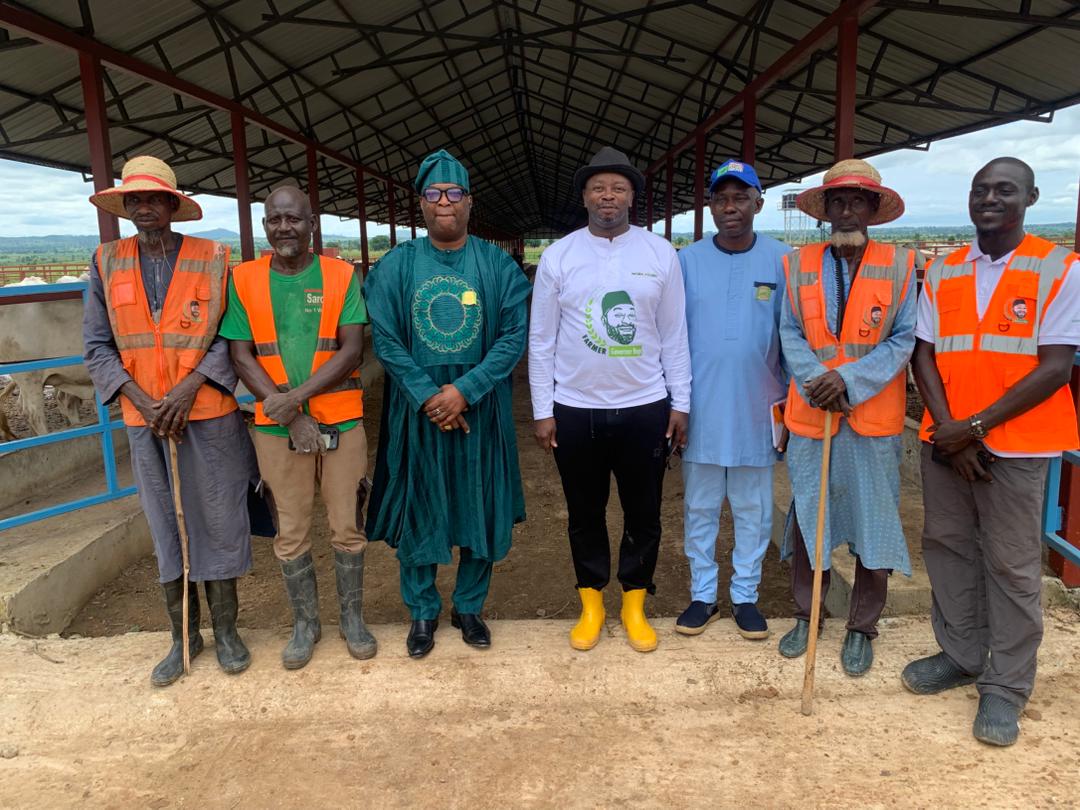
In a significant move towards transforming Nigeria’s agricultural landscape and expanding opportunities within the nation’s agribusiness value chain, the Chairman/GCEO of Adron Group, Sir Aare Adetola Emmanuelking, paid a strategic visit to the Niger Foods Breeding and Feedlot Center to explore a landmark agricultural partnership.
Also read: Adron Group Spotlights Affordable Property at ESG Expo
The high-level engagement between Adron Group and the Niger Foods Breeding and Feedlot Center focused on unlocking vast opportunities in the livestock industry and exploring the establishment of specialised Adron Farm Estates across Niger State, with the Center positioned to play a strategic facilitation role in the proposed collaboration.
Adron Homes and Properties, widely recognised as one of Nigeria’s foremost real estate development companies, has built a strong reputation for delivering secure, affordable and premium housing developments across the country.
Through this proposed initiative, the Group is set to extend its proven expertise in structured estate development into the agricultural sector.
The proposed Adron Farm Estates are envisioned as purpose-built agricultural communities, providing structured, secure and infrastructure-driven land layouts designed to support commercial farming, livestock production and agro-processing.
During a tour of the Niger Foods Breeding and Feedlot Center, discussions between the leadership of Adron Group and the Center highlighted the critical role of modern infrastructure and structured development in addressing the challenges of Nigeria’s fragmented agricultural market system.
The proposed collaboration seeks to combine Adron Group’s extensive experience in land development and infrastructure with the agricultural expertise, livestock production capacity and market development experience of the Niger Foods Breeding and Feedlot Center, with the objective of creating a new and sustainable model for agricultural development.
Beyond enhancing food production and unlocking new opportunities in livestock and agribusiness, the initiative is expected to stimulate rural development, create employment opportunities, attract investment and strengthen the agricultural value chain across Niger State.
The collaboration between Adron Group and the Niger Foods Breeding and Feedlot Center also holds the potential to position Niger State as a major hub for integrated agricultural and real estate development, while demonstrating how strategic partnerships between the real estate and agricultural sectors can unlock new possibilities for economic growth and national development.
Also read: Adron Group Spotlights Affordable Property at ESG Expo
As discussions between both organisations progress, the proposed partnership represents another bold step by Adron Group towards exploring innovative development models that respond to emerging opportunities, create sustainable communities and contribute meaningfully to Nigeria’s economic transformation.


-
Politics3 years ago
13 Ondo Assembly Members Disown Endorsement of Aiyedatiwa
-
Politics3 years ago
APC Group, Ondo Govt, Quarrel Over Money for Endorsement
-

 Trending News5 years ago
Stop unsavoury, inciting statements – DSS warns
-

 Others5 years ago
Adron Homes Celebrates 10 Years Of Housing Excellence
-

 Humanity5 years ago
President Buhari Commiserates With Ambassador Maureen Tamuno Over The Loss Of Her Father
-

 Others7 years ago
EX- CUSTOMS BOSS, IBRAHIM MERA’S DWINDLING FAME
-

 Business3 years ago
Bigi Carbonated Soft Drinks Treats 40 Consumers to an Epic Easter Movie Hangout
-

 Business2 years ago
Wema Bank Shines at Global SME Finance Forum Conference Awards 2024 …Awarded: • SME Financier of the Year (Africa) • Platinum Award for Best Financier for Women Entrepreneurs (Africa)