
Business & Economy
Boost Africa Connects Capital to African Businesses

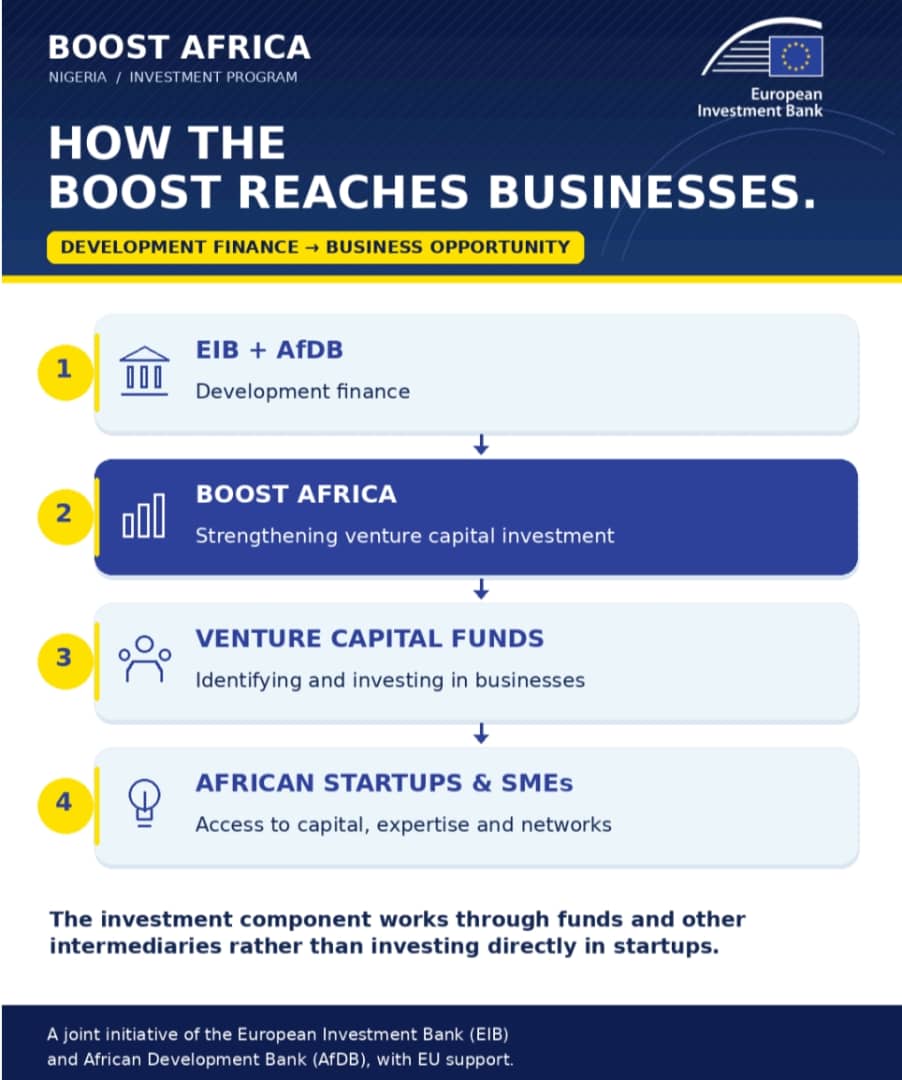
Boost Africa connects development finance with African businesses through venture capital funds backed by the EIB, AfDB and European Union
Africa’s startup ecosystem continues to attract attention from international development institutions and private investors, but access to suitable financing remains a major obstacle for many young businesses.

Through Boost Africa, the European Investment Bank (EIB), the African Development Bank (AfDB) and the European Union (EU) are supporting an investment model designed to bridge that gap and help promising African companies reach new markets.
Also read:Oyo 2027: Alli Proposes ₦10bn Youth Fund
The initiative, launched in 2016, is a joint programme of the EIB and AfDB, with financial support from the European Commission and the Organisation of African, Caribbean and Pacific States Secretariat.
Its central objective is to address financing gaps facing young businesses, particularly startups with innovative ideas but limited access to conventional funding.
Unlike traditional financing arrangements that provide money directly to individual businesses, Boost Africa operates largely through financial intermediaries, particularly venture capital funds.
These funds identify promising companies, assess their commercial potential and provide investment to help them develop products, strengthen operations and expand into new markets.
The infographic accompanying the initiative illustrates this process in four stages, beginning with development finance from the EIB and AfDB, followed by Boost Africa’s investment support, venture capital funds and, ultimately, African startups and small and medium-sized enterprises.
This structure allows public development finance to attract additional private investment while benefiting from the experience of professional fund managers.
A significant feature of the programme is its use of blended finance, including junior investment tranches that help absorb some of the risks associated with venture capital investments. The arrangement is designed to encourage other investors to commit resources to African businesses that might otherwise struggle to secure early-stage financing.
The programme also recognises that access to money alone does not guarantee business success. Its technical assistance component provides support in areas such as financial management, corporate governance, regulatory compliance, talent acquisition, market research and business development.
These services are intended to help entrepreneurs build stronger organisations and prepare their companies for sustainable expansion.
According to the European Commission, Boost Africa had supported eight venture capital funds through investment structuring and fundraising by December 2025. The programme had committed €50 million to venture capital funds, which had collectively raised more than €800 million.
More than 60 startups and small businesses had received support through the funds by the end of 2024, while over 200 companies were expected to benefit as additional investments were made.
The programme had also contributed to 12,001 direct jobs by the end of 2024, with young people accounting for 90 per cent of those positions.
More recent figures reported by BusinessDay on 21 September 2026 indicate that Boost Africa had committed €78 million to six venture capital funds, which collectively mobilised €382 million.
More than 70 companies had benefited, creating or sustaining over 15,000 jobs, according to Edward Claxton, Head of the EIB Regional Hub for East Africa.
Claxton highlighted the importance of private investment in driving economic development, stating: “The private sector is a very important sector; it’s the key driver of economic growth and a key driver of job creation.”
The initiative supports businesses across several sectors, including financial technology, agriculture, healthcare, education, renewable energy and digital services.
Its emphasis on young people and women also reflects an effort to make investment opportunities more accessible to entrepreneurs who have traditionally faced difficulties securing capital.
One example highlighted through the programme is Daya, a Nigerian financial technology company developing solutions to simplify international payments for African businesses.
Founded in 2025 by Tomiwa ‘Aleph’ Lasebikan and Paul Joe, Daya is working to address challenges associated with cross-border transactions, including expensive foreign exchange services, fragmented payment infrastructure and delays in international settlements.
The company’s platform combines stablecoin technology with banking services to help businesses receive, hold and transfer money across international markets.
Daya’s journey is featured in a video released as part of the Boost Africa initiative, with its co-founders explaining the company’s development, ambitions and the role of investment in pursuing opportunities beyond Nigeria.
The company is identified in the accompanying programme feature as a beneficiary of investment channelled through Janngo Capital, a venture capital fund supported by Boost Africa.
The relationship illustrates how development finance can reach individual entrepreneurs through investment funds rather than direct financing from development institutions.
Janngo Capital, founded by technology entrepreneur Fatoumata Bâ, invests in African technology and technology-enabled businesses with the potential to address market challenges, improve access to essential services and create sustainable employment.
The fund targets sectors including healthcare, logistics, financial services, retail, agriculture and mobility, with a particular focus on women and young people.
In December 2020, the European Investment Bank announced a €15 million commitment to the Janngo Capital Startup Fund. The bank subsequently announced an additional €10 million investment in February 2022, bringing its announced commitment to €25 million.
Daya has also attracted funding from other investors. In June 2026, the Nigerian fintech company announced a $2.4 million pre-seed funding round led by Hivemind Capital, with participation from Lattice Fund, Alliance DAO, Aptos Foundation and Globelink Investment.
The funding was intended to support the expansion of its cross-border payments network and strengthen its financial infrastructure.
Beyond Daya, other businesses supported through the wider Boost Africa investment ecosystem demonstrate the programme’s potential to address practical economic challenges.
In Kenya, Shamba Pride has benefited from investment and business development support, while Power Internet is working to improve access to affordable internet services in underserved communities.
Samuel Munguti, chief executive of Shamba Pride, has also highlighted the importance of combining financial investment with business expertise.
“When you leverage and unlock the potential of what capital can do, that’s one, and also what human capital can do,” Munguti said in an interview published by BusinessDay.
His observation reflects a central principle of the initiative: growing businesses need more than funding. They also require sound management, access to markets, experienced advisers and the capacity to compete in increasingly demanding commercial environments.
For African entrepreneurs, the distinction is particularly important. Many promising startups struggle to secure financing because they lack the collateral, established cash flows or financial records traditionally required by commercial banks.
By working through venture capital funds, Boost Africa seeks to create alternative pathways for such businesses to attract investment and develop their commercial potential.
The programme’s longer-term ambition is to strengthen Africa’s investment ecosystem so that venture capital funds can eventually attract private investors and finance new businesses without relying continuously on development finance support.
Daya’s experience provides a practical illustration of how this investment model can connect African entrepreneurship with wider market opportunities.
As its founders pursue their ambition of improving international financial connectivity, the broader Boost Africa initiative is seeking to demonstrate how strategic partnerships, development finance and private investment can help turn promising business ideas into sustainable enterprises.
Also read:Oyo 2027: Alli Proposes ₦10bn Youth Fund
The underlying message is that Africa’s next generation of successful businesses will require not only entrepreneurial ambition but also the financial resources, professional expertise and networks needed to grow beyond their initial markets.
Watch Daya’s Boost Africa story:
[Watch the video featuring Daya’s co-founders and their business journey](https://youtu.be/2U-EIoN-VgA?utm_source=chatgpt.com).



The Nigerian Computer Society and Green Lunar Nigeria are strengthening ties to promote digital innovation, professional development and technology growth

Tinubu defends fresh loans to fund infrastructure and achieve a $1tn economy by 2030 as the NLC demands accountability over Nigeria’s debt

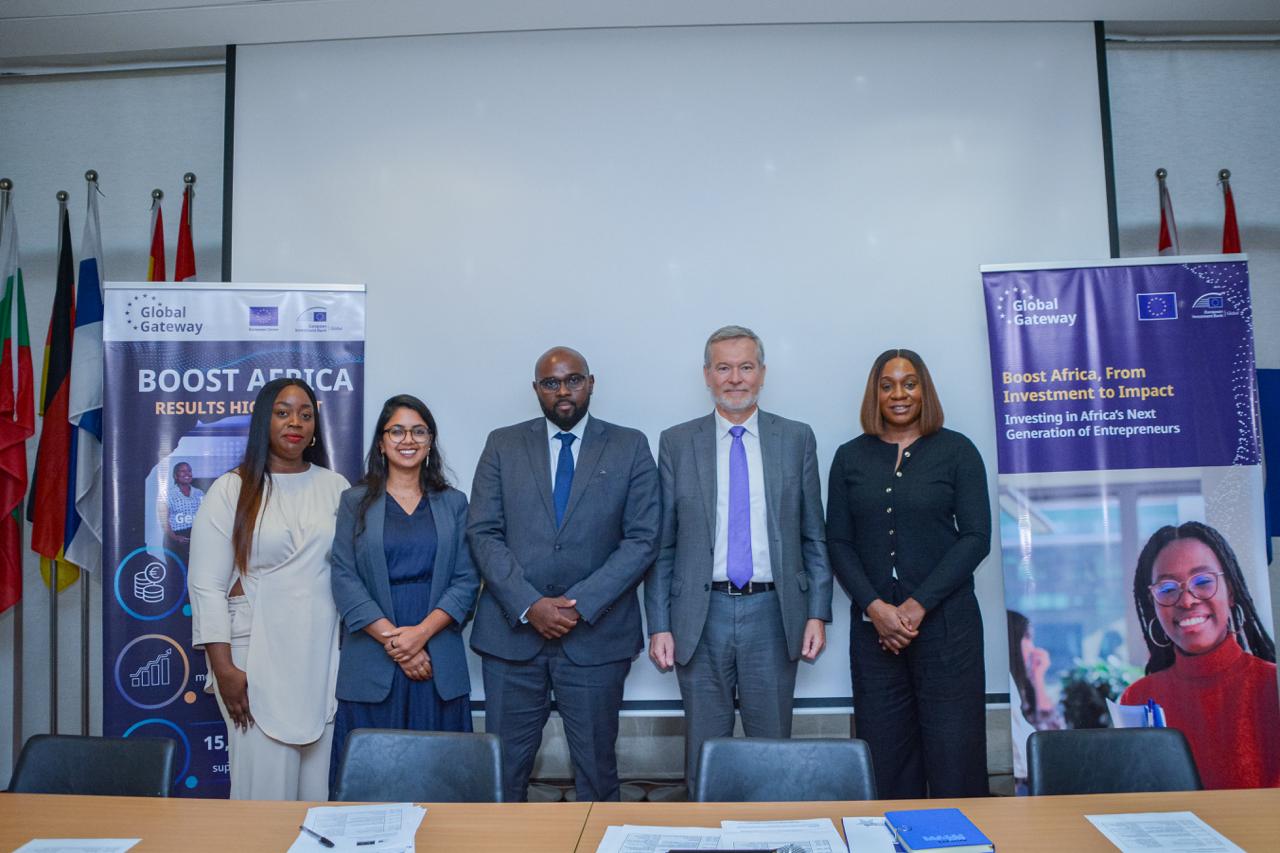
Boost Africa, a joint initiative of the European Investment Bank (EIB) and the African Development Bank (AfDB), supported by the European Union, is launching “From Capital to Impact,” a communications campaign highlighting the achievements of the initiative and the experiences of innovative Nigerian businesses supported through its venture capital investments.
Running from 1 November to 31 December 2026, the campaign will bring the impact of Boost Africa closer to the public through entrepreneurial success stories, investment insights, digital storytelling and media engagement.
Launched to address financing challenges facing innovative African businesses, Boost Africa has helped strengthen the continent’s venture capital ecosystem by investing in funds that provide financing and strategic support to promising startups and growing enterprises.
The initiative demonstrates how development finance can help mobilise private investment and enable businesses to develop solutions, expand operations, reach new markets and create employment opportunities.
Putting Businesses and People Behind the Numbers
At the heart of the campaign are stories of Nigerian businesses whose growth journeys illustrate the wider impact of investment.
The campaign will feature companies including Daya, ChipMango and TradeDepot, highlighting their innovations, entrepreneurial journeys and experiences working with venture capital funds supported by Boost Africa.
From developing cross-border financial infrastructure to strengthening digital commerce and creating opportunities for technology talent, these businesses demonstrate how investment can support solutions to real economic and societal challenges.
Through founder interviews, beneficiary success-story videos, digital content and editorial features, the campaign will explore not only the financing received by businesses but also the expertise, networks and strategic support that help them grow.
From Investment to Measurable Impact
Boost Africa’s achievements extend beyond the capital committed to venture funds.
According to EIB-reported results as of December 2023, the initiative had invested €88 million, supported approximately 15,000 jobs and helped mobilise nearly €400 million in additional investment across Africa.
These figures illustrate the potential of development finance to catalyse private investment and strengthen the businesses contributing to Africa’s economic transformation.
The campaign will connect these broader achievements with the experiences of Nigerian entrepreneurs, investors, employees and customers, demonstrating how investment translates into tangible opportunities.
Amplifying Africa’s Entrepreneurial Success Stories
The From Capital to Impact campaign will feature a coordinated programme of social media
storytelling, video documentaries, thought-leadership articles and online media publications.
It will also provide perspectives from venture capital fund managers on the importance of patient capital, technical expertise, business networks and investment partnerships in helping African enterprises scale.
By making investment outcomes more visible and accessible, the campaign aims to strengthen public understanding of Boost Africa’s contribution to entrepreneurship, innovation and sustainable economic development.
The central message is simple: the true value of investment is reflected not only in the capital deployed, but in the businesses strengthened, opportunities created and impact made possible.
About Boost Africa
Boost Africa is a joint initiative of the European Investment Bank and the African Development Bank, supported by the European Union. The initiative promotes
entrepreneurship and innovation across Africa by supporting venture capital funds investing in innovative startups and growing businesses, alongside complementary technical assistance and ecosystem support.
-
Politics3 years ago
13 Ondo Assembly Members Disown Endorsement of Aiyedatiwa
-
Politics3 years ago
APC Group, Ondo Govt, Quarrel Over Money for Endorsement
-

 Trending News6 years ago
Stop unsavoury, inciting statements – DSS warns
-

 Others5 years ago
Adron Homes Celebrates 10 Years Of Housing Excellence
-

 Humanity5 years ago
President Buhari Commiserates With Ambassador Maureen Tamuno Over The Loss Of Her Father
-

 Others7 years ago
EX- CUSTOMS BOSS, IBRAHIM MERA’S DWINDLING FAME
-

 Business3 years ago
Bigi Carbonated Soft Drinks Treats 40 Consumers to an Epic Easter Movie Hangout
-

 Business2 years ago
Wema Bank Shines at Global SME Finance Forum Conference Awards 2024 …Awarded: • SME Financier of the Year (Africa) • Platinum Award for Best Financier for Women Entrepreneurs (Africa)