
Business
Oyetola Woos Investors to Nigeria’s Catfish Industry

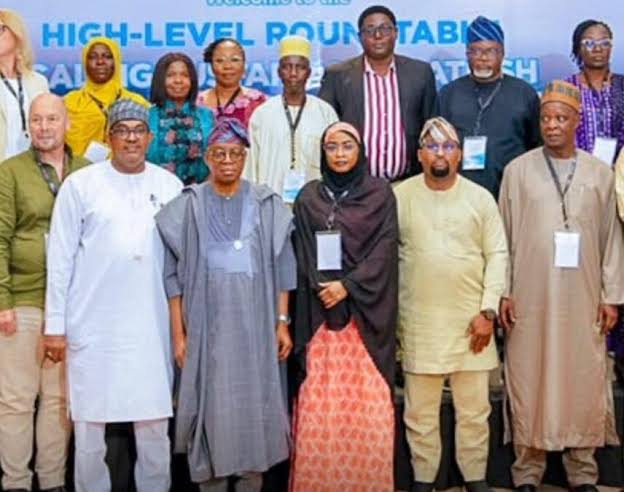
Oyetola woos investors to Nigeria’s catfish industry, highlighting a 2.2 million-tonne fish supply gap and opportunities across aquaculture
The Minister of Marine and Blue Economy, Adegboyega Oyetola, has called on investors and financial institutions to increase investment in Nigeria’s catfish industry, describing the country’s fish supply deficit as an opportunity to expand domestic production, strengthen food security and create jobs.
Also read:Obasa Gives cash gift to 500 Lagos Public School Students

Oyetola made the appeal on Wednesday, November 11, 2026, at the High-Level Roundtable on Scaling Sustainable Catfish Value Chain Transformation, organised under the Fisheries and Aquaculture for Africa, the Caribbean and the Pacific (FISH4ACP) programme.
The minister said Nigeria required approximately 3.6 million metric tonnes of fish annually, while domestic production from all sources stood at about 1.4 million metric tonnes, leaving a shortfall of roughly 2.2 million tonnes.
He argued that closing the gap would create opportunities for local fish farmers, entrepreneurs, manufacturers and financial institutions while reducing the country’s dependence on imported fish.
“Expanding domestic fish production is an economic and food security imperative.
It offers an opportunity to strengthen domestic food supply, reduce dependence on fish imports, stimulate enterprise development and create sustainable livelihoods across the country,” Oyetola said.
Nigeria is already one of Africa’s leading aquaculture producers and a major producer of farmed African catfish.
However, Oyetola said the sector’s economic potential extended far beyond fish farming.
He identified hatcheries, feed production, equipment manufacturing, transportation, processing, cold-chain services and fish trading as areas capable of attracting investment and supporting businesses across the value chain.
“Investment in aquaculture has a multiplier effect, creating opportunities and value across several interconnected sectors of the economy,” he said.
The minister, however, cautioned that increasing the number of fish farms alone would not be enough to address the production deficit.
He called for coordinated investment in the entire production chain, particularly in quality fingerlings, affordable feed, financing, fish health management, reliable markets and modern infrastructure.
Feed and energy costs remain major challenges for fish farmers, alongside inconsistent supplies of quality fingerlings, inadequate fish health services, weak biosecurity and limited processing and cold-storage facilities.
Oyetola said these constraints also represented commercial opportunities for investors willing to establish modern hatcheries, feed mills, processing plants and cold-chain infrastructure.
He also urged financial institutions to develop lending arrangements that reflect the production cycles and cash-flow realities of aquaculture businesses.
“The timing of disbursement, repayment schedules and cost of credit must reflect the production cycle and cash-flow patterns of fish farming enterprises,” he said.
According to him, viable fish farming businesses should not be held back by loan conditions that fail to recognise the time required to raise fish and generate revenue.
Oyetola commended the Food and Agriculture Organisation (FAO), the European Union and the German Government for supporting Nigeria’s catfish value chain through the FISH4ACP programme.
He said the initiative had identified major obstacles to industry growth and supported interventions involving alternative feed ingredients, including black soldier fly larvae, improved hatchery management, broodstock development, business planning and digital farm management.
The minister also pledged that the Federal Government would strengthen collaboration with state governments, regulatory agencies, private businesses and development finance institutions to improve the investment climate.
He said the government would pursue better access to affordable finance, improved industry data, research, quality assurance and technical support to encourage sustainable expansion.
Beyond individual businesses, Oyetola advocated the development of aquaculture clusters and cooperative arrangements that would allow farmers to share infrastructure, reduce operating costs and gain easier access to essential services.
He further called for greater participation by women and young people, particularly through small and medium-scale enterprises, arguing that the industry’s expansion should deliver wider economic benefits without compromising environmental sustainability.
FISH4ACP is an initiative of the Organisation of African, Caribbean and Pacific States, implemented by the FAO with funding from the European Union and the German Federal Ministry for Economic Cooperation and Development.
The programme supports more productive, inclusive and sustainable fisheries and aquaculture value chains in 12 countries across Africa, the Caribbean and the Pacific.
In Nigeria, its work focuses on improving the catfish value chain through better farming practices, access to finance, technology adoption, stronger farm management and closer cooperation among industry stakeholders.
With a reported annual fish supply gap of about 2.2 million metric tonnes, the minister’s appeal places aquaculture among the sectors with significant potential to contribute to Nigeria’s food supply and economic diversification.
Also read:Obasa Gives cash gift to 500 Lagos Public School Students
Whether that potential is fully realised will depend on sustained investment, affordable financing and improvements across the entire production and distribution chain.


Africa’s technology ecosystem has produced innovative fintech, e-commerce and digital service companies. But there is another important part of the technology value chain that deserves attention: semiconductor engineering.
ChipMango is developing capabilities in chip design, verification and emerging hardware technologies. Its story demonstrates the kind of specialised innovation that deserves greater investment and attention.
Through Boost Africa, a joint initiative of the European Investment Bank (EIB) and African Development Bank, supported by the EU, the EIB helps channel investment through venture capital funds to innovative African enterprises. Discover how this
investment ecosystem is helping create opportunities for businesses working on Africa’s technological future.
Watch the video:
From smartphones and laptops to vehicles and AI systems, semiconductors are essential to modern technology. Yet, the expertise required to design these components remains concentrated in a relatively small number of global
technology hubs.
ChipMango is working to expand access to semiconductor engineering skills and commercial opportunities for African engineers. Its journey also highlights why initiatives such as EIB’s Boost Africa matter. By supporting venture capital funds investing in innovative African businesses, Boost Africa helps strengthen the financing ecosystem needed to develop specialised technology companies. Watch the video to learn how ChipMango is contributing to Africa’s place in the global technology industry.
Watch the video:
Business
ChipMango: Building Nigeria’s Semiconductor Engineering Capabilities for the Global Tech Industry

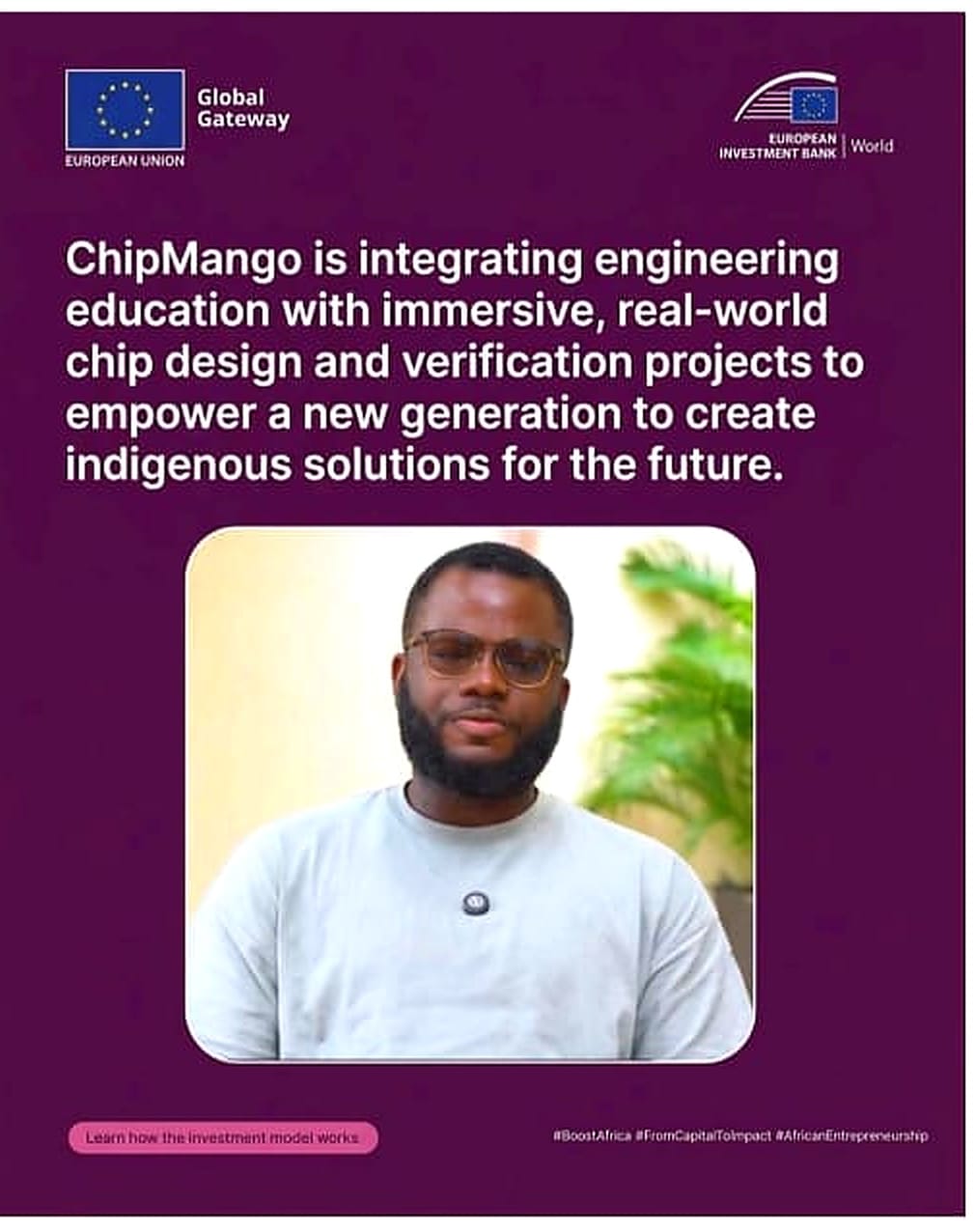
Africa’s participation in the global technology industry should go beyond
using digital products and services.
African engineers also have an opportunity to contribute to the technologies themselves, including the semiconductors that power smartphones, computers, vehicles and artificial intelligence.
Nigerian semiconductor technology company ChipMango is working to develop this capability by connecting engineering education with practical chip-design and verification projects.
Through its investment in African venture capital funds, the European Investment Bank (EIB), under the Boost Africa
initiative, is helping strengthen the ecosystem that supports innovative businesses like ChipMango.
Boost Africa is a joint initiative of the EIB and African Development Bank, supported by the European Union.
Watch the video to discover ChipMango’s story and the opportunities it is helping create.
Watch the video:
-
Politics3 years ago
13 Ondo Assembly Members Disown Endorsement of Aiyedatiwa
-
Politics3 years ago
APC Group, Ondo Govt, Quarrel Over Money for Endorsement
-

 Trending News6 years ago
Stop unsavoury, inciting statements – DSS warns
-

 Others5 years ago
Adron Homes Celebrates 10 Years Of Housing Excellence
-

 Humanity5 years ago
President Buhari Commiserates With Ambassador Maureen Tamuno Over The Loss Of Her Father
-

 Others7 years ago
EX- CUSTOMS BOSS, IBRAHIM MERA’S DWINDLING FAME
-

 Business3 years ago
Bigi Carbonated Soft Drinks Treats 40 Consumers to an Epic Easter Movie Hangout
-

 Business2 years ago
Wema Bank Shines at Global SME Finance Forum Conference Awards 2024 …Awarded: • SME Financier of the Year (Africa) • Platinum Award for Best Financier for Women Entrepreneurs (Africa)