
News
IGP Disu Gives Police Commissioners 72-Hour Deadline

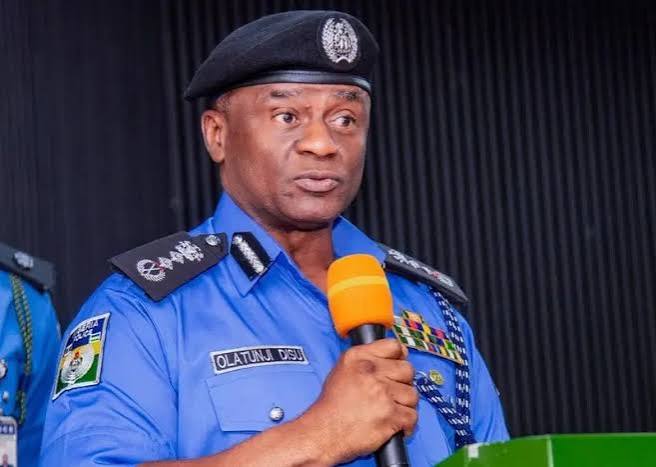
IGP Disu gives commissioners 72 hours to submit security threat assessments as police report 611 arrests and 95 rescued kidnap victims
The Inspector-General of Police, Olatunji Disu, has given Commissioners of Police in states facing security challenges 72 hours to submit updated threat assessments and identify the operational resources required to tackle insecurity across their commands.
Also read:Kebbi Government Supports IDP Mother of Triplets

Disu issued the directive on Wednesday, November 11, 2026, during a conference with police strategic managers in Abuja, where he acknowledged that bandit attacks were continuing in parts of the country despite recent operational successes.
The IGP said the Nigeria Police Force had arrested 611 suspected criminals across the federation within one month, rescued 95 kidnap victims and recovered firearms, ammunition and stolen vehicles.
Giving a breakdown of the arrests, Disu said 218 suspects were apprehended for alleged banditry and terrorism, while 85 were arrested for suspected armed robbery.
He added that 129 suspects were arrested over murder and culpable homicide, 59 over alleged kidnapping and 120 over suspected cultism.
The police also recovered 306 assorted firearms, 630 rounds of ammunition of various calibres and 116 stolen vehicles during the period.
“I commend all officers and men whose courage, professionalism and commitment have contributed to these achievements,” the IGP said.
However, Disu warned that the figures should not be mistaken for a complete picture of the security situation, particularly in communities still experiencing attacks.
“I must now speak plainly. The statistics I have just read represent progress, but they do not tell the full story.
Bandit attacks are ongoing in some states across the Federation, and communities in those areas continue to face real threats to their safety and livelihoods,” he said.
“This is a challenge we are confronting directly, and I will not allow this conference to pretend otherwise.”
He consequently directed commissioners in affected states to submit detailed security assessments and operational requirements to Force Headquarters within 72 hours.
The reports, he said, must identify specific threats and the resources needed to address them, rather than contain general descriptions of insecurity.
“I want specifics, not generalities,” Disu stressed.
The IGP also directed the Deputy Inspector-General of Police in charge of Operations to coordinate the immediate deployment of additional personnel, mobility assets and air support to the most affected areas in consultation with the relevant commands.
He ordered police formations to sustain intelligence-led operations and maintain standing operational plans for locations identified as high-risk areas.
Disu further emphasised the importance of community intelligence, directing officers to strengthen cooperation with traditional rulers, village heads, hunters’ associations and local vigilante groups.
“Community intelligence must be deepened. Traditional rulers, village heads, hunters’ associations and local vigilante groups in affected areas must be engaged and incorporated into our intelligence architecture,” he said.
“The people know who the bandits are. We must give them the confidence to tell us.”
Beyond the immediate security concerns, the police chief addressed preparations for the 2027 general elections, reaffirming that the Nigeria Police Force would remain politically neutral.
He insisted that police officers must not use their positions to advance the interests of political parties or candidates, stressing that their responsibility was to protect the rights of all Nigerians.
“Our allegiance is to the Constitution and the Nigerian people,” he said.
Disu maintained that every political party, candidate, supporter and eligible voter was entitled to equal protection under the law.
He also warned that officers who collaborated with political actors, encouraged thuggery, compromised electoral activities or interfered with voters’ rights would face disciplinary action.
“Any officer found to be colluding with political actors, facilitating thuggery, compromising the integrity of the electoral process or interfering with the rights of voters will be disciplined according to the law,” he said.
The 72-hour directive places immediate responsibility on affected state commands to provide a clearer picture of security threats and the resources required to respond.
Also read:Kebbi Government Supports IDP Mother of Triplets
It also signals the police leadership’s intention to combine operational deployments with intelligence gathering and community cooperation as the country approaches another general election.



Balogun traders protest the disputed BBA election timetable, demanding a caretaker committee and a constitutionally approved process

NYC Lagos executives pledge action against fake food, drugs and drinks, cultism and unemployment following the inauguration of the association’s new leaders

Abia Town Unions awards recognise Sun MD Onuoha Ukeh and other prominent indigenes as the association launches a ₦500m Abia House project in Lagos
-
Politics3 years ago
13 Ondo Assembly Members Disown Endorsement of Aiyedatiwa
-
Politics3 years ago
APC Group, Ondo Govt, Quarrel Over Money for Endorsement
-

 Trending News6 years ago
Stop unsavoury, inciting statements – DSS warns
-

 Others5 years ago
Adron Homes Celebrates 10 Years Of Housing Excellence
-

 Humanity5 years ago
President Buhari Commiserates With Ambassador Maureen Tamuno Over The Loss Of Her Father
-

 Others7 years ago
EX- CUSTOMS BOSS, IBRAHIM MERA’S DWINDLING FAME
-

 Business3 years ago
Bigi Carbonated Soft Drinks Treats 40 Consumers to an Epic Easter Movie Hangout
-

 Business2 years ago
Wema Bank Shines at Global SME Finance Forum Conference Awards 2024 …Awarded: • SME Financier of the Year (Africa) • Platinum Award for Best Financier for Women Entrepreneurs (Africa)