
Politics
ADC Presidential Aspirant 2027 Race Wide Open as David Mark Breaks Silence
ADC presidential aspirant 2027 not yet chosen, says interim chairman David Mark, promising transparency and unity to address Nigeria’s major challenges.


ADC presidential aspirant 2027 not yet chosen, says interim chairman David Mark, promising transparency and unity to address Nigeria’s major challenges

ADC presidential aspirant 2027 has not been decided, according to the party’s interim national chairman, David Mark. Speaking on Tuesday in Abuja, Mark addressed stakeholders from the Kogi chapter of the African Democratic Congress (ADC), making it clear that the party remains neutral at this stage.
Also read: ADC Mourns Ex-presidential Candidate, Mailafia
The former Senate President stressed that the ADC’s priority is to build a platform that reflects the aspirations of everyday Nigerians. According to him, the party is focused on creating a truly democratic environment, one where every voice counts and leadership is earned, not handed down.
“We have no preferred or favourite presidential aspirant,” Mark stated. “The ADC is not interested in coronations. What we want is a process that produces the best candidate through open engagement with the people.”
He further explained that the decision to remain neutral stems from the desire to put the nation’s interest ahead of personal ambitions. He warned that Nigeria stands on a dangerous edge and that the nation needs strong leadership, not divisive politics.
“We are doing this because we do not want this great ship called Nigeria to sink, because if we do not rise up now and it sank, all of us will be affected,” he said.
Mark, a former military governor and long-serving legislator, assured party members that no aspirant will be given undue advantage. His message was one of inclusion, equity, and national urgency.
“All members of the party are equal stakeholders, equal joiners, and equal owners,” he added, echoing the core values of the ADC’s founding principles.
The ADC’s position is especially significant as Nigeria’s political climate grows increasingly tense ahead of the 2027 general elections. With major parties already aligning behind known figures, the ADC’s decision not to endorse anyone yet sets it apart. It also leaves the door open for new faces and ideas to emerge, providing an alternative to the usual political structure.
At the meeting in Abuja, Mark urged unity among members and warned against internal divisions. He called on all party leaders to rise above personal disagreements and work together to provide Nigerians with real solutions.
“Let us avoid attacking one another. That kind of energy should be redirected towards addressing insecurity, unemployment, and the cost of living,” he said.
Insecurity was a major point of concern during the meeting. Mark noted that Nigeria’s challenges are deeply rooted and require more than rhetoric. He promised that, if given the mandate, the ADC would prioritise national security and governance reform.
The ADC leader expressed disappointment in the current political culture, describing it as transactional and destructive. “Too many politicians see office as a prize, not a responsibility. That is the culture we are determined to change,” he remarked.
Mark concluded his address by reaffirming the ADC’s commitment to transparency, fairness, and democratic values. He encouraged young Nigerians, professionals, and marginalised groups to consider the party as a home for political participation. “This platform belongs to all who want to build, not destroy,” he declared.
As the political calendar slowly moves toward 2027, the ADC remains one of the few parties yet to signal a direction in the presidential race.
The announcement that there is no preferred ADC presidential aspirant 2027 confirms the party’s intention to hold an open and competitive process.
Also read: Atiku reportedly offers Peter Obi VP slot in 2027 coalition bid
Whether this approach will attract strong contenders or simply delay the inevitable remains to be seen. For now, the party has taken a principled stance in a landscape often marred by premature endorsements and closed-door deals.


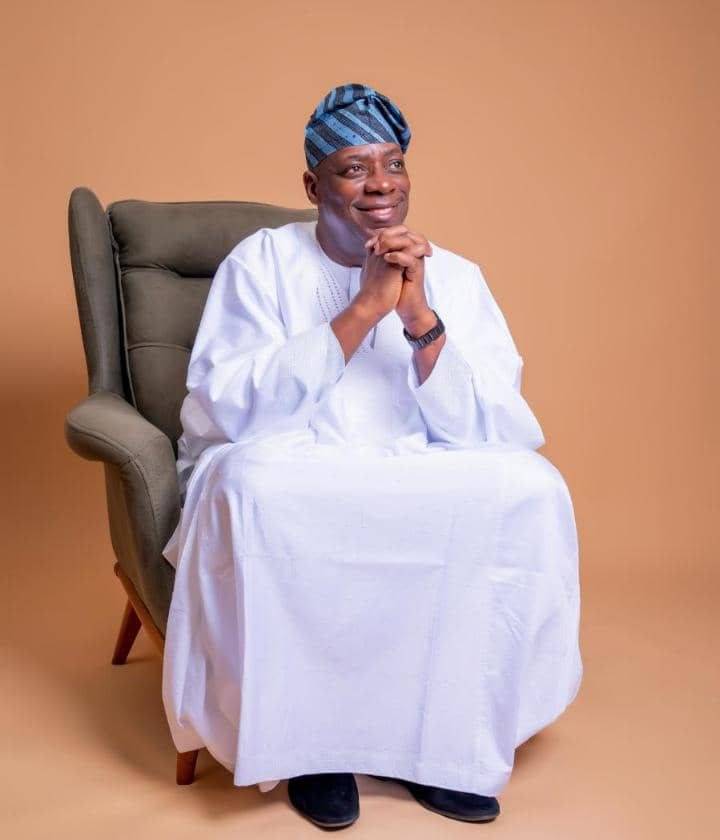
Hon Orekoya Somolu reelection mandate sees Lagos lawmaker thank residents after victory, promising improved service delivery and development
By Adebayo Adeoye
All is clearly not well within the ranks of the All Progressives Congress in Bauchi State. What should have been a defining moment for party unity and strategic positioning ahead of the 2027 elections has instead deepened mistrust, widened internal divisions and exposed dangerous cracks within the party. For an opposition party still struggling to regain political momentum in one of Nigeria’s most competitive states, the timing could hardly be worse. Rather than serving as a launchpad for renewed ambition, the governorship primary has become a stark reflection of the APC’s internal dysfunction — one that could shape its political fortunes long before voters head to the polls.
The so called Last Friday’s governorship primary, which produced former Governor Mohammed Abubakar as candidate, was expected to rally party faithful around a credible challenger for 2027. Instead, it has triggered widespread controversy and bitter reactions across the party. What ought to have strengthened internal cohesion has, in many quarters, been condemned as deeply flawed, opaque and lacking the transparency required to inspire confidence among party members. Allegations of backroom deals, imposed outcomes and the sidelining of longstanding stakeholders have rapidly evolved from whispers into open accusations the party leadership can no longer ignore. The resulting credibility crisis is not merely reputational; it strikes at the institutional foundations necessary for any serious electoral campaign.
For many observers and loyal party members, the exercise represented more than a routine internal contest. It was a test of the APC’s democratic credentials and its readiness to reposition itself after years of electoral setbacks in Bauchi. The party had a rare opportunity to demonstrate discipline, inclusiveness and a genuine commitment to internal democracy. It had the chance to show voters that it had learned from past mistakes and was prepared to offer a coherent alternative to the ruling Peoples Democratic Party. Instead, the primary has left many supporters frustrated, alienated and uncertain about the party’s direction. What should have united the APC has instead pushed it closer to fragmentation.
Concerns continue to grow over what critics describe as the complete absence of participatory democracy in favour of a forced consensus process. These concerns were reinforced by comments attributed to the endorsed candidate, Mohammed Abubakar, and by the controversial declaration of results announced by retired AIG John Abang, which many party stakeholders insist reflected a predetermined outcome rather than a credible electoral exercise.
The grievances extend far beyond the immediate contestants and their campaign teams. Ward officials, delegates and grassroots mobilisers — the very backbone of electoral politics in Nigeria — feel sidelined and betrayed after investing time, loyalty and resources into a process they believe disregarded their voices. These are the individuals who organise communities, mobilise voters and translate party messaging into electoral support. When such actors lose faith in the process, the consequences are rarely passive. In closely contested political environments like Bauchi, disillusionment at the grassroots can prove decisive.
The broader political context makes the crisis even more consequential. Bauchi has long been a battleground state where power has alternated between the APC and the PDP. Governor Bala Mohammed has significantly consolidated the PDP’s political networks and influence across the state. Against that backdrop, the APC’s most realistic path to electoral competitiveness in 2027 depended on presenting a united front, a credible candidate and a compelling alternative vision. The governorship primary was therefore not just an internal exercise; it was a strategic moment capable of defining the party’s electoral future. Instead, it has handed the ruling party an early political advantage.
More troubling still is the growing fear that unresolved grievances could trigger defections, weaken party cohesion and embolden rival political forces ahead of 2027. Nigerian political history repeatedly shows that opposition parties rarely succeed when consumed by internal divisions and leadership disputes. In many cases, electoral defeats stem less from the popularity of opponents than from unresolved internal crises allowed to fester unchecked. Bauchi itself has witnessed this pattern before, and the APC now risks repeating it.
Indeed, the party faces one of its most consequential internal tests in recent years. Influential figures across the state are reportedly disenchanted with both the outcome of the primary and the manner in which it was conducted. Quiet consultations outside official party structures have already begun — often an early sign of possible realignments. In several local governments, ward executives are said to be demoralised and uncertain about committing themselves to a process they no longer trust. If left unresolved, the fallout could cripple grassroots mobilisation, weaken fundraising efforts and push influential stakeholders toward strategic defections, political abstention or alternative alliances.
For a party serious about reclaiming political relevance in Bauchi, unity cannot remain a slogan recited at press conferences while the conditions necessary for unity are undermined in practice. Reconciliation, dialogue and genuine inclusion must now become urgent priorities. That requires more than symbolic appeals for calm. It demands credible engagement with aggrieved aspirants, delegates and grassroots structures. It requires transparent mechanisms for addressing grievances and accountability for actions that have left the party more divided than before the primary.
The 2027 election is approaching quickly, and time is not on the APC’s side. The window for reconciliation and political recovery remains open, but not indefinitely. The party must now make a clear choice: unity with all its difficult compromises, or division with all its predictable consequences.
Politics
Araraume’s victory at the APC senatorial primary election: A resurgence of political structure in Imo North


-
Politics2 years ago
13 Ondo Assembly Members Disown Endorsement of Aiyedatiwa
-
Politics2 years ago
APC Group, Ondo Govt, Quarrel Over Money for Endorsement
-

 Trending News5 years ago
Stop unsavoury, inciting statements – DSS warns
-

 Others4 years ago
Adron Homes Celebrates 10 Years Of Housing Excellence
-

 Humanity4 years ago
President Buhari Commiserates With Ambassador Maureen Tamuno Over The Loss Of Her Father
-

 Others7 years ago
EX- CUSTOMS BOSS, IBRAHIM MERA’S DWINDLING FAME
-

 Business2 years ago
Bigi Carbonated Soft Drinks Treats 40 Consumers to an Epic Easter Movie Hangout
-

 Business2 years ago
Wema Bank Shines at Global SME Finance Forum Conference Awards 2024 …Awarded: • SME Financier of the Year (Africa) • Platinum Award for Best Financier for Women Entrepreneurs (Africa)