
Uncategorized
Top 10 Countries Offering Affordable Education Abroad


Discover 10 affordable countries for international students, with estimated tuition fees, living costs and study opportunities abroad
Choosing where to study abroad can be challenging, particularly for students seeking quality education without excessive tuition fees and living expenses.
Also read: FG to Review Foreign Scholarships and Focus on Nigerian Schools

From Asia to Europe and North America, several countries offer international students relatively affordable study options, scholarship opportunities and diverse cultural experiences.
Based on estimated tuition fees, living expenses and available academic opportunities, the following are 10 affordable countries for international students to consider.
1. Malaysia
Malaysia remains an attractive destination for international students because of its relatively affordable tuition fees, estimated at $4,000 to $12,000 annually.
Monthly living expenses range from about $330 to $660. The country also offers English-taught programmes in fields such as business, finance and engineering.
2. Poland
Poland offers tuition fees ranging from approximately $4,500 to $12,000 annually, while monthly living costs are estimated at $600 to $930.
Some programmes taught in Polish may be tuition-free for eligible students, depending on the institution and applicable conditions.
3. Hungary
Hungary is another option for students seeking affordable European education.
Annual tuition fees generally range from $5,000 to $12,000, with monthly living expenses estimated at $500 to $1,000.
International students may also qualify for government-funded scholarships.
4. Italy
Italy attracts international students through its public universities, varied academic programmes and financial assistance opportunities.
Tuition fees at public institutions can vary according to the university, course and student’s financial circumstances. Some universities also offer English-taught master’s programmes.
5. Portugal
Portugal offers a combination of European education and relatively manageable living expenses.
Annual tuition fees are estimated at $3,500 to $10,000, while monthly living costs range from approximately $600 to $900. However, Portuguese remains important for many undergraduate programmes.
6. France
France is known for its public university system, where government subsidies can help make education more affordable.
However, tuition fees for students from outside the European Union vary by institution and programme.
Monthly living expenses are estimated at $850 to $1,600, with Paris generally more expensive than other cities. Scholarships may help reduce the overall cost.
7. Czech Republic
The Czech Republic offers tuition-free study at public institutions for programmes taught in Czech, subject to eligibility requirements.
English-taught programmes generally cost between $4,500 and $11,000 annually, while monthly living expenses are estimated at $600 to $900.
8. Spain
Spain provides international students with a range of academic programmes and cultural experiences.
Tuition fees are estimated at $8,000 to $13,500 annually, while monthly living expenses typically range from $900 to $1,100, depending on the city and lifestyle.
9. Mexico
Mexico offers international students an alternative to more expensive study destinations.
Private university tuition fees are estimated at $6,000 to $12,000 annually, while monthly living expenses range from approximately $600 to $1,200.
Spanish is essential for many programmes, although some institutions offer courses in English.
10. Norway
Norway remains attractive because of its high standard of education and quality of life.
However, it is no longer generally tuition-free for students from outside the European Union and European Economic Area.
Tuition fees and living expenses can be high, so prospective students should check current university requirements and available scholarships before applying.
The cost of studying abroad varies according to the university, course, city and personal lifestyle.
Also read: FG to Review Foreign Scholarships and Focus on Nigerian Schools
Prospective students should confirm current tuition fees, visa requirements, scholarship eligibility and living expenses with their chosen institutions before making a decision.


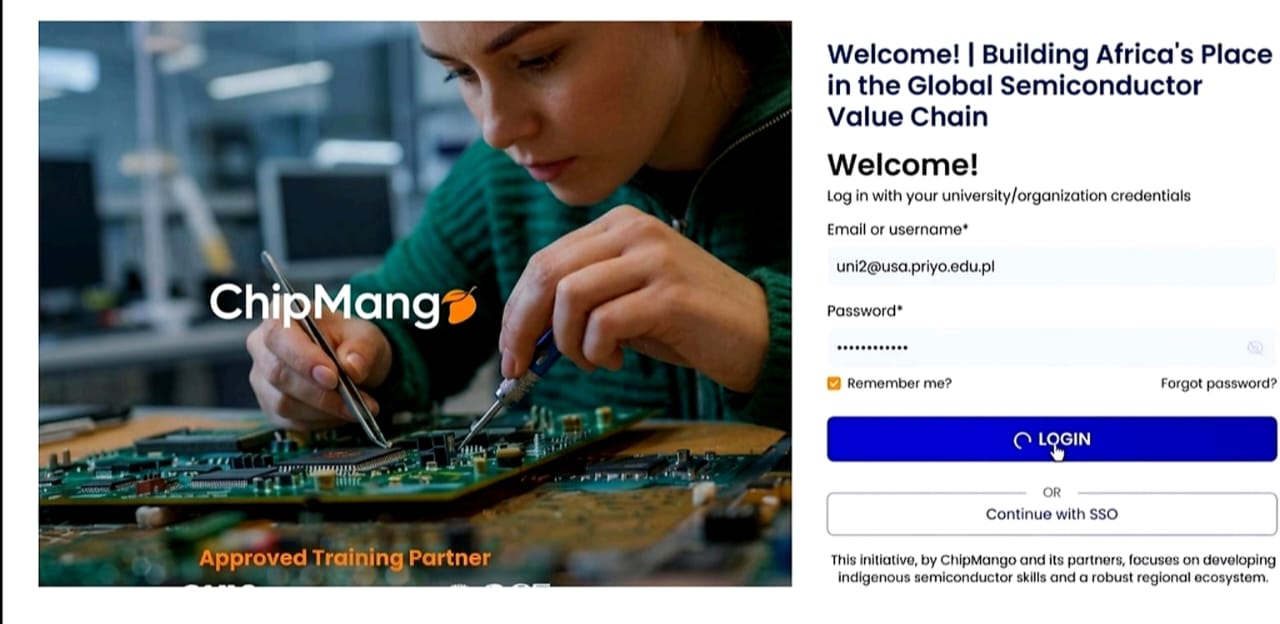
The global semiconductor industry involves several stages, from chip design and verification to manufacturing and
packaging. Africa has an opportunity to strengthen its participation in different parts of this value chain.
ChipMango is focusing on engineering talent, chip design, verification and emerging hardware technologies. Its work reflects the potential of African businesses to participate in specialised global industries. Through its Boost Africa initiative, the European Investment Bank (EIB), together with the African Development Bank and with EU support,
helps strengthen the venture capital ecosystem that finances innovative African companies.
Discover how ChipMango is contributing to the development of semiconductor capabilities in Africa.
Watch the video:

Fani-Kayode rejects Blue Silk after the Nigerian Law Society conferred its Senior Counsel designation on him at its 2026 annual conference.


Grey CEO Idorenyin Obong says intra-African trade payments should bypass the dollar, as the fintech expands direct currency conversion routes
African businesses should be able to pay suppliers across the continent without routing transactions through the United States dollar, Grey co-founder and Chief Executive Officer, Idorenyin Obong, has said, as the cross-border payments company expands its currency conversion infrastructure.
Also read: CAF Restores AFCON to Every Two Years After Reversing Four-Year Plan
Obong made the remarks on Thursday, October 29, on the sidelines of Moonshot by TechCabal 2026, a two-day technology conference held at the National Theatre in Lagos.
He said reliance on intermediary currencies, particularly the dollar, adds complexity to transactions between African countries and can worsen existing foreign exchange liquidity challenges.
According to him, Grey has developed direct currency conversion routes that allow payments between selected African currencies without requiring businesses to convert their funds into dollars first.
“Most times, if you’re trading within Africa, there’s always some form of intermediary currency,” Obong said.
“We’ve built out these currency pairs, these exotic currency pairs, such that you never have to go in between to the USD.”
The issue is significant for businesses operating across African markets, where differences in currency availability, banking arrangements and payment infrastructure can make cross-border transactions expensive or unpredictable.
For example, a Nigerian company paying a supplier in Kenya may traditionally have to convert naira into dollars before exchanging the dollars for Kenyan shillings.
Each conversion introduces another stage in the transaction, potentially increasing costs and exposing the payment to additional delays.
Grey says its direct currency routes are designed to simplify that process by connecting supported currencies more efficiently.
The company said its payment infrastructure currently enables customers in Nigeria, Kenya and Ghana to send and receive money, with liquidity arrangements supporting transactions in multiple currencies.
It also said payments can be settled in real time across several supported currencies.
However, the availability of direct routes does not mean that all African currencies can be exchanged freely or that every transaction will avoid dollar intermediation.
Currency coverage, liquidity and regulatory requirements remain important considerations in cross-border payments.
Obong identified foreign exchange liquidity and payment reliability as two of the biggest difficulties confronting businesses that trade internationally.
He said uncertainty over when suppliers will receive their money can disrupt procurement schedules and weaken commercial relationships.
Grey has therefore invested in infrastructure intended to improve the predictability of international payouts, including providing customers with estimated delivery times.
“We spent the last six years building the infrastructure to ensure that we’re delivering at the last mile at 99.99% to our customers,” Obong said.
He also disclosed that Grey had processed more than 40 million transactions and nearly $5bn in payments since the company began operations in 2020.
The company has expanded beyond individual currency exchange services into business payments and international salary management.
Its Grey Business platform, designed for startups and small businesses, has processed nearly $100m since launching in February, according to the company.
Grey previously reported that the business platform processed $61.4m in its first four months, with demand partly driven by stablecoin-based payments.
The fintech has also extended its payout services to China, allowing businesses to pay suppliers in Chinese yuan.
The expansion reflects its effort to serve companies whose international supply chains extend beyond African markets.
Grey’s development has followed changes in customer demand since its launch in 2020.
Obong said the company initially operated as a currency exchange service but discovered that many customers were primarily using the platform to receive salaries earned abroad.
“Most of our customers were using Grey to receive their foreign salary. And so we decided to build what I would call simply a salary account for these customers,” he said.
That shift led to Paycheck, a product that enables professionals earning in dollars, pounds and euros to receive and manage their salaries.
The service also integrates with Pouch, Grey’s savings feature, which allows users to set aside money for goals such as education, travel and major purchases.
The company’s expansion comes amid wider efforts to improve financial connectivity across African markets.
The African Continental Free Trade Area (AfCFTA), which seeks to create a more integrated continental market, has made trade facilitation, payment systems and currency-related barriers important parts of the conversation about intra-African commerce.
One initiative in this area is the Pan-African Payment and Settlement System (PAPSS), developed to facilitate cross-border payments in local African currencies.
The system is intended to reduce reliance on third-party currencies and make intra-African trade payments more efficient.
Grey’s direct currency routes address a related challenge through its own commercial payment infrastructure, although the company’s services and PAPSS are separate initiatives with different operating models.
Obong’s comments also came as the company faced questions about customer experiences, including difficulties accessing foreign currency accounts and obtaining support.
Grey said it provides round-the-clock digital assistance and operates a physical office, while maintaining that online support is more effective for directing customer complaints to its distributed teams.
Grey was the headline sponsor of Moonshot by TechCabal 2026, held on October 28 and 29 in Lagos.
The conference brought together technology companies, investors, entrepreneurs and other industry participants to discuss innovation, investment and business opportunities across Africa.
For Grey, the ambition is to make international payments less complicated for businesses and individuals.
Also read: CAF Restores AFCON to Every Two Years After Reversing Four-Year Plan
Its push towards direct currency conversion reflects a broader question facing African commerce: how much more efficiently could companies trade across the continent if paying a supplier did not routinely require passing through the dollar?
-
Politics3 years ago
13 Ondo Assembly Members Disown Endorsement of Aiyedatiwa
-
Politics3 years ago
APC Group, Ondo Govt, Quarrel Over Money for Endorsement
-

 Trending News6 years ago
Stop unsavoury, inciting statements – DSS warns
-

 Others5 years ago
Adron Homes Celebrates 10 Years Of Housing Excellence
-

 Humanity5 years ago
President Buhari Commiserates With Ambassador Maureen Tamuno Over The Loss Of Her Father
-

 Others7 years ago
EX- CUSTOMS BOSS, IBRAHIM MERA’S DWINDLING FAME
-

 Business3 years ago
Bigi Carbonated Soft Drinks Treats 40 Consumers to an Epic Easter Movie Hangout
-

 Business2 years ago
Wema Bank Shines at Global SME Finance Forum Conference Awards 2024 …Awarded: • SME Financier of the Year (Africa) • Platinum Award for Best Financier for Women Entrepreneurs (Africa)