
Politics
Amb. Yusuf Maitama Tuggar: The Man of the People in Bauchi State

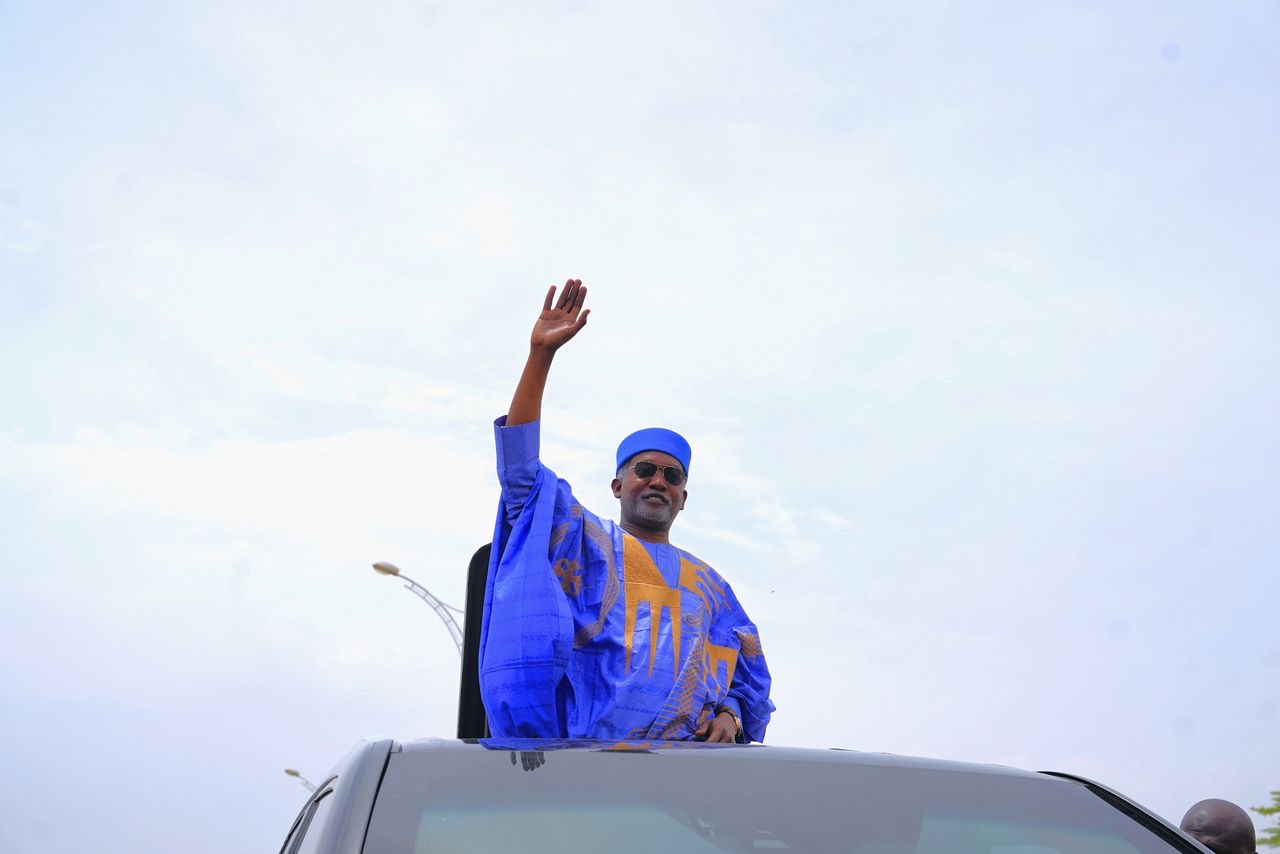
In politics, timing is everything. There are moments when a candidate merely contests for office, and there are moments when a candidate arrives as a response to a public mood already searching for expression. In Bauchi State today, supporters of Yusuf Maitama Tuggar believe his emergence belongs firmly in the latter category.

As the All Progressives Congress (APC) inches closer to its governorship primaries ahead of the next electoral cycle, the atmosphere within Bauchi’s political landscape has begun to shift in a manner difficult to ignore. Conversations in markets, within youth circles, among traditional institutions, and across professional communities increasingly revolve around one question: could Yusuf Maitama Tuggar represent the long-awaited break from a political culture many residents believe has kept the state trapped below its true potential?
For years, Bauchi has remained a state suspended between promise and underperformance. Endowed with vast agricultural opportunities, mineral resources, strategic commercial positioning, and one of the most politically conscious populations in northern Nigeria, it has nevertheless struggled to convert these advantages into broad developmental gains. Roads have been announced but abandoned midway. Healthcare facilities exist in policy documents more convincingly than in practical reality. Educational institutions continue to lose talent and competitiveness. Across many communities, there is a growing sense that governance has too often become an exercise in survival politics rather than visionary leadership.
It is against this backdrop that Tuggar’s candidacy has begun to attract unusual attention.
When the former Foreign Affairs Minister formally submitted his nomination and Declaration of Interest forms at the APC secretariat, the reactions that followed across parts of Bauchi were striking. Unlike the carefully choreographed rallies that have become routine within Nigerian politics, many observers described the response as spontaneous and organic. There were celebrations not merely from political loyalists but from ordinary supporters who appeared eager to identify with a figure they see as embodying competence, exposure, and administrative seriousness.
In many respects, Tuggar’s appeal lies precisely in the contrast he presents to the conventional political archetype.
Before becoming Foreign Affairs minister ,Tuggar built much of his public profile through diplomacy and institutional service. As Nigeria’s Ambassador to Germany, one of the country’s most strategically significant foreign postings, he represented Africa’s largest economy at the centre of Europe’s industrial and political architecture. During his tenure, he was involved in strengthening bilateral cooperation in areas ranging from trade and investment to security and migration policy.
Those familiar with his diplomatic career often describe him as disciplined, methodical, and intensely policy-driven — qualities not always commonly associated with Nigeria’s rough-and-tumble political environment. Associates say he possesses the rare ability to combine intellectual depth with political accessibility, a balance many politicians struggle to maintain.
Yet beyond personal credentials, Tuggar’s supporters argue that his greatest strength may be his understanding of governance as a practical undertaking rather than a ceremonial occupation.
In his engagements with party stakeholders and community leaders, he has consistently spoken about governance in terms of systems, institutions, planning, and measurable outcomes. Rather than relying solely on emotionally charged political rhetoric, he frames development as a technical challenge requiring competent administration, transparency, and long-term thinking.
That message appears to resonate strongly among younger voters and professionals who have grown increasingly frustrated with what they perceive as cyclical politics devoid of real progress.
Indeed, there is a generational undercurrent quietly powering the Tuggar movement.
Across northern Nigeria, a significant youth population has become increasingly disillusioned with the recycling of political authority among familiar interests and entrenched patronage networks. In Bauchi particularly, many young people believe the state’s enormous economic and human potential has been repeatedly sacrificed to short-term political calculations. Tuggar’s background — rooted more in institutional service and international diplomacy than in local political godfatherism — offers a symbolic departure from that tradition.
His supporters believe this distinction matters.
To them, Tuggar represents not merely another aspirant seeking office, but a candidate whose worldview has been shaped by exposure to functioning systems and accountable governance structures abroad. They argue that his years representing Nigeria on the international stage have equipped him with both the discipline and perspective needed to reposition Bauchi competitively within Nigeria’s evolving economic and political landscape.
Of course, politics is rarely moved by credentials alone.
Critics have already begun raising familiar questions that often confront diplomats and technocrats entering domestic politics. Can international experience translate into effective grassroots political management? Can a man accustomed to diplomatic negotiations navigate the complicated realities of state-level power structures, competing interests, and entrenched political loyalties?
These are not insignificant concerns. Nigerian politics, particularly at the state level, rewards coalition-building as much as competence. It demands the ability to negotiate competing ambitions while maintaining political stability across diverse constituencies.
Tuggar’s allies insist he is fully aware of these realities. They point to the growing coalition reportedly forming around his candidacy across Bauchi’s three senatorial zones as evidence that his appeal cuts across generational, professional, and community lines. From youth groups to market associations and influential traditional stakeholders, his camp argues that momentum continues to build steadily in his favour.
More importantly, they believe the current political climate in Bauchi has created an opening for a candidate whose central message revolves around credibility and governance reform rather than populist theatrics.
Whether that momentum ultimately translates into electoral success remains uncertain. Nigerian politics has often demonstrated that public enthusiasm does not always guarantee political victory. Structures, alliances, and internal party calculations continue to shape outcomes in ways voters do not always control.
Still, what cannot be dismissed is the psychological shift Tuggar’s emergence appears to have triggered among many Bauchi residents. In a political environment where cynicism has become deeply rooted, he has managed to rekindle something that is increasingly rare in contemporary Nigerian politics: cautious optimism.
And perhaps that explains the growing fascination around his candidacy.
For in the end, elections are not merely contests between politicians. They are contests between competing visions of what people believe their future can become. In Bauchi today, many supporters of Yusuf Maitama Tuggar appear convinced that his candidacy represents more than another political ambition.
To them, it represents possibility.


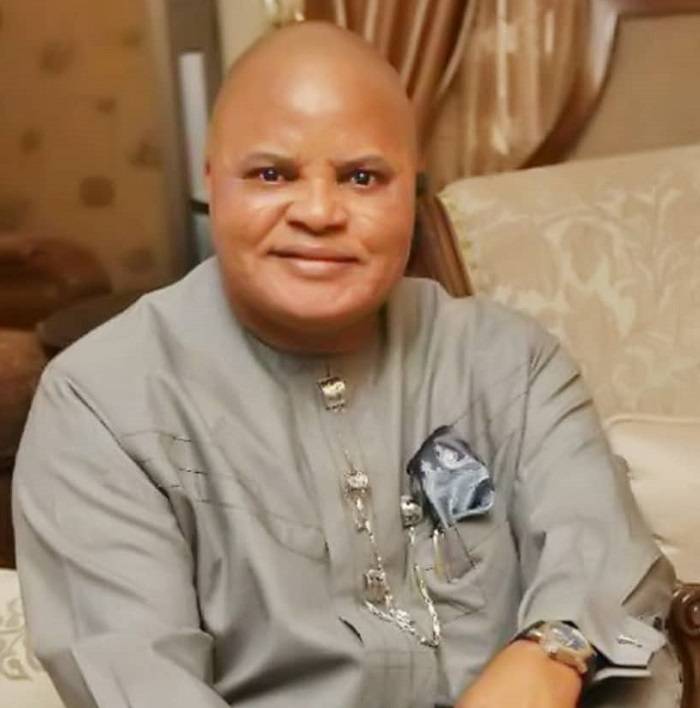
A group, the Imo First Group (IFG) has described the purported Magistrate court order to arrest Senator Ifeanyi Araraume and the former governor of Imo State, Rochas Okorocha, over alleged criminal conspiracy and forgery, as a ruse and fake news
The group stated this in a statement issued on Saturday in Abuja.
IFG challenged those peddling the fake news to make the court order public.
The statement reads ” The fabricated and concocted story was first posted on social media by Hon. Ambrose Nwaogwugwu, a media aide to Governor Hope Uzodimma, before it was picked up by other media outfits, including Arise TV.
According to the statement, those behind the report claimed that a Senior Magistrate Court sitting in Abuja issued a Bench Warrant dated September 9, 2026, following a petition written by the Resident Electoral Commissioner (REC) in Imo State, Barr. Chukwuemeka Ibejiako, to the Police and DSS on October 8, 2026, over alleged presentation of fake APC primary results.
The Group debunked the existence of any such order.
“We want to state categorically and unequivocally that no jSenior Magistrate ordered or issued any bench warrant for the arrest of Araraume”
IFG however challenged anyone in possession of the purported court order to publish it.
“If you claim to have a court order present same for the public to see,
“This fabricated bench warrant contain in the report is filled with inconsistencies, the bench warrant was dated September 9, 2026, while the REC’s petition that supposedly triggered it was dated October 8, 2026, with case number CR/M/084/2026.
The statement further stated that the purveyors and harbinger of the fake news tried to trick the magistrate via exparte order but was rebuked
“The magistrate bluntly refused to grant their exparte and threatened to arrest them, yet they carried their falsehood about. What’s the problem of occupants of office that never won free and fair elections and tried to destroy reputable Imo sons that have won elections. We challenge anyone in this macabre surugede dance to show the court order or warrant of arrest. It’s preposterous to blackmail decent Imo sons on the altar of dirty politics.”

-
Politics3 years ago
13 Ondo Assembly Members Disown Endorsement of Aiyedatiwa
-
Politics3 years ago
APC Group, Ondo Govt, Quarrel Over Money for Endorsement
-

 Trending News5 years ago
Stop unsavoury, inciting statements – DSS warns
-

 Others5 years ago
Adron Homes Celebrates 10 Years Of Housing Excellence
-

 Humanity5 years ago
President Buhari Commiserates With Ambassador Maureen Tamuno Over The Loss Of Her Father
-

 Others7 years ago
EX- CUSTOMS BOSS, IBRAHIM MERA’S DWINDLING FAME
-

 Business2 years ago
Bigi Carbonated Soft Drinks Treats 40 Consumers to an Epic Easter Movie Hangout
-

 Business2 years ago
Wema Bank Shines at Global SME Finance Forum Conference Awards 2024 …Awarded: • SME Financier of the Year (Africa) • Platinum Award for Best Financier for Women Entrepreneurs (Africa)