
Opinion
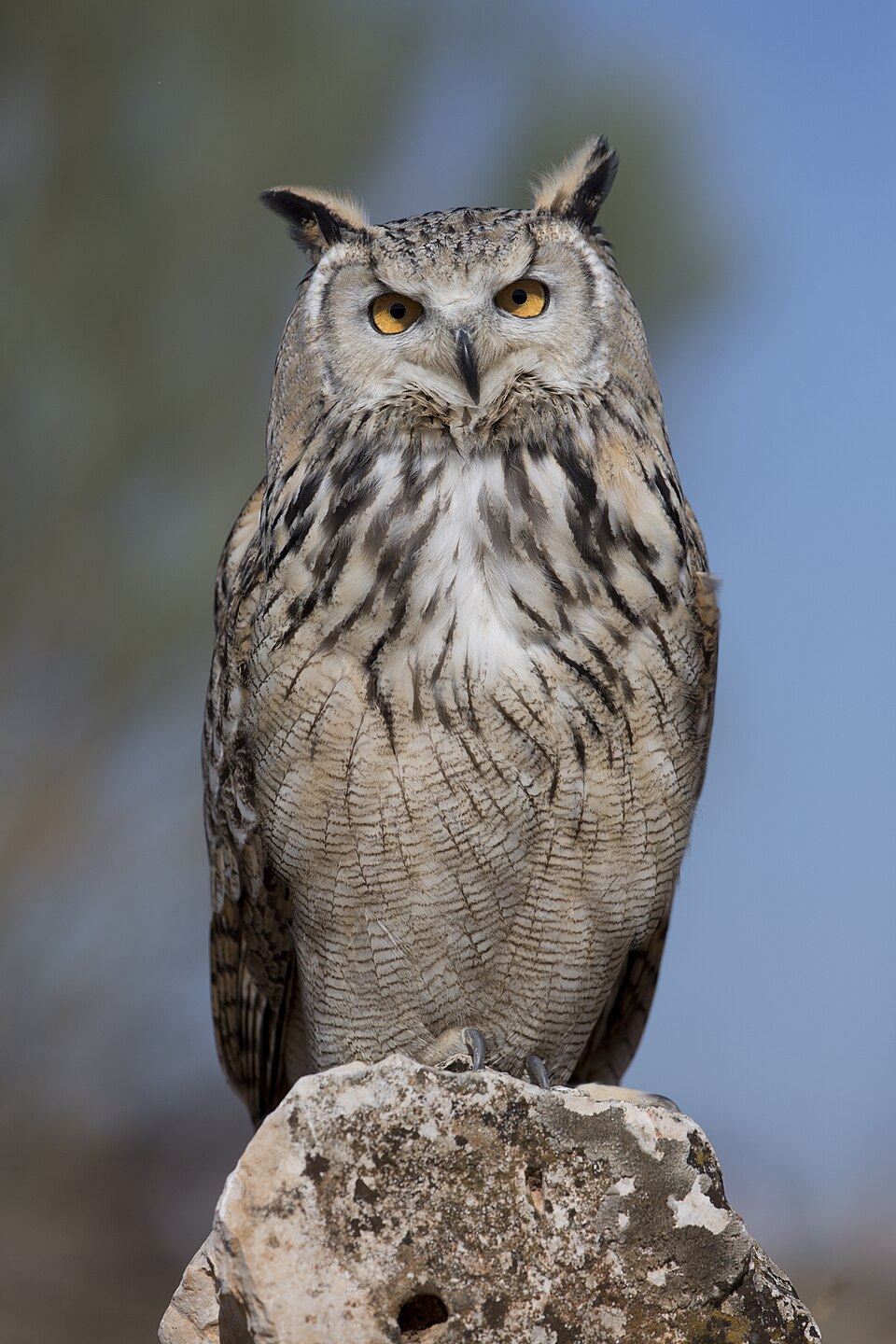
Are owls evil birds?

By Bolanle Bolawole,

Sometime this year, I was alerted to the presence of an owl perching on the PHCN line overlooking my apartment. And so what, I asked! The response I got shocked me: Don’t you know that owls are evil birds? I quickly jumped out of bed! I really never knew anything about owls. I went to my window and saw it. I began to “bind and cast.” I followed this up by picking up a stone and going after it. It flew away before I could reach it. Days later, the owl appeared again. I went after it again with prayer and action. Again, it flew away before I could reach it. Every night afterwards I checked the PHCN line before going to bed and whenever I woke up in the night. There was no sight of it. Still, I prayed.
Also read: Coalition Defends NSCDC Commandant-General, Rejects Calls for His Removal Over Minna Detainee Deaths
Not long afterwards, a classmate and friend who had suffered a stroke earlier, died. He was 69. Closely afterwards, my in-law, a mentor, died at the age of 89.
Then real tragedy struck in the same month with the death of his daughter and my niece, at 54. In July alone a chorister in my church lost her father who was 65.
My panel beater lost a 14-year-old child; a pastor friend died at a relatively young age, and then another schoolmate and professional colleague also passed on at the age of 67. More deaths of colleagues and known faces have since followed.
Are owls evil birds? Are they the harbingers or messengers of death? This is what Google has to say about this mysterious bird: “No, owls are not evil birds; they are simply wild, nocturnal animals fulfilling a natural role in the environment.”
But owls, all the same, have a really bad reputation. Their nocturnal lifestyle is one. They hunt and move around in the dark and people historically associate darkness with fear and the unknown. Owls also fly silently: Their specialized feathers let them fly completely silently, causing them to appear suddenly out of nowhere.
They also have human-like facial features, with their forward-facing eyes giving them an intense, penetrating gaze that can feel uncanny or unsettling. Owl’s eerie sounds, strange screeches, clicks, and hoots in the dead of night have also fueled ghost stories for centuries.
There are also a lot of cultural myths and superstitions pertaining to owls. Many cultures around the world historically view owls as bad omens or messengers of death.
“In general, owls are viewed as harbingers of bad luck, ill health, or death. The belief is widespread even today.” According to Wikipedia, this belief cuts across the globe. Among the Kikuyu of Kenya, it was believed that owls were harbingers of death. If one saw an owl or heard its hoot, someone was going to die.
In the Americas, the culture of the Uto-Aztec tribe, the Hopi, has “taboos surrounding owls, which are associated with sorcery and other evils. The Aztecs and Maya, along with other natives of Mesoamerica, considered the owl a symbol of death and destruction. In fact, the Aztec god of death, Mictlantecuhtli, was often depicted with owls. There is an old saying in Mexico that is still in use: ‘When the owl cries/sings, the Indian dies’.
“The Popol Vuh, a Mayan religious text, describes owls as messengers of Xibalba (the Mayan “Place of Fright”). The belief that owls are messengers and harbingers of the dark powers is also found among the Hočągara (Winnebago) of Wisconsin. When in earlier days the Hočągara committed the sin of killing enemies while they were within the sanctuary of the chief’s lodge, an owl appeared and spoke to them in the voice of a human, saying, ‘From now on the Hočągara will have no luck.’ This marked the beginning of the decline of the tribe. An owl appeared to Glory of the Morning, the only female chief of the Hočąk nation, and uttered her name. Soon afterwards she died.
“People often allude to the reputation of owls as bearers of supernatural danger when they tell misbehaving children, ‘the owls will get you.’ Also, in the Cherokee culture, as well as many other Native American cultures, owls are a very bad omen. It is said that if you are outside in broad daylight and an owl flies over your head, a family member or loved one would die within the coming week. In the Middle East, Arab mythology sees owls as bad omens.”
Some other cultures, however, see owls in a different light i.e. as a wise creature (for example, Hinduism in India.) In Japan, souvenir shops display little owl figurines that are supposed to bring good luck.
The Japanese word for owl is ‘fukurou’, and the first part of the word (‘fuku’) can be written with the same character as ‘luck’ or the whole word can literally be written as ‘no suffering/troubles’.”
So, what is it really about owls? It would appear owls signify different strokes for different people – and for different reasons as well. Superstition exists everywhere. And every superstitious belief has a logic behind it.
Most of the time, this is weaved around the fear of the unknown and the recoil from what Cicero, a Roman philosopher, called the ultimate evil.
Cicero, also noted for his oratorical gift, defined the Latin term “summum malum” as “the highest evil” and “summum bonum” as “the highest good” in his foundational ethical treatise titled “On the Ends of Good and Evil”.
He reportedly used these concepts to compare how different ancient Greek schools such as the Stoics, Epicureans, and Peripatetics defined the ultimate goal of human life (summum bonum) vis-a-vis what they sought most to avoid (summum malum). Cicero, however, merely built on the thoughts of earlier ancient Greek philosophers like Plato and Aristotle.
Thomas Hobbes, another Western philosopher and famous author of the “Leviathan” (1651) rejected the idea of a universal “summum bonum” due to conflicting human desires, but agreed that a definitive “summum malum” did exist: the fear of violent death.
What is certain, and which is known to all civilizations, is that the traffic between heaven and earth is never ending; and that this is as sure as day follows night.
As Orlando Owoh crooned, just as babies are born on a daily basis, so also do people die – owl or not owl. Were the universe to be rid of owls, people would still die! All the same because I am not Japanese, owls are not the kind of birds I love to see!
Robbing Peter to pay Paul: A lose-lose situation
Can these figures be correct? Since I came across them on the internet, I have not seen a rebuttal from any quarters. So, since silence is said to mean consent, I want to assume that the figures are factual – until the contrary is proven.
The disturbing information goes thus: “Six geo-political zones’ contribution to the VAT pool and (what each of them) received (in return) in half-year January -June 2026): 1. South-west contributed N2.16trn but received N691.56bn (31.99%). 2. South-south contributed N880.58bn but received N429.99bn (48.83%). 3. North-central contributed N302.81bn but received N350.17bn (115.64%).
4. North-west contributed N205.52bn but received N384.56bn (187.11%). 5. North-east contributed N152.82bn but received N285.70bn (186.95%). 6. The South-east contributed N79.27bn but received N230.89bn (291.28%).”
Are you not surprised that the South-east zone contributed the least but received the highest, percentage-wise? This means that a region always screaming “marginalization” is the one actually marginalizing others!
All the three zones in the North received more than they contributed; meaning that, like the South-east, they benefit from the sweat of others – in other words, they reap on a monthly basis from where they did not sow! The two burden-bearer zones are the South-south and South-west, with the latter being the greater losers.
Those riding on the back of others will never disembark unless they are forced to.
Unfortunately, free lunch offers no incentives for anyone to work harder.
And those being held down as beasts of burden will never achieve their true potential for as long as they carry the can for others. What a lose-lose situation in real or absolute terms!
FEEDBACK
RE: If state police are not to suffer a stillbirth…
Thank you so much for this piece! Brig-Gen. Jibola Togun once drew my attention to the lack of support by our governors for Amotekun after the exit of Rotimi Akeredolu from earthly life.
I have written no fewer than five times on the imperatives of the establishment of state police, drawing attention to how formal policing began at Abeokuta in 1903, but took off in 1905, followed by Ibadan in 1906 and Oyo, 1907 and from there to other divisions of Yorubaland.
If our forebears could see the imperatives of divisional and regional policing, the attitude of our governors after Akeredolu has been shocking and disappointing. The first responsibility of any government is security.
It is, in fact, the origin of government. We can see now that the establishment of state police has received a national stamp. Well done! – Lade Bonuola
Has Tinubu lost his grip on the Nigerian media?
The shortcomings you highlighted and the solutions proffered are top-notch. I am one of those who believe until tomorrow that (Dele) Alake should have been Tinubu’s spokesman (but) rumours have it that Gbaja and Alake can not co-habit at the villa! Reno Omokri is doing far better than all the government paid spokesmen, including Onanuga. Ask yourself why Dele Momodu and Femi Ojudu distanced themselves from Tinubu. Self-interest, I presume! I have read the “Adventure of Guerrilla Journalist” by Ojudu and I have heard Momodu narrate how Tinubu gave him 500 pounds while they were in exile. I have equally heard how Remi asked: “Uncle Dee, so you are not going to work for my husband?” That question is loaded. Nobody runs Tinubu down as does the duo! I don’t think the Nigerian Press is as dangerous as the TV anchor personalities. Many no longer read newspapers but depend on TV stations. Arise News, for instance, sees all government actions from negative perspectives. They know who to invite: hardly will you see their guests not towing their preferred line of thought.
More often than not, they carefully select the APC men they can easily bully. Rufyy is a pessimist par excellence, only he is honest and capable! To him, all Nigerians are corrupt and unpatriotic – except himself! Abati was my hall mate at Awo Postgraduate Hall, UI… He always loves to play smart (but) I think an average Nigerian knows that he is biased.
He is a PDP card-carrying member. Seun Okinbaloye is worse, despite the fact that the Finance Minister has said it times without number that the right question to ask is ‘where would Nigeria have been if the (Tinubu) reforms were not introduced’ and NOT ‘is your life better now than it was in 2023?’ Okinbaloye is aware of the 33 trillion paper-money printed, the huge amount owed foreign airlines, and the less than four billion dollars in the foreign reserves account.
Yet, Seun will have none of that! He is in the habit of parading statistics just to discredit the government.
The ones that favour the government are downplayed! Hardly will you see Seun ask the right follow-up questions from the opposition. Tinubu needs to strengthen his information machinery in all its ramifications. – Rev. Canon Dr. Kayode Abegunde.
Can anyone or organization in this country have the media in their pocket? I ask this question as someone who has spent almost 50 years in the media and who has done only media job all his life.
But I look at media relations in this country and ask myself: how can these guys be so dumb? All the attacks on opponents and critics will be useless after the President leaves office.
Also read: Coalition Defends NSCDC Commandant-General, Rejects Calls for His Removal Over Minna Detainee Deaths
Where is Buhari’s press value today? It is all gone! Where is Femi Adesina? And where is Garba Sheu? Government media minders are lazy; they are not deep enough; they focus on fighting political opponents and critics and once the government they serve disappears, they, too, will disappear with it! They do not bother to convince anyone; they just shout at us and think that is press relations! They should understudy Ogbuefi Nwokedi and Tunji Oseni! – Olowo Adebola.
(Published in the ON THE LORD’S DAY column in the SUNDAY TRIBUNE newspaper edition of Sunday, 20 September, 2026).


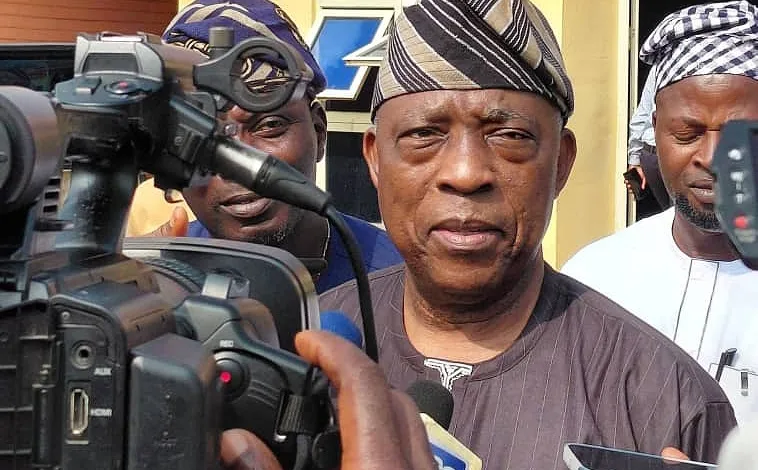
Veteran journalist and Chairman of Gaskia Media Limited, Dare Babarinsa, has called on Nigeria to sustain its informal power-rotation arrangement between the North and South, arguing that the system remains important for political stability and national unity.
Babarinsa said the presidency should return to the North in 2031 and move back to the South in 2039, maintaining that the arrangement should remain in place until Nigerians develop a more suitable alternative.
He made the position known on Monday, November 2, while delivering a public lecture at the Press Centre, Iyaganku, Ibadan, as part of activities marking the 60th anniversary of the Oyo State Council of the Nigerian Union of Journalists (NUJ).
Speaking on the theme of Nigeria’s political arrangement and the future of the media, Babarinsa acknowledged criticisms of the rotational presidency, particularly from those who believe that every qualified Nigerian should be allowed to contest for the highest political office regardless of region.
However, he argued that Nigeria’s political circumstances make power rotation a practical arrangement for maintaining stability, even if it may not always produce the most suitable candidate.
According to him, the arrangement emerged from political negotiations ahead of the return to civilian rule in 1999, following the deaths of former military Head of State, General Sani Abacha, and the presumed winner of the June 12, 1993 presidential election, Chief Moshood Abiola.
Babarinsa recalled that after Abacha’s death in 1998, General Abdulsalami Abubakar assumed leadership and introduced a transition programme aimed at ending military rule by May 29, 1999.
He said the death of Abiola, who was detained by the military government, created concerns about the political future of the Yoruba people and influenced discussions over the region that should produce Nigeria’s first civilian president after military rule.
The journalist disclosed that he was among members of the Idile Oodua resistance movement who supported the position that the South-West should produce the first president under the new democratic arrangement.
He said he was subsequently mandated by members of the group to consult the late Ooni of Ife, Oba Okunade Sijuwade, who told him that traditional rulers across the country were also holding consultations on the matter.
According to Babarinsa, the discussions contributed to the emergence of two Yoruba presidential candidates in the 1999 election: former President Olusegun Obasanjo of the Peoples Democratic Party (PDP) and Chief Olu Falae, who contested under the Alliance for Democracy and All Peoples Party coalition.
He also recalled that former Vice-President Alex Ekwueme disagreed with the arrangement, arguing that the South-East could not be bound by an agreement reached principally between political interests in the North and South-West.
Babarinsa said he agreed with Ekwueme’s interpretation that power should rotate between the North and South rather than among the six geopolitical zones.
He explained that the arrangement had continued through successive administrations, including the emergence of former President Goodluck Jonathan following the death of President Umaru Yar’Adua and the subsequent election of former President Muhammadu Buhari.
With President Bola Tinubu currently in office, Babarinsa argued that the existing arrangement should be sustained, with power returning to the North after the current administration and subsequently moving back to the South.
To support his argument, he compared Nigeria’s power-sharing arrangement with the confessional system adopted in Lebanon in 1943, under which key political offices were allocated to different religious communities to promote political balance.
He said Nigeria could learn from such arrangements, insisting that political compromises sometimes become necessary in countries with diverse ethnic, religious and regional interests.
“If we intend to keep Nigeria, then we need to make this special arrangement work until future generations are able to make a better arrangement,” he said.
Babarinsa reflects on Ibadan’s journalism legacy
Beyond the political question, Babarinsa used the lecture to examine the history of journalism in Ibadan and the contribution of the city to the development of Nigeria’s media industry.
He described Ibadan as a major centre of political and media influence, noting that its newspapers had produced some of the country’s most prominent journalists, editors and public commentators.
He recalled the establishment of the Nigerian Tribune in 1949 by Chief Obafemi Awolowo and the creation of the Sketch newspaper group in 1964 by the then Premier of the Western Region, Chief Ladoke Akintola.
He also highlighted the contributions of prominent journalists, including Felix Adenaike, Segun Osoba and Peter Ajayi, whom he described as the Three Musketeers of the Nigerian media during the Second Republic.
According to him, the trio wielded considerable influence in the industry through their leadership positions at the Tribune and Sketch newspaper groups.
Babarinsa also acknowledged the contributions of former journalists and columnists, including Alhaji Lateef Jakande, Chief Bola Ige, Chief Olabisi Onabanjo, Aare Afe Babalola and Dr Tai Solarin.
He said the history of journalism in Ibadan was closely connected to the political development of the country, recalling the debates on issues such as the International Monetary Fund loan, diarchy and rotational presidency.
The journalist urged members of the profession to preserve that tradition by ensuring that the media remained a platform for informed public debate and the promotion of ideas capable of strengthening Nigeria.
Media organisations urged to embrace digital transformation
Addressing the challenges facing the industry, Babarinsa warned that traditional media organisations must urgently adapt to the changing media environment or risk losing relevance.
He said the internet had disrupted conventional news production and distribution, creating new opportunities while also allowing unregulated online platforms to compete with established media organisations.
According to him, several traditional newspapers have established online platforms, but their digital presence has not translated into the level of revenue needed to sustain their operations.
He cited the decline of once-dominant media organisations such as the Daily Times and Sketch as examples of the changes that have reshaped the industry.
Babarinsa recalled that Sketch newspaper had a daily circulation of about 60,000 copies during the 1970s and 1980s but had since ceased publication, with its former premises converted into a shopping mall.
He also expressed concern over declining newspaper readership among young Nigerians, warning that a society with an increasingly uninformed population could struggle to appreciate and defend democracy.
The Gaskia Media chairman said media organisations must follow their audiences into the digital space and develop business models that can sustain quality journalism.
He disclosed that his organisation had also decided to strengthen its online presence through the publication of a digital magazine, beginning with an online news blog.
Journalists urged to defend democracy and uphold professional standards
Babarinsa further reminded journalists of their role in Nigeria’s democratic development, particularly during the struggle against military rule.
He said members of the Nigerian press had suffered imprisonment, exile and other forms of persecution in the fight for the restoration of democracy, with some journalists paying the ultimate price.
He maintained that journalists therefore had a responsibility to protect the democratic system and ensure that the country’s electoral processes remained credible.
With the 2027 general election approaching, he urged media professionals to play their part by providing accurate information and encouraging informed public participation.
The Independent National Electoral Commission has scheduled the presidential and National Assembly elections for January 16, 2027, while governorship and State Houses of Assembly elections are fixed for February 6, 2027.
Babarinsa said journalists must remain committed to the fundamental principles of the profession, stressing that factual accuracy should remain central to news reporting while allowing room for responsible advocacy.
He urged journalists to advocate for the national interest, rather than restrict their work to positions that may be politically convenient.
Calls for greater inclusion of young journalists and women
Looking towards the future, Babarinsa called for greater opportunities for young journalists and women in the profession, saying the industry must deliberately prepare a new generation of media leaders.
He cited the careers of prominent journalists who assumed major editorial and management positions at relatively young ages, including Peter Enahoro, Olusegun Osoba, Yemi Ogunbiyi, Yakubu Mohammed, Ray Ekpu and Adamu Ciroma.
According to him, the history of Nigerian journalism demonstrates that young professionals have consistently played important roles in driving the industry forward.
He urged established media practitioners to listen to younger colleagues, particularly members of Generation Z, and create opportunities for them to contribute to the future of the profession.
Babarinsa also called for more deliberate efforts to bring women into leadership positions, noting that the industry could no longer remain dominated by men.
He expressed optimism about the future of journalism, despite concerns over poor remuneration, declining newspaper circulation and competition from digital platforms.
The veteran journalist concluded by urging the profession to embrace change, drawing attention to the need for innovation in newspaper production, technology and audience engagement.
Quoting a principle he attributed to Professor Ladipo Adamolekun, Babarinsa said the media industry must adapt to changing realities to remain relevant.
“Adapt or Die!” he declared.

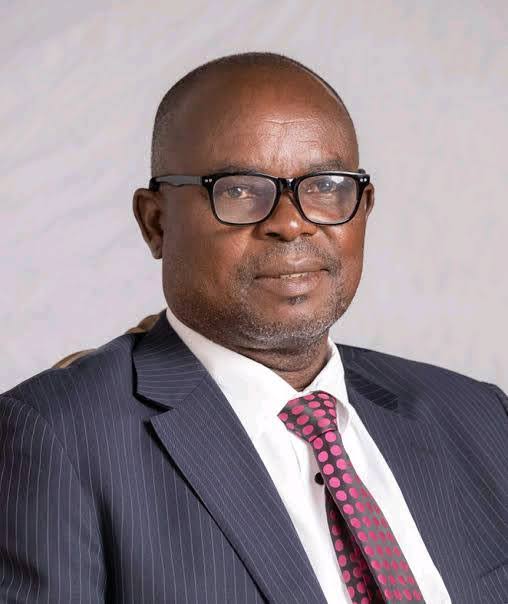
Bola Bolawole questions Nigeria’s democratic future, citing poverty, illiteracy, corruption and political rivalry as obstacles to credible elections
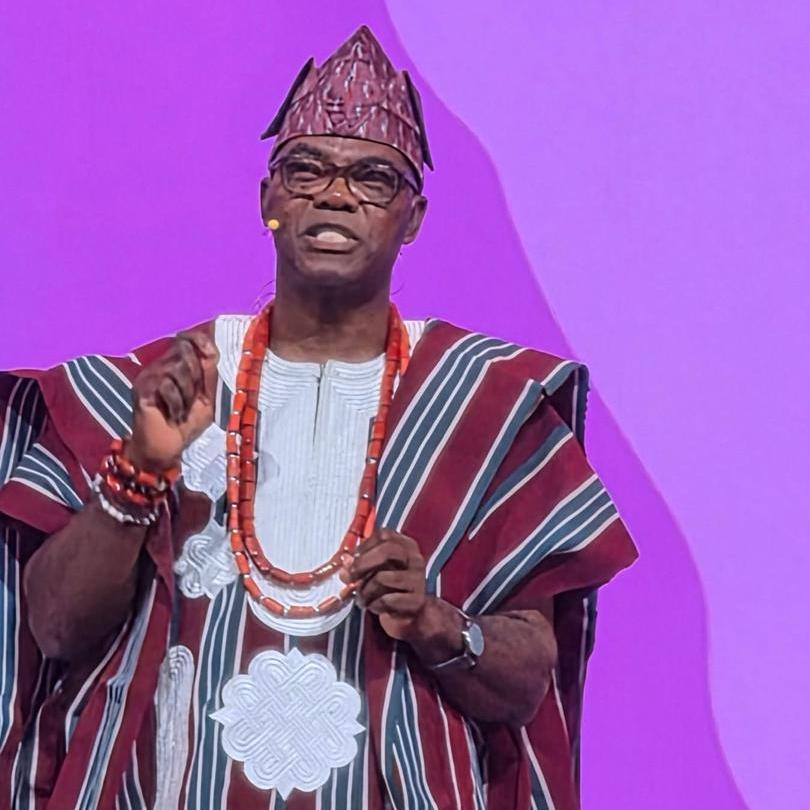
The All-Nigeria Rotary Peace Summit will examine how good governance, justice and equity can help Nigeria build lasting peace
-
Politics3 years ago
13 Ondo Assembly Members Disown Endorsement of Aiyedatiwa
-
Politics3 years ago
APC Group, Ondo Govt, Quarrel Over Money for Endorsement
-

 Trending News6 years ago
Stop unsavoury, inciting statements – DSS warns
-

 Others5 years ago
Adron Homes Celebrates 10 Years Of Housing Excellence
-

 Humanity5 years ago
President Buhari Commiserates With Ambassador Maureen Tamuno Over The Loss Of Her Father
-

 Others7 years ago
EX- CUSTOMS BOSS, IBRAHIM MERA’S DWINDLING FAME
-

 Business3 years ago
Bigi Carbonated Soft Drinks Treats 40 Consumers to an Epic Easter Movie Hangout
-

 Business2 years ago
Wema Bank Shines at Global SME Finance Forum Conference Awards 2024 …Awarded: • SME Financier of the Year (Africa) • Platinum Award for Best Financier for Women Entrepreneurs (Africa)