
Business
Australia Unveils Bold Law to Force Big Tech News Payments


Australia Big Tech news levy law proposes charges on Meta, Google and TikTok unless they pay publishers for news content or face revenue levies

The Australian government has unveiled a new legislative proposal that could compel major technology companies, including Meta, Google, and TikTok, to pay local news publishers or face a financial levy on their Australian revenues.
Also read: Israeli President Visits Australia After Deadly Bondi Attack
The proposed framework, known as the News Bargaining Incentive, would impose a 2.25 per cent charge on digital platforms that fail to reach commercial agreements with Australian media organisations for the use and distribution of news content.
According to officials, the funds collected from the levy would not be retained by the government but redirected to news organisations to support journalism and sustain media operations.
The move represents Australia’s latest attempt to ensure that global tech platforms contribute financially to the news ecosystem, given the role of journalism in driving traffic, engagement, and advertising revenue on digital platforms.
Under the proposal, companies would have the option to avoid the levy entirely by entering direct payment agreements with publishers.
The model also includes incentives, with platforms potentially receiving offsets of between 150 and 170 per cent of their liability when they strike deals, particularly with smaller media outlets.
Prime Minister Anthony Albanese said the initiative is aimed at ensuring fairness in the digital economy and supporting public interest journalism.
Communications Minister Anika Wells also defended the proposal, arguing that technology platforms benefit significantly from news content and therefore have a responsibility to help sustain its production.
The policy builds on Australia’s earlier News Media Bargaining Code introduced in 2021, which pushed platforms such as Google and Facebook into commercial agreements with publishers.
However, officials say that framework has weakened in recent years, particularly after Meta opted not to renew some of its agreements with Australian media companies.
The new legislation is being positioned as a stronger “pay or be charged” system, targeting platforms with significant operations in Australia and annual local revenues exceeding A$250 million.
While the government insists the policy is designed to strengthen journalism rather than generate tax revenue, the proposal has already drawn pushback from the technology sector.
Meta has rejected the premise of the scheme, arguing that it does not derive the level of value from news content suggested by policymakers.
Google has also raised concerns while pointing to its existing partnerships with Australian publishers, while TikTok has yet to issue a detailed response.
Australian media organisations have largely welcomed the initiative, describing it as a necessary step to protect journalism amid declining advertising revenues and the growing dominance of global digital platforms.
Also read: Nigerian Ayobami Omoniyi Sentenced in US Wire Fraud Case
The legislation is expected to undergo intense scrutiny in parliament and could also face international pressure, particularly from the United States, where many of the affected companies are headquartered.


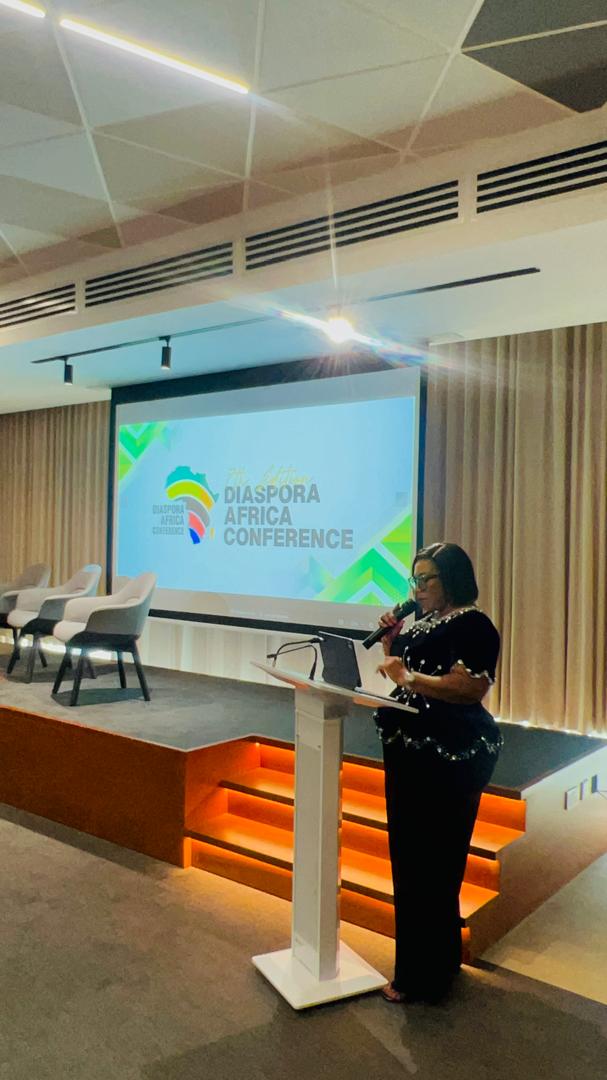
AICL GMD Maureen Tamuno calls for stronger diaspora investment in Africa through trust, transparency, skills transfer and sustainable partnerships

-
Politics3 years ago
13 Ondo Assembly Members Disown Endorsement of Aiyedatiwa
-
Politics3 years ago
APC Group, Ondo Govt, Quarrel Over Money for Endorsement
-

 Trending News5 years ago
Stop unsavoury, inciting statements – DSS warns
-

 Others5 years ago
Adron Homes Celebrates 10 Years Of Housing Excellence
-

 Humanity5 years ago
President Buhari Commiserates With Ambassador Maureen Tamuno Over The Loss Of Her Father
-

 Others7 years ago
EX- CUSTOMS BOSS, IBRAHIM MERA’S DWINDLING FAME
-

 Business2 years ago
Bigi Carbonated Soft Drinks Treats 40 Consumers to an Epic Easter Movie Hangout
-

 Business2 years ago
Wema Bank Shines at Global SME Finance Forum Conference Awards 2024 …Awarded: • SME Financier of the Year (Africa) • Platinum Award for Best Financier for Women Entrepreneurs (Africa)