
Sport
Baba Bamu Honoured: Epe Premier Club Visits Lagos Speaker Obasa

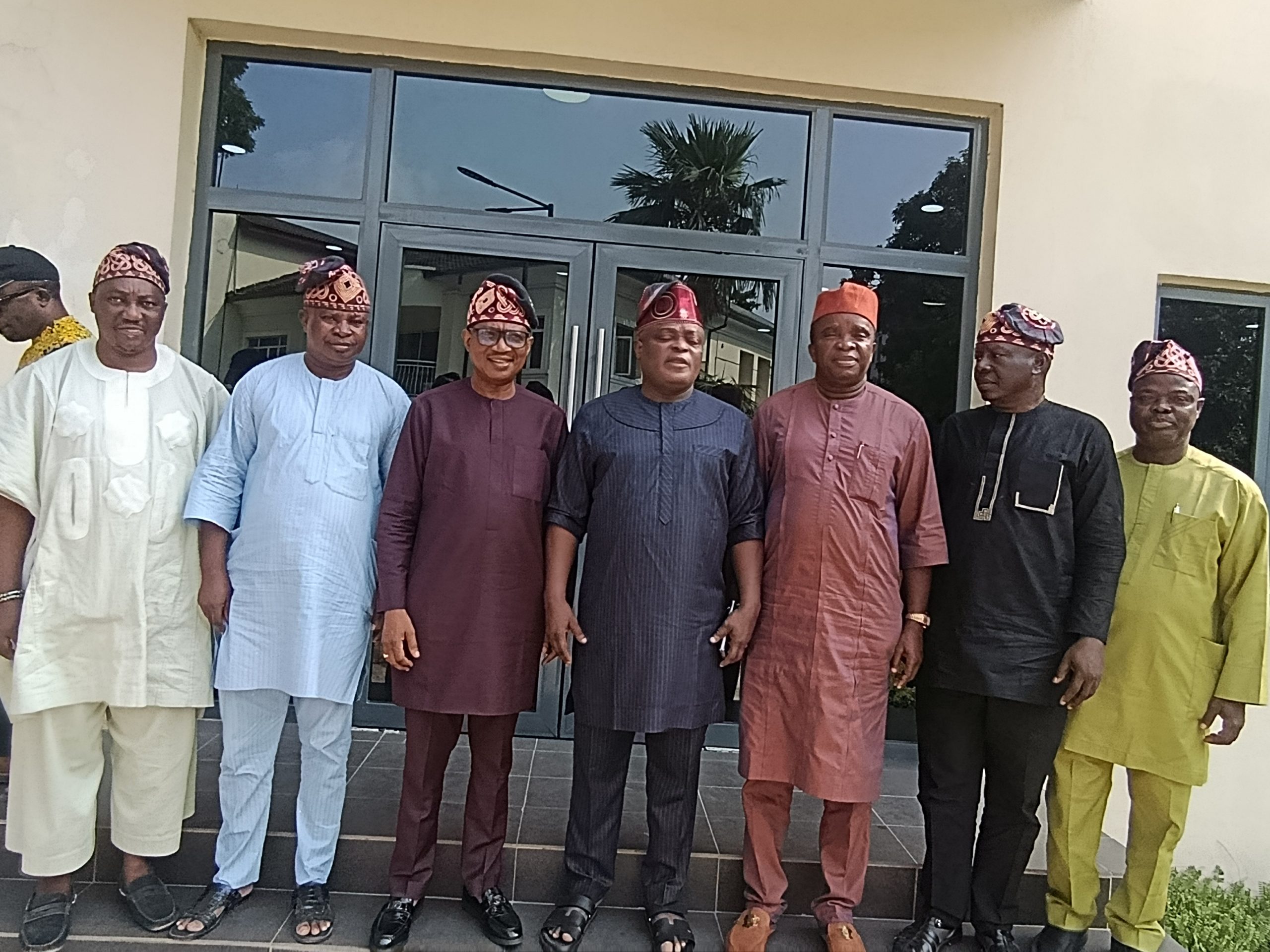
Epe Premier Club meets Lagos Speaker Obasa as it prepares to immortalise Alhaji Akanni Seriki Bamu for his leadership and community contributions

The leadership of the Epe Premier Club on Wednesday paid a courtesy visit to the Speaker of the Lagos State House of Assembly, Rt. Hon. Mudashiru Ajayi Obasa, ahead of the Club’s inaugural immortalisation ceremony.
Also read: Timini Egbuson Unveils Romantic Drama ‘Love and New Notes’
Led by Hon. Abiodun Mustainu Tobun, the delegation briefed Speaker Obasa on plans to recognise and immortalise iconic figures who have significantly contributed to the socio-political and cultural development of Epe Division.
The Club announced that Alhaji Akanni Seriki Bamu, a respected member of the Governance Advisory Council and political leader of the All Progressives Congress in Epe Division, has been chosen as the first honouree.
Hon. Tobun described Baba Bamu as a mentor and pillar of the community, praising his leadership, sacrifice, and enduring commitment to Epe’s growth.
“He embodies leadership and has shaped the region’s political trajectory,” Tobun said.
Speaker Obasa commended the Epe Premier Club for institutionalising a programme to honour distinguished individuals.
He lauded Alhaji Seriki Bamu’s impact, political maturity, and statesmanship, noting that his contributions continue to resonate across Lagos State.
Obasa assured the Club of his support and confirmed his attendance at the upcoming ceremony, highlighting the importance of recognising leaders who have devoted themselves to community and state development.
The courtesy visit also included discussions on civic engagement, community empowerment, and potential collaborations to further advance the interests of Epe Division.
Also read: Timini Egbuson Unveils Romantic Drama ‘Love and New Notes’
The immortalisation ceremony for Alhaji Akanni Seriki Bamu is scheduled for the coming weeks and is expected to attract dignitaries, community stakeholders, and residents.



Mourinho La Liga award celebrates Real Madrid’s perfect October, including victories over Villarreal, Sevilla and Barcelona

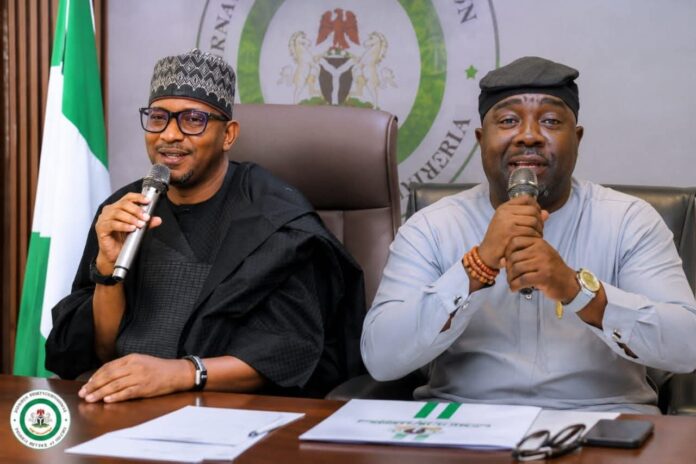

By Michael Soyebo
The corridors of the National Sports Commission (NSC) in Abuja have long echoed with grand promises, administrative bottlenecks, and the heavy weight of unfulfilled potential. Yet, every so often, a rare synergy of competence, passion, and strategic vision cuts through the bureaucratic noise to rewrite history.
Such a watershed moment has arrived, courtesy of the dynamic leadership pairing of NSC Chairman Mallam Shehu Dikko and Director-General Hon. Bukola Olopade. Working in lockstep, these two technocrats have once again thrust Nigeria onto the global pedestal, orchestrating a monumental milestone that has forever altered the landscape of women’s football in the country and across the African continent.
To understand the magnitude of this recent feat is to look back at the historical labyrinth that has long characterized Nigerian sports administration. For decades, talent has never been in short supply; Nigeria’s football fields, from the dusty pitches of rural towns to bustling urban academies, overflow with raw, unadulterated genius.
However, the missing link has consistently been structured institutional support, visionary leadership, and proactive welfare management. When President Bola Ahmed Tinubu reconstituted the National Sports Commission and entrusted its apex leadership to Dikko and Olopade, skeptics wondered if it would be business as usual. They have answered with actions that speak louder than any policy document.
The crown jewel of this administrative masterclass is rooted in the unprecedented triumph of Nigeria’s women’s football framework, brilliantly highlighted by historic global conquests and backed by a revolutionized administrative machinery. Under the watchful eyes of Dikko and Olopade, the National Sports Commission has transitioned from a reactive agency to a proactive catalyst.
Gone are the days when athletes’ morale was dampened by administrative red tape or delayed entitlements. This leadership duo recognized early that sustainable glory on the pitch begins with absolute institutional backing off it.
A prime testament to this new dawn was witnessed when the nation’s female football representatives shattered decades-old glass ceilings on the world stage. Displaying tactical discipline, breathtaking flair, and an unyielding winning mentality, Nigeria’s young Amazons conquered giants, outclassed traditional powerhouses, and lifted a historic global trophy that had eluded the entire African continent until now.
It was a moment of pure national ecstasy—an explosion of green and white confetti that reminded the world why Nigeria remains a sleeping giant of global sports when properly awakened.
Crucially, what makes this “first” so profound is not just the trophy hoisted under the floodlights, but the immaculate precision with which the NSC handled the backend of the triumph. In a sharp departure from past eras defined by post-tournament controversies over unpaid bonuses and neglected allowances, the Presidency, channeled seamlessly through the proactive intervention of the NSC under Dikko and Olopade, ensured that every financial incentive, bonus, and welfare package was cleared with military promptness.
From preliminary qualification rounds right through to the final glory, the players’ hard-earned dues were prioritized, setting a golden standard for athlete treatment.
This meticulous attention to detail did not go unnoticed by the corporate world and well-meaning stakeholders. The historic victory catalyzed an unprecedented wave of national celebration and financial rewards, anchored by patriotic patrons like Alhaji Saleh Ahmadu, who instantly doled out monumental cash gifts to the players and technical crew.
Comptroller-General of the Customs Service Bashir Adewale Adeniyi and other top dignitaries rallied around the team, creating an ecosystem of support where success is lavishly celebrated and heavily incentivized.
At the heart of this operational success is the distinct administrative chemistry shared by Shehu Dikko and Bukola Olopade. Dikko, a globally respected sports economy expert and administrator, brings to the table a deep-seated structural blueprint, navigating macro-policies with legislative and executive finesse.
Olopade, a grassroots marketing guru and quintessential hands-on manager, infuses the commission with an unmatched street-smart urgency and operational zeal. Together, they form a complementary powerhouse—the brain and the heartbeat of modern Nigerian sports rebirth.
Their leadership philosophy discards armchair administration in favor of active engagement. Olopade’s immediate immersion into the trenches upon assumption of office—visiting staff, aligning visions with Dikko, and cutting through red tape—set the tone for a target-driven commission.
Every department within the NSC was re-oriented to realize that the athlete is the most vital asset in the sports value chain. This empathetic yet fiercely professional approach has breathed fresh air into national team camps.
Furthermore, this historic milestone in women’s football serves as a powerful psychological breakthrough for the girl-child across Nigeria. When young girls see the nation’s leaders treating female athletes with utmost reverence, prioritizing their welfare, and celebrating their continental and global “firsts”, it validates their dreams.
Dikko and Olopade have inadvertently transformed the women’s national team into a symbol of national pride and gender empowerment, proving that excellence knows no gender when the right environment is provided.
The ripple effects of this triumph extend far beyond the shores of Nigeria, elevating the nation’s diplomatic footprint through sports. International sports bodies and FIFA stakeholders have taken note of Nigeria’s renewed administrative stability.
By restoring absolute credibility to the management of national teams, the NSC has opened doors for deeper international partnerships, technical grants, and global respect. Investors who previously shied away from Nigerian sports due to administrative instability are beginning to knock on a newly repositioned door.
Yet, for all the pomp and pageantry of recent receptions, both Dikko and Olopade remain acutely aware that a single victory is merely a stepping stone. In their ongoing briefings and strategic policy rollouts, the emphasis has quickly shifted from celebration to sustainability.
The blueprint is already being drawn to replicate this success across all age grades and sports disciplines, ensuring that grassroots talent pipelines are continuously fed, scouted, and professionally nurtured.
The duo understands that maintaining a “first” position is infinitely harder than achieving it. Plans are reportedly underway to institutionalize the structural frameworks that guaranteed this recent success, insulating future campaigns from the whims of political transitions or administrative apathy.
Capacity building for local coaches, improvement of domestic women’s league infrastructure, and sports science integration are front and center in the NSC’s master plan.
As history looks back at this era, the names Shehu Dikko and Bukola Olopade will undoubtedly be written in gold as the architects who proved that Nigerian sports can, indeed, run like a well-oiled corporate machine. They took over a system plagued by historical baggage and turned it into an incubator of global champions.
Ultimately, scoring another first for Nigeria in women’s football is not merely about a trophy etched in silver or gold. It is about a paradigm shift—a resounding testament to what happens when competence meets passion, when leadership serves the athlete, and when two visionary patriots decide that second best is never an option for Nigeria.

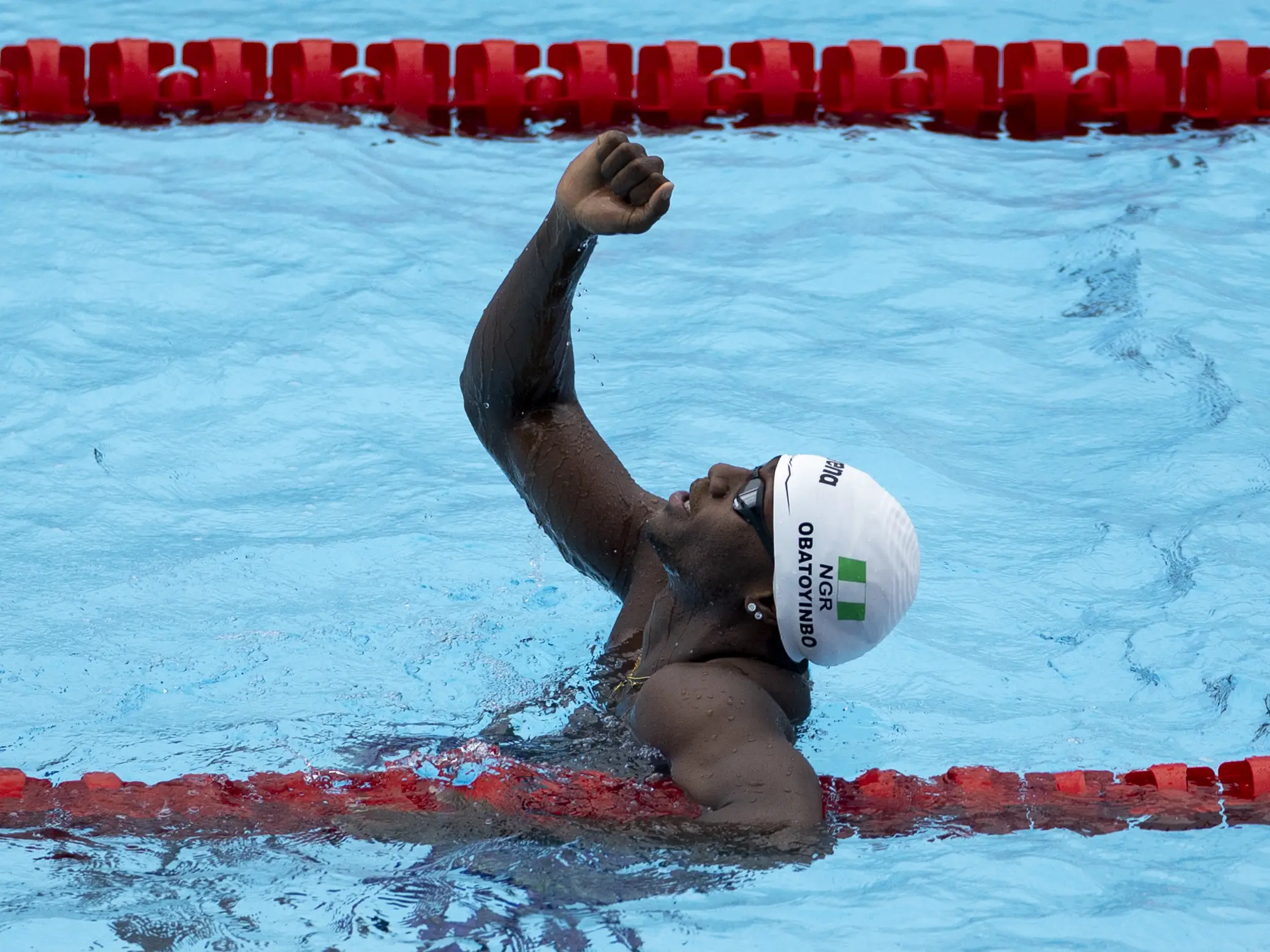
Nigeria ends its Dakar 2026 swimming campaign without a medal as Kashope Obatoyinbo makes history with a sixth-place final finish
-
Politics3 years ago
13 Ondo Assembly Members Disown Endorsement of Aiyedatiwa
-
Politics3 years ago
APC Group, Ondo Govt, Quarrel Over Money for Endorsement
-

 Trending News6 years ago
Stop unsavoury, inciting statements – DSS warns
-

 Others5 years ago
Adron Homes Celebrates 10 Years Of Housing Excellence
-

 Humanity5 years ago
President Buhari Commiserates With Ambassador Maureen Tamuno Over The Loss Of Her Father
-

 Others7 years ago
EX- CUSTOMS BOSS, IBRAHIM MERA’S DWINDLING FAME
-

 Business3 years ago
Bigi Carbonated Soft Drinks Treats 40 Consumers to an Epic Easter Movie Hangout
-

 Business2 years ago
Wema Bank Shines at Global SME Finance Forum Conference Awards 2024 …Awarded: • SME Financier of the Year (Africa) • Platinum Award for Best Financier for Women Entrepreneurs (Africa)