
Empowerment
Boosting Food Security: Governor Lawal Launches Distribution of Fertilizers and Farm Inputs for Zamfara Dry Season Farmers


In a decisive effort to enhance agricultural productivity and strengthen food security across Zamfara State, Governor Dauda Lawal has officially initiated the distribution of thousands of bags of fertilizers and other essential farming inputs aimed at supporting local farmers during the dry season.

The launch took place yesterday Thursday at the Fadama III facility of the Ministry of Agriculture in Gusau, which served as a symbolic venue for the Governor’s commitment to empowering local farmers and invigorating the agricultural sector an industry he described as the cornerstone of the state’s economy.
During the event, attendees witnessed the distribution of a comprehensive array of agricultural resources, comprising thousands of bags of fertilizers, herbicides, and insecticides. A statement from the Governor’s spokesperson, Sulaiman Bala Idris, outlined that this initiative is strategically designed to significantly boost crop yields, reduce post-harvest losses, and promote sustainable farming practices, particularly among smallholder farmers who play a critical role in the local economy.
The Comprehensive Support Package and farm inputs made available for distribution include:
-3,920 bags of NPK fertilizer: This balanced formulation is essential for promoting growth, enhancing root development, and improving overall crop yield.
1,956 bags of Urea fertilizer: Known for its high nitrogen content, Urea will be pivotal in optimizing protein synthesis in crops, thereby increasing yields.
3,920 liters of herbicide: These will aid in controlling weeds, allowing crops to access essential nutrients and sunlight without competition.
1,956 liters of insecticide: These are crucial for protecting crops from pest infestations that could threaten harvests.
3,920 sachets of seed-dressing chemicals: These will enhance seed viability and encourage strong plant development from the onset.
In his address to the beneficiaries, Governor Lawal reiterated that this initiative represents a fundamental element of a broader strategy aimed at transforming the state’s agricultural landscape. “Farming is not just a livelihood; it is the backbone of our economy,” he stated with conviction. “We have a responsibility to provide our farmers with the tools and resources they need to flourish.” He emphasized that the distribution of fertilizers and farm inputs is particularly targeted toward enhancing dry-season farming throughout Zamfara State.
A significant aspect of the Governor’s address was the recognition of the NG-CARES (Nigeria COVID-19 Action Recovery and Economic Stimulus) programme, which he identified as a foundational pillar supporting these agricultural initiatives. He highlighted the success of similar input support programs over the years that have benefitted tens of thousands of smallholder farmers by providing them with improved seeds, agrochemicals, and crucial agronomic knowledge.
“Through the NG-CARES programs, we have laid the groundwork for achieving remarkable improvements in the agricultural sector,” Lawal explained. “Combining these inputs with behavioral enablers—such as seed adoption, advisory services, and peer learning—has markedly elevated crop yields, increased farmers’ incomes, and enhanced food security within our communities.”
Acknowledging the various challenges that farmers face in the region, particularly those posed by insecurity, Governor Lawal assured the agricultural community that his administration is committed to a holistic approach to development. “It’s widely recognized that today’s challenges are heavily intertwined with security issues,” he remarked. “While we equip farmers with necessary inputs, we are also focused on fortifying the security infrastructures within our communities to ensure sustainable agricultural practices.”
He called for a collaborative spirit between the government and the citizens, urging farmers to fully exploit the opportunity presented by this initiative while remaining vigilant. “We must unite to secure our surroundings, cultivate our lands, and harvest bountifully to foster a prosperous Zamfara State,” he urged.
The Governor positioned this initiative within the larger framework of national development, expressing optimism that it would deliver the momentum needed for sustainable agricultural growth, not just in Zamfara, but as a replicable model for other regions of Nigeria. He stressed the importance of increasing local food production to diminish Nigeria’s current heavy reliance on food imports.
“We remain dedicated to leveraging these programs to sustainably produce food and mitigate our reliance on imports,” Lawal asserted. “Our administration is committed to collaborating with our development partners and the Federal Government to ensure the effective implementation of these developmental strategies for the comprehensive advancement of our beloved state.”
At the conclusion of the event, beneficiaries expressed their optimism that the timely provision of these essential farm inputs would enable them to maximize their harvests during the dry season, thus generating critical income for their families and contributing significantly to the regional food supply chain.


In line with Economic and Community Development being the theme of the month of October for Rotary International, foremost Rotary club in Rotary International District 9111, Rotary Club of Ikeja has teamed up with Field of Skills and Dreams Academy to empower four youths.
The beneficiaries who will be undergoing a three-month training are, Olumide Akingbohungbe, Yemisi Olubode, Ayodeji Olanrewaju and Daniel Oyebami.
They will be trained in different skills, namely, Fashion Designing, Solar panel installation, Hospitality and Catering as well as Heating, Ventilation, Air-conditioning and Refrigeration.
Speaking during the free vocational, training and empowerment presentation of the beneficiaries which took place during the meeting of the club at Lagos Airport Hotel, Ikeja, the Chair, Service Projects, Rotarian Gbenga Fetuga said the club was very meticulous in the selection of the vocational skills.
Rotarian Fetuga added that: ‘’Being the foremost club in the District, we are expected to live up to it in all areas and we are always detailed in the selection of both the beneficiaries as well as the vocational skills.
‘’The skills we chose are very strong skills for our trainees. Nearly every home, office, hotel and shop in Lagos runs ACs and fridges. So, qualified technicians are always in demand, and graduates can start their own repair businesses.’’
The club’s President, Rotarian Kayode Osokomaiya stressed that the club was committed to making a difference in the lives of the beneficiaries of the empowerment exercise.

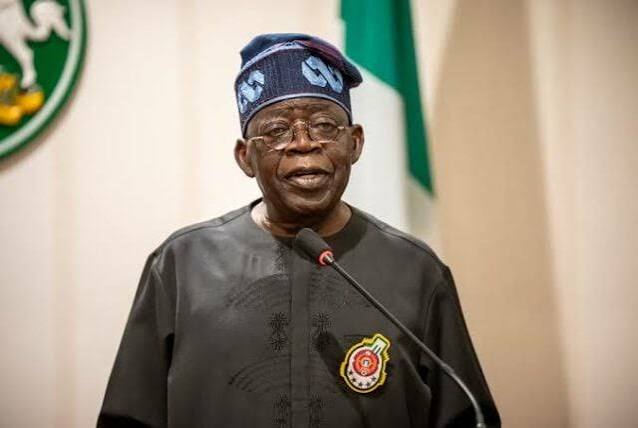
Nigeria investment in youth and local industries is vital to job creation, says FG, urging public-private partnerships and regional industrialisation
The Federal Government has called for increased investment in youth development, small and medium-sized enterprises, technology and local industries to create jobs and strengthen Nigeria’s economic competitiveness.
Also read: Osun amotekun dismisses officer over gross misconduct
The Minister of State for Foreign Affairs, Ambassador Sola Enikanolaiye, made the call during a panel discussion titled “From Trade to Value Chains: Building Regional Industries to Compete Globally” at the 32nd Nigerian Economic Summit, held under the sub-theme, “Invest Nigeria”.
In a statement issued on Tuesday and signed by his Special Assistant on Digital Media and Public Diplomacy, Raphael Oni, Enikanolaiye said Nigeria needed stronger partnerships between the public and private sectors to mobilise the capital required for sustainable economic growth.
He argued that the country must move beyond trading raw materials towards building industries that process local resources into finished products for domestic consumption and export.
According to the minister, investment from both domestic businesses and foreign sources would be necessary to expand industrial capacity, create employment opportunities and improve living standards.
“In advancing our country, we don’t talk enough to one another in terms of constructive conversation and dialogue. We believe that partnership which allows government to engage deeper and stronger with the private sector is critical. Government alone cannot alone raise the resources needed for shared prosperity,” he said.
Enikanolaiye added that domestic capital mobilisation was as important as attracting foreign investment.
He identified Nigeria’s youthful population as a major asset that could accelerate industrialisation if supported by investments in education, skills development, innovation and entrepreneurship.
“Our youth population is very critical – a vibrant population. We need to invest more in human capital, focusing on Small and Medium Scale Enterprises, technology, innovation and creativity. By so doing, we will be able to generate more employment for the youth and also raise more wealth and income,” he said.
On foreign policy, the minister said the administration had reordered its four-point 4D doctrine to place the welfare and prosperity of Nigerians at the centre of the country’s international engagements.
The framework focuses on Demography, Development, Democracy and Diaspora.
Enikanolaiye said democratic governance should produce tangible economic benefits for citizens rather than remain an end in itself.
“Democracy is good, but it is a means to an end, not an end in itself. Democracy must deliver on core priorities of economic development and economic prosperity to our people,” he said.
The minister also emphasised the importance of macroeconomic stability and reliable economic data in helping businesses assess investment opportunities and make long-term plans.
He said Nigeria had recorded improvements in macroeconomic stability and that inflation was coming down, although he did not provide supporting figures in the statement.
Enikanolaiye further called for reforms to make the Ministry of Foreign Affairs more responsive to Nigerians and strengthen its engagement with businesses.
He said cooperation between the government and private sector, alongside partnerships with neighbouring countries and other international markets, could help Nigeria expand its industrial base and improve its access to regional and global markets.
Also speaking at the summit, the President of the Economic Community of West African States Commission, General Birame Diop, called for greater emphasis on industrialisation to create jobs and strengthen regional trade.
His remarks were delivered by the ECOWAS Commissioner for Economic Affairs and Agriculture, Dehpue Yenpea Zuo.
Diop argued that trade agreements alone could not deliver widespread employment and economic growth without industries capable of processing raw materials and producing goods.
“Trade agreements do not create jobs; industries do,” he said.
He noted that intra-African trade accounted for about 15 per cent of the continent’s total trade, compared with more than 60 per cent in Europe and Asia.
He attributed the gap partly to the limited scale of regional industries.
According to Diop, the regional market, with more than 300 million consumers, provides an opportunity for West African manufacturers to expand production before competing across the continent under the African Continental Free Trade Area.
He outlined four priorities for advancing regional industrialisation: implementing existing trade agreements, including commitments on border management; developing value chains in sectors where West Africa has a competitive advantage; improving access to finance for businesses and producers; and measuring progress through jobs created and goods processed within the region.
Also read: Osun amotekun dismisses officer over gross misconduct
Diop said converting trade commitments into productive industries would be essential to expanding employment, increasing regional economic activity and strengthening West Africa’s competitiveness in global markets.

-
Politics3 years ago
13 Ondo Assembly Members Disown Endorsement of Aiyedatiwa
-
Politics3 years ago
APC Group, Ondo Govt, Quarrel Over Money for Endorsement
-

 Trending News6 years ago
Stop unsavoury, inciting statements – DSS warns
-

 Others5 years ago
Adron Homes Celebrates 10 Years Of Housing Excellence
-

 Humanity5 years ago
President Buhari Commiserates With Ambassador Maureen Tamuno Over The Loss Of Her Father
-

 Others7 years ago
EX- CUSTOMS BOSS, IBRAHIM MERA’S DWINDLING FAME
-

 Business3 years ago
Bigi Carbonated Soft Drinks Treats 40 Consumers to an Epic Easter Movie Hangout
-

 Business2 years ago
Wema Bank Shines at Global SME Finance Forum Conference Awards 2024 …Awarded: • SME Financier of the Year (Africa) • Platinum Award for Best Financier for Women Entrepreneurs (Africa)