
Business
CBN raises N804.85bn at OMO auction amid strong investor demand
The Central Bank of Nigeria (CBN) successfully raised N804.85 billion at its Open Market Operations (OMO) auction, driven by strong investor appetite for high-yield, long-tenor securities amidst excess liquidity and elevated inflation expectations.


The Central Bank of Nigeria (CBN) successfully raised N804.85 billion at its Open Market Operations (OMO) auction, driven by strong investor appetite for high-yield, long-tenor securities amidst excess liquidity and elevated inflation expectations

The Central Bank of Nigeria (CBN) successfully auctioned N804.85 billion worth of Open Market Operations (OMO) bills on Monday, April 29, 2025, demonstrating continued strong investor interest in high-yield securities.
Also read: AICL hosts fifth post-summit roundtable to drive strategic investments, development
The auction witnessed total subscriptions of N1.057 trillion, indicating an oversubscription rate of 111 per cent.
While robust, the total amount raised was slightly lower than the N1.008 trillion raised at the previous auction on April 25, which saw subscriptions totaling N1.391 trillion for two N500 billion bills.

In the latest auction, the CBN offered two long-tenor instruments: a 329-day bill and a 350-day bill, each with an offer size of N250 billion.
Notably, investor demand was significantly skewed towards the longer 350-day bill, maturing on April 14, 2026, which attracted subscriptions of N923.60 billion, more than three times the offered amount.
The CBN allotted N698.60 billion of this bill at a stop rate of 22.73 per cent, with bid rates ranging from 22.4990 per cent to 22.9700 per cent.
This strong interest reflects market confidence in Nigeria’s sovereign debt and expectations of sustained elevated interest rates.
Conversely, the 329-day bill, maturing on March 24, 2026, experienced more muted demand, receiving subscriptions of N133.25 billion, just over half of the N250 billion offered.
The CBN allotted N106.25 billion of this shorter-tenor bill at a slightly lower stop rate of 22.69 per cent, with bid rates ranging between 22.3200 per cent and 22.8900 per cent.
The consistent strong demand for longer-dated securities underscores market expectations that the CBN will maintain its hawkish monetary policy stance to combat inflation and stabilize the naira.
This trend of investors favouring longer tenors to maximize yields has been evident in recent OMO auctions.
The heightened demand for OMO bills occurs against a backdrop of rapidly expanding broad money supply in Nigeria.
According to the CBN’s latest data, broad money (M3) increased by 3.2 per cent month-on-month to N114.22 trillion in March 2025, and by 24 per cent year-on-year.
Despite the CBN maintaining a high Cash Reserve Ratio and benchmark interest rate, liquidity in the financial system remains elevated, posing ongoing challenges for monetary tightening efforts.
Headline inflation also rose to 24.23 per cent in March 2025, further fueling demand for high-yield instruments.
OMO auctions remain a critical tool for the CBN in managing excess liquidity and anchoring short-term interest rates, while also signaling its monetary policy direction and moderating speculative pressures in the financial markets.



Fidelity Bank CEO Amuchie takes over in January 2027 as Nneka Onyeali-Ikpe exits after five years of strong earnings, expansion and transformation

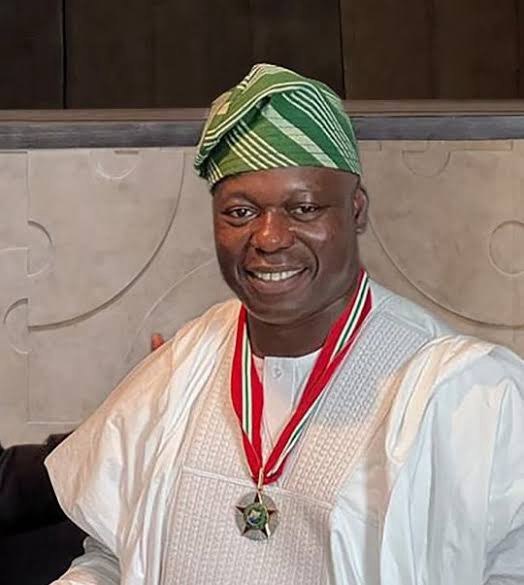
Oando Plc, under the leadership of its Group Chief Executive, Jubril Adewale Tinubu, has recorded a significant improvement in its operating performance, returning to profitability at the operating level as revenue rose to ₦2.78 trillion in the first nine months of 2026.
The indigenous energy company reported revenue of ₦2.776 trillion for the nine months ended September 30, 2026, representing a nine per cent increase from the ₦2.541 trillion recorded during the corresponding period of 2025.
The latest unaudited results, released on October 30, also showed a substantial recovery in gross profit, which increased to ₦174.5 billion from ₦29.8 billion in the previous year.
One of the most notable developments was the company’s return to operating profit. Oando recorded an operating profit of ₦159.7 billion, reversing the operating loss of ₦109.7 billion reported in the corresponding period of 2025.
The improvement reflects stronger performance across its operations, supported by higher production volumes, improved realised prices and the absence of a significant fair value loss recorded in the previous year.
The figures provide an indication of the progress made by the company as it continues to pursue its expansion and operational efficiency objectives under Tinubu’s leadership.
Oando’s production performance also improved during the reporting period. Average daily production increased by 14 per cent to 42,985 barrels of oil equivalent per day, compared with 37,614 barrels in the corresponding period of 2025.
The growth was supported by higher output from crude oil, natural gas and natural gas liquids operations.
The company also reported a 22 per cent reduction in production operating costs, which fell to $15.39 per barrel of oil equivalent from $19.67 recorded a year earlier.
Facility uptime improved to 96.1 per cent from 85 per cent, indicating greater reliability across its production infrastructure.
These improvements reflect the impact of drilling activities, workover programmes and efforts to restore previously constrained facilities. Oando said the measures helped increase production and improve operational efficiency across its enlarged asset base.
During the period, the company generated ₦285 billion in cash from operations and invested ₦110.7 billion in capital expenditure, with a significant portion directed towards drilling activities across its operated OML 60–63 assets.
Its seven-well drilling programme for 2026 also progressed, with two new wells completed and brought on stream, while workovers and additional drilling activities continued.
Oando further reported an improvement in its debt position, with total borrowings declining by 20 per cent from ₦2.70 trillion at the end of December 2025 to ₦2.16 trillion as of September 30, 2026.
Net debt also fell by ₦286 billion to ₦1.99 trillion during the nine-month period.
The reduction forms part of the company’s broader capital management strategy, which is aimed at lowering acquisition-related debt, reducing financing costs and strengthening its balance sheet.
Despite the stronger operating performance, however, Oando’s profit after tax declined by 47 per cent to ₦106.5 billion, compared with ₦201.3 billion recorded in the corresponding period of 2025.
The company attributed the decline largely to the swing from net finance income in the previous year to net finance costs in 2026, alongside the continuing burden of acquisition-related debt.
Its results showed finance costs of ₦244.2 billion during the period, while the company also recognised a tax credit of ₦181.1 billion arising from the reversal of previously recognised tax provisions.
The figures underline the distinction between Oando’s improved operating performance and the financial pressure it continues to face from its debt obligations.
Nevertheless, the return to operating profitability, higher production, lower unit operating costs and declining borrowings represent important developments in the company’s financial and operational position.
For Tinubu, who has remained central to Oando’s corporate transformation, the latest results provide further evidence of the company’s efforts to consolidate its position in Nigeria’s energy industry and expand its presence across Africa.
The company has also outlined plans to continue its seven-well development programme, sustain production reliability and strengthen its financial position through an equity-raising initiative.
With its operating performance improving and debt reduction remaining a priority, Oando’s next challenge will be to translate its production and revenue growth into stronger bottom-line earnings while managing the cost of financing its expansion.
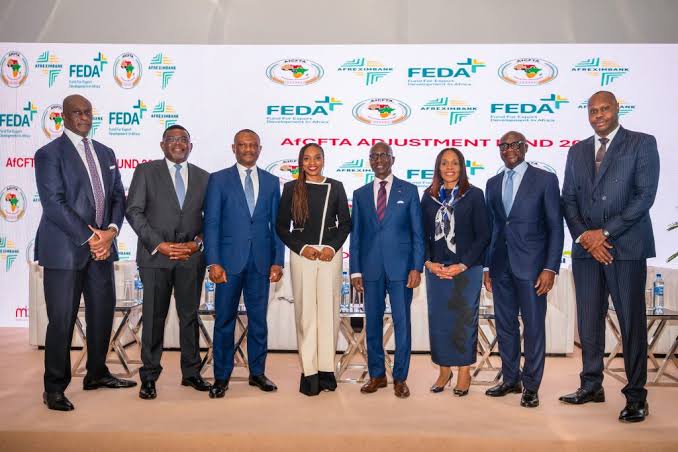
Ehi Braimah urges Afreximbank and AfDB to strengthen Africa’s economic integration through trade finance, infrastructure and industrial investment
-
Politics3 years ago
13 Ondo Assembly Members Disown Endorsement of Aiyedatiwa
-
Politics3 years ago
APC Group, Ondo Govt, Quarrel Over Money for Endorsement
-

 Trending News6 years ago
Stop unsavoury, inciting statements – DSS warns
-

 Others5 years ago
Adron Homes Celebrates 10 Years Of Housing Excellence
-

 Humanity5 years ago
President Buhari Commiserates With Ambassador Maureen Tamuno Over The Loss Of Her Father
-

 Others7 years ago
EX- CUSTOMS BOSS, IBRAHIM MERA’S DWINDLING FAME
-

 Business3 years ago
Bigi Carbonated Soft Drinks Treats 40 Consumers to an Epic Easter Movie Hangout
-

 Business2 years ago
Wema Bank Shines at Global SME Finance Forum Conference Awards 2024 …Awarded: • SME Financier of the Year (Africa) • Platinum Award for Best Financier for Women Entrepreneurs (Africa)