
News
The Accountability of Thought: A Debt I Owe Chris Asoluka, By Max Amuchie


Chris Asoluka tribute reflecting on mentorship, intellectual discipline, and the promise to continue writing inspired by the late economist

There are debts that cannot be quantified.
Also read: Amosun 68th birthday draws warm tributes from AFROGRAMS
They are not financial. They do not accrue interest. They send no reminders. Yet they settle quietly on the conscience and refuse to leave.
This is one of them.
Some people also enter your life almost silently, almost accidentally, yet leave impressions so enduring that you only recognise their depth in their absence.
Dr. Chris Asoluka was one such person.
Dr. Asoluka, who passed away on 10th May 2025, at age 70, was an economist, a public servant, and a technocrat of rare intellect.
He served as a member of the House of Representatives in the Third Republic and as commissioner for finance and economic development in Imo State from 1994 to 1996.
Later, he became Chairman and CEO of Nipal Consulting Network, a firm that provides strategy and policy development for national and subnational governments.
He bridged public service, private enterprise, and intellectual engagement — a rare combination of principle, precision, and practice.
The first time I encountered his name, I did not meet him.
I was a postgraduate student accompanying a course mate – whose name now escapes me – to his kinsman’s residence in Festac Town, Lagos, to collect books for a thesis. It was my course mate who mentioned, almost casually, “This is Chief Chris Asoluka’s house.”
He was not home. We collected the books and left.
The name lingered, then slipped quietly into memory.
Shortly after, I joined ThisDay newspaper.
I found myself in the orbit of Professor Pat Utomi — political economist, restless intellectual, and at the time a faculty member at the Lagos Business School.
As part of a book project on him, we drew up a list of key voices to interview.
Chris Asoluka’s name resurfaced.
That was the beginning of a relationship that would quietly shape my understanding of accountability, leadership, and intellectual rigour.
My fuller interaction with him deepened during Professor Utomi’s first presidential bid ahead of the 2007 election.
By 2006, the Lagos Business School had become a hub for strategy sessions — long hours of debate about economic direction, governance, and the temperament leadership requires.

Dr Max Amuchie
Dr Asoluka was the arrowhead driving the entire strategy. He was measured and precise. He was never theatrical, never one to dominate a discussion for effect.
But when he spoke, arguments gained structure. He anchored them in evidence, numbers, and logic.
He demanded clarity where enthusiasm risked becoming vague and challenged assumptions politely but firmly.
It was my first sustained exposure to technocratic discipline applied to politics — and it permanently shaped how I perceive leadership, strategy, and responsibility.
During those Lagos years, our interactions extended beyond formal meetings. Asoluka’s office in Apapa was not far from ThisDay office, and I often dropped in, sometimes with purpose, sometimes simply to converse.
He welcomed dialogue without pretence. Our discussions ranged from policy and economy to literature, ethics, and society.
I served as Features Editor at ThisDay for over five years. For three of those years, I wrote the Saturday back-page column, a space to reflect, interrogate, and provoke thought beyond breaking headlines.
It was during this period that Dr Asoluka began reading my work.
He responded, sometimes briefly, sometimes analytically, often with questions that sharpened thought.
When someone of disciplined intellect reads your work, you write more carefully. You test assumptions. You refine conclusions.
He did not flatter; he engaged. That engagement was accountability.
While in ThisDay, I was head-hunted to Truetales Publications Ltd, publishers of Hints magazine, as CEO/Editor-in-Chief to lead a turnaround team.
It was a brief but pivotal period. The challenge was organisational: reviving structures, restoring focus, and implementing strategic corrections.
From Truetales, I moved to BusinessDay as a member of its Editorial Board, where I resumed opinion writing, this time on Wednesdays.
The platform changed, but the discipline of thinking aloud remained. It was from BusinessDay that I relocated to Abuja in 2011.
Distance altered rhythm. Writing slowed. Columns became occasional, then irregular, then silent. Life, with its multiplicity of responsibilities, filled the spaces once devoted to thought.
Writers rarely stop dramatically. They taper. They postpone. They drift. I drifted.
In 2024, at the Congress Hall of Transcorp Hilton in Abuja, our paths crossed again. Time had left its mark: there was a walking stick to aid his movement.
Yet his mind was sharp, his speech measured, his curiosity intact.
After pleasantries, he asked a simple question:
“Why did you stop writing?”
It was not accusatory. It was observational. He had noticed the silence. He had been reading me, following my work, and he expected the continuity of a voice that had once spoken publicly and consistently.
I offered explanations – distractions, responsibilities, the usual language of postponement. None satisfied me.
In that moment, I felt the weight of quiet expectation, not from a critic, but from a mentor who believed that a voice once committed to reasoned discourse should not drift casually into silence.
I promised to resume.
I did not keep that promise in time.
When news of his passing came, the unfinished promise returned with unusual force. There is a grief attached not merely to a loss, but to deferred action; to knowing that a debt to someone who shaped your thought remained unsettled.
Dr. Chris Asoluka was more than a technocrat. He was what the Italian philosopher, Antonio Gramsci, called an “organic intellectual” – one embedded in society, shaping institutions, translating abstract principles into applied practice.
In a society like ours, where noise often outpaces nuance, the organic intellectual performs an indispensable function.
He tempers passion with evidence, insists that arithmetic matters, and reminds power that clarity must precede charisma. He insists that personality shapes policy, temperament informs decisions, and values must guide action.
Asoluka expected consistency.
That expectation lingers.
Our national conversation obsesses over events. Beneath every event lies personality. Beneath every policy lies character.
Every decision emerges from a constellation of pre-formed values. Institutions matter, yes – but the people who inhabit them matter more.
We do not always control the circumstances that interrupt us. But we control whether interruption becomes abandonment.
That is one lesson I have learnt.
The question he asked in that Transcorp Hilton hall has not faded:
“Why did you stop writing?
Today, I answer not with explanation but with action. This column is not just my answer; it is my commitment.
This first edition of The Sunday Stew is my attempt to honour that debt, not through nostalgia, but through consistency.
It is my way of responding to a standard quietly set before me.
This column will examine faith, leadership, culture, personality, and the unseen forces shaping our society’s visible outcomes. It will appear every Sunday, unhurried, unfiltered, and thoughtful.
Some weeks it will challenge you.
Other weeks, it may unsettle you.
Occasionally, it may simply provoke a smile.
But it will always be honest.
Addendum
That this debut aligns with March 8, International Women’s Day, is unplanned, yet fitting.
If this column speaks of influence and accountability, it must acknowledge that many of Nigeria’s most enduring influences are steady and formative, often embodied by women whose contributions sustain our institutions without spectacle.
Tomorrow, March 9, marks the first anniversary of my mother’s passing. Lolo Angela Iheomahialam Amuchie departed on 9th March 2025.
Her life, like that of many women of her generation, was not performed on public stage. It was lived in quiet consistency — in faith, discipline, sacrifice, and the shaping of values long before they found expression in public spaces.
The lessons she taught, alongside my father, the late Chief Emmanuel Ikonne Amuchie, still guide the steps of my siblings and me.
Influence needs not be loud to be lasting. It is visible in the mentors, the colleagues, the educators, and the family members whose work shapes lives quietly, profoundly, and consistently.
Also read: Oyetola 71st Birthday: Husain Delivers Powerful Tribute
Therefore, as this column begins, I honour not only mentors like Chris Asoluka who sharpened my thought, but also those — like my parents — whose diligence, insight, and steadfast values quietly shape society in ways that often go unacknowledged.





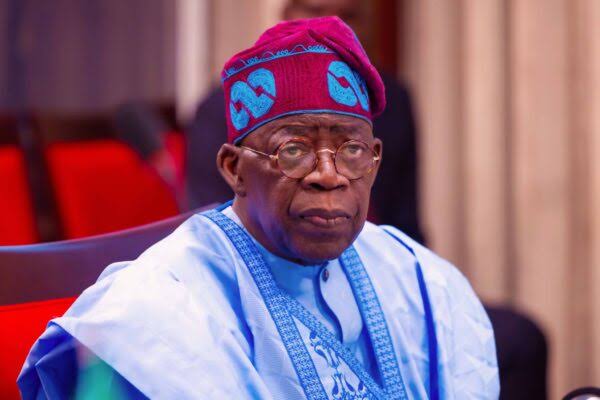
Tinubu food prices are monitored through regular briefings, presidential aide Abiodun Essiet says, as Nigerians continue to face cost-of-living pressures
President Bola Tinubu is aware of the prices of everyday food items, including eggs and bread, and receives regular briefings on the economic challenges facing Nigerians, the Senior Special Assistant to the President on Community Engagement for the North-Central region, Dr Abiodun Essiet, has said.
Also read:FG Urges Investment in Youth, SMEs and Local Industries to Grow Economy
Essiet made the remarks while speaking to State House correspondents at the Presidential Villa in Abuja on Tuesday, dismissing suggestions that journalists were the only people who understood the hardship experienced by ordinary Nigerians.
She also serves as the President’s representative for the North Central Citizens’ Assembly.
“I don’t feel it’s only media people who understand what the people are facing. Some of the reality of what our people are facing is what we are communicating to Mr President,” she said.
Essiet added that the President and members of the Federal Executive Council were regularly informed about the cost of basic commodities and the challenges confronting households.
“I usually tell people, you think Mr President doesn’t know the price of egg or bread in the market? He does, because we brief him regularly, and so do members of the Federal Executive Council,” she said.
The presidential aide also highlighted infrastructure development as a key component of the administration’s agenda, citing public reactions during a visit to a section of the Mokwa-Bida road in Niger State.
According to her, residents turned out in large numbers during the visit because of longstanding concerns about the condition of the road and calls for its rehabilitation.
“Yes, infrastructure is the bedrock of any development. When we went to the Mokwa-Bida road, come and see the crowd, because that is the road that people have been calling for Mr President to address,” she said.
Essiet claimed that the road had last been awarded for construction 46 years ago and highlighted the dangers motorists and other road users faced while navigating the route.
“Do you know how many people have died trying to manoeuvre that road? Trailers have had accidents trying to manoeuvre that road,” she added.
She said Tinubu had directed that the road be reconstructed using reinforced concrete rather than conventional asphalt, with the aim of improving its durability.
“Mr President said they should award the contract and make sure that the contract will be reinforced concrete, not just asphalt,” Essiet stated.
Her comments come amid continued public concern over food affordability and the cost of living.
On October 19, Vice President Kashim Shettima expressed optimism that food prices would decline in the coming weeks as the administration responds to challenges affecting agriculture.
Shettima made the statement at a forum titled “Together till 2027: An Evening with Original City Boy”, organised by the City Boy Movement alongside the Relax-Tinubu-Is-Fixing-Nigeria movement, groups supporting the President’s re-election bid.
Also read:FG Urges Investment in Youth, SMEs and Local Industries to Grow Economy
Essiet was appointed Senior Special Assistant to the President on Community Engagement for the North-Central region in 2024.
-
Politics3 years ago
13 Ondo Assembly Members Disown Endorsement of Aiyedatiwa
-
Politics3 years ago
APC Group, Ondo Govt, Quarrel Over Money for Endorsement
-

 Trending News5 years ago
Stop unsavoury, inciting statements – DSS warns
-

 Others5 years ago
Adron Homes Celebrates 10 Years Of Housing Excellence
-

 Humanity5 years ago
President Buhari Commiserates With Ambassador Maureen Tamuno Over The Loss Of Her Father
-

 Others7 years ago
EX- CUSTOMS BOSS, IBRAHIM MERA’S DWINDLING FAME
-

 Business3 years ago
Bigi Carbonated Soft Drinks Treats 40 Consumers to an Epic Easter Movie Hangout
-

 Business2 years ago
Wema Bank Shines at Global SME Finance Forum Conference Awards 2024 …Awarded: • SME Financier of the Year (Africa) • Platinum Award for Best Financier for Women Entrepreneurs (Africa)