
Judiciary
Court of Appeal Strikes Out Ogun Government’s Appeal Over Datkem Plaza Demolition

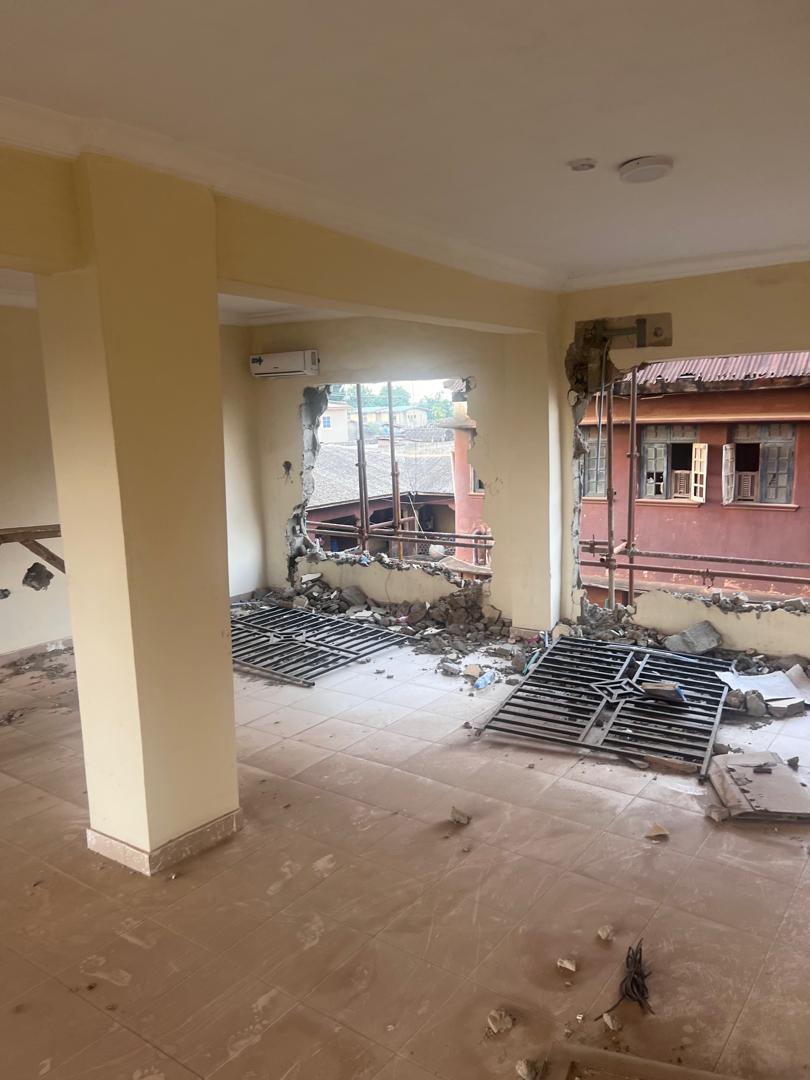

The Court of Appeal sitting in Ibadan has struck out an appeal filed by the Ogun State Government challenging the ruling over the controversial demolition of Datkem Plaza, a five-story complex in Ijebu-Ode owned by Yeye Olufunke Daniel, the wife of former Ogun State Governor, Otunba Gbenga Daniel.
The appeal, presided over by Hon. Justice Y.B. Nimpar, was dismissed for lack of competence, dealing a significant blow to the administration of Governor Dapo Abiodun, which has faced intense scrutiny and criticism over the circumstances surrounding the destruction of the multi-billion-naira property.
The demolition of Datkem Plaza, valued at approximately N5 billion, was carried out in the dead of the night on a weekend, raising suspicions of politically motivated sabotage.
Reports indicate that the building, which was already completed and awaiting commissioning just two weeks before it was brought down, was targeted by agents allegedly acting on the orders of the Ogun State Government.
Unconfirmed sources claim that the initial plan was to use dynamite to create the illusion that the structure had collapsed due to structural defects.
However, upon realizing that the explosion could damage surrounding buildings and expose the act as deliberate sabotage, the perpetrators allegedly opted for jackhammers and bulldozers, executing the demolition under the cover of darkness.
Eyewitnesses who spoke to journalists described the scene as “a well-coordinated operation” designed to erase the landmark building, which many had believed would become the tallest structure in Ijebuland.
By the time daylight broke, Datkem Plaza was nothing but rubble—its dream of becoming a thriving commercial hub obliterated overnight.
Following the demolition, the Ogun State Government defended its actions, citing regulatory infractions as the basis for bringing down the structure. Officials claimed that Datkem Plaza violated planning approvals, a claim the owners vehemently denied, providing evidence of compliance with all necessary regulations.
In response, Yeye Olufunke Daniel dragged the state government to court, arguing that the destruction of her property was illegal, vindictive, and politically motivated. The lower court ruled in her favor, prompting the Ogun State Government to file an appeal, which has now been struck out for lack of competence by the Court of Appeal in Ibadan.
The demolition of Datkem Plaza ignited a political firestorm, with many interpreting it as a direct attack on the Daniel family, given the longstanding political rivalry between Governor Abiodun and former Governor Gbenga Daniel, who is now a senator representing Ogun East Senatorial District.
Observers see the Court of Appeal’s decision as a legal and moral victory for the Daniel family, reinforcing the argument that the demolition was not based on law, but rather on political vendetta.
With the appeal dismissed, legal analysts believe the Ogun State Government could face further legal consequences, including potential financial compensation for the destruction of the multi-billion-naira property. Meanwhile, the Daniels’ supporters are celebrating the verdict as a step toward justice in what they call “one of the most brazen acts of executive impunity in Ogun State’s history.”
While the Ogun State Government has yet to respond to the Court of Appeal’s decision, legal experts suggest that it may have limited options left, as the ruling effectively upholds the lower court’s judgment.
For now, the spotlight remains on Governor Abiodun’s administration, with critics demanding accountability for the demolition of a structure that could have transformed the economic landscape of Ijebu-Ode



The Court of Appeal sitting in Port Harcourt, Rivers State has dealt another significant blow to the Economic and Financial Crimes Commission (EFCC) in its protracted legal battle with prominent businesswoman, Aisha Achimugu, dismissing the commission’s application for leave to challenge an earlier appellate judgment at the Supreme Court.
The ruling, delivered yesterday, October 22, 2026, represents another important judicial victory for Achimugu, whose prolonged confrontation with the anti-graft agency has involved investigations, asset seizures, the freezing of corporate and personal bank accounts, and several court proceedings.
In dismissing the EFCC application, the appellate court held that the commission had failed to establish sufficient grounds to justify granting the permission sought.
According to an excerpt of the ruling, the court declared that the commission’s motion for leave to appeal its earlier judgment to the Supreme Court “lacks merit and accordingly dismissed.”
The decision leaves undisturbed, for now, the substantive judgment delivered by the same appellate court on July 22, 2026, which discharged an interim order freezing her bank accounts linked to Achimugu and corporate entities associated with her.
It also constitutes a fresh procedural setback for the EFCC in its efforts to sustain the restrictions earlier imposed on the businesswoman’s financial operations.
The latest development is particularly significant because the earlier Court of Appeal judgment had raised fundamental questions about the manner in which investigating agencies deploy interim freezing orders and the limits of their statutory powers in relation to private individuals and corporate organisations.
In that judgment, a three-member panel comprising Justices Muhammad Ibrahim Sirajo, Ishaq Mohammed Sani and Eleojo Enenche unanimously vacated the freezing order initially granted by the Federal High Court in Port Harcourt on April 10, 2025.
The court held that allowing an interim ex parte freezing order to remain in force for more than 15 months amounted to an abuse of court process and a subversion of the rule of law.
The appellate court reasoned that such orders were intended as temporary measures to preserve disputed funds pending the hearing and determination of substantive applications, rather than indefinite instruments for restricting access to bank accounts.
The judgment followed a legal dispute arising from an application by the EFCC before Justice Turaki Adamu of the Federal High Court, Port Harcourt, seeking to freeze the accounts linked to Achimugu and companies associated with her.
The application was granted on April 10, 2025, with affected banks directed to prevent outward transactions on the accounts.
However, Achimugu subsequently challenged the order, arguing that the continued restrictions constituted an abuse of judicial process.
The dispute took another dimension when the businesswoman raised concerns over the movement of N1.8 billion from a SunTrust Bank account to a Central Bank of Nigeria/EFCC recovery account while the freezing order remained in force.
In a ruling delivered on August 27, 2025, Justice Adamu held that the transfer was unlawful and directed its reversal.
Dissatisfied with that decision, the EFCC approached the Court of Appeal, questioning, among other issues, the jurisdiction of the trial court to deliver its ruling during the judicial vacation, an alleged denial of fair hearing, and the evaluation of evidence relating to the bank accounts.
In its July 22 judgment, the Court of Appeal rejected the commission’s arguments concerning jurisdiction and fair hearing, holding that the delivery of a reserved ruling during judicial vacation did not invalidate the proceedings.
The appellate court, however, agreed with the EFCC on the separate issue involving the N1.8 billion transfer, finding that the evidence before the lower court did not sufficiently establish that the money originated from an account covered by the April 10 freezing order.
Consequently, it set aside the order directing the reversal of the N1.8 billion, while expressly clarifying that its decision did not validate the legality of the EFCC directive transferring the funds.
Notwithstanding that limited finding in favour of the commission, the appellate court discharged the freezing order in its entirety, ruling that the prolonged restriction could no longer be justified as an interim measure.
The court’s conclusion was unequivocal: the ex parte order restricting the accounts of Achimugu and the affected corporate entities was discharged and vacated.
Yesterday’s refusal to grant the EFCC leave to challenge that judgment at the Supreme Court has now reinforced Achimugu’s position in the particular dispute over her accounts.
For Achimugu, the decision is an important development in a legal battle she has consistently maintained was characterised by excessive enforcement measures and disregard for her constitutional rights.
The founder of Oceangate Engineering Oil and Gas Limited and Group Managing Director of Felak Concept Group has repeatedly denied wrongdoing and questioned the commission’s handling of investigations into her business activities.
In a public statement in July, she accused the EFCC of subjecting her to intimidation, reputational damage and prolonged disruption of her legitimate business interests.
She maintained that investigations and enforcement measures against her had adversely affected substantial investments, business relationships and the operations of companies built over several years.
The businesswoman also raised concerns about what she considered a sustained trial by media, insisting that allegations against any individual must be established through proper judicial processes rather than public accusations.
Judiciary
COURT HANDS UBA MAJOR VICTORY IN LANDMARK N156BN DEBT RECOVERY JUDGEMENT AGAINST THE VASWANI BROTHERS AND STALLION GROUP
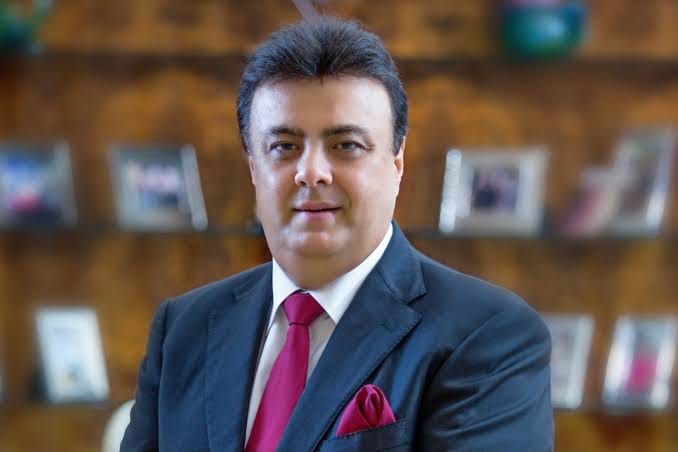
United Bank for Africa (UBA) Plc has won a court ruling in its three-year effort to recover money it says Stallion Group owes. The Federal High Court upheld the bank’s receiver, its mortgage security and the liability of the guarantors.
Justice Daniel Osiagor of the Federal High Court in Ikoyi, Lagos, resolved every issue in UBA’s favour and granted all the reliefs sought, MoneyCentral’s reports according to the judgement heard in Court.
The court confirmed Romeo Ese Michael as receiver-manager, with the right to take possession of the mortgaged property and seek protective orders.
It also barred the defendants from diverting payments owed to them by government agencies, thereby reinforcing the Bank’s ability to protect its recovery interests.
The court held that the defendants did not dispute owing money, only the amount, and that a reconciliation of accounts did not cancel the debt.
The Court also dismissed objections raised by the 12th Defendant (Barbedos Ventures Limited), holding that it had failed to establish any proprietary rights over the mortgaged property. Consequently, its consent was not required for the creation of the mortgage, and its objections were rejected.
When UBA filed the suit in October 2023, it claimed N156.03 billion, as being owed. Stallion has called the claim “entirely false,” however, the court’s written judgment and Stallion’s response to the ruling were not immediately available.
The case began when Justice Akintayo Aluko granted UBA orders to take over assets of Stallion Nigeria Ltd. and its affiliates in Lagos, Port Harcourt and Kano, and to freeze their funds across Nigerian banks. Stallion’s attempts to lift those orders failed in December 2023. The defendants include Von Automobile Nigeria, Stallion Motors, The Honda Place and director Sunil Vaswani.
The ruling strengthens a principle Nigerian lenders rely on: arguing over how much is owed does not by itself stop a creditor from enforcing its security. UBA is using the same receiver to pursue N61.45 billion linked to Western Metal Products Co.
The decision represents a comprehensive victory for UBA, with the Court resolving all issues in the Bank’s favour and granting all the reliefs sought.
The ruling is particularly significant for the enforcement of creditors’ rights in Nigeria, underscoring the legal validity of properly constituted security arrangements and the authority of duly appointed receivers to enforce creditors’ interests.
The judgment marks a major milestone in UBA’s efforts to recover its exposure to Stallion Group and safeguard the interests of the Bank and its stakeholders.
The key highlights of the judgment are as follows:
The Federal High Court Ikoyi affirmed its jurisdiction to hear the case.
The Judgement was delivered by Justice Daniel Osiagor of Court 6 of Federal High Court, Ikoyi, Lagos
The Defendants did not dispute their indebtedness, only the amount owed.
The guarantors were held liable.
The appointment of the Receiver/Manager was upheld as valid.
The Receiver/Manager’s right to take possession of the mortgaged property was affirmed.
The Receiver/Manager was held to be entitled to seek protective orders.
The Court held that the reconciliation exercise did not negate the indebtedness.
The objection of the 12th Defendant was dismissed, as it failed to establish any proprietary rights over the mortgaged property. Its consent was therefore not required for the mortgage.
The Defendants were restrained from diverting receivables due to them from government agencies.

The Human Rights Writers Association of Nigeria, (HURIWA), has called on the Economic and Financial Crimes Commission, (EFCC), to bring its investigations involving former Delta State Governor Ifeanyi Okowa and former Kogi State Governor Yahaya Bello to a clear and lawful conclusion, warning political parties against fielding candidates whose unresolved corruption cases raise serious questions about public
The call was contained in a press statement signed by Comrade Emmanuel Nnadozie Onwubiko, National Coordinator of HURIWA, on the 9th of September, 2026.
According to the association, an opinion poll it conducted across Nigeria involving more than 6,000 respondents indicated overwhelming public disapproval of parties fielding politicians with unresolved corruption allegations.
HURIWA said 99 per cent of respondents condemned the practice, with particular criticism directed at the ruling All Progressives Congress, (APC), over its reported decision to field Okowa for a senatorial contest in Delta North.
The association said respondents in Delta North questioned why the party would reportedly choose the former governor instead of the incumbent senator, Prince Ned Nwoko, and demanded that EFCC clarify status of its investigation into Okowa.
HURIWA said the EFCC must explain status of its investigation into Okowa, who was arrested and detained in November 2024 over allegations concerning management of funds received during his eight-year tenure as Delta State governor.
The group recalled that reports at the time quoted EFCC saying:
“Okowa was at our Port Harcourt office following an invitation from the investigators probing the allegations against him. He was then arrested.”
HURIWA noted that the Punch also reported the source as saying:
“The commission is investigating him regarding the N1.3 trillion 13% derivation fund from the federation account between 2015 and 2023.”
The organisation said allegations reported at the time also included questions about funds allegedly used to acquire shares in a floating liquefied natural gas project and other investments.
HURIWA stressed that these were allegations under investigation and not proof of guilt. It noted that Okowa subsequently denied wrongdoing, with his aide maintaining that EFCC had not established a case against him.
The association added that the former governor should be entitled to due process, just as Nigerians deserved transparency about the investigation and a clear explanation of whether evidence warranted prosecution.
“Where investigators have sufficient evidence to prosecute, the EFCC should proceed without undue delay. Where the evidence is insufficient, the commission should equally clarify the position rather than leave the matter indefinitely unresolved,” HURIWA said.
Bello Case Raises Similar Questions On Accountability
The association said respondents in Kogi State expressed similar concerns about unresolved allegations involving former Governor Yahaya Bello, who has faced EFCC allegations concerning alleged diversion of public funds during his tenure.
HURIWA said reported scale of allegations made it imperative for anti-graft agency to pursue matter transparently and through courts. It emphasised that neither accusation nor investigation should be treated as conviction, however political office should not become shield against lawful investigation or prosecution.
APC, INEC And EFCC Must Address Public Concerns — HURIWA
HURIWA said its reported poll reflected public frustration with what respondents perceived as gap between anti-corruption rhetoric and political choices made by parties seeking public office.
It urged APC to explain rationale behind its reported senatorial choice in Delta North and called on all political parties to adopt transparent candidate-selection standards.
The association also urged the Independent National Electoral Commission, INEC, to apply electoral law impartially, noting that eligibility questions must be determined by relevant constitutional and statutory provisions rather than public allegations alone.
HURIWA called on EFCC to provide update on status of Okowa investigation and pursue any prosecution justified by evidence, and to ensure Bello case also proceeds in accordance with law.
“Nigerians should not have to choose between respect for the presumption of innocence and the demand for accountability from public officials,” HURIWA said.
It maintained that both principles must be upheld: no individual should be declared guilty without due process, and no politically influential person should be insulated from investigation because of party affiliation or electoral ambition.
-
Politics3 years ago
13 Ondo Assembly Members Disown Endorsement of Aiyedatiwa
-
Politics3 years ago
APC Group, Ondo Govt, Quarrel Over Money for Endorsement
-

 Trending News5 years ago
Stop unsavoury, inciting statements – DSS warns
-

 Others5 years ago
Adron Homes Celebrates 10 Years Of Housing Excellence
-

 Humanity5 years ago
President Buhari Commiserates With Ambassador Maureen Tamuno Over The Loss Of Her Father
-

 Others7 years ago
EX- CUSTOMS BOSS, IBRAHIM MERA’S DWINDLING FAME
-

 Business2 years ago
Bigi Carbonated Soft Drinks Treats 40 Consumers to an Epic Easter Movie Hangout
-

 Business2 years ago
Wema Bank Shines at Global SME Finance Forum Conference Awards 2024 …Awarded: • SME Financier of the Year (Africa) • Platinum Award for Best Financier for Women Entrepreneurs (Africa)