
News
Customs Reform Will Unlock AfCFTA’s Full Potential, Experts Say

Experts say digitised border systems are vital to unlocking Africa’s free trade ambitions and boosting Nigeria’s export competitiveness

Trade and economic experts have described customs modernisation as the critical engine that will determine whether the African Continental Free Trade Area, AfCFTA, evolves from an ambitious policy framework into a commercially successful single market, arguing that faster, digital and transparent border systems are now indispensable to Africa’s economic integration.
Also read: Nigeria’s AfCFTA strategy: Ambition, progress and the challenge of delivery
Speaking in separate interviews with the News Agency of Nigeria in Abuja, the experts said Customs Modernisation AfCFTA is no longer a technical reform confined to border agencies.
Instead, they described it as a strategic economic priority capable of reducing logistics costs, accelerating cargo movement, improving transparency and enabling businesses, particularly in Nigeria, to compete more effectively across the continent.
Their comments come as African governments continue efforts to implement AfCFTA, which seeks to establish the world’s largest free trade area by participating countries.
While the agreement has been ratified by most African Union member states, implementation has progressed unevenly, with only a limited number of countries actively trading under its preferential framework.
The World Bank has projected that AfCFTA could substantially increase intra-African exports if non-tariff barriers and implementation bottlenecks are addressed.
For the Director-General of the Abuja Chamber of Commerce and Industry, Agabaidu Jideani, the greatest obstacle to continental trade is no longer tariff policy but inefficient border administration.
According to Jideani, AfCFTA’s success depends on replacing fragmented customs procedures with harmonised digital systems that allow goods to move across African borders with minimal bureaucracy.
He said electronic documentation, risk-based cargo inspections and integrated customs platforms would reduce delays, lower compliance costs and improve transparency for businesses operating across multiple jurisdictions.
“A tariff reduction means little if a truck is trapped at the border for days,” he said, stressing that cumbersome paperwork and repeated inspections continue to undermine Africa’s trade ambitions.
Jideani believes small and medium-sized enterprises stand to gain the most from customs reform because they often lack the financial resources and compliance capacity available to larger corporations.
Simplified procedures, digital documentation and reduced administrative costs, he argued, would allow smaller manufacturers and exporters to participate more confidently in cross-border trade while encouraging investment in regional value chains.
For larger businesses, he said, predictable customs procedures would strengthen inventory planning, reduce supply chain disruptions and improve overall competitiveness.
“Businesses can better plan inventory, minimise delays at ports and border crossings, and expand their regional value chains,” Jideani said.
The President of the Organisation of Youth in International Trade and Commerce, Dr Chinedu Amadi, described AfCFTA as Africa’s most ambitious economic integration initiative since independence but warned that its long-term success depends on efficient customs administration.
“The success of AfCFTA depends largely on customs modernisation through faster, transparent and efficient border processes driven by digital technology,” Amadi said.
He noted that Nigeria, despite being one of Africa’s largest consumer markets, continues to face longstanding challenges including multiple inspections, inconsistent customs procedures, documentation bottlenecks, high transaction costs and weak logistics infrastructure.
Those constraints, he said, continue to affect exporters seeking greater access to continental markets.
Amadi welcomed the Federal Government’s digital customs initiatives, including the rollout of the National Single Window platform, which is designed to streamline import and export procedures through integrated electronic processing.
The platform forms part of broader trade reforms intended to reduce bureaucracy, lower logistics costs and improve Nigeria’s competitiveness within AfCFTA.
He explained that digital customs tools, including electronic declarations, digital certificates of origin, online payment systems and risk-based cargo inspections, can significantly reduce manual processing, eliminate duplication and improve transparency.
Beyond facilitating trade, Amadi said such reforms would also strengthen revenue collection by reducing opportunities for leakages while enabling customs authorities to focus enforcement efforts on high-risk consignments.
He cautioned, however, that customs reform alone would not be sufficient unless agencies responsible for immigration, port health, standards, quarantine, transport and security also embraced greater coordination.
For Williams Osaze, President of the Society for Promotion of People’s Right, the next stage of AfCFTA lies in connecting customs systems across national borders rather than allowing each country to operate independently.
Osaze said interconnected digital platforms and single-window systems would enable customs declarations submitted in one country to be recognised elsewhere, eliminating duplicate paperwork and reducing administrative burdens for traders.
Such integration, he argued, would be essential for building regional value chains linking manufacturers, suppliers and retailers across different African economies.
Economic consultant Prof. Emmanuel Adeniyi highlighted the importance of AfCFTA’s Simplified Trade Regime, describing it as a practical mechanism for supporting micro, small and medium-sized enterprises engaged in cross-border commerce.
He said simplified documentation requirements and streamlined clearance procedures could encourage more informal traders to enter the formal economy while reducing unnecessary delays at border posts.
Adeniyi also linked customs reform to financial integration through the Pan-African Payment and Settlement System, which enables businesses to settle cross-border transactions in local currencies rather than relying predominantly on the United States dollar.
The payment platform is expected to reduce transaction costs, ease foreign exchange pressures and support faster settlement of intra-African trade, particularly for small businesses.
The experts agreed that customs efficiency extends beyond ports and border crossings.
Modern customs systems, they argued, influence investment decisions, manufacturing competitiveness, logistics performance, export growth and government revenue.
For investors, efficient customs administration strengthens confidence in industrial parks, export processing zones, logistics hubs, warehousing, trade finance, freight forwarding and digital compliance technologies.
For governments, digitised customs systems improve transparency, enhance revenue assurance and strengthen oversight of cross-border trade.
The experts also urged Nigerian manufacturers to improve product quality, certification, branding and packaging, warning that expanded market access under AfCFTA will expose local producers to stronger competition from businesses across Egypt, South Africa, Kenya, Ghana, Morocco, Côte d’Ivoire and other African economies.
While customs modernisation can remove barriers to trade, they noted that competitiveness will ultimately depend on the quality of products entering continental markets.
Nigeria’s trade reforms have gathered pace in recent years with the introduction of digital customs initiatives, port modernisation programmes and the National Single Window project.
These measures complement broader efforts by the Nigeria Customs Service to automate clearance processes, strengthen risk management systems and improve collaboration among border agencies.
As AfCFTA gradually moves from policy to implementation, analysts believe customs modernisation has become the bridge between Africa’s integration ambitions and commercial reality.
Also read: Biashara Afrika in Lome 2026: From AfCFTA talkshop to trade action
For Nigeria, they argue, digitising border processes, strengthening logistics infrastructure, supporting exporters and improving product standards will be essential not only to expanding non-oil exports but also to positioning the country as a leading trade hub within Africa’s emerging single market.


News
Panic-stricken Enugu APC begins flag-off of already flagged of roads in Nsukka after PDP’s Chijioke Ugwu’s homecoming




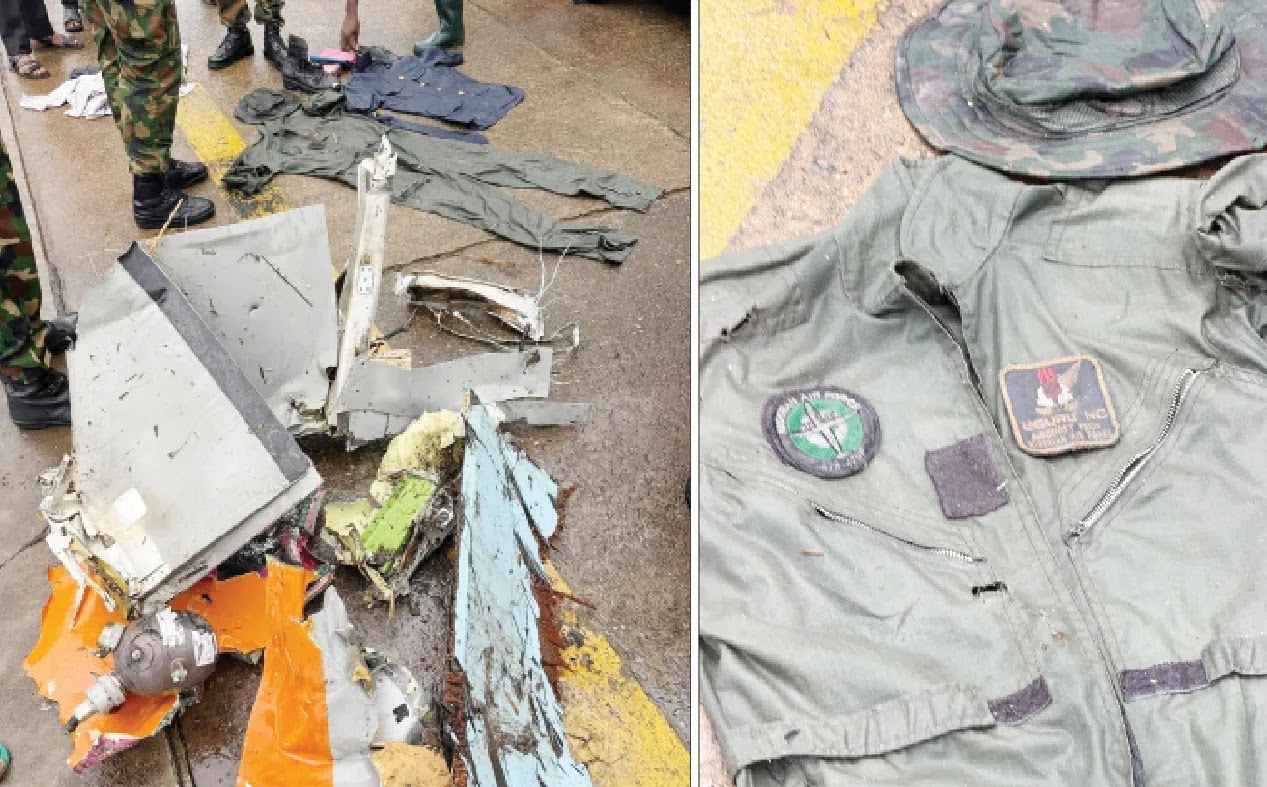
The Nigerian Air Force has confirmed that all 25 people aboard its ATR-42 aircraft, NAF 931, died after the aircraft crashed in the Igbokoda area of Ondo State.
The aircraft, which had five crew members and 20 passengers on board, was on a routine mission from Benin to Lagos when the NAF 931 aircraft crash occurred on Monday, October 5, 2026. Search-and-rescue operations were immediately activated following the accident.
The Chief of the Air Staff, Air Marshal Sunday Kelvin Aneke, described the incident as a deeply painful moment for the Nigerian Air Force and the country, while extending condolences to the families, colleagues and loved ones of those who died.
Aneke assured the bereaved families of the Nigerian Air Force’s full support as they come to terms with the loss.
The Air Force said no survivors had been found and released the names of the five crew members and 20 passengers on board the aircraft.
The crew members were identified as Squadron Leader M.I. Aburime, Flight Captain; Squadron Leader A.P. Man-Ugwueje, Co-pilot; Flight Lieutenant I.S. Bako, Co-pilot; Warrant Officer A. Abubakar, Aircraft Technician; and Corporal H.C. Uguru, Aircraft Technician.
The 20 passengers were Flight Lieutenant T.L. Lazarus; Flight Lieutenant M. Akinloye; Flying Officer I.M. Adeshina; Master Warrant Officer F. Onwuka; Master Warrant Officer B.A. Matini; Warrant Officer F.S. Nuhu; Flight Sergeant R.B. James; Flight Sergeant A.I. Mohammed; Sergeant A.E. Ani; Sergeant S.I. Izibenikien; Sergeant C. Alafuka; Sergeant A.N. Mbadugha; Lance Corporal F.C. Ugwuba; Lance Corporal G.E. Eledan; Mrs Ezeh Nneka; Godstmine Tarabina; Joy Micheal; Sunday Micheal; Ukeme David; and Gideon Omotola.
The latest figure released by the Air Force differs from the initial information provided after the crash. Aviation Minister Festus Keyamo had initially said 32 people, comprising 25 passengers and seven crew members, were aboard the aircraft. The Nigerian Air Force subsequently clarified that the manifest contained 25 people, made up of five crew members and 20 passengers.
The aircraft crashed in a swampy area around Igbokoda, close to a naval base, after air traffic controllers lost contact with it at about 9:13am while it was travelling from Benin to Lagos. The wreckage was later located and rescue teams were deployed to the area.
The cause of the crash has not been established. The Chief of the Air Staff has directed a comprehensive investigation to determine the circumstances surrounding the accident.
President Bola Tinubu had also directed the Nigerian Air Force to conduct a thorough investigation into the crash and declared three days of national mourning for the personnel who died. He ordered that national flags be flown at half-mast throughout the country in honour of the victims.
The Air Force said it would continue to provide timely and verified information as the investigation progresses. It also urged members of the public to avoid speculation and the circulation of unverified information, while respecting the privacy and dignity of the affected families.
A condolence register has been opened at the Headquarters of the Nigerian Air Force in Abuja for senior government officials, members of the diplomatic corps, heads of security agencies and other well-wishers who wish to pay their respects and convey messages of sympathy to the families of the deceased and the Nigerian Air Force.
-
Politics3 years ago
13 Ondo Assembly Members Disown Endorsement of Aiyedatiwa
-
Politics3 years ago
APC Group, Ondo Govt, Quarrel Over Money for Endorsement
-

 Trending News5 years ago
Stop unsavoury, inciting statements – DSS warns
-

 Others5 years ago
Adron Homes Celebrates 10 Years Of Housing Excellence
-

 Humanity5 years ago
President Buhari Commiserates With Ambassador Maureen Tamuno Over The Loss Of Her Father
-

 Others7 years ago
EX- CUSTOMS BOSS, IBRAHIM MERA’S DWINDLING FAME
-

 Business2 years ago
Bigi Carbonated Soft Drinks Treats 40 Consumers to an Epic Easter Movie Hangout
-

 Business2 years ago
Wema Bank Shines at Global SME Finance Forum Conference Awards 2024 …Awarded: • SME Financier of the Year (Africa) • Platinum Award for Best Financier for Women Entrepreneurs (Africa)