Business
Dangote Refinery Boosts Petrol Prices to N874, Pump Costs May Hit N1,000


Dangote Petroleum Refinery raises ex-depot petrol price to N874, signalling nationwide pump prices could reach N1,000 per litre amid global crude volatility

Retail petrol prices in Nigeria may soon rise to between N980 and above N1,000 per litre following an upward review of the gantry price by the Dangote Petroleum Refinery.
Also read: Dangote Predicts Naira Could Strengthen to N1,100
Industry sources report that the refinery increased its ex-depot price from N774 to N874 per litre, a move largely attributed to rising global crude oil prices and heightened volatility in international energy markets.
Chinedu Ukadike, National Publicity Secretary of the Independent Petroleum Marketers Association of Nigeria (IPMAN), confirmed that the gantry price adjustment would inevitably reflect at retail outlets nationwide.
He noted that location, transportation costs, and other logistics considerations would influence the final pump price.
The revision follows a brief suspension of petrol loading operations at the refinery on 2 March 2026 after crude prices surged above $80 per barrel.
Diesel supply, however, continued uninterrupted.
Geopolitical tensions involving the United States, Israel, and Iran have rattled global oil markets, raising concerns over potential disruptions around the Strait of Hormuz, a key transport corridor for roughly 20–21 million barrels of crude and petroleum products daily.
Rising war-risk insurance premiums and suspended shipping activity have contributed to higher replacement costs for petroleum products.
Industry analysts warn that if Brent crude climbs beyond $90 per barrel, Nigeria could see further increases in petrol and diesel prices despite expanding domestic refining capacity.
Dangote Petroleum Refinery currently produces about 650,000 barrels of refined products daily, with output expected to expand in the coming years.
The refinery is part of the Dangote Group’s broader industrial push, which includes electricity generation, steel production, and port infrastructure, aimed at accelerating Africa’s industrialisation and boosting domestic energy security.
Aliko Dangote, President of the Dangote Group, emphasised that refining is only one component of a wider strategy to industrialise the continent, noting that reliable electricity remains crucial for manufacturing growth and economic transformation.
Also read: Dangote Refinery Dominates 62% of Nigeria’s Petrol Market
Despite increased domestic refining, analysts say Nigeria’s fuel market remains vulnerable to global shocks, with consumers likely to face further pump price adjustments in the weeks ahead.




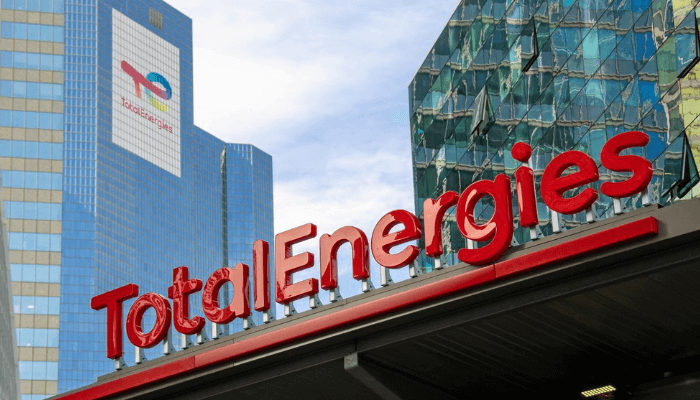
TotalEnergies and Nigerian independent energy company AMNI International have taken the Final Investment Decision on the $800 million Ima Gas Project, more than five decades after the gas field was discovered.
The Ima Gas Project, located in shallow waters across Oil Mining Leases 112 and 117 near Bonny Island, Rivers State, is expected to begin production in 2028 and reach a plateau of 350 million cubic feet of gas per day.
The development is expected to play a major role in supplying feed gas to Nigeria LNG, with the Ima field projected to provide about one-third of the additional gas required for the ongoing Train 7 expansion.
Train 7 is expected to increase Nigeria LNG’s liquefaction capacity from 22 million tonnes per annum to 30 million tonnes per annum, strengthening Nigeria’s capacity to process and export liquefied natural gas.
The Ima field was discovered in 1973 but remained undeveloped for more than 50 years. The Final Investment Decision provides the commercial and financial basis for finally developing the long-dormant resource.
Under the development plan, TotalEnergies will operate the project with a 40 per cent interest, while AMNI will hold the remaining 60 per cent.
The field will be developed using a single offshore platform connected to Nigeria LNG’s facility on Bonny Island through a 22-kilometre pipeline.
TotalEnergies said its investment in the project is more than $600 million, while the Federal Government described the overall Final Investment Decision as an $800 million investment.
At the FID signing ceremony in Abuja, TotalEnergies Exploration and Production Nigeria Managing Director, Mathieu Bouyer, described the decision as the culmination of a development process that had stretched across several decades.
He said the project reflected increased confidence in Nigeria’s investment environment and highlighted reforms targeting the non-associated gas sector as part of the factors that helped make the development commercially viable.
President Bola Tinubu welcomed the investment, saying the project demonstrated the potential of reforms introduced to reduce the cost and time required to develop oil and gas projects.
The President said the government had introduced incentives aimed specifically at unlocking onshore and shallow-water gas projects that had remained undeveloped for years.
He said the Ima development would create opportunities for Nigerian businesses, engineers, technicians and contractors, while generating jobs, economic activity in host communities and additional export earnings.
The project is also expected to have a strong Nigerian content component. TotalEnergies said all key contractors for the development would be Nigerian companies, while about 60 per cent of the workforce during the development phase is expected to come from host communities.
The development will incorporate measures aimed at reducing emissions. TotalEnergies said the platform would receive electricity from shore, operate without routine flaring and use permanent methane detection and monitoring systems.
The Federal Government said the project is part of efforts to turn Nigeria’s large natural gas reserves into productive assets capable of supporting industrialisation, energy supply, jobs and export earnings.
Special Adviser to the President on Energy, Olu Verheijen, said the Ima development illustrated the importance of creating commercial and investment conditions that allow previously stranded resources to be developed.
The government also noted that Nigerian financial institutions arranged 77 per cent of the project’s financing, further highlighting the participation of domestic financial institutions in the development.
For Nigeria LNG, the project comes as the company continues work on the Train 7 expansion, which is designed to increase the Bonny Island plant’s liquefaction capacity and strengthen the country’s position in the global LNG market.

-
Politics3 years ago
13 Ondo Assembly Members Disown Endorsement of Aiyedatiwa
-
Politics3 years ago
APC Group, Ondo Govt, Quarrel Over Money for Endorsement
-

 Trending News5 years ago
Stop unsavoury, inciting statements – DSS warns
-

 Others5 years ago
Adron Homes Celebrates 10 Years Of Housing Excellence
-

 Humanity5 years ago
President Buhari Commiserates With Ambassador Maureen Tamuno Over The Loss Of Her Father
-

 Others7 years ago
EX- CUSTOMS BOSS, IBRAHIM MERA’S DWINDLING FAME
-

 Business2 years ago
Bigi Carbonated Soft Drinks Treats 40 Consumers to an Epic Easter Movie Hangout
-

 Business2 years ago
Wema Bank Shines at Global SME Finance Forum Conference Awards 2024 …Awarded: • SME Financier of the Year (Africa) • Platinum Award for Best Financier for Women Entrepreneurs (Africa)