
News
Dapo Abiodun’s multibillion-naira Cargo Airport road in Ogun submerged by flood
Flooding near Ogun’s Gateway Cargo Airport raises alarm over poor drainage, sparking public outrage and questions about long-term infrastructure planning


Flooding near Ogun’s Gateway Cargo Airport raises alarm over poor drainage, sparking public outrage and questions about long-term infrastructure planning
Flood exposes airport road flaws as torrential rain submerges the main route to Governor Dapo Abiodun’s much-celebrated Gateway International Agro-Cargo Airport in Ilishan-Remo, Ogun State.
Also read: Mascot of mediocrity: A rejoinder to Dapo Abiodun’s imported propaganda merchant

The deluge, which struck on Friday, trapped motorists and severed access to the nearly completed multibillion-naira project, fuelling outrage across social and civic circles.
Footage shared by TheCityPulse showed helpless drivers wading through floodwaters that engulfed the newly built corridor linking the airport to the Sagamu–Benin expressway.
The scene was a stark contrast to the state’s glowing narrative about the airport’s world-class potential and has triggered widespread questions about poor drainage design and project oversight.
Promoted as a transformative aviation hub for sub-Saharan Africa, the Gateway Cargo Airport was hailed for features such as Nigeria’s longest runway, a control tower, fire service infrastructure, and an agro-processing zone.
With officials claiming the project is 97% complete, Friday’s flooding has shattered confidence in its resilience and readiness.
Local authorities had received earlier warnings from the Nigerian Meteorological Agency and state bodies predicting heavy rainfall and potential flooding in areas including Sagamu and Iperu.
Yet, no visible effort was made to fortify key access routes to the airport, leaving the new infrastructure defenceless against seasonal downpours.
“This is unacceptable for a project of this magnitude. Accessibility to such a critical facility should not be this vulnerable,” said a transport logistics analyst who described uninterrupted road access as vital for any functioning cargo airport, particularly during peak rainy seasons.
This is how a billion-naira dream gets washed away. Who builds an airport road without proper drainage?”
So far, neither the Ogun State Ministry of Works nor the Airport Development Authority has responded to public concern.
Repeated attempts to contact state officials yielded no reply, deepening frustration among residents and observers.
Online reactions have been scathing. Critics argue that the government focused too much on ceremonies and press releases while neglecting the practical demands of sustainable infrastructure.
One local resident, reacting to the viral video, said: “This is how a billion-naira dream gets washed away. Who builds an airport road without proper drainage?”
The incident feeds into a broader national debate about the disconnect between large-scale government projects and the realities of planning.
Many Nigerians have grown wary of symbolic infrastructure that fails under basic environmental stress. For a project positioned to handle substantial volumes of agro-exports, the consequences of poor accessibility could be devastating.
With Ogun State aiming to establish itself as a logistics powerhouse, the pressure is now on the government to act swiftly.
Industry stakeholders are calling for urgent engineering reviews, improved drainage systems, and a transparent reassessment of contracts tied to the airport’s construction.
Also read: Olumo Rock in chains: Dapo Abiodun’s final act of betrayal to Ogun’s cultural legacy
Without these measures, the vision of a gateway to growth may remain stuck in the mud.


Police arrest seven suspected kidnappers in Abuja and Kaduna, recover Oluwadamilola Adedayo’s body and seize AK-47 rifles and ammunition
The Nigeria Police Force has arrested seven suspected members of a kidnapping syndicate operating in the Federal Capital Territory and Kaduna State, recovering the remains of a woman allegedly abducted and killed by the gang.
Also read:FG Vows Action Against Lagos Firms Over Power Theft
The police said the decomposing body of Oluwadamilola Adedayo was recovered from the suspects’ camp in Tukuba Forest, Kuje, Abuja, on October 19, 2026, following an intelligence-led investigation.
The victim was abducted alongside her mother, Nancy Adedayo, her 12-year-old brother, David Adedayo, and their housemaid, Jennifer David, during a gunpoint raid on their residence on Adedayo Adeosun Street, Kuchiyako, Kuje, on August 23.
According to the police, the kidnappers released the victim’s mother about an hour after the abduction to arrange ransom payment, while the housemaid and the boy were assaulted and abandoned unconscious in a forest.
They later regained consciousness and found their way home.
Addressing journalists in Abuja on Friday, the Commander of the Force Intelligence Department’s Special Tactical Squad, ACP Godfrey Victor, said the operation followed a petition referred by the Inspector-General of Police’s Secretariat on October 15.
He said intelligence gathering led to the arrest of two suspects in Rijana community, Kaduna State, while five others were subsequently apprehended in Sagbon Lugbe, Abuja, through a joint operation involving police officers, vigilante operatives and other security agencies.
“On 19th October 2026, operatives led by ACP Victor Ogbiede Godfrey proceeded to the gang’s camp at Tukuba Forest, Kuje, FCT, where the decomposing body of Miss Oluwadamilola Adedayo was recovered,” he said.
Victor said the family paid N16.2m for the release of the abducted children, but the suspects allegedly demanded an additional N50m before releasing Oluwadamilola.
The police identified the seven suspects as Ishaka Abdullahi, 27, also known as Langalanga; Abdullahi Dabo, 42; Abubakar Jibrin, 20, also known as Mai-Laya; Barahu Ibrahim, 24, also known as Black; Sani Mohammed, 24; Alidu Lawal, 18, also known as De Jaguar; and Yakubu Abubakar, 28, also known as Soldier.
The suspects remain allegations under investigation and have not been convicted by a court.
The operation also resulted in the recovery of weapons and other items allegedly linked to the syndicate.
According to Victor, the exhibits included four AK-47 rifles, a locally made revolver pistol, 63 rounds of live ammunition, a mobile phone allegedly used for ransom negotiations, N400,000 and a motorcycle.
He added that investigators had linked the group to the abduction of a businessman, John Ali, in Kuje on September 24.
The police said investigations were continuing as they worked to establish the full extent of the syndicate’s activities and gather evidence for prosecution.
Oluwadamilola’s father expressed gratitude to the Inspector-General of Police and the officers involved in the investigation, but said the family remained devastated by her death.
“The kidnapping and murder of our beloved daughter, Oluwadamilola, at this time has left our family in deep pain. However, the support and assurance from the leadership of the police force has given us strength and hope that justice will prevail,” he said.
He urged the police to pursue the investigation to its conclusion and ensure that everyone found responsible was brought to justice.
“We continue to appeal to the police, with the help of Almighty God, to get to the root of this matter and ensure that all those responsible for this wicked act are brought to book,” he added.
Also read:FG Vows Action Against Lagos Firms Over Power Theft
The arrests mark a significant development in the investigation into the family’s abduction, although the police have yet to announce the outcome of the prosecution process.


The FG vows action against Lagos companies over alleged illegal power connections, as it moves to recover unpaid charges and reduce grid losses
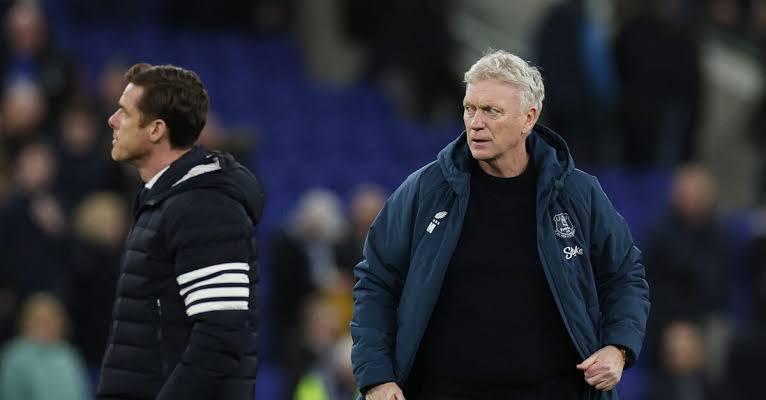
Arteta praises Moyes ahead of Arsenal’s Premier League clash with Everton, warning that David Moyes’ organised side poses a serious threat
Arsenal manager Mikel Arteta has praised Everton boss David Moyes as a respected figure in English football while warning that his team must prepare for a difficult Premier League encounter at the Emirates Stadium on Saturday.
Also read: Arokodare Eyes Permanent Ajax Move After Strong Start
Speaking ahead of the match on October 24, 2026, Arteta highlighted Moyes’ longevity, contribution to English football and qualities as both a coach and a person.
Asked whether Moyes could be considered the king of the Premier League, Arteta expressed admiration for his Everton counterpart.
“100%; I don’t know if it’s the king or what it is, but he’s certainly someone that I think we all look up to,” he said.
Arteta praised Moyes not only for his long career but also for what he represents within the game.
“Not only for his longevity, but I think what he represents for the game, what he represents for the Premier League, and his trajectory,” he said.
The Arsenal manager added that his personal relationship with Moyes had strengthened his respect for him.
“For me especially, because I know the man behind the coach, which is the most important thing, and then I really know as well the coach, and he’s a superb coach,” Arteta said.
Arteta spent six years at Everton as a player, giving him first-hand knowledge of the club and its expectations.
Despite Arsenal’s home advantage, Arteta cautioned against underestimating Everton, pointing to their tactical organisation and individual talent under Moyes.
“There are a lot, because I know David so well and how he sets the team, the quality they have in their organisation and individually,” he said.
Arteta also noted that Everton had avoided defeat before their most recent match, describing them as a well-balanced side capable of making life difficult for Arsenal.
“It’s no coincidence they didn’t lose before their last game.
They have a really good team, which we know because in recent clashes, it’s always been a really difficult game for us,” he added.
The warning underlines Arsenal’s need for concentration against an Everton side Arteta expects to provide a stern test.
Arteta also discussed the tactical approaches Arsenal could face, acknowledging that opposing teams would decide how best to challenge his side.
He said managers prepare their teams according to what they believe gives them the best chance of winning, meaning Arsenal must be ready for different styles of play.
“Every team is going to prepare in the best way with how they think they can beat us, like we do with the opponent,” Arteta said.
He explained that an early opportunity or goal could dramatically alter the course of a match, influencing how both teams approach the remaining minutes.
“You could have an open chance in the first 10 minutes that changes the game and then the next 80 minutes are different because of the context of the game, results have a huge impact on how teams behave,” he said.
Arteta stressed that Arsenal must be capable of finding solutions regardless of how the contest develops.
“We need to be able to win and enjoy as much as possible in every context,” he added.
The Spaniard also responded to discussions about Arsenal’s style of play, saying the team must focus on its own performance while respecting the opposition.
Arteta acknowledged that football naturally generates strong reactions and that assessments of a team can change depending on what happens during a match.
“I think you have to respect every opponent – it would be good to be a bit consistent, but it’s understandable,” he said.
He added that Arsenal’s responsibility was to deliver performances that keep supporters engaged, even when opponents adopt defensive or cautious tactics.
“But that’s normal, that’s the expectation, and our job is to create constant excitement. The opponent has a lot to do with how they want to play, it’s inevitable, but it’s on us,” Arteta said.
Arsenal’s meeting with Everton comes as the Gunners continue to balance their domestic campaign with European commitments.
Also read: Arokodare Eyes Permanent Ajax Move After Strong Start
Arteta’s comments make clear that he expects his players to adapt to the tactical demands of the contest and deliver a performance capable of securing a positive result.
-
Politics3 years ago
13 Ondo Assembly Members Disown Endorsement of Aiyedatiwa
-
Politics3 years ago
APC Group, Ondo Govt, Quarrel Over Money for Endorsement
-

 Trending News5 years ago
Stop unsavoury, inciting statements – DSS warns
-

 Others5 years ago
Adron Homes Celebrates 10 Years Of Housing Excellence
-

 Humanity5 years ago
President Buhari Commiserates With Ambassador Maureen Tamuno Over The Loss Of Her Father
-

 Others7 years ago
EX- CUSTOMS BOSS, IBRAHIM MERA’S DWINDLING FAME
-

 Business2 years ago
Bigi Carbonated Soft Drinks Treats 40 Consumers to an Epic Easter Movie Hangout
-

 Business2 years ago
Wema Bank Shines at Global SME Finance Forum Conference Awards 2024 …Awarded: • SME Financier of the Year (Africa) • Platinum Award for Best Financier for Women Entrepreneurs (Africa)