
Business
Cocoa operators urge FG to mandate chocolate in schools, boost local demand
Cocoa stakeholders urge Nigerian government to mandate chocolate in schools to grow local demand and revive the cocoa industry’s processing potential.


Cocoa stakeholders urge Nigerian government to mandate chocolate in schools to grow local demand and revive the cocoa industry’s processing potential

Cocoa operators urge FG to revive Nigeria’s cocoa industry by mandating the local consumption of chocolate, particularly through school feeding programmes.
Also read: ‘We will take drastic decisions that will shape Nigeria’s Economy for Good’ – Minister for Investment, Trade and Industry; Dr Doris Uzoka-Anite
The call, renewed by industry leaders under the Cocoa Association of Nigeria (CAN) and Cocoa Farmers Association of Nigeria (CFAN), highlights the urgent need to build a local market to complement Nigeria’s export-heavy cocoa economy.
The operators criticised the low domestic consumption of cocoa products despite Nigeria’s position among the world’s top producers of raw cocoa.
According to CAN President Mufutau Abolarinwa, chocolate should become a staple in the diets of Nigerian schoolchildren, beginning from primary to tertiary institutions.
“Chocolate is not widely consumed locally. And we ask, what can the government do to create a chocolate market? It’s simple.
The government should make it mandatory to give chocolate to children of school age,” he said. Abolarinwa believes that early exposure will nurture a future generation of cocoa consumers.
His argument is echoed by CFAN President Adeola Adegoke, who said Nigeria cannot compete globally in chocolate production if it lacks a domestic market.
“If you are producing chocolate and the market of consumption is not in Africa or Nigeria, why do you engage in it?” he asked, noting that the country has strong potential in cocoa production and intermediate processing.
Despite producing more than 280,000 tonnes of cocoa in 2023, Nigeria imports cocoa powder containing sugar worth over ₦4.6 billion, according to the National Bureau of Statistics.
Most cocoa powder and butter processed locally are exported, with only a small fraction used by beverage, biscuit and ice-cream producers within Nigeria.
Stakeholders blame the poor consumption culture on ignorance of cocoa’s health benefits and the absence of targeted government policies.
Abolarinwa stressed that cocoa-based products such as chocolate are vital for children’s brain development and should be part of the Home Grown School Feeding Programme. “The government should subsidise it for them,” he added, pointing to its long-term value.
Adegoke also urged capacity building through training for women and youth in cocoa-based enterprises. “We can continue to leverage it in terms of making sure to train our children, our youth, our women to be creative, to advocate for consumption,” he said.
The operators acknowledged growth in the cocoa powder market, especially with companies like Cadbury and Nestlé purchasing locally. However, they warned that until Nigeria builds internal consumption, foreign buyers will continue to dictate prices that do not favour producers.
Abolarinwa concluded by saying, “Once they know that you also consume it locally, then they will be begging you to get the product from you.”
Also read: Nigeria’s Energy Transition Prioritises Job Creation, Says Minister
The consensus among operators is clear: without local demand, the cocoa industry’s growth will remain stunted, and its vast economic potential untapped.


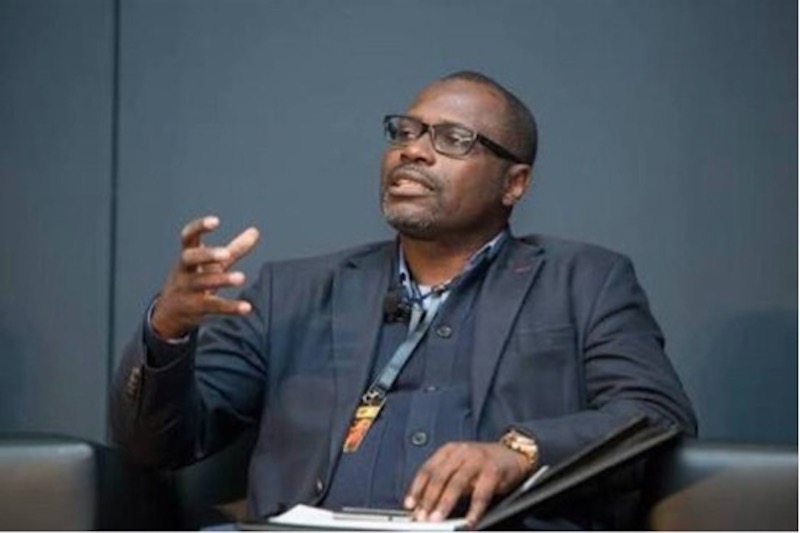
Shoreline Group today announced that African Export-Import Bank (Afreximbank) has approved a US$200 million facility in favour of Shoreline Power Company Limited and co-borrowers including Arkad S.p.A., Shoreline’s majority-owned engineering and construction platform.
Approved in June 2026, the facility was arranged and provided by Afreximbank as sole mandated lead arranger and lender. It provides bonding and working-capital capacity for Arkad’s delivery of the Hassi Bir Rekaiz project and supports Shoreline and its affiliates in developing further pipeline and infrastructure
projects in Nigeria and other permitted jurisdictions.
“This is a defining transaction for Shoreline and Arkad. We built Arkad as an African- sponsored engineering platform capable of competing at the highest level, and it is now delivering against a billion-dollar energy contract. Afreximbank’s US$200 million commitment gives the platform the financial strength to match its engineering capability and pursue further major infrastructure mandates. It demonstrates that African enterprises can assemble the capital, capability and partnerships required to compete for infrastructure at international scale.”
Hassi Bir Rekaiz Phase 2a Arkad holds 44 per cent of the approximately US$1 billion EPCCS-1 contract awarded by Groupement
Hassi Bir Rekaiz (GHBR) to an unincorporated consortium led by Egypt’s Petrojet, which holds 56 percent. EPCCS-1 covers engineering, procurement, construction, commissioning and start-up for the Phase 2a central processing facility and related infrastructure at the Hassi Bir Rekaiz field in Algeria’s Berkine
Basin.
GHBR is the joint operating entity for the licence, held by Sonatrach with 51 per cent and Thailand’s PTTEP with 49 per cent. The project includes a new crude oil processing facility with capacity of 31,500 barrels per day, facilities for associated gas and produced-water treatment, approximately 217 kilometres
of pipelines and the brownfield modifications required to integrate existing Phase 1 infrastructure.
The facilities are designed to support later expansion to 63,000 barrels per day under Phase 2b.
“This financing addresses the instruments that determine whether an EPC contractor can execute at scale: performance guarantees, advance payment guarantees and working capital through the project cycle. Hassi Bir Rekaiz is a demanding scope, combining a new central processing facility, associated treatment systems, pipelines and brownfield integration. With Petrojet, and with the support of Shoreline and Afreximbank, Arkad is focused on disciplined delivery against the project’s safety, quality and schedule requirements.”
The transaction was structured under Afreximbank’s Engineering, Procurement and Construction Initiative, which supports African engineering and construction firms with the financial instruments required to compete for and execute large infrastructure contracts. Afreximbank also supported the Arkad-Petrojet partnership through its EPC twinning work at the Intra-African Trade Fair held in Algiers
in 2025.
According to Afreximbank, the transaction is its first support for a Sub-Saharan African contractor undertaking a major infrastructure project in North Africa. For Shoreline, it demonstrates a practical model for combining African ownership and capital with established international engineering andindustrial capability.
Business
BUSINESSWOMAN AISHA ACHIMUGU SPEAKS OUT, CALLS FOR PROTECTION OF LIFE AND RESPECT FOR RULE OF LAW

Nigerian businesswoman and investor Aisha Achimugu has made a public appeal for the protection of her life, her family, and her business interests while alleging a sustained campaign of intimidation, media trial, and asset seizures.
Achimugu, in a statement Tuesday, said she is facing actions that she described as an affront to the rule of law and natural justice.
She then called for the respect for court orders and for an end to what she termed misleading media coverage about her person and companies.
According to Achimugu, the widow of the late Engr. Sulaiman Achimugu, former Managing Director of the Pipelines and Product Marketing Company, PPMC, she has over the last three decades built businesses in the oil and gas and other sectors, and runs the SAM Empowerment Foundation, SEF, which she said has implemented health, education, and community projects across Nigeria.
The businesswoman, however, alleged that since 2023 she has been the subject of investigations and actions by the Economic and Financial Crimes Commission, EFCC.
Narrating her ordeals, Achimugu noted that in 2023, the EFCC’s Port Harcourt zonal office froze her personal accounts, her children’s accounts, and company accounts linked to the Felak Group, based on an interim forfeiture order.
She said this was connected to a mistaken association with MBA Forex and Capital Investment.
Achimugu stated that in January 2024 she honoured an EFCC invitation with her counsel, clarified her company’s single transaction with MBA Forex, and refunded N58 million by bank draft to the EFCC recovery account.
In March 2025, the businesswoman said she received WhatsApp messages inviting her to the EFCC Port Harcourt office. Her lawyer responded in writing, proposing dates in April 2025. Despite this, she alleged a media campaign began on March 10, 2025 linking her to wrongdoing.
On March 28, 2025, the same day her company, Oceangate Oil & Gas Limited, submitted proof of $20 million payment to NUPRC for oil blocks PPL 302-DO and PPL 3007, subsequently, she claimed the EFCC declared her a “Wanted Person” for “conspiracy and money laundering.” She also alleged that EFCC operatives searched her home that day.
In April 2025, Achimugu said she filed a fundamental rights suit at the Federal High Court, Abuja. But upon returning to Nigeria on April 28, 2025 from a foreign trip, she alleged she was taken into EFCC custody, granted bail by a judge, but released five days later. She also said her international passport was collected.
She alleged further asset actions, including freezing of bank accounts, and the seizure of vehicles from her home in January 2026. She said matters relating to these actions are the subject of ongoing litigation and appeals.
Achimugu also alleged that her United States visa was revoked in April 2025, and that she encountered issues with visa processing related to her Grenadian citizenship, which she linked to media reports citing the EFCC’s declaration.
Achimugu stated that she has invested nearly $90 million in Nigeria’s oil and gas sector in the last five years and has attracted over $100 million in investments into the economy while directly employs close to 200 Nigerians.
However, she said the actions of the anti-graft agency have affected her business operations, international partnerships, and family, including her elderly parents and young children.
Achimugu then called on the National Assembly, the Judiciary, security services, and local and international human rights organizations to examine her case.
She also asked for the protection of her life and properties, respect for court orders, and an end to what she described as a “media trial”.
“I believe that justice delayed is justice denied, and I am not afraid to face the law provided due process is followed. My lawyers are pursuing all legal remedies locally and internationally,” she said.
Achimugu added that she remains committed to Nigeria and to supporting private sector growth.

-
Politics2 years ago
13 Ondo Assembly Members Disown Endorsement of Aiyedatiwa
-
Politics2 years ago
APC Group, Ondo Govt, Quarrel Over Money for Endorsement
-

 Trending News5 years ago
Stop unsavoury, inciting statements – DSS warns
-

 Others4 years ago
Adron Homes Celebrates 10 Years Of Housing Excellence
-

 Humanity4 years ago
President Buhari Commiserates With Ambassador Maureen Tamuno Over The Loss Of Her Father
-

 Others7 years ago
EX- CUSTOMS BOSS, IBRAHIM MERA’S DWINDLING FAME
-

 Business2 years ago
Bigi Carbonated Soft Drinks Treats 40 Consumers to an Epic Easter Movie Hangout
-

 Business2 years ago
Wema Bank Shines at Global SME Finance Forum Conference Awards 2024 …Awarded: • SME Financier of the Year (Africa) • Platinum Award for Best Financier for Women Entrepreneurs (Africa)