Business / Economy
Delta Reforms Target 100,000 Residents With ₦5bn


The Delta State Government says its ongoing economic reforms and empowerment programmes are helping to strengthen residents’ purchasing power, support small businesses and stimulate economic activity at the grassroots.

The Commissioner for Works (Rural Roads) and Public Information, Charles Aniagwu, disclosed this on Friday during a press briefing in Asaba, explaining that the administration of Governor Sheriff Oborevwori was focused on ensuring that the benefits of its economic measures reached residents, particularly low-income earners and operators of nano and small businesses.
As part of the empowerment drive, councillors across the state have been directed to support 200 residents in each ward. With about 500 wards in Delta State, the initiative is expected to reach at least 100,000 people and inject approximately ₦5 billion directly into the grassroots economy.
Aniagwu said the intervention was designed to help small businesses remain viable, expand their operations and increase the capacity of residents to participate in local economic activities.
The commissioner also disclosed that political and community leaders had complemented the government’s intervention with additional empowerment programmes and financial contributions.
He cited Ika North-East as an example, where community and political leaders contributed at least ₦5 million in each federal ward, resulting in an additional injection of about ₦70 million into the local economy, separate from funds being provided through the councillors’ empowerment initiative.
Aniagwu explained that strengthening purchasing power was essential to attracting and retaining investment, noting that businesses would naturally seek locations where residents had the financial capacity to purchase goods and services.
He said improving the economic capacity of rural communities could therefore help spread investment and business opportunities beyond major urban centres across the state.
The commissioner also linked the state’s interventions to broader improvements in its finances, saying increased fiscal capacity had enabled the government to mobilise contractors, meet salary and other obligations and improve the regularity of payments to workers and pensioners.
According to him, contractors can now be mobilised with payments of up to 40 per cent, while workers’ salaries and emoluments are being paid between the 22nd and 25th of every month. He also said pensioners no longer have to queue at Government House to receive their payments.
Aniagwu further pointed to the relative stability of academic activities in Delta State-owned universities as another indication of the state’s improved financial position.
He said the administration’s reforms were aimed at strengthening government finances while ensuring that public resources were used to support infrastructure, workers, businesses and vulnerable residents.
The state government has also backed a bill providing for a 13th-month salary for public servants. Aniagwu said the measure, once assented to by the governor, would form part of the administration’s broader efforts to increase disposable income and stimulate economic activity.
He maintained that interventions aimed at increasing residents’ purchasing power were intended to stimulate consumption, support businesses and create conditions capable of attracting further investment into Delta State.
The government’s latest empowerment drive therefore combines direct support for residents with wider economic measures, as the state seeks to increase household purchasing power and strengthen economic activity at the community level.
With the planned beneficiaries spread across the state’s wards, the administration says the initiative is expected to take economic support closer to residents and provide additional capacity for small businesses to survive and grow.




BUA Foods profit rose 11% to N450.47bn in nine months as lower production costs lifted margins despite a 19% revenue decline
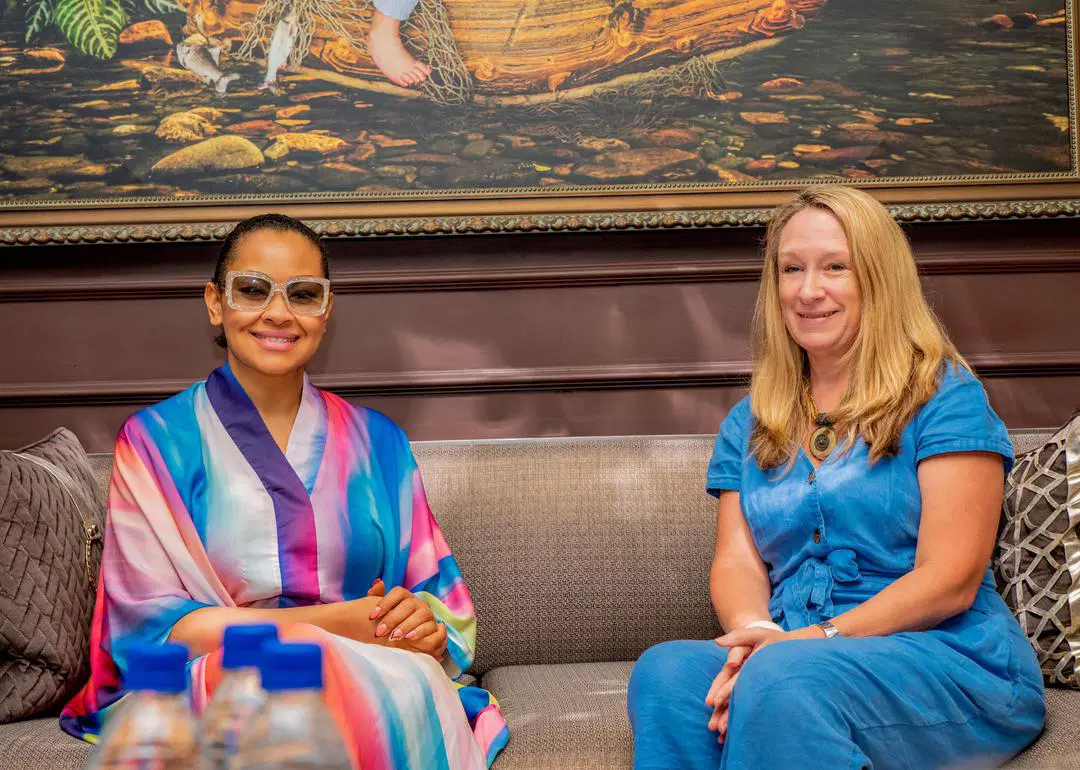
Kogi investment tour led by Natasha Akpoti-Uduaghan brought four European ambassadors to explore the state’s tourism, cultural heritage and local industries
Senator Natasha Akpoti-Uduaghan, representing Kogi Central, has hosted ambassadors from Belgium, Denmark, Italy and Spain on a tour of Kogi State aimed at attracting investment, promoting tourism and showcasing local industries.
Also read: Lula Wins Historic Fourth Term as Bolsonaro Challenges Brazil Vote
The visit featured tours of historical landmarks, cultural activities and interactions with artisans and community members, with discussions focused on potential investment and humanitarian partnerships that could create jobs, support local businesses and improve livelihoods.
According to a statement issued by the senator’s media aide, Mike Idoko, in Abuja on Monday, the delegation visited several attractions in the state to explore its economic potential and gain insight into the traditions and hospitality of the Ebira people.
The tour began at Lord Lugard’s Rest House on Mount Patti in Lokoja before the delegation visited the confluence of the Niger and Benue rivers.
The ambassadors subsequently travelled to Kogi Central for cultural activities and meetings with local communities.
Italy’s Ambassador to Nigeria, Roberto Mengoni, described the confluence as a symbol of national unity and expressed optimism about opportunities for collaboration with the state.
“Kogi is very rich, and we look forward to partnership,” Mengoni said, thanking Akpoti-Uduaghan for facilitating the visit.
Belgium’s Ambassador, Pieter Leenknegt, praised the experience, particularly a hiking expedition around the historic hills of Ihima.
He commended the opportunity to explore the region’s landscape, culture and local cuisine.
The cultural programme also included a visit to Obeiba Hill, where the diplomats sampled traditional foods, including akara, apapa and akamu.
The delegation observed indigenous production processes such as shea butter and palm kernel oil extraction, black soap making, pottery and traditional Ebira cloth weaving.
A masquerade performance further introduced the visitors to the community’s cultural identity and artistic traditions.
Denmark’s Ambassador, Jens Hansen, expressed admiration for the skills of local artisans, particularly women engaged in pottery, traditional clothing and other crafts.
He said the locally made products reflected the creativity and determination of the artisans, adding that their work offered opportunities for enterprise development and access to wider markets.
Addressing the delegation, Akpoti-Uduaghan said the tour was intended to demonstrate that Kogi Central’s economic prospects extended beyond tourism to include indigenous industries, skilled workers and entrepreneurial communities.
She said discussions with the ambassadors covered investment and humanitarian opportunities, expressing hope that the engagement would lead to partnerships with lasting benefits for residents.
“To attract investment, we must give people the chance to see our strengths for themselves: our skills, our enterprise, our culture and our people,” the senator said.
However, a planned visit to the Ajaokuta Steel Company did not take place because access to the facility was reportedly not approved, despite a written request by the senator.
Akpoti-Uduaghan said the delegation could only view the complex from outside its gates.
She expressed disappointment over the development and reiterated her call for the revival of the steel plant, describing it as essential to Nigeria’s industrial ambitions.
“Ajaokuta remains central to the industrial future we want for our people, and I will continue to advocate for its revival,” she said.
The Ajaokuta steel complex has long represented Nigeria’s unfulfilled industrial ambitions.
Its revival has been viewed as a potential avenue for expanding manufacturing, creating employment and strengthening domestic supply chains.
Despite successive government efforts to complete and operationalise the facility, the plant has yet to fulfil its intended role as a major driver of industrialisation.
The senator thanked community leaders, residents and artisans for welcoming the delegation, saying their hospitality had helped introduce the Ebira nation to an international audience.
She also thanked the four ambassadors, identifying them as Pieter Leenknegt of Belgium, Jens Hansen of Denmark, Roberto Mengoni of Italy and Félix Costales Artieda of Spain, for accepting the invitation and engaging with local communities.
Also read: Lula Wins Historic Fourth Term as Bolsonaro Challenges Brazil Vote
Akpoti-Uduaghan said the visit had provided an opportunity to promote Kogi Central’s tourism assets, cultural heritage and indigenous enterprises, expressing hope that the exposure would attract investment and partnerships to the area.

-
Politics3 years ago
13 Ondo Assembly Members Disown Endorsement of Aiyedatiwa
-
Politics3 years ago
APC Group, Ondo Govt, Quarrel Over Money for Endorsement
-

 Trending News6 years ago
Stop unsavoury, inciting statements – DSS warns
-

 Others5 years ago
Adron Homes Celebrates 10 Years Of Housing Excellence
-

 Humanity5 years ago
President Buhari Commiserates With Ambassador Maureen Tamuno Over The Loss Of Her Father
-

 Others7 years ago
EX- CUSTOMS BOSS, IBRAHIM MERA’S DWINDLING FAME
-

 Business3 years ago
Bigi Carbonated Soft Drinks Treats 40 Consumers to an Epic Easter Movie Hangout
-

 Business2 years ago
Wema Bank Shines at Global SME Finance Forum Conference Awards 2024 …Awarded: • SME Financier of the Year (Africa) • Platinum Award for Best Financier for Women Entrepreneurs (Africa)