
Business / Economy
FG Approves New Electricity Grid to Curb Frequent Collapses

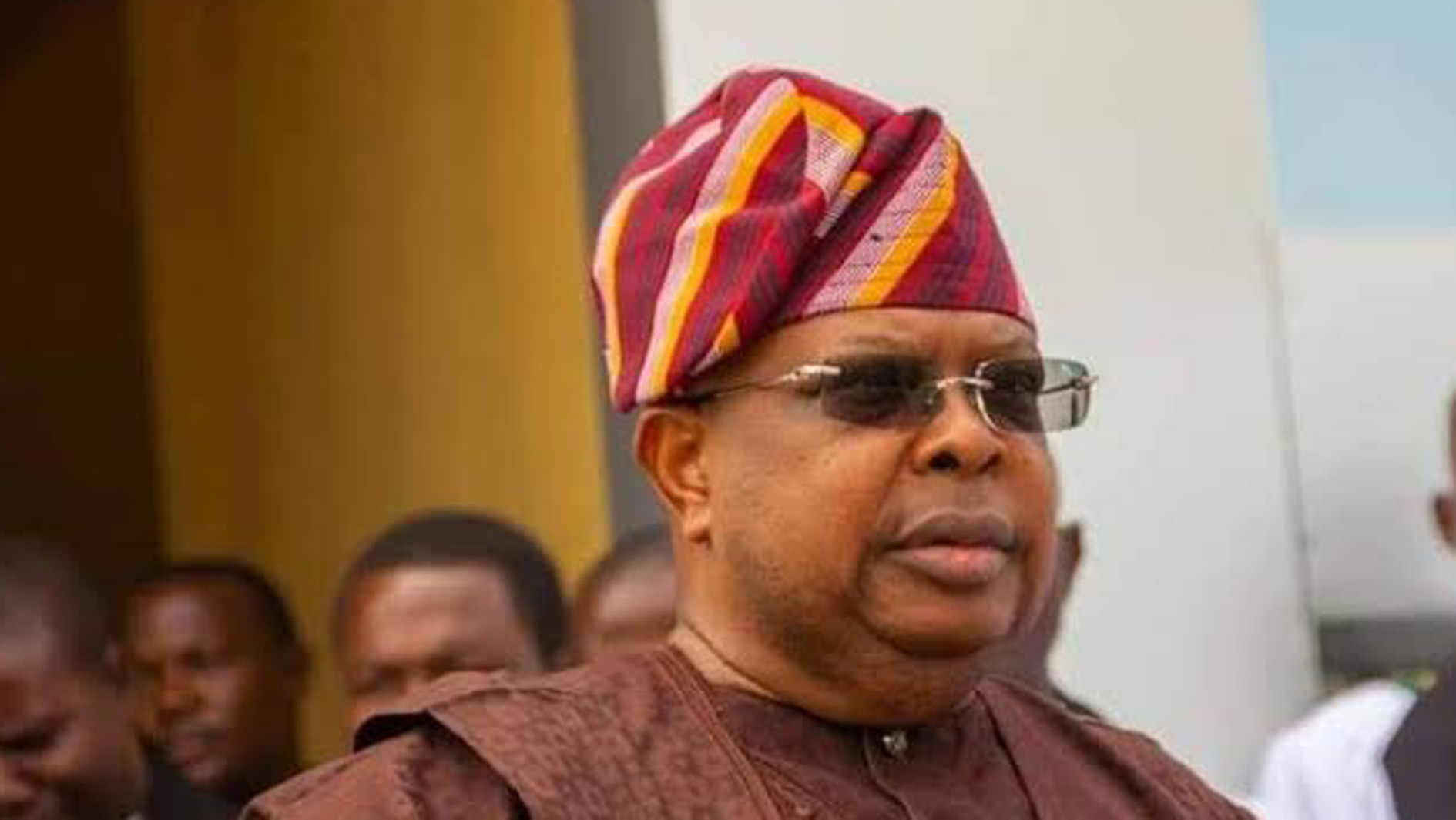
Nigeria electricity grid upgrade gets FG approval as the government plans new eastern and western grids to address recurring collapses
The Federal Government has approved plans to develop new eastern and western electricity grids as part of efforts to tackle Nigeria’s recurring national grid collapses and improve power transmission across the country.
Also read: Tinubu’s Message To Ogun Politicians: Gbenga Daniel Is No Ordinary Ally

The Minister of Power, Joseph Tegbe, disclosed this at a recent energy conference organised by HBSAN in Lagos, where he outlined plans to address longstanding weaknesses in Nigeria’s electricity transmission infrastructure.
Tegbe said the government was preparing to begin the procurement process for the projects, adding that Nigerians could start seeing their benefits within two to three years.
He also revealed that a nationwide technical audit of electricity infrastructure was underway to identify faults, assess the condition of existing facilities and determine which areas required urgent intervention.
According to the minister, the government has divided Nigeria into three energy zones to help prioritise investment and improve the efficiency of interventions in the power sector.
Tegbe said the government had identified areas where improvements could have a significant impact on electricity supply, particularly the Lagos and Abuja corridors.
He explained that addressing transmission challenges in these areas could resolve a substantial proportion of the country’s power-sector problems.
The minister, however, stressed that operational improvements alone would not be sufficient without expanding and strengthening the transmission network.
He said President Bola Tinubu had approved the commencement of the process to develop the eastern and western grids.
“We have clustered Nigeria into three energy zones. The first one is the one that demands 50 per cent. If you fix Lagos and you fix the Abuja corridors, you’ve solved more than half of the problem of Nigeria,” Tegbe said.
He added that the government was working through the procurement process, with the projects expected to deliver benefits within two to three years.
The minister said the ongoing technical audit was intended to establish the precise causes of transmission failures before public funds were committed to repairs or replacement.
According to him, the exercise would help the government distinguish between problems involving transformers, conductors, relays, insulators and transmission towers.
Tegbe warned against spending money on equipment that was not responsible for a particular fault, saying interventions must be based on accurate technical assessments.
“We have started a technical audit across the entire country to say where do we have issues, and what issues specifically do we have,” he said.
The minister added that the audit was expected to be completed within a few weeks, after which the government would focus on the most urgent and prioritised areas.
Tegbe attributed some of Nigeria’s electricity transmission problems to the age and deteriorating condition of infrastructure across the country.
He said certain transmission towers and lines had been in service for decades, highlighting the scale of the challenge facing efforts to modernise the national grid.
The minister recalled visiting sites where some infrastructure still carried the logo of the former Electricity Corporation of Nigeria (ECN), which preceded the National Electric Power Authority (NEPA).
He said the discovery illustrated how much of the country’s transmission network had been inherited from earlier generations.
“This government has inherited a problem of 50 years,” Tegbe said, describing the age of some of the facilities as a major concern.
He added that some transmission towers had deteriorated and that sections of the network required substantial rehabilitation.
The proposed eastern and western grids form part of the government’s broader plan to address structural weaknesses in the electricity transmission system.
Recurring grid disturbances and collapses have disrupted electricity supply to homes and businesses, reinforcing calls for investment in transmission infrastructure and improved system reliability.
The government says the technical audit will guide decisions on where repairs, replacements and new infrastructure are most urgently needed.
However, the proposed projects remain at the procurement stage, and their eventual impact will depend on implementation, funding and the successful integration of the new infrastructure into Nigeria’s electricity network.
Also read: Tinubu’s Message To Ogun Politicians: Gbenga Daniel Is No Ordinary Ally
The Federal Government expects the planned investments to strengthen transmission capacity and help address some of the longstanding challenges affecting reliable electricity supply across the country.





The Delta State Government says its ongoing economic reforms and empowerment programmes are helping to strengthen residents’ purchasing power, support small businesses and stimulate economic activity at the grassroots.
The Commissioner for Works (Rural Roads) and Public Information, Charles Aniagwu, disclosed this on Friday during a press briefing in Asaba, explaining that the administration of Governor Sheriff Oborevwori was focused on ensuring that the benefits of its economic measures reached residents, particularly low-income earners and operators of nano and small businesses.
As part of the empowerment drive, councillors across the state have been directed to support 200 residents in each ward. With about 500 wards in Delta State, the initiative is expected to reach at least 100,000 people and inject approximately ₦5 billion directly into the grassroots economy.
Aniagwu said the intervention was designed to help small businesses remain viable, expand their operations and increase the capacity of residents to participate in local economic activities.
The commissioner also disclosed that political and community leaders had complemented the government’s intervention with additional empowerment programmes and financial contributions.
He cited Ika North-East as an example, where community and political leaders contributed at least ₦5 million in each federal ward, resulting in an additional injection of about ₦70 million into the local economy, separate from funds being provided through the councillors’ empowerment initiative.
Aniagwu explained that strengthening purchasing power was essential to attracting and retaining investment, noting that businesses would naturally seek locations where residents had the financial capacity to purchase goods and services.
He said improving the economic capacity of rural communities could therefore help spread investment and business opportunities beyond major urban centres across the state.
The commissioner also linked the state’s interventions to broader improvements in its finances, saying increased fiscal capacity had enabled the government to mobilise contractors, meet salary and other obligations and improve the regularity of payments to workers and pensioners.
According to him, contractors can now be mobilised with payments of up to 40 per cent, while workers’ salaries and emoluments are being paid between the 22nd and 25th of every month. He also said pensioners no longer have to queue at Government House to receive their payments.
Aniagwu further pointed to the relative stability of academic activities in Delta State-owned universities as another indication of the state’s improved financial position.
He said the administration’s reforms were aimed at strengthening government finances while ensuring that public resources were used to support infrastructure, workers, businesses and vulnerable residents.
The state government has also backed a bill providing for a 13th-month salary for public servants. Aniagwu said the measure, once assented to by the governor, would form part of the administration’s broader efforts to increase disposable income and stimulate economic activity.
He maintained that interventions aimed at increasing residents’ purchasing power were intended to stimulate consumption, support businesses and create conditions capable of attracting further investment into Delta State.
The government’s latest empowerment drive therefore combines direct support for residents with wider economic measures, as the state seeks to increase household purchasing power and strengthen economic activity at the community level.
With the planned beneficiaries spread across the state’s wards, the administration says the initiative is expected to take economic support closer to residents and provide additional capacity for small businesses to survive and grow.
-
Politics3 years ago
13 Ondo Assembly Members Disown Endorsement of Aiyedatiwa
-
Politics3 years ago
APC Group, Ondo Govt, Quarrel Over Money for Endorsement
-

 Trending News5 years ago
Stop unsavoury, inciting statements – DSS warns
-

 Others5 years ago
Adron Homes Celebrates 10 Years Of Housing Excellence
-

 Humanity5 years ago
President Buhari Commiserates With Ambassador Maureen Tamuno Over The Loss Of Her Father
-

 Others7 years ago
EX- CUSTOMS BOSS, IBRAHIM MERA’S DWINDLING FAME
-

 Business2 years ago
Bigi Carbonated Soft Drinks Treats 40 Consumers to an Epic Easter Movie Hangout
-

 Business2 years ago
Wema Bank Shines at Global SME Finance Forum Conference Awards 2024 …Awarded: • SME Financier of the Year (Africa) • Platinum Award for Best Financier for Women Entrepreneurs (Africa)