
News
Duke Pledges Merit-Based Cabinet, Rejects Political Patronage

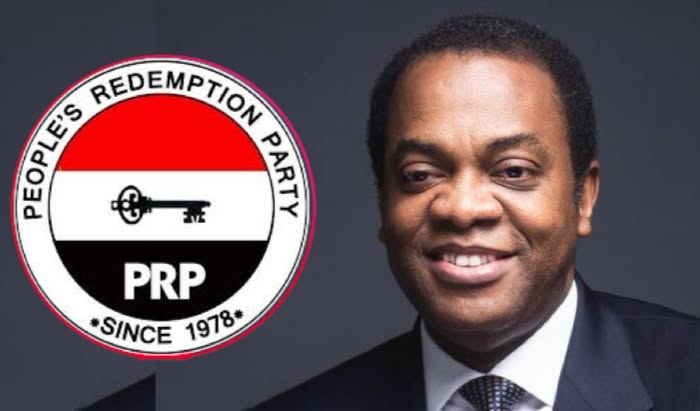
Donald Duke promises a merit-based cabinet if elected in 2027, saying Nigeria needs competent professionals rather than political appointments

Donald Duke, presidential candidate of the Peoples Redemption Party (PRP) and former Governor of Cross River State, has pledged to prioritise professional competence over political patronage in forming his cabinet if elected president in 2027, saying in an interview in Abuja on Monday, 2 November 2026, that Nigeria needs its most capable people in government, regardless of their political affiliations.
Also read: Why Nigeria needs the All-Nigeria Rotary Peace Summit
Duke said he would be willing to appoint an entire cabinet without politicians if doing so offered the best opportunity to address the country’s economic, security and social challenges.
The former governor argued that Nigeria’s problems required a fundamental change in how political leaders approached appointments, insisting that government positions should not become rewards for individuals who supported a candidate during an election campaign.
“If I am going to pick a cabinet, you may not find any politician in that cabinet,” he said.
According to Duke, the tendency to accommodate political allies when forming a government often shifts attention towards securing another electoral victory rather than delivering meaningful results for citizens.
He maintained that his approach would be based on performance, arguing that an administration capable of improving living conditions would earn public support without relying excessively on political structures.
“I’m going for broke. When you start putting politicians in your cabinet, you are looking at the next election. You are thinking about the people who will support you. For me, I want the people to support me. If you perform, the people will support you,” he said.
Duke drew on his experience as Cross River governor between 1999 and 2007 to explain why he believes performance should be the strongest foundation of political legitimacy.
He recalled that his first governorship election required considerable political mobilisation because he was relatively unfamiliar to many voters. By his second election, however, he said his administration’s record had become a significant advantage.
“My first election in Cross River was really tough. I was basically introducing myself to the people, and there were politicians running around everywhere.
“But by my second election, I hardly needed to go to rallies. You could feel the mood. People would tell me, ‘Don’t worry yourself; you have proved your mettle,’” he recalled.
He said the experience reinforced his belief that elected leaders should be judged primarily by what they accomplish in office rather than the promises they make during campaigns.
“When you prove your mettle, much of the politics disappears. People trust you because they have seen what you can do.
“When you are contesting for the first time, people hold on to your words because that is what you offered them. But when you are seeking a second term, they should hold on to your work. Your work should speak for you,” Duke said.
The PRP candidate also questioned what he described as a weakness in Nigeria’s democratic framework, arguing that constitutional eligibility requirements do not necessarily establish whether an individual possesses the necessary qualities to govern effectively.
He noted that meeting requirements relating to age, citizenship and criminal convictions might make someone legally qualified to contest an election, but those conditions did not automatically demonstrate the person’s capacity to manage the country’s complex challenges.
Duke consequently proposed the development of a suitability framework that would provide a more rigorous basis for assessing individuals seeking public office.
“The constitution tells you who is eligible. It tells you the age requirement and says you must not have certain criminal convictions and so on.
“But where is the section dealing with suitability? We need to sit down and design a suitability matrix. Leadership should not be a free-for-all where everybody enters and the most popular person wins, even when that person does not know where he is taking the country,” he said.
He compared presidential leadership to selecting a football team for an important competition, arguing that the most capable individuals should be chosen rather than those with the strongest political connections.
“If you want to win a Premier League match, you put out your best eleven. That is what I am trying to put on the table.
“This is not a popularity contest. You don’t substitute your future for a popular candidate. You look for who is best equipped to do the job,” he stated.
Duke also acknowledged that his own suitability for the presidency would ultimately be determined by voters, describing his participation in the 2027 election as an opportunity to offer Nigerians an alternative approach to governance.
“Am I the best candidate? I cannot say that. The voters will decide who the best is. But I want to put another option on the table because the options we have had have been too narrow and have not adequately addressed the issues,” he said.
The former governor identified education, healthcare, justice and security as fundamental responsibilities of any administration, arguing that improvements in these sectors were necessary to increase productivity and create opportunities for Nigerians.
He described the ultimate purpose of government as improving people’s ability to contribute meaningfully to society.
According to him, education equips citizens with the skills required for productive activities, while accessible healthcare enables them to apply those skills effectively.
A functional justice system, he added, provides the foundation for peace, while security remains indispensable to economic and social development.
“The ultimate function of government is to enhance the productivity of the people,” he said.
“The problem today is that everything has become urgent,” he added, highlighting the overlapping nature of the country’s challenges.
Duke also criticised what he described as the self-centred attitude of Nigeria’s political and economic elite, arguing that private prosperity could not remain secure while the wider society continued to experience widespread hardship.
He maintained that wealthy Nigerians should recognise their dependence on a stable and functioning society rather than concentrating exclusively on protecting their immediate families and personal interests.
“The Nigerian elite is selfish and self-centred. He thinks that by looking after himself and his immediate family, he is safe. But he is not.
“Enlightened self-interest should make us look beyond ourselves and consider the wider community,” he said.
He further questioned the growing dependence of wealthy Nigerians on security convoys and other protective arrangements when travelling within their own country, describing the situation as evidence of deeper problems affecting public safety.
“If you want to be the richest man in the community, that is fine. But make sure the other members of that community are not so poor that your wealth itself makes you a target,” Duke said.
“You see successful Nigerians moving around their own country with security and sirens. This is your country. This is your home. Why should you live in fear in your own home and not realise that something is fundamentally wrong?” he asked.
Duke’s comments add to his emerging political message ahead of the 2027 presidential election, with institutional competence, economic productivity and professional appointments featuring prominently in his arguments for a different approach to national leadership.
The PRP formally cleared Duke as its presidential candidate in June 2026 following a review of the party’s primary election results by its Primaries Appeal Committee and subsequent approval by the National Working Committee.
His political background includes an earlier attempt to secure the presidency in 2019 under the platform of the Social Democratic Party. Before that, he served two terms as Cross River governor, from May 1999 to May 2007.
His record in Cross River included initiatives aimed at expanding tourism, business and investment, with projects such as the Calabar Carnival and Tinapa forming part of his administration’s development strategy.
An interview archive published by Princeton University’s Innovations for Successful Societies programme also documents his emphasis on investment, infrastructure planning, public engagement and institutional reforms during his time as governor.
However, the latest cabinet proposal raises broader questions about how a government built around professional appointments would balance technical expertise with the political negotiations required to secure legislative cooperation, maintain party relationships and implement national policies.
While Duke has presented competence as the guiding principle of his proposed administration, the practical details of his proposed suitability framework, including its assessment criteria, appointment procedures and accountability mechanisms, remain to be fully explained.
For now, his central argument is that Nigeria’s leadership choices should extend beyond political popularity and electoral calculations.
Also read: Why Nigeria needs the All-Nigeria Rotary Peace Summit
He wants voters to consider the ability of candidates to assemble capable teams, deliver measurable results and improve the conditions under which Nigerians live.



Niger NSCDC Commandant warns of fresh danger after 34 miners died in custody, alleging illegal miners have regrouped and are threatening residents.
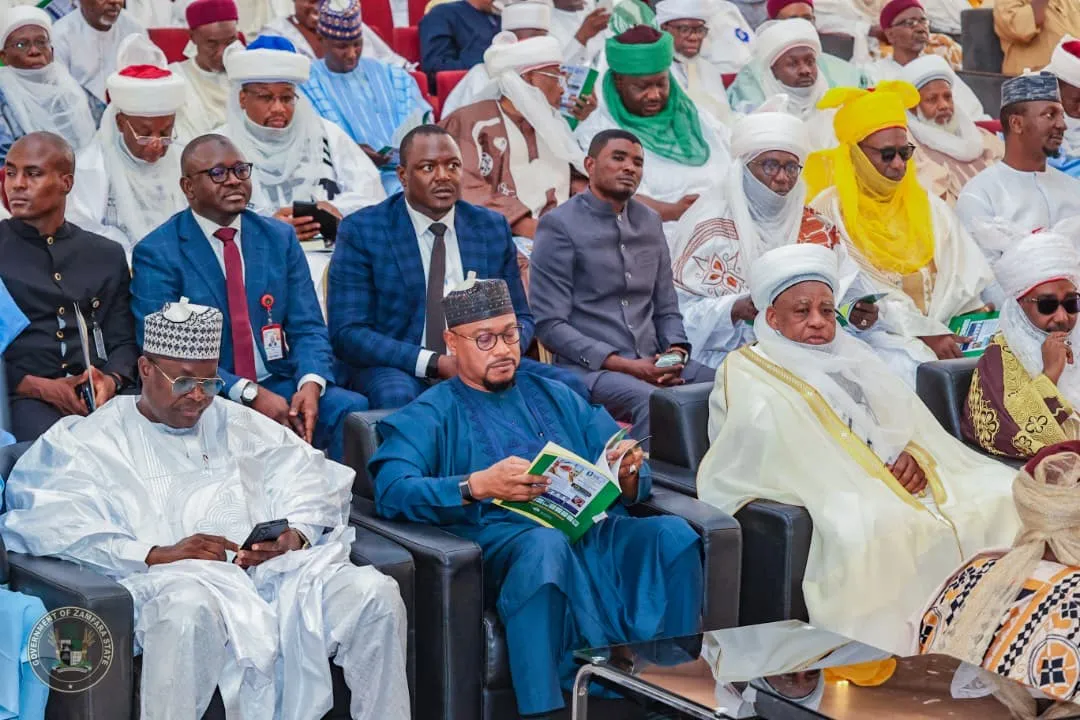
Dauda Lawal hails the Sultan of Sokoto at his 20th anniversary, praising his leadership and calling for peace, justice and social harmony

BUA Foods profit rose 11% to N450.47bn in nine months as lower production costs lifted margins despite a 19% revenue decline
-
Politics3 years ago
13 Ondo Assembly Members Disown Endorsement of Aiyedatiwa
-
Politics3 years ago
APC Group, Ondo Govt, Quarrel Over Money for Endorsement
-

 Trending News6 years ago
Stop unsavoury, inciting statements – DSS warns
-

 Others5 years ago
Adron Homes Celebrates 10 Years Of Housing Excellence
-

 Humanity5 years ago
President Buhari Commiserates With Ambassador Maureen Tamuno Over The Loss Of Her Father
-

 Others7 years ago
EX- CUSTOMS BOSS, IBRAHIM MERA’S DWINDLING FAME
-

 Business3 years ago
Bigi Carbonated Soft Drinks Treats 40 Consumers to an Epic Easter Movie Hangout
-

 Business2 years ago
Wema Bank Shines at Global SME Finance Forum Conference Awards 2024 …Awarded: • SME Financier of the Year (Africa) • Platinum Award for Best Financier for Women Entrepreneurs (Africa)