
Opinion
Shaping Intercontinental Business Between Africa and Europe


Ambassador Eniola Ajayi urges a new approach to the Dutch Africa Strategy, calling for equal partnership and African inclusion in future policy design

Keynote Address by Ambassador Dr. Eniola Ajayi at a Business Dialogue on Africa organised by the Voice News Magazine based in the Kingdom of Netherlands which took place at Eko Hotel, Victoria Island, Lagos on Friday, November 28, 2025
Also read: Baba-Ahmed confirms Peter Obi remains in Labour Party
Title: Shaping Intercontinental Business Between Africa and Europe
Theme: Debunking Notions, Reshaping Mindsets in Doing Business in Africa
Opening & Acknowledgements
Your Excellencies,
Esteemed colleagues,
Leaders of industry, government, and diplomacy, Distinguished ladies and gentlemen, Good morning.
It is an honour and privilege to stand before you today to discuss a subject that sits at the very heart of our shared future – Shaping Intercontinental Business Between Africa and Europe.
Allow me to appreciate the organisers of this dialogue, The Voice Africa News Magazine, from the Netherlands for framing such a profound theme – “Debunking Notions, Reshaping Mindsets in Doing Business in Africa.”
It is indeed time to move beyond the old narratives – those outdated perceptions of Africa as a continent defined by aid, rather than by opportunity; by potential, rather than by performance.
Africa is not waiting to be discovered. Africa is open for business – on equal terms.
Setting the Context: A Moment of Transformation
We are gathered at an auspicious moment in history. The tipping point if you like.
The tectonic plates of global trade, energy, and geopolitics are shifting.
The COVID-19 pandemic and its aftermath have redrawn global value chains and revealed the vulnerabilities in our different nations – big or small.
The war in Ukraine has reshaped energy and food security priorities.
And across Africa, a young, dynamic, and connected generation is rewriting the script of our economic destiny.
Africa today is not merely a supplier of raw materials – it is a continent of creators, innovators, intellectuals and entrepreneurs who are building the industries of tomorrow.
From Lagos to Kigali, Nairobi to Accra, African startups are redefining fintech, healthtech, agritech, and clean energy solutions that speak not only to local realities but to global challenges.
The Dutch Africa Strategy – A Case Study of Intention and Opportunity
When the Dutch Africa Strategy (2023–2032) was launched in The Hague in May 2023, I had the privilege of being among the Ambassadors representing African nations.
It was a moment of recognition – that Africa’s growth and Europe’s prosperity are deeply intertwined. Our proximity to each other makes our collaboration inevitable.
The Dutch strategy articulates noble intentions. It speaks of mutual trust, equality in partnership, and shared prosperity.
It acknowledges that Africa’s development is no longer a matter of charity, but of mutual interest – in trade, security, climate resilience, and sustainable growth.
It represents an important shift: a recognition that doing business with Africa is not about aid, but about partnership; not about dependency, but about interdependence. We need each other to thrive and survive.
A Missing Element – The African Voice
However, while the Dutch Africa Strategy was commendable in vision, it also revealed a familiar pattern.
It was a strategy for Africa, but not with Africa.
African nations were not consulted in its drafting; we were presented with the finished document – a plan about our continent, developed without our direct input.
And therein lies a paradox that we must address, if we are to reshape intercontinental business:
How can we speak of equality and mutual trust when the voices of one side are absent from the design table?
True partnership cannot be built on monologue – it must be dialogue.
Africa does not seek to be a passive recipient of strategies. We seek to be co-authors of them.
We want to sit at the table not as guests, but as equals – bringing our own priorities, insights, and aspirations to the discussion.
Debunking Notions – A New Mindset for Both Sides
Ladies and gentlemen,
If this decade is to be one of genuine transformation, we must begin by *debunking old notions* – on both sides of the partnership.
For too long, Africa has been seen primarily as a source of raw materials – a continent that extracts but does not refine; that exports value but imports finished products; that fuels global industry while its own citizens remain on the margins of prosperity.
That narrative must end. Our survival depends on this.
Africa is finally waking up to the reality that our vast natural resources – from minerals to agriculture, from oil and gas to our boundless human capital – must no longer be shipped out in raw form.
We have realized that value addition must happen on African soil, by African hands, through African innovation – in partnership, yes, but with equity and ownership.
When Africa processes its cocoa, it creates jobs. We can make chocolate bars too! It is not rocket science.
When Africa refines its lithium, it powers its own industries.
When Africa manufactures its pharmaceuticals, it safeguards its own health.
This is not protectionism – it is self-empowerment. It is self preservation. It is economic justice.
Reshaping the European Mindset
At the same time, our European partners must also evolve their perspective.
Partnership with Africa should not be viewed through the lens of risk, but of reward.
The narrative of instability and fragility must give way to one of resilience and opportunity. It should call a spade – a spade. Yes, there are issues of insecurity, what we need is help, not escalation.
The Africa of today is governed by regional economic communities that are harmonising trade rules.
The African Continental Free Trade Area (AfCFTA) is creating the largest single market in the world by number of countries – a market of 1.4 billion people with a combined GDP of over three trillion dollars.
This is not a continent to be pitied. It is a continent to be partnered with – on equal footing.
The mean age of the African population is 19.2 years (due to factors that we hope will improve over time) but the benefit is that we have a virile, versatile, educated and youthful workforce.
The business mindset must therefore shift from extractive transactions to transformative investments;
from short-term profit to long-term partnership;
from seeing Africa as a *testing ground to seeing Africa as a growth engine.
Europe and Africa – Partners in Transition
Both continents are undergoing profound transitions.
Europe is reindustrialising and greening its economy – moving towards clean energy, circular production, and digital transformation.
Africa is urbanising rapidly, digitising its economies, and investing in renewable energy and youth innovation.
Our transitions can and must be aligned.
Africa holds 60% of the world’s renewable energy potential.
Europe holds decades of industrial and technological expertise.
Together, we can build a new paradigm of co-created growth – that is green, inclusive, and mutually beneficial.
Migration – A Bridge, Not a Barrier
But there is another crucial aspect of our intercontinental relationship that requires a new mindset: migration.
Too often, migration has been portrayed as a crisis to be managed rather than a force to be harnessed. Yet, when well-governed, migration is not a problem – it is an opportunity.
We must tackle the issue of migration between Africa and Europe in a way that is mutually beneficial to both continents.
Africa’s youthful population is an asset; Europe’s aging workforce presents a challenge.
A fair, regulated, and humane framework for mobility that can serve both needs.
There should be regular pathways for legal migration – pathways that attract the people and skills needed in European countries seeking to shore up their workforce, while ensuring that migration remains dignified, orderly, and mutually enriching and not exploitative.
When talent circulates, innovation follows. When movement is managed, both continents prosper.
We must therefore move from a defensive approach to migration to a developmental approach – one that sees people as bridges, not as burdens.
A New Business Compact – Built on Trust and Equality
To shape truly intercontinental business between Africa and Europe, we must anchor our cooperation on five key principles:
1. Co-creation, not prescription
Policies affecting Africa should be designed with African stakeholders at the table.
When strategies such as the Dutch Africa Plan are revisited or implemented, they should incorporate the perspectives of African governments, private sectors, and youth voices.
Ownership begins with participation.
2. Value addition within Africa
European investors must continue to partner in setting up industries in Africa – not just to extract raw materials but to manufacture, process, and innovate locally.
The success story of Friesland Campina is a case in point. This is a great company with the right mindset.
This will create jobs, reduce poverty, and deepen regional value chains.
3. Fair trade and access to markets
Trade frameworks must reflect fairness. Non-tariff barriers and complex standards often disadvantage African producers.
The future must prioritise access, technology transfer, and mutually beneficial trade agreements under AfCFTA and EU frameworks. The CBI – Ginger initiative is a welcome collaboration between Nigeria and the EU.
(Nigerian ginger is considered among the best in the world. Its aroma, sharp taste and high oil content are unique features.
Nigeria was the world’s third-largest producer of ginger in 2018. Still, economic growth in Nigeria is spread unevenly and many people live in poverty.
The Nigerian ginger sector has the potential to add more value and diversify its markets.
In 2021, the Centre for the Promotion of Imports from developing countries (CBI) started a project to strengthen the sector’s quality services.
In the project, Nigerian small and medium-sized enterprises (SMEs) are supported to create value-added ginger products.
This is done by improving quality, helping with sustainability certification and organic or refined processing.
4. Technology and knowledge partnership
The 21st-century partnership must be based on technology transfer, research collaboration, and capacity building.
Let us replace the model of finished goods for raw materials with one of shared innovation. We cannot keep collecting peanuts for our coffee beans while paying premium dollars at Starbucks.
5. Inclusive growth and sustainability
Intercontinental business must be anchored in sustainability – environmentally, socially, and economically.
Women, youth, and small enterprises must not be left behind in this journey.
The market is large enough for everyone to get a share. The sky is big enough for all birds to fly without impeding one another.
Examples of Opportunity
The opportunities for partnership are vast:
• In energy, Africa’s abundant sunlight and Europe’s technology can together lead the world in renewable innovation.
• In agriculture, Africa’s fertile lands and Europe’s processing expertise can ensure food security on both continents. With the golden triangle approach of the Netherlands ( Government-Research Institutions-Private Sector partnership), prosperity is possible.
It is no wonder Netherlands is the second largest producer of food in the world. Netherlands has mastered how to improve the yield of their produce.
• In healthcare, Africa’s growing pharmaceutical sector and Europe’s regulatory experience can build resilient health systems.
• In digitalisation, Africa’s mobile-driven innovation and Europe’s cybersecurity frameworks can together define the next frontier of global commerce.
Reclaiming the Narrative
We must remember – narratives shape behaviour.
For too long, Africa’s story has been told by others.
It is time for Africa to tell its own story – confidently, creatively, and collaboratively.
As an African diplomat who has served in Europe, I have seen firsthand that when Africa speaks with a clear voice, the world listens.
When we negotiate with clarity and unity, the terms of engagement change.
And when we demand fairness – not as charity, but as a right – we gain respect.
We must therefore approach intercontinental business not with a sense of inferiority, but with the dignity of equal partnership. We must come to the table with a true understanding of our selfworth.
A Call to European Partners
To our European friends – including the Netherlands – I say this:
The future of global prosperity is not in rivalry, but in renewed partnership.
When the Dutch Africa Strategy speaks of mutual trust and equality, let us make it real by ensuring African inclusion in every phase of implementation.
Let us transform the strategy from a policy paper into a living framework of collaboration – where Dutch and African entrepreneurs, scientists, and innovators co-create the industries of tomorrow.
Let us build joint centres of excellence, green industrial zones, and value-chain partnerships that demonstrate the power of equality in action.
A Call to African Entrepreneurs and Governments
And to my fellow Africans – government leaders, business owners, innovators – let us rise up to this moment.
The world will not value what we do not value ourselves. If you call yourself a doormat, nobody will call you a queen.
We must create enabling environments – stable policies, secure safe spaces, transparent governance, reliable infrastructure – that attract and sustain investment.
We must develop our human capital – in science, technology, engineering, entertainment, and management – to power our own industries.
We must trade more with each other – because an integrated Africa is a stronger Africa.
The artificial division of Africa in 1884 – 1885 at the Berlin conference must give way to deliberate and intentional solidarity.
Let us remember: no one will add value to our resources unless we decide to do so ourselves. Africa must first be developed by Africans. People respect what is developed.
The Spirit of Ubuntu – Our Shared Humanity
At the heart of all these conversations lies a deeper truth:
Our destinies are intertwined.
As the African proverb says, “If you want to go fast, go alone. If you want to go far, go together.”
Africa and Europe are natural neighbours.
Africa and Europe must go far – together.
Not as donor and recipient, not as exporter and importer, but as partners in progress, equals in vision, and co-architects of a sustainable future.
Conclusion – A Future Defined by Partnership
In closing, let me return to where I began:
We are not just shaping intercontinental business – we are shaping intercontinental destiny. We are being pragmatic about our inevitable future.
The Dutch Africa Strategy 2023–2032 gives us an opportunity – not a finished product, but a framework to build upon. Maybe for a Europe – Africa strategy.
It is an invitation to redefine partnership.
To move from strategy on paper to collaboration in practice.
To replace extraction with equity, and charity with shared prosperity.
Let us move forward, therefore, with mutual respect and renewed trust –
Recognising that Africa is not a problem to be solved, but a partner to be embraced.
That Europe’s success and Africa’s progress are inseparable.
And that together, we can build a world where every resource, every innovation, and every partnership adds value – not just to economies, but to human lives.
Also read: Baba-Ahmed confirms Peter Obi remains in Labour Party
As we engage in this dialogue today, let us ensure that the next time an Africa Strategy is written – it is written not about Africa, but with Africa!
Thank you.


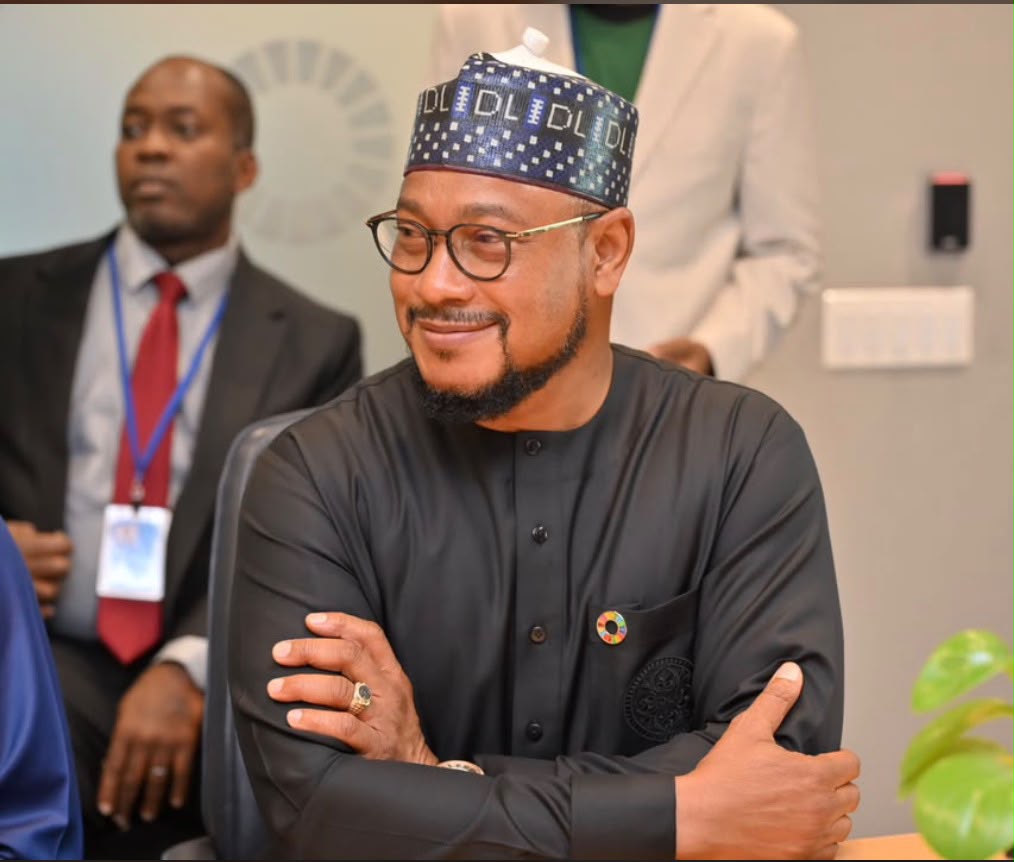
By Oladapo Sofowora,
On October 1, 1996, a profound historic journey birthed across the vast expanses of the Northwest region when Zamfara State was carved out of the old Sokoto State as a standalone state.
Also read: Nigeria @66: Obasa Says Tinubu’s 2027 Re-election Will Secure Reform Gains
Despite the state being created by the military administration of the late General Sani Abacha, the birth of the state was greeted with overflowing euphoria from many who believed its a welcoming development to ensure more stability in governance.
The founding fathers of Zamfara envisioned a self-sustaining agricultural giant, proudly flying the banner “Farming is Our Pride” as its motto but also marked with action and not mere words on paper.
With the vast arable agrarian lands and rich mineral deposits the state is blessed with, they imagined a haven of communal peace, where vibrant markets flourished, schools molded brilliant minds, basic amenities were standard and civic dignity was guaranteed to every indigene which would, in turn generate meaningfully development and place the state among the very best in the state and also the region.
Yet, for nearly three decades, that noble vision drifted into a tragic narrative of what could have been a dream come true. Sequential political administrations took the helm, but systemic governance deficits slowly starved the state of its promise also preventing it from reaching its full potential.
Instead of transforming into an economic lighthouse, Zamfara became synonymous with institutional decay, bedridden with insecurity, banditry, kidnapping and illiteracy.
Basic infrastructure withered like a flower with no water supply; state-owned schools were reduced to crumbling dilapidated structures; general hospitals and Primary health centres lacked essential diagnostic tools and basic medications and a chronic backlog of unpaid civil service gratuities spanning over a decade left retired public servants in severe hardship.
Worse still, an escalating rural security crisis took root, driving hundreds of thousands of farmers from their ancestral fields, paralysing interstate commerce and suffocating the state’s economic soul.
For millions of residents, the proud dream of 1996 had morphed into a quiet, painful struggle for survival affecting the survival of the state.
History, however, rarely remains static when decisive leadership intervenes. As Zamfara State approaches its landmark 30th anniversary, the long-standing story of stagnation is undergoing a historic shift.
The turning point arrived with the election of Governor Dauda Lawal in 2023 who defeated an incumbent against all odds; whose “Rescue Mission” agenda did not merely offer political promises but launched a systematic engineering of state affairs.
Governor Lawal took office with a clear diagnostic view of the state’s wounds, He moved away from cosmetic fixes to confront the structural defects that had held Zamfara back for twenty-seven years.
Recognizing that development cannot take root where fear reigns, the governor prioritized security of lives and property above all else. Through the operationalization of the Homegrown Community Protection Guards and strategic collaboration with federal security agencies, the state moved from defense to active deterrence.
Modern operational capabilities, ranging from advanced long-endurance surveillance drones for real-time intelligence gathering to fleets of armored personnel carriers and specialized tactical vehicles, were deployed into high-risk rural corridors.
Critical transport routes like the 108-kilometer Gusau to Dansadau road, once notorious for security risks, were awarded for total reconstruction, allowing agrarian communities to safely reconnect with major markets and reclaim their farming livelihoods.
What distinguished Governor Lawal’s programme from the capital-centric spending that has historically defined Nigerian state governance is its geographic spread.
In Bukkuyum Local Government Area, a region more often associated in national conversation with insecurity than with infrastructure investment, N4 billion has been committed to the 23-kilometre Mallamawa–Zarummai–Bukkuyum road with a spur to Zarummai Masama Road, alongside N1.5 billion for the Bukkuyum–Birnin Zuama–Gummi road.
That the government has chosen to route capital there is itself a statement of intent. In Maradun, N5 billion is allocated to the Maradun–Magami–Faru road and N1 billion to the Maradun–Makera road.
In Bungudu, N10 billion is going into the Daza–Gidan Dawa link to the Sokoto Road dual carriageway and N500 million for the 21-kilometre Tasha Babba–Lambar Kyambarawa Road in Nahuche Ward. In Birnin Magaji, N10 billion is earmarked for the 53-kilometre Gusau–Jauri–Dogon Kade–Nasarawa Mailayi–Nasarawar Godal roads.
The administration has also awarded what is now the longest road project in Zamfara’s history: a 95-kilometre stretch in Tsafe Local Government Area running from Yandoton Daji through Chediya, Doka, Yan Waren Daji, Hayin Alhaji, Bedi, Unguwar Joji, Yankuzo to Tsafe with an allocation of N10 billion.
The Governor has also set aside N5 billion for emergency roads across the three senatorial zones, ensuring that even the most remote communities are not left behind in the infrastructure drive.
Simultaneously, a massive urban and regional renewal initiative was rolled out. Gusau, long criticized for looking more like a neglected outpost than a state capital, was turned into a bustling site of civil infrastructure.
Inner-city arterial roads were expanded and dualized, comprehensive underground drainage networks were engineered to end perennial flooding and modern solar streetlighting systems illuminated major commercial avenues.
Across all fourteen local government areas, legacy projects began taking shape, most notably the Gusau International Airport and its network of connecting transport corridors, designed to position Zamfara as a future hub for regional agricultural export and interstate commerce.
In May 2026, Zamfara made history when the first-ever Hajj flight departed from Gusau International Airport, carrying 415 intending pilgrims aboard a Max Air flight directly to Saudi Arabia.
Governor Lawal described the airport’s construction, which began on June 18, 2024, as a “legacy project of great importance” to his administration, noting that pilgrims who previously had to travel to Sokoto or Kano could now fly directly from Gusau in “less than 4 hours.”
The human capital landscape has experienced an equally dramatic rebirth. In basic and secondary education, the administration addressed fundamental decay by renovating and equipping more than 500 public schools, recruiting and training thousands of new teachers and clearing multi-year backlogs of WAEC and NECO examination fees to ensure that no child’s academic progression was halted by state neglect.
In healthcare, general hospitals across local government areas underwent complete structural overhauls, bringing functional surgical theaters, diagnostic capacity, and reliable maternal care directly to rural populations.
Furthermore, by liquidating over 16 billion Naira in accumulated civil service gratuities, the administration restored basic financial dignity to thousands of senior citizens who had dedicated their working lives to the state.
Governance is ultimately judged by measurable impact, a reality underscored by the broad national recognition conferred upon the administration, including multiple “Governor of the Year” honors for exceptional project execution and public service reform.
Thirty years after its creation, Zamfara State is actively shedding the burdens of its past and rewriting its history.
Through fiscal discipline, physical development and a focus on human dignity, Governor Dauda Lawal is demonstrating that the vision of the founding fathers was never out of reach; it simply required an architect capable of turning the promise of 1996 into enduring reality.
The state tomorrow the 1st of October set to launch its commercial Bi-weekly passenger flight from Abuja to Gusau, a service to be run by XeJet which signifies a significant development that will change the commercial trajectory of the state and also increase trade activities for development.
As Zamfara saunters into its fourth decade, the anniversary committee inaugurated in September 2026, chaired by Deputy Governor Mani Mumuni, has been tasked with delivering a celebration that reflects the state’s journey from creation to resounding transformation from grass to grace.
For Governor Lawal, the message is simple: the Rescue Mission is not a slogan but a delivery framework
Also read: Nigeria at 66: Taking stock and doing the needful…
and as Zamfara marks 30 years since its creation, the concrete and asphalt spreading across the state suggest that the aspirations of 1996, development, peace, identity and prosperity, are finally being given a foundation to stand on.
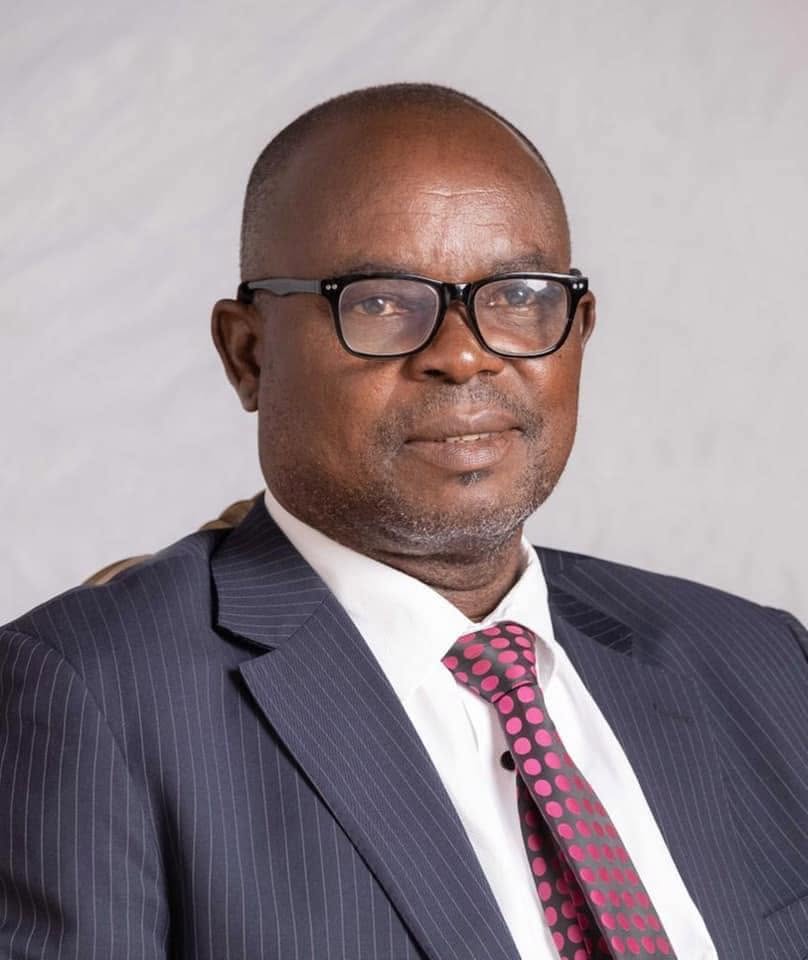
By Bola BOLAWOLE,
Thursday, Ist October, 2026, Nigeria celebrates its 66th anniversary. Is there anything at all to celebrate? I know opinion will be sharply divided on this score.
Also read: Nigeria @ 66: ‘The Nation’s Destiny Begins in Our Communities’ — Oba Makama
There are those who will say there is nothing really to celebrate while others will say comme ci, comme ca! Neither good nor bad.
There is still cause for cheers all the same, yet some will say. It can be better, but we should be careful not to throw the baby away with the bath water.
In other words, we should appreciate whatever progress has been made while pointing the way forward. Sixty-six years may be a long period in the life of a person but it is like the very first step taken, as the Chinese would say, in a journey of 1000 years.
A better way to understand this is to note that there are countries/civilizations that have existed even before the birth of Jesus Christ!
Some of the oldest civilizations/countries in the world are said to be Iran, Egypt, Vietnam, Armenia, China, India, Georgia, Ethiopia, Greece, Japan, San Marino, France, Bulgaria, Nepal, Portugal, Mongolia, Thailand, Andorra, Switzerland, and Spain.
Note that except for Egypt, no other African civilization/country is mentioned in the list, but we shall soon return to that.
Iran’s civilisation is traced to c.3200 BCE; Egypt, c. 3100 BCE; Vietnam, c. 2879 BCE; China, c. 2070 BCE; India, c. 2000 BCE; and so on and so forth.
Does it then mean that there are no ancient civilizations in Africa that measure up to those mentioned above? How about our ancient empires and kingdoms – Mali empire, Songhai empire; Kush, Azom, and Zimbabwe, among others? A unique feature of the European, Asian and Arabic countries mentioned above is that colonialism and/or military conquest notwithstanding, they have stoutly maintained their distinct cultural identities.
Thank God for archeology: The Iho Eleru (formerly Iwo Eleru) rock shelter in Isarun near Akure, the Ondo state capital, has yielded the oldest known human fossil remains in West Africa, dating back approximately 13,000 years.
What this indicates is that there has been human life in that area for a much longer period than is recorded for some of the so-called oldest countries or civilizations of the world.
The various bronze heads of Ife and Benin, for instance, showed the superior technological development of our fore-fathers, at some point, compared to Europe and other parts of the world.
How come, then, that none of our ancient cities and civilizations are mentioned in the league of Iran, China, Japan, etc.?
The simple reason could be that colonialism erased our pre-colonial history, achievements and identities.
Any student of History at the then University of Ife (now Obafemi Awolowo University), Ile-Ife), who studied at the feet of Dr. Ishola Olomola (as he then was), whom some of us nicknamed “Tekrur” because of the way he produced the name, must have answered the question “Africa has no history: Discuss.”
To them, our history – and existence – started with the coming of the colonialists and their “discovery” of our existence! Thus, it was Mungo Park who “discovered” the River Niger, notwithstanding that he was led to the river by locals (natives) who had lived side-by-side the river for God-knows-when! On our part, we acquiesced in the erasure and have not only carried it forward but have also deepened it.
Africans were not the only people subjected to colonial rule or slavery, but while others struggled to maintain their cultural identities, we were just too glad to abandon ours and swallow what the colonizers imposed on us hook-line-and-sinker.
For those who may not know, the Indians, like us in Nigeria, were also colonized by Britain; so also what is today called Pakistan and Bangladesh. Parts of China were at some point colonized by Japan; so also the Korean peninsula (known today as North Korea and South Korea).
While those countries threw away the yoke of colonialism, maintained their cultural identities and retraced their history back to pre-colonial days, those of us in Africa have chosen to forgo our pre-colonial history and identities. Gone are our indigenous language, religion, mode of dressing, culture, ways of life, customs, traditions and beliefs. We are happy – in fact, the mark of civilization is when we ape the colonizers and distance ourselves from our roots.
But we should have asked ourselves: Why is it that foreign countries, including ex-colonies like us, teach their children in their own language while we abandon ours and learn instead in the foreign language imposed on us by our erstwhile colonial masters? Those of us who travel abroad for studies must first learn their own language.
Is it true that the original idea behind the founding of the then University of Ife by the Obafemi Awolowo government of the Western Region was to conduct learning in the Yoruba language, hence the Motto: For Learning and Culture? But the military struck in 1966 and the rest, as they say, is history! Why have we abandoned our own religion and belief systems for those of foreigners who still keep theirs? Why do we despise everything that is ours but embrace what is theirs, even when it is clear to us that it is not working, and cannot work for us?
When we say Nigeria is 66 years old, it does not mean that the various nations and people making up Nigeria are 66 years old.
The Yoruba, Hausa, Igbo, Bini, Jukun, Kanuri, etc are hundreds, if not thousands of years old. They have also created civilizations that, at their apogee, compared to, even surpassed, anyone mentioned above.
When the Lugardian Experiment of 1914, as it is derisively called by those opposed to it, is abandoned, then the various ethnic nationalities making up Nigeria will be free to retrace their history back beyond 1914 to an era that compares favourably with those mentioned above. The contraption called Nigeria is, thus, a prison of sorts and an eraser of history.
Nigeria may be 66 years old but the Yoruba, Igbo, Hausa, Bini, Jukun, Igala, Ijaw, Idoma, and many others are certainly not. They are thousands of years older than Nigeria.
And therein lies a fundamental problem: When we say 66 years are but like the twinkle of an eye in the life of a nation, which nation are we referring to? Is it the various nationalities that make up Nigeria? Ahmadu Bello reportedly referred to Nigeria as the “mistake of 1914.” In his book, Path to Nigerian Freedom (1947), Obafemi Awolowo referred to the same Nigeria as “a mere geographical expression.” One Hundred and Twelve (112) years after the amalgamation, has Nigeria stopped being a mistake or a mere geographical expression? Even those who publicly profess their love for Nigeria, are they more than Nnamdi Azikiwe who prefer to live for Nigeria rather than die for it? “Why die for Nigeria when you can live for Nigeria”, Zik was quoted as saying!
In the Olympics, World cup, UEFA and European League competitions, big and small nations compete as sovereign nations. Countries not as big as my native Ondo state compete as nations. Then I wonder why a similar thing cannot happen here.
Why shouldn’t the Yoruba have their own nation or country? Why shouldn’t the Igbo have their dream Biafra? Why shouldn’t any other nationality in today’s Nigeria that wants to break away do so and form their own country? Why must we continue to force strange bedfellows to cohabit with bad blood flowing endlessly in their veins?
In the United Kingdom as we speak, the three other components of Northern Ireland, Scotland, and Wales are itching to go their separate ways.
Scotland has twice failed (in 1979 and 2014) to meet the threshold in the referendum for independence; still, its leaders are making another move.
In Spain, Catalonia’s independence movement has not relented. In 2017, it caused a constitutional crisis that nearly forced Spain on its knees.
The Soviet Union behemoth broke into 15 independent countries in December 1991. That break has not prevented Russia, the largest rump of the erstwhile USSR, from retaining its status as a superpower-nation.
Comrade-President Jozip Broz Tito’s much-beloved Yugoslavia fought a decade-long and bitter civil war (1991 – 2000) before splitting into six or seven independent countries. In contrast, Czechoslovakia’s “velvet divorce” led to the Czechs and Slovakians peacefully going their separate ways on January 1, 1993.
The “divorce” that separated Singapore and Malaysia was not as pleasant.
Malaysia considered Singapore a drag on its economic and political development and expelled it from the federation on August 9, 1965; similar to what Major Gideon Orkar and his fellow coupists wanted to do to some states in the North of the country with their failed coup of April 22, 1990. Singaporean leaders wept after their expulsion.
Many thought the end had come for the small, arid and resource-less island. But Singapore’s leaders, led by the iconic Lee Kuan Yew, pulled themselves up by their bootstraps and, today, Singapore is one of the most prosperous countries in the world, with its GPD surpassing even that of Malaysia. Singapore’s GDP is $659.57 billion while that of Malaysia is $516.4 billion
Let those advocating for the restructuring of Nigeria on the account that the North of this country which, today, is considered a drag on the country, will suffer, take note of this.
I advocate for restructuring because I believe it can prove the elusive solution to Nigeria’s problem as it will compel everyone to buckle up and work, putting an end to the present system of monkey dey work, baboon dey chop.
With both monkey and baboon rolling up their sleeves and sweating it out – as was the case with Malaysia and Singapore – what a win-win solution that will be!
The alternative to a peaceful resolution of the Nigerian quagmire could be another civil war – God forbid! The experience of the civil war of 1967 – 1970 is there to warn us.
If that is not fresh enough, we have seen Liberia, Sierra Leone, Rwanda, Sudan, Ethiopia/Eritrea and, of course, Kosovo.
Many of the independent countries mentioned above are not half as big or richly-endowed as the nationalities fighting for their own independent status here in Nigeria – such as Biafra and Oodua.
Seperation has helped India and Pakistan to both become nuclear-power nations.
The experience of other countries that parted ways in Europe also points to the fact that separation may not necessarily be a bad idea afterall.
It can even prove the catalyst that we need for the rapid socio-economic development that has eluded us for 66 years.
Also read: Nigeria @ 66: ‘The Nation’s Destiny Begins in Our Communities’ — Oba Makama
While wishing Nigerians happy celebrations, let us also serve a note of warning that a stitch in time saves nine!
By Tai Emeka Obasi,
It is exceedingly terrible for clubs operating in a league as supremely elite as the English Premier League, EPL, to fraudulently cheat themselves to massive success.
Also read: Arteta Confirms: Myles Lewis-Skelly Stays at Arsenal
Rules are rules, and supposedly responsible club managements should comply with them in administering a game termed the beautiful game.
Manchester City is currently in the eye of the storm for all the wrong reasons.
A whopping 115 breaches were brought against the club, with reports now indicating that an independent commission found City guilty of 114 of them.
The club, however, maintains that the Premier League process remains ongoing, with significant elements still to be completed and subject to strict confidentiality.
Manchester City chairman, Khaldoon Al Mubarak, has appealed to the fans to remain calm and faithful, insisting that the club will continue to defend its position and pursue the available legal process.
According to reports, Manchester City is expected to appeal the verdict. The sanctions have not yet been announced, and the possible consequences could include a heavy fine, points deduction, stripping of titles or even relegation.
From the available reporting, however, there is no basis for football fans to start celebrating the prospect of receiving Manchester City’s trophies.
Even if titles were eventually stripped, the relevant period under investigation is 2009 to 2018.
During that period, Manchester City won three Premier League titles, in 2011/12, 2013/14 and 2017/18, as well as three League Cups, in 2013/14, 2015/16 and 2017/18.
That immediately puts a different complexion on the matter.
For instance, Manchester United finished runners-up to City in the 2011/12 and 2017/18 Premier League seasons, while Liverpool finished second in 2013/14.
But whether those titles would actually be reassigned to the runners-up is another matter entirely.
There is no automatic rule that says a stripped title simply moves to the team that finished second. Any such outcome would depend on the eventual sanction imposed by the relevant authorities.
The same applies to Arsenal and the League Cup. Arsenal were beaten by City in the 2018 final, but that does not mean Arsenal would automatically inherit the trophy if City were sanctioned.
Expert opinion has suggested that the eventual punishment could include a substantial financial penalty and a huge points deduction, potentially severe enough to threaten City with relegation.
But until the sanction is formally determined, nobody can say with certainty what punishment Manchester City will receive.
For Gunners fans, therefore, we should lower our expectations from City’s debacle. Even if Manchester City are eventually found guilty after the appeal process and even if they are relegated, Arsenal will not stroll to this season’s title.
Our last match against Brighton and Hove Albion is a huge warning that our squad is not as complete as it is generally acclaimed to be.
Also read: Arteta Confirms: Myles Lewis-Skelly Stays at Arsenal
Like we did last season, Arsenal must win the title on the pitch, not wait for Manchester City to lose it in the courtroom.
That is the real lesson.
-
Politics3 years ago
13 Ondo Assembly Members Disown Endorsement of Aiyedatiwa
-
Politics3 years ago
APC Group, Ondo Govt, Quarrel Over Money for Endorsement
-

 Trending News5 years ago
Stop unsavoury, inciting statements – DSS warns
-

 Others5 years ago
Adron Homes Celebrates 10 Years Of Housing Excellence
-

 Humanity5 years ago
President Buhari Commiserates With Ambassador Maureen Tamuno Over The Loss Of Her Father
-

 Others7 years ago
EX- CUSTOMS BOSS, IBRAHIM MERA’S DWINDLING FAME
-

 Business2 years ago
Bigi Carbonated Soft Drinks Treats 40 Consumers to an Epic Easter Movie Hangout
-

 Business2 years ago
Wema Bank Shines at Global SME Finance Forum Conference Awards 2024 …Awarded: • SME Financier of the Year (Africa) • Platinum Award for Best Financier for Women Entrepreneurs (Africa)