Business
Egyptian Automotive Aftermarket Enters Fast Lane

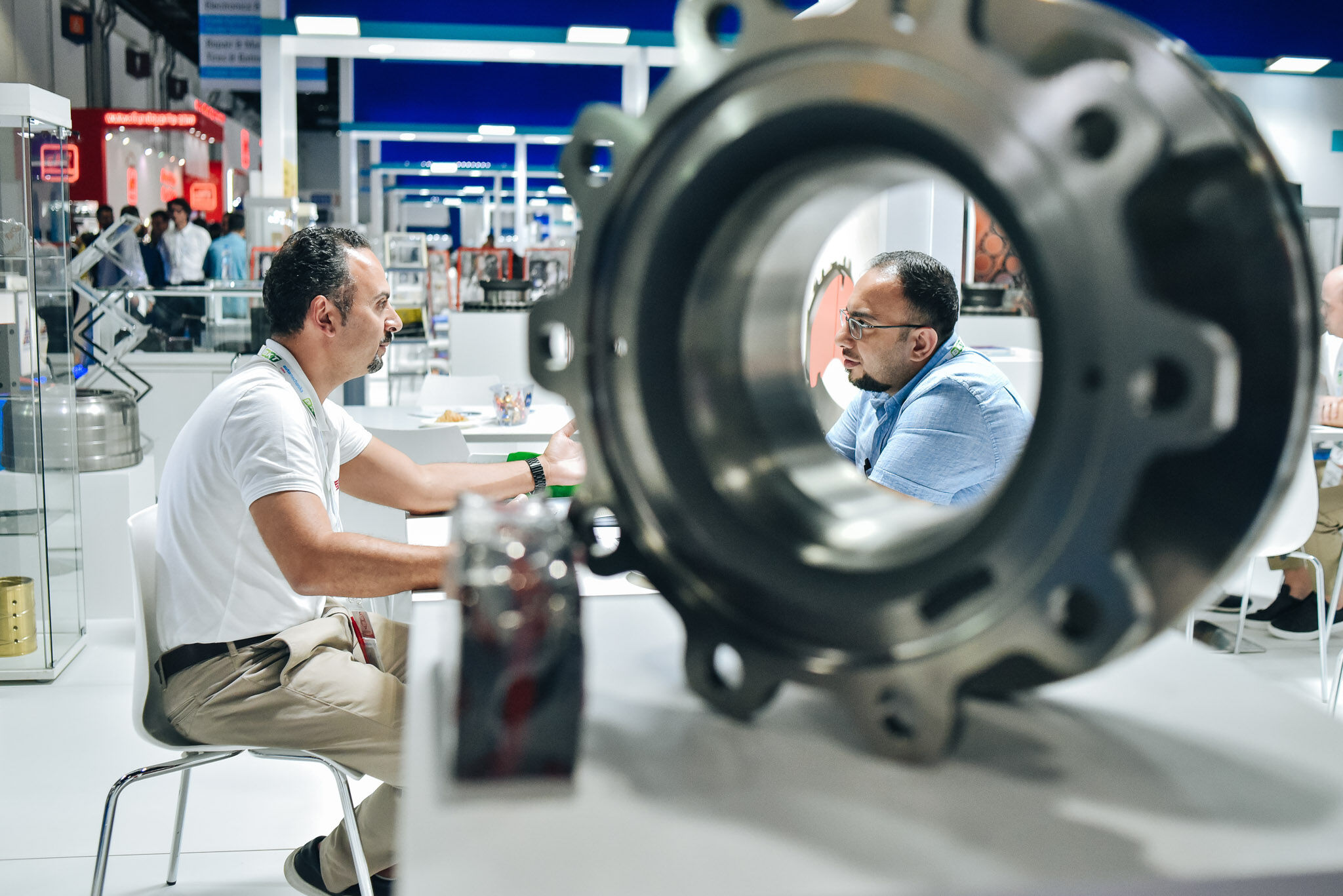
Egypt’s automotive aftermarket is accelerating and has been dubbed “one of Africa’s most exciting markets” as its motoring population and vehicle sales grow, its economy expands, FDI floods in, and the government moves to combat automotive emissions.

It’s a powerful combination which Germany’s Africa business experts africon GmbH, the knowledge partners of Automechanika Dubai, the Middle East and Africa’s largest international automotive aftermarket trade show, contends has resulted in an aftermarket now worth between US $1-2 billion. And africon GmbH should know, having worked on more than 30 automotive market projects across Africa in the last few years.
The company has now turned its expertise specifically on the high potential Egyptian market with a whitepaper collated from research among companies within the Arab republic’s automotive industry.
Opportunity Rising:
The paper’s positive and opportunistic sentiment points to the country’s rising population – now the third largest within Africa with more than 100 million people – and its economic advancement, having overtaken South Africa as the continent’s second-largest economy with a GDP of US $360 billion and sturdy growth forecasts.
“The IMF predicts that growth will slow to around 2.5% this year but recover to more than 5% from 2022 forward,” the paper reports. “After economically difficult years in 2016/17, inflation has come down to around 6%. Unemployment has been reducing, and GDP per capita in US$ terms has increased by almost 50% since 2017. Consequently, Egypt has been the largest recipient of FDI in Africa for several years in a row, receiving more than $9 billion worth of investments in 2019 and almost $6 billion in 2020. This growth is driven, among other things, by continuous economic and fiscal reforms. For instance, on the Ease of Doing Business Index, Egypt has improved by 14 places since 2018.”
Egypt is now in growth mode, even despite the rigors of the COVID-19 pandemic and was among the few countries to report full year GDP growth in 2020.
Growth Market:
The growth has fed into the aftermarket, with the country now being home to one of Africa’s largest vehicle fleets with around six million vehicles on the country’s roads, with the majority – approximately 4.6 million – being passenger cars. This is followed by almost a million trucks and about 470,000 buses. Most passenger cars are petrol-powered, while many commercial vehicles rely on diesel engines but that could soon change.
“The government is increasing the share of dual-fuel cars, which can use both petrol and compressed natural gas (CNG). Around 300,000 vehicles in Egypt already use CNG. This number will likely increase further over the next years,” the paper reports.
Egypt is also taking bold steps to replace internal combustion engines with more environmentally friendly alternatives. Last year the government announced an initiative to encourage consumers to replace old vehicles for new ones operating on CNG engines with extended credit facilities among its green program incentives. This has led to China’s Dongfeng Motors planning to assemble up to 25,000 electric vehicles a year in an Egyptian assemble plant.
Even the brand make-up of the country’s vehicle fleet is changing. The significant market shares held by Chevrolet/Isuzu, Hyundai, Toyota, and Nissan could be eroded by the entry of European and Chinese brands fueled by preferential import duties.
“New vehicle sales in Egypt have recently grown, currently standing at more than 200,000 units per year. Around half of this figure is assembled locally. Egypt is home to notable local vehicle assemblers like GB Auto, General Motors Egypt / Mansour Automotive, and Nissan. While most passenger vehicles are produced for the domestic market, many buses are exported to regional markets,” explains the whitepaper.
Change The Name of the Game:
Change is also coming to Egypt’s heavily import-driven aftermarket, which is dominated by Asian suppliers, namely China, Korea, and Japan. However, Germany and the US now rank among the country’s top ten suppliers of parts and components and globally leading brands enjoy relatively high market shares for crucial parts. But the local component manufacturing market is gaining ground and supplying local vehicle assemblers, the aftermarket and export markets with a range of batteries, brake parts, wiring and filets.
Egypt’s importer/distributor landscape is a mix of small and large companies, most of which are based in Cairo. The independent aftermarket is fragmented. The importers/distributors sell directly to end-users, workshops, and a network of wholesalers and retailers across the country. As is the case in other African markets, a significant share of Egyptians, having taken the advice of trusted mechanics, buy their parts from retailers instead of from workshops. However, most do follow the advice of their trusted mechanics.
The Trend & Outlook:
E-commerce is fast emerging as a significant aftermarket force through highly visible platforms such as Odiggo, Tawfiqia, Egyparts and Amazon Egypt.
The Egyptian aftermarket is ripe for growth and to offer up great opportunities for parts producers, distributors, and service providers, but increasing competition from local producers may mean overseas suppliers will need to invest in their own on-the-ground structures or seek out ways to add value locally to increase market shares.
GB Auto, a leading Egyptian automotive supplier, sums up the expected scenario: “We currently see three factors strongly influencing the future of our market in Egypt: firstly, we are expecting a period of robust growth across various industry segments. Secondly, online sales will likely gain significant importance. Thirdly, the share of CNG-powered vehicles increasing further, which will open up new industry segments and growth opportunities,” explained Mohamed Yahia, Managing Director of Ready Parts (GB Auto Group).
Others looking for indicators of the growth potential can track the Egyptian visitor presence at Automechanika Dubai which has risen by 20% since 2015.
“We anticipate a surge in visitors from Egypt when the show returns from December 14th-16th December. This year we have the support and presence of Egypt Expo & Convention Authority (EECA) and have also seen a 142% y-o-y (2019-2021) increase in floor space taken from Egyptian businesses – a true testament to current conditions and the appetite for doing business,” commented Mahmut Gazi Bilikozen, Automechanika Dubai’s Show Director.




The Dangote Group is pursuing a $45bn investment programme across its businesses as it targets annual revenue of $100bn by 2030, with Dangote Cement expected to play a major role in funding the conglomerate’s next phase of expansion.
The group’s expansion strategy covers cement, refining, fertiliser, gas, infrastructure and other industrial businesses as it seeks to increase production capacity and strengthen its presence across African markets.
Dangote Cement, described as the group’s largest cash-generating business, is targeting an increase in annual production capacity from its current 55 million tonnes to more than 80 million tonnes as part of the growth programme.
The cement company said its expansion strategy would rely substantially on internally generated cash, reflecting the strength of its existing operations and cash-generating capacity.
In the 12 months to June 2026, Dangote Cement recorded revenue of $3.1bn, representing a 22 per cent year-on-year increase. Its cash conversion stood at 89 per cent, while return on capital employed reached 68 per cent during the period.
The company’s financial performance has also remained strong in naira terms. For the first half of 2026, Dangote Cement reported profit before tax of N981.39bn, up 34.43 per cent from N730.03bn recorded in the corresponding period of 2025. Profit after tax rose 22.69 per cent to N638.53bn.
The group’s wider investment plan is expected to include further expansion of the Dangote Refinery, with its capacity targeted to rise towards 1.4 million barrels per day. The company is also pursuing gas and LNG projects and additional industrial investments across Africa.
Dangote Cement’s expansion includes projects such as the proposed six-million-tonne-per-year plant at Itori in Ogun State, which is expected to strengthen the company’s production base as demand for cement and construction materials grows across the continent.
The group is also increasingly positioning its businesses around export earnings and geographically diversified operations. Management expects a larger share of revenue to be generated in foreign currency as its African expansion gathers pace.
The scale of the investment programme is underpinned by the group’s broader Vision 2030 strategy, which includes a target of more than $30bn in adjusted earnings before interest, taxes, depreciation and amortisation by 2030 alongside the $100bn revenue objective.
For Dangote Cement, the strategy represents a combination of capacity expansion and financial discipline, with strong operating cash flows expected to support investment while maintaining the company’s balance-sheet strength.
The wider Dangote Group is therefore positioning its 2030 strategy around expanding industrial capacity, increasing exports and using the cash generated by established businesses to finance further growth across Africa.
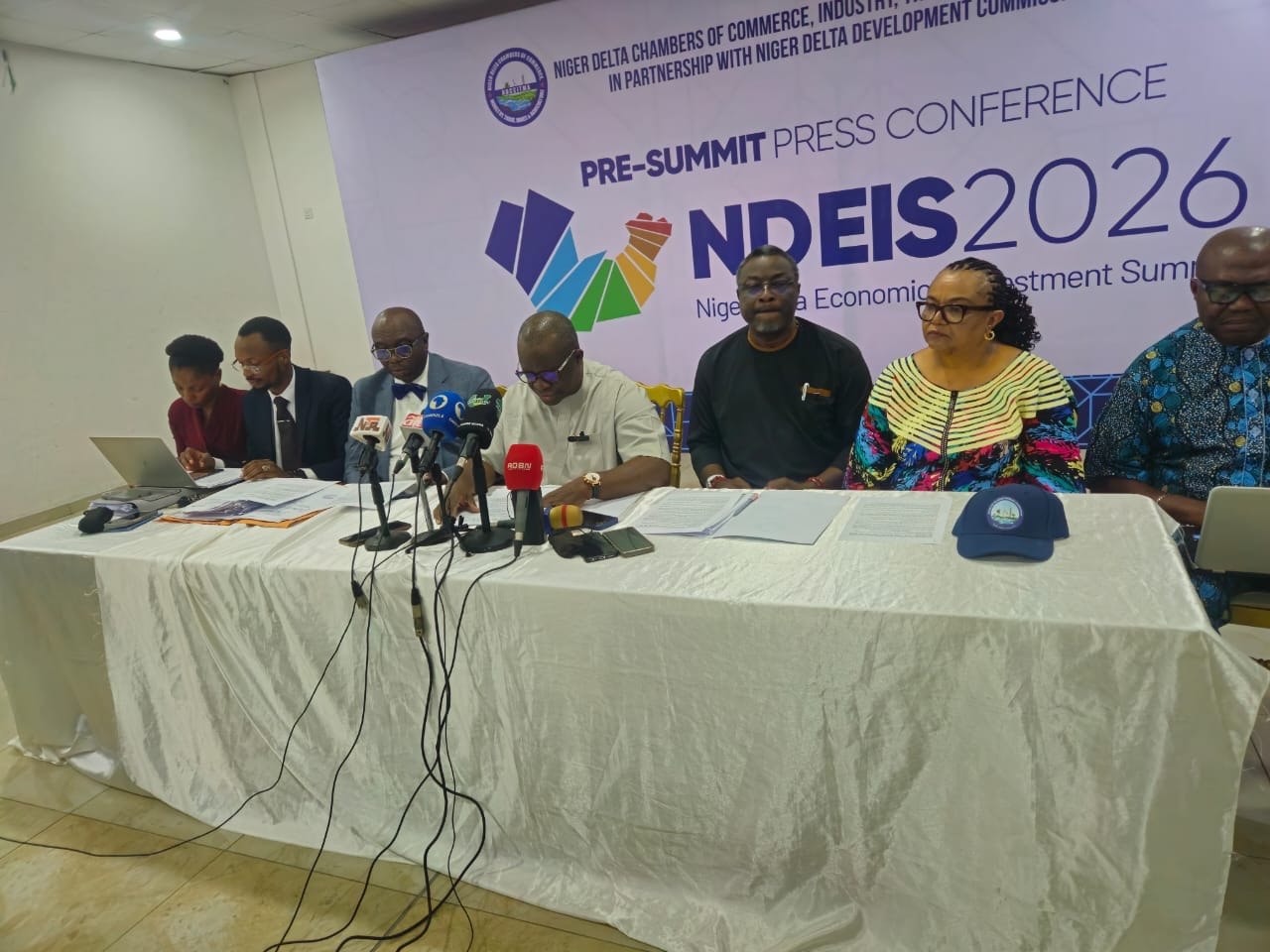
The Niger Delta Chamber of Commerce, Industry, Trade, Mines and Agriculture (NDCCITMA) has dismissed allegations that it appropriated the Niger Delta Economic & Investment Summit (NDEIS) brand, insisting it lawfully obtained trademark acceptance for the name and will proceed with its 2026 summit as scheduled.
In a statement issued on September 12, 2026, the chamber described claims by Kunle Nwiwa Junior as “cheap blackmail, misleading, mischievous and a misrepresentation of the facts,” maintaining that it independently developed the summit and followed all required regulatory procedures.
According to NDCCITMA, it applied for and received a Trademark Acceptance Letter for the name Niger Delta Economic & Investment Summit (NDEIS) in August 2025 under File No. NG/TM/O/2025/387284.
The chamber said the chronology of events contradicts allegations that it copied another party’s application, arguing that its trademark acceptance predated the period during which Nwiwa’s own application was reportedly still pending before the relevant authorities.
“Economic Summit” is a generic expression
NDCCITMA further argued that the phrase “Economic Summit” is a generic description widely used for conferences that bring together governments, investors, businesses, development institutions and other stakeholders to discuss investment and economic development.
The chamber maintained that while concepts may be widely used, legal protection only arises from recognised intellectual property rights, including duly registered trademarks and other enforceable proprietary interests.
It therefore rejected suggestions that any individual or organisation has exclusive ownership of the broader concept of an economic summit.
Court grants interim injunction
Addressing reports that the summit had been halted, NDCCITMA said the dispute is already before the Federal High Court in Port Harcourt and that there is no court order restraining the event.
The chamber disclosed that in Suit No. FHC/PHC/CS/57/2026, Justice Stephen Dalyop Pam granted an interim injunction restraining the defendants—Kunle Nwiwa Junior and Keneva Consult Ltd.—from interfering with the planned summit.
According to NDCCITMA, the court also directed the defendants to remove publications, notices, petitions, social media posts and other statements allegedly considered damaging to the chamber’s name, integrity and reputation pending the hearing of its motion for interlocutory injunction.
The matter has been adjourned until September 22, 2026 for further hearing.
Chamber rejects ₦500 million demand claim
NDCCITMA also alleged that it had received a demand from Nwiwa Junior requesting ₦500 million as a condition for abandoning his claims over the summit.
The chamber said the demand was rejected, adding that it subsequently petitioned the Inspector-General of Police over what it described as repeated harassment and threats directed at its officials.
It said the petition sought police intervention, including inviting the complainant for questioning and caution where necessary.
Summit opens September 15
Despite the legal dispute, NDCCITMA reaffirmed that the 2026 Niger Delta Economic & Investment Summit will hold from September 15 to 17, 2026, at the Obi Wali Conference Centre in Port Harcourt, Rivers State.
The summit will be held under the theme “Driving Investment, Innovation & Industrial Growth in the Niger Delta” and is expected to bring together policymakers, investors, business leaders, development partners and industry stakeholders to discuss economic transformation across the region.
The chamber said it remains committed to promoting commerce, industry, trade, mining, agriculture and sustainable economic development throughout the Niger Delta while allowing the courts to determine all outstanding legal issues.
-
Politics3 years ago
13 Ondo Assembly Members Disown Endorsement of Aiyedatiwa
-
Politics3 years ago
APC Group, Ondo Govt, Quarrel Over Money for Endorsement
-

 Trending News5 years ago
Stop unsavoury, inciting statements – DSS warns
-

 Others5 years ago
Adron Homes Celebrates 10 Years Of Housing Excellence
-

 Humanity5 years ago
President Buhari Commiserates With Ambassador Maureen Tamuno Over The Loss Of Her Father
-

 Others7 years ago
EX- CUSTOMS BOSS, IBRAHIM MERA’S DWINDLING FAME
-

 Business2 years ago
Bigi Carbonated Soft Drinks Treats 40 Consumers to an Epic Easter Movie Hangout
-

 Business2 years ago
Wema Bank Shines at Global SME Finance Forum Conference Awards 2024 …Awarded: • SME Financier of the Year (Africa) • Platinum Award for Best Financier for Women Entrepreneurs (Africa)