Opinion
Interrogating Tinubu’s recurring absence at the UN General Assembly…

By Bola BOLAWOLE,

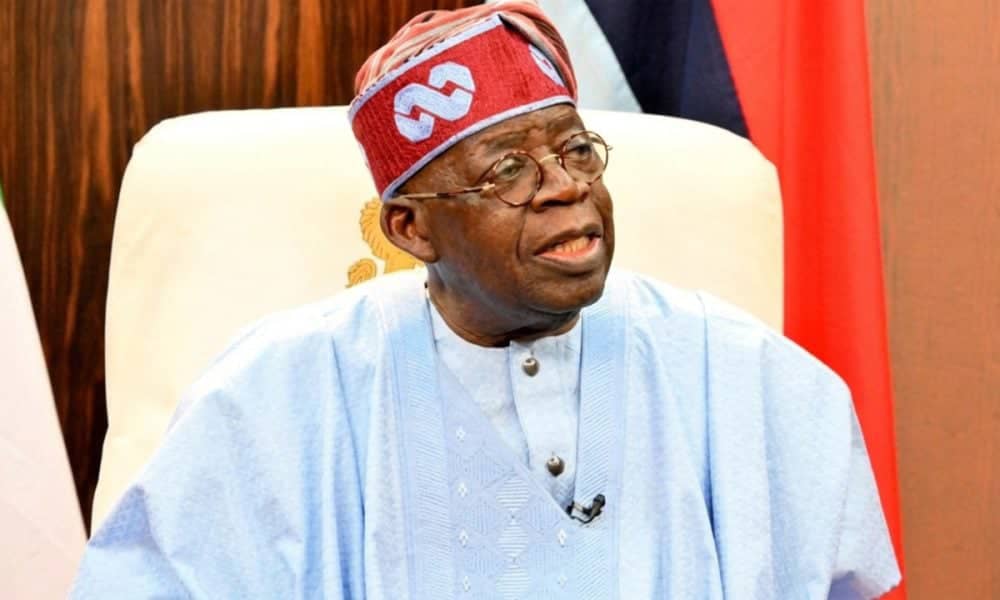
President Bola Ahmed Tinubu’s decision to skip the ongoing 81st session of the United Nations General Assembly, the third such abstention in a row, has raised eyebrows and sparked speculations.
Also read: Governor Dauda Lawal Approves 95% Salary Increase for Health Workers
Expectedly, opposition politicians have wasted no time in feasting on the official announcement that the vice-president, Kashim Shettima, will, once again, stand in for the president.
This trumps an earlier announcement by Jimoh Ibrahim, the country’s Ambassador to the United States/Permanent Representative to the United Nations, that not only would the president attend the annual meeting of world leaders at the UN headquarters in New York, USA, but that a vantage position had been secured for him to sit very close to the maverick United States’ president, Donald Trump!
Since he assumed the country’s leadership in 2023, Tinubu has yet to attend a single UNGA meeting; so also has he yet to pay either official or private visit to the United States despite that he has reportedly embarked, so far, on 52 foreign trips. He has visited at least 30 different countries across Europe, Asia, Africa, and the Americas, spending approximately 261 days.
As we speak, the president is out of the country on holidays, first to the UK after which he is expected in France. So, is there anything that aileth Tinubu about the United States? That is where the speculation begins; however, it does not end there!
Is President Tinubu deliberately avoiding the United States? Has it got anything to do with the unending controversy and legal battles over the FBI files and Tinubu’s past activities in the United States? He schooled there; he also worked there before returning to Nigeria decades back.
During the giddy days of the Sani Abacha military dictatorship, the US provided succour and a safe haven for Tinubu and many other pro-democracy activists. What has since changed is the question to ask if the suspicion is that the president is deliberately avoiding the United States.
Or has it got anything to do with the unpredictability of President Trump and the activities of anti-Tinubu politicians here at home and the paid groups doing their bidding in the US? Who dare put anything beyond a president that organized the storming, arrest, and rendition of a sitting foreign leader, hauling him and his wife to the US for trial on drug-related charges, with the country of the leader concerned and the international community as a whole helpless to do anything about it! “What if” then becomes the question should Tinubu set foot on US soil! Is it not better, then, to err on the side of caution?
Another school of thought is that Tinubu’s health might need attention. Unlike in much of the Western world, the secrecy that surrounds the health conditions of Nigerian, nay, African leaders makes it difficult to speak authoritatively on their health conditions.
And this is not new. Babangida, Abacha, Abdulsalami, Yar’Adua all had rumours swirling around their health conditions while in office. Abacha and Yar’Adua died in office. Buhari spent close to one-third of his tenure shuttling between the country and his doctors in the UK. It has been said, this time around, that Tinubu’s doctors are in France.
With part of his holiday reportedly scheduled to be spent in Charles de Gaulle’s country, could this holiday be another disguised medical tourism? Health is wealth, as they say, and prioritizing one’s health and wellbeing over and above a meeting, no matter how important, can be justified, especially when we have been told that the president can be (adequately?) represented at the UNGA.
Then I asked Google: Is it compulsory that the president lead his country’s delegation to the UNGA? The answer is: No, it is not compulsory for a president or prime minister to lead their country’s delegation to the UNGA.
Alternatively, the president or prime minister can be represented by the vice president or deputy prime minister, the foreign affairs minister or the country’s permanent representative at the UN who can speak, vote and act on behalf of the country or member-state concerned.
History records that many world leaders have frequently failed to personally attend UNGA due to divergent reasons, such as pressing domestic issues, disasters or local crises needing their personal attention or for health reasons.
Super-power rivalry and politics, and the need to remain non-committal or stay neutral from taking sides on volatile issues have also been known to compel foreign leaders to skip personally attending UNGA.
When a country’s leader attends the United Nations General Assembly (UNGA) in person, it provides several distinct strategic, diplomatic, and political advantages that cannot be replicated through virtual participation or lower-level delegation.
Some of these advantages are: High-level bilateral diplomacy (the “Margin” meetings); spontaneous networking whereby leaders hold informal, face-to-face meetings on the sidelines (the “margins”) of the assembly, allowing them to resolve disputes or advance treaties quickly.
It also affords the opportunity of building rapport. Personal presence helps build trust and personal relationships between heads of state, which can be critical during international crises.
Other advantages include enhanced global visibility and influence as UNGA gives leaders a global or world stage to operate from.
A speech delivered in person by a head of state commands significantly more international media attention and diplomatic weight than a pre-recorded video or speech read by a representative.
Some world leaders have been noted for setting agendas on issues of national, regional or international importance at UNGA. Leaders can directly pitch their nation’s foreign policy priorities, economic opportunities, or security concerns to a global audience.
Personal attendance at UNGA also helps to facilitate efficient multilateral engagement or what is called “mini-Summits” among leaders.
Leaders can participate in localized, high-level side events or regional summits (such as G7, BRICS, or regional blocs like the EU and the African Union) that have been known to convene in New York during the UNGA week. When leaders attend UNGA in person, direct access to decision-makers is made possible.
Smaller or developing nations also can seize the opportunity to have direct, unmediated access to leaders of superpower nations as well as heads of major international organizations like the UN itself, the World Bank and IMF. We can go on and on!
At the level of individual nations, attending UNGA is said to project an image of strength, global respect, and statesmanship to citizens back at home.
Newly-elected leaders especially use UNGA to announce themselves to the international community to garner support and recognition, to state their goals and set agendas as well as make profound statements on their administration’s foreign policy direction.
UNGA also serves as a formal introduction to the international community and signals the leader’s commitment to global cooperation.
From the above, it is, without doubt, a disadvantage when leaders absent themselves from UNGA. No matter how “powerful” a substitute representation is, it cannot be the same as when the president or prime minister of a country leads it.
There is what is called “bragging rights” among leaders. Presidents prefer to deal with presidents; vice presidents or foreign ministers will be shuffled down the ladder to discuss with their equivalents or counterparts.
The reverse is the case, however, where presidents of less powerful countries queue or consider it a privilege to have an audience with the foreign affairs minister or envoy of powerful countries such as the US, China, Russia, etc.
One narrative for Tinubu’s recurring absence at UNGA being spinned by his detractors is the fear of the unknown over the FBI files and Tinubu’s alleged past encounter with the US judicial system.
But a man, once tried and acquitted of criminal charges, cannot be tried again on the same offence except fresh evidence pops up that possesses the likelihood of affecting the outcome of the trial in the opposite direction.
Furthermore, can any harm come the way of a visiting president attending UNGA? Or, put more directly and blatantly, can a foreign leader attending UNGA in New York, USA be arrested for any reason whatsoever by the US authorities? The answer is, no; leaders attending UNGA cannot be arrested, charged or tried in the US because they enjoy immunity.
Under the UN Headquarters Agreement, the United States has an international obligation to allow accredited representatives entry and transit to the UN as well as respect their diplomatic inviolability.
In like manner, no US state, city, local government or county official possesses the legal power to arrest a protected visiting foreign leader.
From the above, it is most unlikely that President Tinubu stands the risk of being arrested in the US if he chooses to personally attend UNGA.
What may happen is that demonstrators may mass at the UN headquarters venue of UNGA, organize protests and heckle him and his delegation.
That will be embarrassing enough. For sure, it will portray the country in bad light and dent its image – which all Nigerians, including the president’s adversaries, will suffer from.
Also read: Governor Dauda Lawal Approves 95% Salary Increase for Health Workers
To avoid such an embarrassment and the deleterious effects it may have on the country’s image appears as the most germane reason why Tinubu has kept away – and may continue to keep sway – from UNGA until, maybe, a more predictable president mounts the saddle in the United States. And the losers? – Nigeria and Nigerians!
(Published in the TREASURES column on the back page of the NEW TELEGRAPH newspaper edition of Wednesday, 23 September, 2026).


THERE have been low-quality rumours, and preponderous propaganda circulating that Senator Henry Seriake Dickson has been meeting at unholy hours with the All Progressives Congress with the sole intention to sell the Nigeria Democratic Congress, NDC, to Bola Ahmed Tinubu and his flock.
It is not true. Those regurgitating these stale tales sourced from the same origins which have challenged NDC, castigated its candidates, and tested things NDC in court, have refused to understand that NDC is not for sale. No matter the price.
The rumours and blackmail are admissions that the election that Tinubu thinks he has enough “strategies” to win, will be fiercely contested by NDC with the Peter Obi and Dr Rabiu Musa Kwankwaso partnership which thoroughly terrifies Tinubu reducing him to new incoherences.
What those attacking Dickson would fail to disclose is what they have offered, just as they are desperate to have him in the ruling party. He has always said, which he did again when he left the Peoples Democratic Party, PDP, with regrets over the party’s unwillingness to resolve its issues, that joining Tinubu’s party was never an option.
A further lie told about Dickson is that he cannot be bought – he has no price. Again, Dickson has a price which they miss when they parlay their desperation to have him with an eye on the devastation of the common good.
Dickson stands with the people and for the people. He has come too far in this to ruin his politics with promises of positions and elite prosperity.
He would not be allies with those who entrench policies that cast Nigerians into deeper poverty, scramble for Nigeria’s resources as if the country has a few more years before expiring yet broadcast fairy tales of their nationalism and sacrifices.
When Dickson calls himself a federalist and progressive, he is not throwing words about or striving to grab the next headline. His political and personal life has built bridges across Nigeria. Those bridges are useful as he aspires for a Nigeria where no man is oppressed.
Dickson has always stood for service, inclusiveness, the common good, governance that cares for many, and the use of education as a pulley to get millions of our people out of grinding poverty.
As a young lawyer practising in Port Harcourt, he experienced, first-hand, how governments – military or civilian – were not about the welfare of the people. The Ogoni, and Ijaw struggle for their voices to be heard in decisions on the use of the oil and gas resources that wasted their environments, hit him harder with government’s killing of Ken Saro-Wiwa and his kinsmen without waiting for the appeal window in the matter to close.
“I am not one who is scared of standing alone or afraid of saying NO when NO is the right answer. My political life is defined by service, courage of conviction, compassion, patriotism, consensus-building, and steadfastness, while living a simple life,” Dickson said of himself.
Those qualities are the price of Dickson for which he has won prizes. Those who have such convictions and are interested in investing in searches for solutions that would improve the conditions of Nigerians and enhance Nigeria’s global standing are his allies.
Dickson’s presence in politics is primed around the people, service, integrity, prudent use of state resources for greatest good of the people, and accountability.
He is also shameless about bringing up the ruinous mining practices in the Niger Delta which while delivering billions of Dollars to federal coffers have diseased many places in the region and made them uninhabitable.
In August 2025, John Tucker Mugabi Sentamu, now 76, Ugandan, retired Anglican Bishop, and Life Peer, who was Archbishop of York and Primate of England from 2005 to 2020, delivered the summary of the report on the almost irredeemable devastation of the environment in Bayelsa State and the Niger Delta, in a quivering voice that appeared propelled by anger at what human beings can do to other human beings so they could profit from oil and gas exploitation.
Dickson commissioned that investigation when he was Governor of Bayelsa State and required scientific evidence for his duels to draw Nigeria’s attention to how oil and gas exploration was killing the peoples of the Niger Delta. He expected Nigeria to reverse the situation.
Nigeria has not cared even with available weighty evidence like the Sentamu report. Pollution of the Niger Delta remains a marginal issue for the multiple agencies assumed to cater for the region.
Oil was at the centre of a key decision that Dickson made in 2002 when he left the Alliance for Democracy, AD, the legacy party under which Tinubu was Governor of Lagos for eight years. AD transmuted to Action Congress of Nigeria and eventually All Progressives Congress.
In 1998, as pioneer Chairman of AD in Bayelsa State, and its National Legal Adviser, by 2002, Dickson built the party with lean resources to produce a Senator, a Member in the House of Representatives, and three seats in the State House of Assembly in 1999 due to his dedication, commitment, strategy and the people’s belief in him.
He disagreed with the national leadership of the AD after Chief Bola Ige, the Attorney-General of the Federation, an AD member, instituted the onshore/offshore case which was against the agreement made with Dickson and his associates when they chose AD over other parties.
Senator Dickson considered the suit against the interests of Bayelsa, the Ijaw Nation and the Niger Delta, and that his membership of AD was therefore no longer tenable.
The latest version of Dickson that encapsulates his growth over the years was laid bare at the 10 May 2026 inaugural National Convention of NDC, a party he formed with like minds to liberate Nigerians from the vice grip of the All Progressives Congress.
“We have assembled at a defining moment in the life of our nation – a time of worsening insecurity, economic hardship, deepening poverty, growing national division, and declining public trust in government and institutions.
Our duty in the NDC is to reverse these dangerous trends,” Dickson, NDC’s National Leader told delegates at the very successful, inaugural National Convention of NDC in Abuja.
“The NDC was founded as an ideological party determined to do politics differently – politics of service, politics of dialogue, politics of consensus-building, politics of inclusion, politics of respect for all Nigerians, politics of unity rather than division, and politics that restores dignity to our people and pride to our nation.
“All of us gathered here today have a long history of sacrifice and service, particularly within the opposition. We have endured intimidation, propaganda, deprivation, blackmail, harassment, and countless obstacles in our democratic journey. And if those pressures did not break us before, they will not break us now, and they will never break us,” Dickson said, pointing out that NDC was a product of the dogged years of focus, vision, integrity transparency, sacrifices, that are the ingredients of his politics.
Politics for the people, politics of service, not to self, but to the people. Politics that protects those without voices or who when they speak, louder interests drown their concerns, remain his message.
Dickson has nothing to do with the ruling party. His focus is to work with friends and allies to remove the burdens that the ruling party has unapologetically heaped on Nigerians.
The realisation that Tinubu’s days are numbered, is leading him and his supporters to unleash all sorts of distractions on the opposition as “Tinubu must go” appears on apparels and in native songs that echo the agonies of our peoples across regions and religions.
Finally…
TINUBU keeps shifting the goalposts. From crashing transport fares to celebration of the CNG buses, and reduction of fuel prices at the sprinkling of NNPC stations across Nigeria. Nigerians are not fooled. They will vote out Tinubu in 2027.
WATCH the kidding and napping of the Tinubu government over 42 school kids abducted in Askira Uba Local Government Area of Borno State since 15 May 2026, 149 days. Nothing is being done about it, as Amnesty International keeps reminding Nigerians.
PARENTS of 20 NYSC members who were kidnapped on the ever-busy Onitsha-Owerri Road, on their way to Abia State to commence service, claimed they paid at least N5 million each as ransom to secure the release of their wards. Imo State Government insists no ransom was paid. Who then in Owerri organised the collection of the ransom and advised the parents to convert the money to US Dollars to enhance portability?
PLEASE answer this question honestly: How has Tinubu’s government improved your life?
MY condolences to families, friends, and the Nigerian Air Force, NAF, on the death of officers and civilians who were in its craft that crashed in Igbokoda, Ondo State. May the Almighty rest them. The calls for auditing of maintenance records of NAF’s fleet deserve attention.
ISIGUZO is a major commentator on minor issues.

The kidnapping of 20 prospective National Youth Service Corps (NYSC) members travelling to their orientation camps on October 1 – Nigeria’s independence anniversary – should make Nigerians pause and ask a fundamental question: Is the present structure of compulsory national service still appropriate for the Nigeria of today?
Thankfully, the corps members, according to media reports, were released six days later at Amakohia Ubi Village, Imo State, by the Nigeria Police Force, in collaboration with other security agencies, although there are allegations that ransoms were paid. To be clear, I align myself with the objectives of the NYSC.
However, there is an urgent need to review the mechanism through which those objectives are pursued in view of the profound changes in Nigeria’s security, infrastructure and socioeconomic environment. The federal government has approved a package of reforms which is a welcome development, but it should not end there – a serious public debate about NYSC’s future is urgently needed.
The NYSC was established in 1973, in the aftermath of the Nigerian Civil War, with an important national purpose.It was conceived as an instrument for rebuilding trust, promoting national integration and encouraging young Nigerians to live, work and serve outside their immediate cultural and geographical environments.
That was a bold and visionary idea. For generations of Nigerian graduates, NYSC has provided an opportunity to experience another part of the country, make new friends across ethnic and religious boundaries, contribute to communities and develop a deeper understanding of Nigeria’s diversity.
The institution therefore deserves neither sentimental protection nor casual dismissal.
Nigeria has changed
The Nigeria of 1973 is not the Nigeria of 2026. When NYSC was introduced, travelling between states did not carry the same level of kidnapping risk that Nigerians now confront on some highways. Today, insecurity has transformed the meaning of interstate travel and national service for young graduates.
Kidnapping has become a major threat on some roads while banditry, armed robbery and other forms of criminality have made some routes particularly dangerous. The deterioration of major highways has also compounded the problem.
For NYSC participants, this is especially troubling because their movements are not entirely voluntary. They are mobilised, posted and expected to report to designated locations which creates a peculiar responsibility for government.
When the state requires a young graduate to travel hundreds of kilometres to another part of the country, it assumes a corresponding responsibility for that person’s safety. A young Nigerian should not have to choose between obeying a statutory national-service requirement and protecting himself or herself from a credible security threat. That is at the heart of the matter.
National service should not become a national security risk
Besides the compelling argument that the NYSC scheme should be retained, national integration should not require exposing young people to unnecessary danger.
If a highway is notorious for kidnapping, why should a group of young graduates be forced to travel through it simply because their posting letter says they must report to an orientation camp hundreds of kilometres away?
It is sad that inter-state travel has become longer and more hazardous primarily because our roads are badly maintained. Criminals know when large numbers of young Nigerians will be travelling to orientation camps, making them predictable targets.
Every time a prospective corps member is kidnapped, families experience an agonising period of uncertainty. Parents wait for information; siblings panic, and families may be forced into ransom negotiations and payments. The young people themselves, who are supposed to be embarking on an exciting transition into professional life, suddenly become victims of a security crisis they did not create.
There is something fundamentally wrong when national service becomes a source of anxiety for parents. It is like sending their children on a suicide mission.
The roads matter
The security debate cannot be separated from the condition of Nigeria’s roads. A bad road in an insecure environment becomes both an infrastructure and security challenge. Vehicles travelling on poorly maintained roads move slowly while broken-down vehicles become stranded. Traffic bottlenecks create opportunities for criminals, forcing drivers to stop at unsuitable locations. Long journeys become overnight journeys.
A functional road network is therefore part of national security. The federal government and state governments must recognise that the safety of Nigerians travelling between states depends not only on police presence but also on the quality of the roads, availability of emergency services, communication networks and rapid-response capability.
For NYSC members, the challenge is even greater because their movements are structured and predictable. The solution cannot simply be to deploy more security personnel every time corps members travel. That may be necessary in the short term, but it does not address the underlying question of whether the current deployment architecture remains sensible with horrible roads.
Review the mechanism
There is a danger in allowing the debate to become a simple choice between “keep NYSC” and “abolish NYSC.” That is too simplistic. A better approach, in my view, is to preserve the objective while reviewing the mechanism to achieve the same objectives.
The current mechanism is the compulsory deployment of graduates across state boundaries for a year, including movement to orientation camps and places of primary assignment. As part of the review, we can introduce a more flexible deployment system based on security assessments. States and local government areas could be categorised according to independently verified security conditions. Deployment to areas classified as high-risk could be suspended until adequate security conditions are restored.
Another option is to reduce compulsory inter-state movement while creating stronger incentives for voluntary cross-regional service. The programme could also incorporate more local and digital service opportunities, particularly for graduates whose skills can be deployed remotely.
There is also a case for shorter orientation periods and better-organised transportation for those who must travel across state boundaries. Instead of leaving young graduates to make long interstate journeys independently, the government can provide secure, coordinated transportation to orientation camps.
Insurance, emergency evacuation arrangements and compensation mechanisms should also be strengthened.
We should not throw away what works
It is important to acknowledge that NYSC has contributed significantly to Nigerian society. Teachers, doctors, engineers, lawyers, journalists, administrators and entrepreneurs have served communities far from their places of origin through the scheme.
On a personal note, I did my youth service in Awka, in the old Anambra State before the creation of Enugu State, and I enjoyed the warm reception accorded me throughout my stay.
In many rural communities, corps members have filled important gaps in education, healthcare, agriculture and community development. For some Nigerians, the NYSC experience remains one of the few structured opportunities to live outside their ethnic or regional environment and build relationships across Nigeria’s diversity – a valuable experience indeed.
At a time when ethnic and regional identities sometimes dominate public discourse, a programme that encourages young Nigerians to see themselves as members of one national community should not be discarded.
But precisely because the objective is valuable, the mechanism must be protected from becoming obsolete. Institutions survive when they adapt.
Moving forward
A review of the scheme should examine the programme’s objectives, cost, security implications, deployment patterns, economic value and relevance to the modern labour market.
If the government cannot guarantee reasonable security for interstate mobilisation, it should have the courage to suspend deployment along dangerous routes or into high-risk areas. This should not be interpreted as an attack on NYSC; it is an invitation to save it from becoming trapped in the assumptions of another era.
What does national service mean in 21st-century Nigeria? We can achieve both national unity and public safety at the same time, but the government should prioritise improving inadequate infrastructure and strengthening our security architecture.
NYSC was created because Nigeria needed a mechanism to bring its young people together after a devastating national conflict. More than five decades later, Nigeria still needs national cohesion, but the country also needs to recognise that the environment in which NYSC operates has changed dramatically.
We should preserve the spirit of national service without treating its existing structure as untouchable. No national programme should be more important than the safety of the citizens it was created to serve.
The time has therefore come to redesign the NYSC scheme and make it fit for purpose. That is the conversation we should be having and it should begin now.
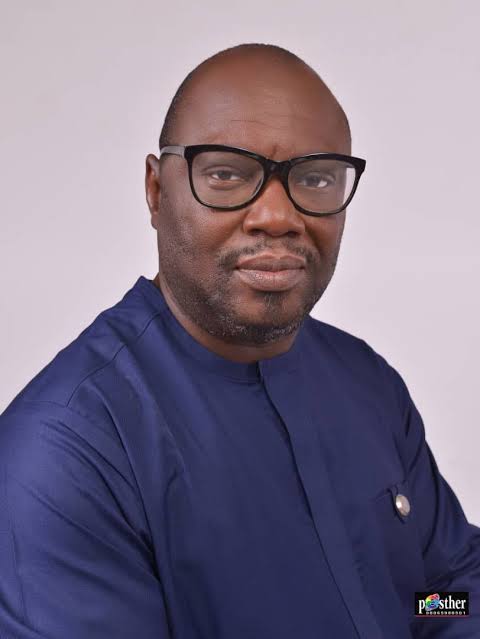
The Guild of Corporate Online Publishers (GOCOP) has come of age as a leading association of professional journalists who have embraced online publishing in Nigeria. From October 6 to 9, members from different parts of the country converged on Lagos for what turned out to be a memorable 10th Annual Conference.
I am grateful to our president, Danlami Nmodu, and our deputy president and chairman of the Conference Planning Committee, Olumide Iyanda, along with all our members for the opportunity to share my thoughts on Wednesday, October 7. My presentation was titled ‘The Sundiata Post Model: Building the African Newsroom for the Long Term in the Age of Zero-Click’. Today’s article draws from that lecture.
The history of modern journalism is, in part, a history of disruption.
Print was disrupted by online publishing. Online publishing was disrupted by social media. Now, digital publishing is being disrupted by artificial intelligence.
Each disruption has changed how news is produced, distributed and consumed. Each has altered audience behaviour, advertising, revenue models and the relationship between publishers and their readers.
But the latest disruption raises a more fundamental question: what should a newsroom become if it intends to survive not merely the next technological change, but the decades ahead?
This is no longer simply a question about digital adaptation. It is a question about institutional purpose, economic survival and the future of journalism itself.
THE ZERO-CLICK CHALLENGE
The traditional economics of digital publishing rested on a straightforward sequence: produce content, attract an audience, generate traffic and monetise attention.
Social media weakened publishers’ control over distribution by moving news discovery to external platforms. Artificial intelligence is taking this separation further.
Readers can encounter headlines without visiting websites, receive summaries without opening articles, and obtain answers through AI systems without necessarily consulting the original publisher. Content may be consumed even when the publisher receives no visit.
The SquirrelPR RANKED Report for 2025, released in April 2026, offers a useful starting point for understanding the implications. According to the report, audience traffic across Nigeria’s digital media ecosystem declined by 26.2 per cent, from more than one billion visits to approximately 769 million.
The figures should concern publishers, but their significance extends beyond declining website visits. They invite us to reconsider how audiences discover information and how news organisations measure their relevance.
A decline in traffic does not automatically mean a corresponding decline in influence. An idea can circulate across professional communities and social networks without the original publisher registering the full extent of its reach.
Traffic and influence are related, but they are not synonymous.
The click remains useful as a measure of audience activity. It is simply becoming a less complete measure of the value journalism creates.
This raises a difficult question: what are we building that remains valuable when the click does not come?
FROM CONTENT PRODUCTION TO KNOWLEDGE PRODUCTION
The answer begins with a reconsideration of what a newsroom can produce.
Beyond stories, headlines and traffic, what else can it create?
A newsroom reports insecurity. Can it also investigate the recurring structures that sustain insecurity?
It reports institutional failure. Can it develop frameworks for understanding how that failure occurs?
It reports the erosion of state authority. Can it construct analytical tools for examining the relationship between the state, territory, institutions and sovereignty?
These questions do not diminish journalism. They extend its possibilities.
The distinction is between an organisation that continually produces content and an institution that also accumulates knowledge.
A story may have a short news cycle. A framework developed through sustained reporting and research may remain useful long after the event that inspired it has disappeared from public attention. An archive preserves what happened; original research can help explain why it happened and how similar developments might be understood.
Journalism, therefore, need not be the final destination of inquiry. It can be the beginning of a wider knowledge-production process.
This is the proposition behind the Sundiata Post Model.
At the end of 2025, after more than three decades in the media industry, I began asking a fundamental question: What else could a newsroom produce beyond news and commentary?
That question helped shape the current direction of Sundiata Post Media Ltd. It informed the evolution of The Sunday Stew, my weekly syndicated column, and the establishment of the Sundiata Post Intelligence Unit (SPIU), the institution’s research and knowledge-production arm.
The emerging body of work includes the Insecurity Triad, a framework for examining the intersecting forces of money, land and mind; the Trinity of Sovereignty Decay, a theoretical framework for understanding the erosion and recovery of sovereignty; and the Decoupling Sovereignty Index (DSI), an analytical instrument developed to investigate the relationship between formal sovereignty and its lived reality.
These outputs reflect a deliberate expansion of the newsroom’s purpose: from reporting and interpreting events to developing original frameworks, theories and analytical instruments for understanding the conditions that produce them.
The underlying question remains the same: if a newsroom can document the world, can it also develop the intellectual tools needed to explain it?
Its central proposition is straightforward: a newsroom can build institutional value from the knowledge it produces, not only from the audience it attracts.
TWO ENGINES, ONE INSTITUTION
At the centre of the Sundiata Post Model is what I call the Dual Engine Architecture.
The first is the Media Operations Engine: Report → Publish → Distribute.
This is the newsroom’s familiar operating system. It gathers information, verifies events, produces journalism and delivers it to audiences.
The second is the Knowledge Operations Engine: Research → Analyse → Develop → Preserve.
This engine takes questions arising from journalism and subjects them to deeper examination. It identifies patterns, develops concepts, tests explanations and preserves the resulting knowledge.
The two engines are complementary. The media engine maintains the institution’s connection to current events and public life; the knowledge engine enables it to learn systematically from what it observes.
A report on insecurity can inform the public today. Continued investigation can reveal recurring patterns. Research can organise those patterns into a framework that subsequent work can refine and test.
The result is a newsroom that builds upon its previous work rather than repeatedly starting from zero.
Yet knowledge production alone cannot sustain an institution. The newsroom also needs the financial, human and organisational capacity to continue its work.
SEVEN PILLARS OF THE REALM OF THE LONG TERM
The Sundiata Post Model rests on seven mutually reinforcing pillars.
Financial Sustainability.
The institution must develop an economic foundation capable of supporting its long-term mission. Monetising traffic remains important, but immediate revenue cannot be the entirety of its strategy.
Human Capital and Leadership. Institutional endurance requires capable people, sound judgement, leadership, character, succession and the transfer of knowledge across generations.
Knowledge Stewardship. Research, frameworks, intellectual property, archives and institutional learning must be organised and preserved so that the institution can build upon what it has already learned.
Governance. Accountability, clear decision-making and appropriate structures enable the institution to function beyond the personality and tenure of its current leader.
Innovation and Adaptation. Technologies, distribution systems and business models will change. The institution must adapt without losing its purpose.
Trust and Reputation. In an information environment saturated with content and increasingly mediated by AI, credibility becomes an essential institutional asset. Trust must be earned through consistency, transparency and integrity.
Mission Continuity. The institution must distinguish between its enduring purpose and the methods through which it pursues that purpose. Methods can change without the mission disappearing.
Together, these pillars address an essential question: can an institution preserve its knowledge, relationships and capabilities beyond its founder?
An organisation built entirely around one person’s energy and memory remains vulnerable to that person’s absence. An institution that documents its work, preserves its knowledge, establishes governance and transfers capability has a stronger foundation for continuity.
The objective is not simply to create something that succeeds today, but to build something capable of continuing to contribute value tomorrow.
WHY THIS MATTERS FOR AFRICA
The argument has particular significance for African journalism.
Many African newsrooms operate under difficult economic conditions. Revenue is constrained, infrastructure is uneven, technology changes rapidly, and political and commercial pressures can complicate independent journalism.
The loss of experienced personnel can weaken institutional memory, while financial uncertainty can force publishers to prioritise immediate survival over long-term development. But survival cannot be the final ambition.
Africa needs news organisations capable of producing knowledge about African societies, institutions and conditions. We need analytical frameworks grounded in our own realities and the capacity to contribute original thinking to international debates.
This does not require rejecting external scholarship or abandoning international collaboration. It requires building the capacity to contribute to the wider knowledge ecosystem from Africa’s experiences and investigations.
A newsroom can be one of the places from which that contribution emerges.
Years of reporting can generate questions that deserve investigation beyond the immediate demands of the news cycle. The opportunity is to develop systems that turn those questions into sustained inquiry.
Such work demands methodological seriousness, documentation, critical scrutiny and a willingness to revise ideas when evidence requires it. A framework is not valuable simply because a newsroom develops it; its value depends on the quality of its reasoning, the evidence supporting it and its usefulness to others.
The ambition is not to attach scholarly labels to journalism. It is to develop the capacity for original knowledge production within the newsroom itself.
For African media organisations, this is a strategic possibility worth exploring, including by smaller independent newsrooms prepared to build systematically from the resources available to them.
THE DESK IS ENOUGH, BUT CANNOT BE THE END
One idea that has emerged from my experience is The Desk Is Enough.
It does not mean that a desk is all an institution needs. It means that meaningful intellectual work can begin with the resources at hand.
A journalist does not have to wait for a large building before developing an idea. A researcher does not have to wait for a prestigious institution before beginning a serious inquiry.
The desk can be the beginning.
But the desk cannot be the end.
What begins as individual effort must become institutional capability if it is to endure.
This leads to what I call the Four Enoughs:
The Desk Is Enough to Begin. The work can begin with the resources at hand.
The Institution Is Enough to Sustain. Individual effort can become an organised capability.
The Archive Is Enough to Preserve. Knowledge can be preserved rather than disappearing with its creator.
The World Is Enough to Test. Geography need not become a ceiling on intellectual reach.
The sequence matters. The desk is where the work begins. The institution provides organisation and continuity.
The archive preserves the work. The world becomes the field in which it can be examined, adapted, challenged and adopted if found useful.
For African researchers and media entrepreneurs, this is the difference between starting small and thinking small.
We can report, research, develop ideas and produce knowledge from here. But international reach does not arise from aspiration alone. It requires quality, discoverability, preservation, dissemination and engagement beyond our immediate environment.
The task is to build the institutional pathways through which locally generated knowledge can travel.
BEYOND THE CLICK
The zero-click environment is not the end of journalism. Websites, traffic, audiences and revenue remain important. Newsrooms must continue to attract readers, protect their credibility and adapt to technological change.
But these activities cannot constitute the entire institutional equation.
What happens when technology changes again? What happens when another intermediary controls access to the audience? What happens when information can be consumed without a visit to the original publisher?
An institution whose value rests almost entirely on immediate content consumption will remain vulnerable to these shifts.
An institution that also develops original knowledge, preserves its intellectual capital and builds systems for continuity has additional sources of enduring value.
The article may be read elsewhere. The idea may travel through another channel. The information may be summarised by a system the publisher does not control.
Yet the institution that generated the knowledge can continue to develop it, preserve it and contribute to the next stage of inquiry.
That is the strategic opportunity before the African newsroom.
The Sundiata Post Model offers one proposition for approaching it: journalism can lead to research, research can generate knowledge, knowledge can become intellectual capital, and intellectual capital can contribute to enduring public value.
The newsroom must do more than report events. It must learn from them, explain them, preserve what it discovers and build upon that knowledge.
The click may open the door to an audience. It cannot, by itself, build an institution.
The African newsroom must learn to outlive the click.
From the Desk to the World
-
Politics3 years ago
13 Ondo Assembly Members Disown Endorsement of Aiyedatiwa
-
Politics3 years ago
APC Group, Ondo Govt, Quarrel Over Money for Endorsement
-

 Trending News5 years ago
Stop unsavoury, inciting statements – DSS warns
-

 Others5 years ago
Adron Homes Celebrates 10 Years Of Housing Excellence
-

 Humanity5 years ago
President Buhari Commiserates With Ambassador Maureen Tamuno Over The Loss Of Her Father
-

 Others7 years ago
EX- CUSTOMS BOSS, IBRAHIM MERA’S DWINDLING FAME
-

 Business2 years ago
Bigi Carbonated Soft Drinks Treats 40 Consumers to an Epic Easter Movie Hangout
-

 Business2 years ago
Wema Bank Shines at Global SME Finance Forum Conference Awards 2024 …Awarded: • SME Financier of the Year (Africa) • Platinum Award for Best Financier for Women Entrepreneurs (Africa)