
Business
ExxonMobil Under Fire Over Delayed $1bn Usan Oil Field Development

ExxonMobil Usan Project promises new oil output but also raises questions over years of delayed investment and regulatory oversight in Nigeria

The announcement by ExxonMobil of a $1 billion investment in the ExxonMobil Usan Project has been welcomed as a positive development for Nigeria’s oil industry.
Also read: NNPCL Signs Bold Deal With Chinese Firms for Refinery Revival
The offshore development is expected to add about 40,000 barrels of crude oil per day when production peaks, offering a timely boost to a country seeking to raise output and improve foreign exchange earnings.
Yet, behind the optimism surrounding the investment lies a broader conversation about whether the project represents genuine progress or the delayed delivery of an opportunity that has existed for years.
For almost a decade, ExxonMobil’s Nigerian affiliate, Esso Exploration and Production Nigeria Limited, carried out little new drilling activity after its last major campaign in 2016.
During that period, Nigeria struggled with declining crude oil production, fluctuating government revenues, crude theft and reduced investment across the upstream sector.
Against that backdrop, industry observers argue that the Usan development raises an unavoidable question: why has a project capable of reaching first oil within months only now moved into execution?
The Usan field is not a newly discovered asset. Existing infrastructure, including the Floating Production, Storage and Offloading vessel, was already available, known reserves had been appraised and the technical capability to execute an infill drilling programme had long existed.
For some analysts, the latest investment therefore represents less of a breakthrough than the implementation of a project whose commercial potential had been evident for years.
That delay carries significant economic implications.
Throughout the period of inactivity, Nigeria sought to increase production to maximise earnings during periods of relatively favourable oil prices while also attempting to attract fresh upstream investment.
Each year without additional production represented forgone export earnings, government revenue and associated economic activity.
The discussion also extends beyond ExxonMobil itself.
Regulatory institutions, including the Nigerian Upstream Petroleum Regulatory Commission, Nigerian National Petroleum Company Limited and Nigerian Content Development and Monitoring Board, have statutory responsibilities to promote investment, improve efficiency and safeguard Nigeria’s interests within the petroleum sector.
While those agencies have welcomed the project as evidence of renewed investor confidence following the implementation of the Petroleum Industry Act, critics contend that questions remain over whether stronger regulatory engagement could have accelerated the development years earlier.
The project’s execution strategy has also drawn attention.
Rather than constructing entirely new production infrastructure, ExxonMobil plans to develop the field by tying new wells back to the existing Floating Production, Storage and Offloading facility.
From an operational standpoint, the approach reduces capital expenditure, shortens project timelines and improves commercial efficiency.
However, some industry commentators argue that under Nigeria’s Production Sharing Contract framework, lower upfront investment also enables operators to recover development costs more quickly before profit sharing with the government increases.
While such an approach is commercially rational for investors, it has prompted debate over whether Nigeria is fully optimising the long-term value of its hydrocarbon resources.
Perhaps the most striking aspect of the announcement is the project’s implementation schedule.
ExxonMobil has indicated that first oil is expected within six months of execution, with peak production anticipated within 18 months.
To many observers, that timeline suggests the principal obstacle was not technical capability but the pace of investment decisions and project execution.
If the additional production can be delivered so rapidly, questions naturally arise over how much output and revenue may have been lost during the intervening years.
At the same time, there are countervailing considerations.
Global upstream investment decisions have been shaped by volatile oil prices, changing energy transition policies, investor demands for capital discipline and the regulatory uncertainty that preceded Nigeria’s Petroleum Industry Act.
International oil companies have increasingly prioritised projects capable of delivering competitive returns within evolving global portfolios.
Those factors provide important context for understanding why several large-scale Nigerian upstream projects experienced delays across the industry rather than at ExxonMobil alone.
The ExxonMobil Usan Project nevertheless offers an important opportunity for reflection.
If successfully delivered, the investment will contribute additional crude production, support government revenues and reinforce confidence in Nigeria’s offshore sector.
Equally, it highlights the importance of creating a regulatory environment that not only approves investments efficiently but also encourages timely project execution and greater accountability from both operators and public institutions.
As Nigeria seeks to reverse declining production and attract fresh capital into its petroleum industry, the success of future projects may depend as much on reducing delays as on securing new investment commitments.
Also read: NNPC Brings Together Top African R&D Chiefs For Energy Innovation Drive
The Usan development demonstrates that significant opportunities remain available, but unlocking them consistently will require coordinated action from investors, regulators and policymakers alike.


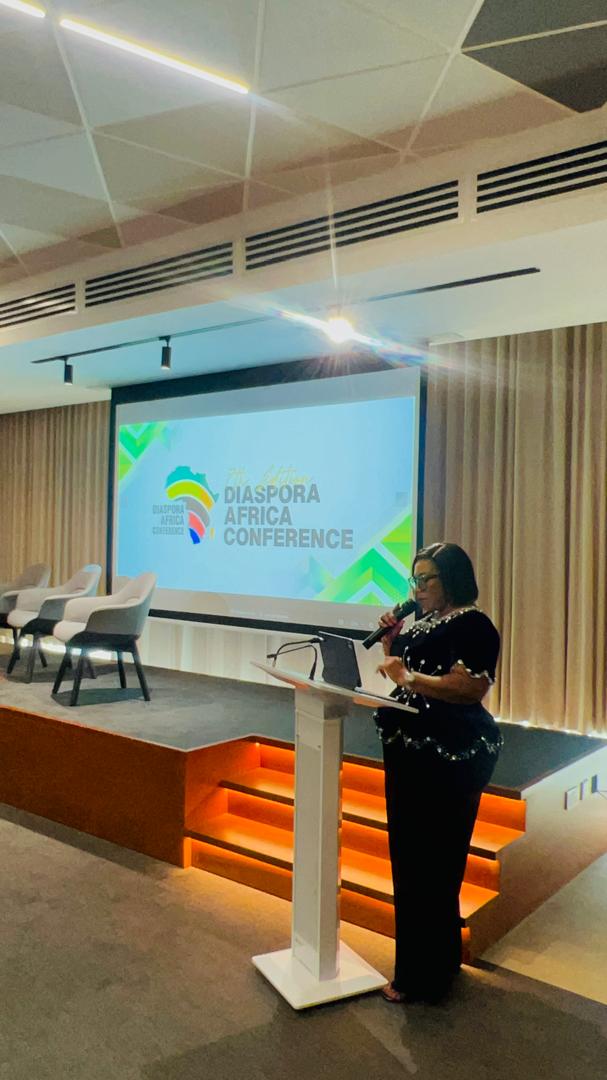
AICL GMD Maureen Tamuno calls for stronger diaspora investment in Africa through trust, transparency, skills transfer and sustainable partnerships

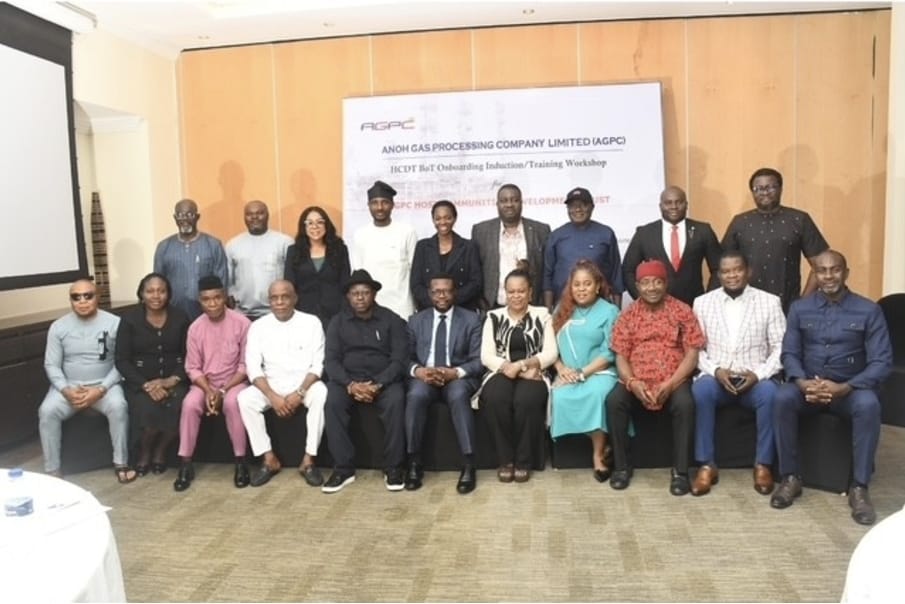
ANOH Gas inaugurates its HCDT Board, setting a new course for sustainable community development, transparency and accountability under the PIA
-
Politics3 years ago
13 Ondo Assembly Members Disown Endorsement of Aiyedatiwa
-
Politics3 years ago
APC Group, Ondo Govt, Quarrel Over Money for Endorsement
-

 Trending News5 years ago
Stop unsavoury, inciting statements – DSS warns
-

 Others5 years ago
Adron Homes Celebrates 10 Years Of Housing Excellence
-

 Humanity5 years ago
President Buhari Commiserates With Ambassador Maureen Tamuno Over The Loss Of Her Father
-

 Others7 years ago
EX- CUSTOMS BOSS, IBRAHIM MERA’S DWINDLING FAME
-

 Business2 years ago
Bigi Carbonated Soft Drinks Treats 40 Consumers to an Epic Easter Movie Hangout
-

 Business2 years ago
Wema Bank Shines at Global SME Finance Forum Conference Awards 2024 …Awarded: • SME Financier of the Year (Africa) • Platinum Award for Best Financier for Women Entrepreneurs (Africa)