
Security
Insecurity: FESCANG Calls for Tougher Anti-Terrorism Legislation


FESCANG urges tougher laws against kidnappers, calling for stricter penalties, intelligence reforms and special courts to combat insecurity

The Foundation for Ethical Society and Cultural Awareness (FESCANG) has called on the Federal Government to enact tougher legislation against kidnapping, banditry and terrorism, arguing that stronger legal sanctions are necessary to address Nigeria’s escalating security challenges.
Also read: Police Arrest Eight Suspected Kidnappers in Nasarawa Raid
In a position paper released on Thursday, the organisation urged authorities to ensure that individuals convicted of kidnapping, banditry and terrorism face the maximum penalties permitted under Nigerian law, including the death penalty where legally applicable and imposed through due judicial process.
FESCANG said the growing threat posed by violent criminal groups has heightened concerns among citizens about the safety of lives and property, stressing that the primary responsibility of government is to guarantee security.
“The growing threat posed by these violent crimes requires decisive action to protect innocent citizens, restore public confidence and deter criminal activities across the country,” the organisation stated.
As part of its recommendations, FESCANG proposed the creation of a one million-man civilian intelligence network to support security agencies with community-based information gathering.
According to the group, the initiative could be funded through a dedicated security levy and would enable citizens to serve as the eyes and ears of law enforcement authorities across the federation.
The organisation also advocated greater investment in human intelligence, arguing that security agencies should complement spending on military hardware with stronger grassroots intelligence systems capable of providing early warnings and actionable information.
In another key recommendation, FESCANG urged the government to explore new approaches to combating insurgency and banditry by establishing community-based self-defence structures operating under the supervision of the military and other security agencies.
The group argued that such units, if properly regulated and trained, could serve as a vital first line of defence in vulnerable communities frequently targeted by criminal groups.
FESCANG further called for the establishment of comprehensive national security databases, including a biometric database of citizens and legal residents, a centralised criminal records system and an integrated intelligence-sharing platform accessible to authorised law enforcement agencies.
According to the organisation, improved information management and inter-agency cooperation would strengthen the country’s capacity to detect, track and disrupt criminal activities.
The group also recommended the deployment of intelligence personnel across wards and local government areas, with information gathered transmitted in real time to intelligence centres for analysis and rapid response.
A major aspect of the proposal is the creation of special courts or designated tribunals to handle kidnapping, banditry and terrorism-related cases.
FESCANG argued that such courts would accelerate the prosecution of suspects and ensure timely delivery of justice.
The organisation also called for legal provisions that would hold accountable anyone found to have aided, financed, harboured or concealed information relating to terrorist or kidnapping activities.
In a notable recommendation, FESCANG urged policymakers to consider legislation that would allow law-abiding citizens to legally possess firearms for self-defence under strict licensing and regulatory frameworks.
The group further advocated a comprehensive review of security institutions to identify and remove any personnel found to be collaborating with criminal or terrorist organisations.
“Such individuals should face prosecution and all applicable sanctions under the law,” the organisation stated.
Beyond security benefits, FESCANG argued that a large-scale intelligence initiative could create employment opportunities for thousands of young Nigerians, helping to reduce poverty and limit the recruitment pool available to criminal groups.
The recommendations come amid continued concerns over insecurity in several parts of Nigeria, where authorities have been battling terrorism, banditry, kidnapping and other violent crimes through a combination of military operations, intelligence gathering and law enforcement measures.
FESCANG described the current period as a critical moment for the country and urged policymakers to adopt bold and effective strategies capable of restoring public confidence and strengthening national security.
Also read: Police Rescue Pregnant 15-Year-Old in Anambra
“Nigeria is at a critical juncture. The time for bold and decisive action is now,” the organisation said, expressing confidence that the proposed measures could contribute to building a safer and more prosperous nation.


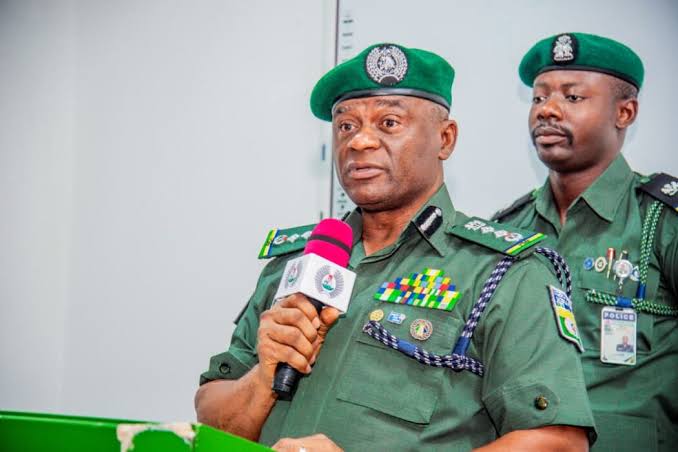
IG Olatunji Disu proposes 200% gratuity for retired police officers as the Federal Government considers reforms to address pension challenges

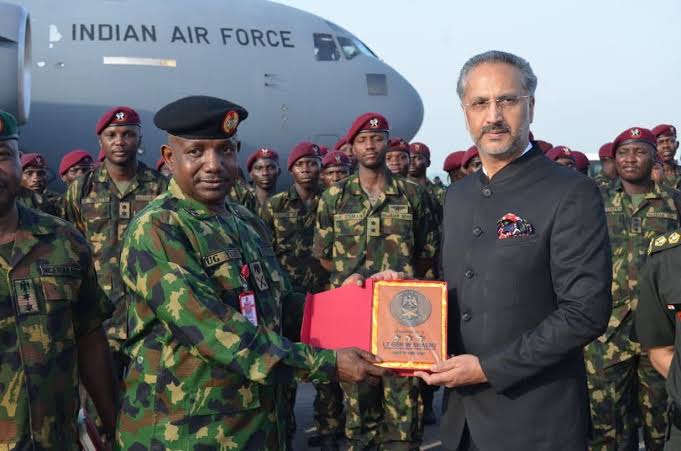
The Nigerian Army is sending 600 soldiers to India for specialised jungle and mountain warfare training to improve combat readiness
The Nigerian Army has commenced the deployment of 600 personnel to India for specialised jungle and mountain warfare training aimed at improving troops’ combat readiness and ability to operate in difficult terrain.
Also read:Umahi Predicts South-East Shift in 2027 Vote for Tinubu
The first batch of 300 soldiers departed the Nnamdi Azikiwe International Airport in Abuja on Thursday, October 22, aboard two Indian Air Force aircraft, a C-17 and an Airbus A321.
The Acting Director of Army Public Relations, Colonel Appolonia Anele, announced the deployment in a statement on Friday.
According to the statement, the training is intended to enhance troops’ operational effectiveness in challenging environments and strengthen the Army’s capacity to protect Nigeria’s territorial integrity.
“The training underscores the COAS’s commitment to building a professional, adaptable and combat-ready force capable of confronting terrorists, insurgents and other criminal elements operating in forests, mountainous areas and other challenging environments,” the statement said.
The statement said the deployment was initiated by the Chief of Army Staff, Lieutenant General Waidi Shaibu, as part of efforts to improve personnel development, realistic training and operational effectiveness.
It added that the programme aligned with Shaibu’s command philosophy, which prioritises combat readiness and the development of a resilient, mission-ready force.
The Coordinator of the Nigerian Military Training Support and Advisory Team at Army Headquarters, Department of Army Training, Major General UG Yusuf, represented the Army chief at the departure ceremony.
The Indian High Commissioner to Nigeria also witnessed the departure.
The Army said arrangements were underway to transport the remaining 300 personnel to India to complete the planned deployment.
The specialised training is expected to strengthen the soldiers’ ability to operate in forests, mountainous regions and other difficult environments where conventional military operations can pose additional challenges.
The initiative is also expected to reinforce defence cooperation between Nigeria and India.
Also read:Umahi Predicts South-East Shift in 2027 Vote for Tinubu
The Army said the deployment reflected its commitment to developing personnel capable of responding to security threats while safeguarding the country’s sovereignty and protecting lives and property.
-
Politics3 years ago
13 Ondo Assembly Members Disown Endorsement of Aiyedatiwa
-
Politics3 years ago
APC Group, Ondo Govt, Quarrel Over Money for Endorsement
-

 Trending News5 years ago
Stop unsavoury, inciting statements – DSS warns
-

 Others5 years ago
Adron Homes Celebrates 10 Years Of Housing Excellence
-

 Humanity5 years ago
President Buhari Commiserates With Ambassador Maureen Tamuno Over The Loss Of Her Father
-

 Others7 years ago
EX- CUSTOMS BOSS, IBRAHIM MERA’S DWINDLING FAME
-

 Business3 years ago
Bigi Carbonated Soft Drinks Treats 40 Consumers to an Epic Easter Movie Hangout
-

 Business2 years ago
Wema Bank Shines at Global SME Finance Forum Conference Awards 2024 …Awarded: • SME Financier of the Year (Africa) • Platinum Award for Best Financier for Women Entrepreneurs (Africa)