
News
FG Approves ₦70,000 Monthly Transport Allowance for Workers

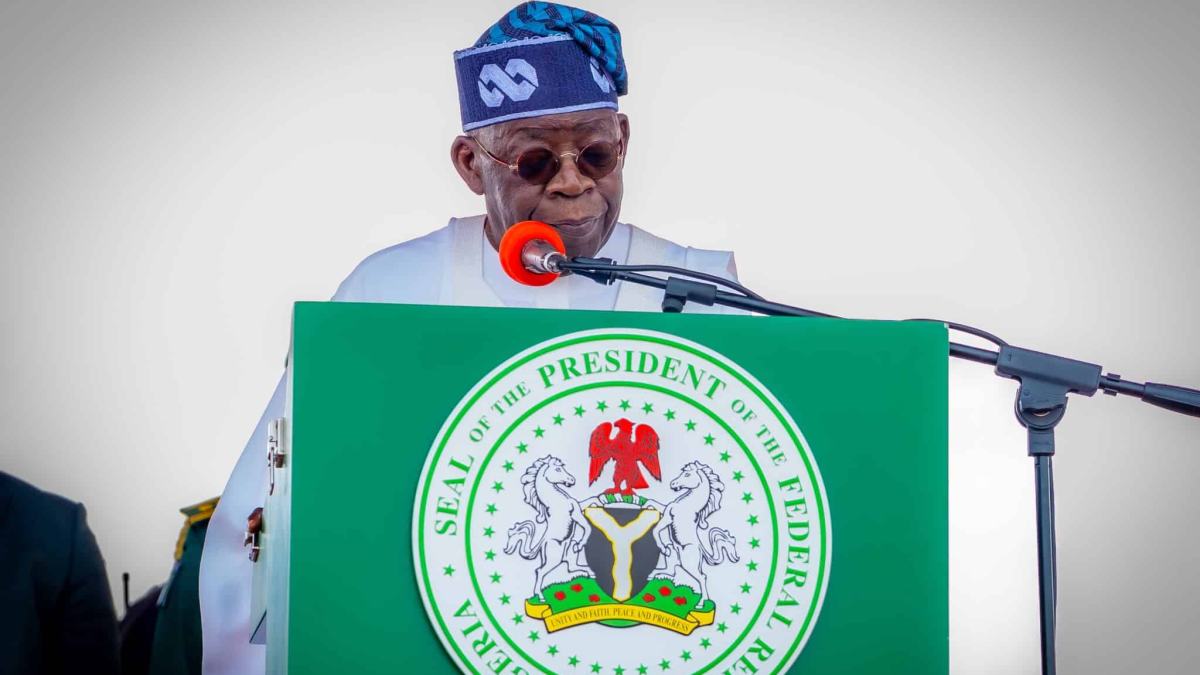
FG approves a ₦70,000 transport allowance for public servants for six months from November, alongside plans to clear outstanding workers’ allowances
The Federal Government has approved a monthly transport allowance of ₦70,000 for public servants for six months, beginning in November 2026, as part of measures to ease the impact of rising living costs on workers.
Also read: FG Urges Investment in Youth, SMEs and Local Industries to Grow Economy

The approval was one of the resolutions reached during a conciliation meeting between the Federal Government and the Nigeria Labour Congress (NLC) in Abuja on Tuesday, October 27, following renewed pressure from organised labour over workers’ welfare, rising prices and outstanding agreements.
The government also approved the payment of outstanding peculiar allowance arrears, effective from May 1, 2026, with disbursement scheduled to begin in November in three equal monthly instalments.
However, both parties failed to agree on the effective date for implementing the national minimum wage, although they committed to immediately constituting a Minimum Wage Negotiation Committee.
The resolutions were contained in a memorandum of understanding signed by the Director-General of Budget, Timi Yakubu; NLC President, Joe Ajaero; the Permanent Secretary of the Service Welfare Office in the Office of the Head of the Civil Service of the Federation, Dr Garba Abdul S.U.; and the Minister of Labour and Employment, Dr Muhammad Maigari Dingiyadi.
The document outlined agreements covering transport support, outstanding allowances, minimum wage negotiations, health workers’ remuneration, tax relief and hazard allowances for agricultural officers.
Speaking on the outcome of the meeting, the NLC Assistant Secretary-General, Chris Onyeka, described the discussions as productive but said they fell short of labour’s expectations.
“It was productive, but not as we had expected,” Onyeka said, adding that negotiations often required compromises.
He explained that the proposed Minimum Wage Negotiation Committee would comprise representatives of the government, workers and employers.
According to the memorandum, the ₦70,000 monthly transport intervention will apply across all levels of the public service for six months, beginning in November 2026.
The document stated that the allowance was intended to provide financial support to workers amid persistent increases in transportation costs and the prices of essential goods.
However, it did not specify the exact payment dates or the administrative arrangements for disbursing the money.
The intervention comes amid continuing concerns over the rising cost of living following the removal of the petrol subsidy in May 2023, which contributed to increased transport expenses and wider household costs.
Organised labour has repeatedly called for measures to ease the economic pressure on workers, including lower petrol prices, improved remuneration and the implementation of outstanding welfare agreements.
The NLC had also expressed concerns about the Federal Government’s handling of its demands, prompting the Ministry of Labour and Employment to convene conciliation meetings.
The memorandum acknowledged the disagreement between the parties, noting that the government had expressed its commitment to addressing workers’ concerns through structured interventions.
The Federal Government also approved the payment of outstanding peculiar allowance arrears, with the payments scheduled to commence in November 2026.
Under the agreement, the arrears will be paid in three equal monthly instalments, with the approval taking effect from May 1, 2026.
However, the memorandum did not disclose the total amount involved or provide a breakdown of the beneficiaries and individual payments.
The parties are expected to monitor implementation as part of their broader efforts to address outstanding workers’ welfare commitments.
Despite the agreements on transport support and allowance arrears, the government and organised labour failed to reach a consensus on the effective date for implementing the national minimum wage.
The memorandum stated that both parties had agreed to establish the Minimum Wage Negotiation Committee and begin meetings immediately.
However, the date from which the proposed implementation would take effect remained unresolved.
The national minimum wage became a major issue in 2024 when the Federal Government and organised labour negotiated an increase in the statutory monthly minimum wage from ₦30,000 to ₦70,000.
The revised rate was subsequently enacted into law through the National Minimum Wage Act.
The latest agreement provides for further discussions on implementation but does not specify the proposal currently under consideration or when negotiations are expected to conclude.
The unresolved issue leaves workers awaiting further clarification even as the government moves to implement other financial interventions.
The memorandum also provided for the settlement of 19 months of outstanding allowance arrears owed to health workers.
According to the agreement, the arrears are to be redeemed within three months, beginning in December 2026.
The document did not disclose the total amount involved or the specific payment dates within the three-month period.
On the proposed adjustment to the Consolidated Health Salary Structure (CONHESS), the National Salaries, Incomes and Wages Commission undertook to complete an updated assessment of the cost implications within three weeks.
The assessment is expected to guide the Presidential Committee on Salaries in considering the proposed adjustment.
However, no final decision on the adjustment had been announced in the memorandum.
The government also addressed outstanding hazard allowances for agricultural officers.
The Federal Ministry of Agriculture and Food Security had submitted the list of beneficiaries and the associated cost implications to the National Salaries, Incomes and Wages Commission for verification.
The memorandum stated that the verification was expected to be completed within two weeks, after which the commission would issue an implementation template.
The payment process therefore remains subject to the completion of the verification exercise and the issuance of the relevant guidelines.
The document did not specify the number of eligible agricultural officers or the total amount involved.
On tax relief for workers, the government and labour representatives agreed to refer the matter to the National Executive Council for further consideration because of its statutory implications.
The memorandum did not specify the tax relief measures being considered or when the council would deliberate on the issue.
Tax relief has remained part of wider discussions on workers’ purchasing power as households contend with rising expenses for transportation, food, housing and other necessities.
For organised labour, such measures form part of efforts to improve workers’ disposable income and reduce the pressure on household budgets.
The latest conciliation meeting followed an earlier session held on October 22, 2026, which the Federal Ministry of Labour and Employment convened to address disagreements between the government and organised labour.
Under the new agreement, both parties are expected to reconvene after one month to assess the level of implementation of the resolutions.
The memorandum also urged state and local governments to participate in the intervention process, given their responsibilities for the welfare of workers in their respective public services.
It further encouraged unions to press for the implementation of the agreed measures.
While the agreement provides a framework for continued engagement between the government and labour, several issues remain unresolved, including the effective date for minimum wage implementation, the proposed CONHESS adjustment, agricultural officers’ hazard allowances and tax relief.
Also read: FG Urges Investment in Youth, SMEs and Local Industries to Grow Economy
The impact of the agreement on workers’ welfare will depend on the implementation of the approved interventions and progress on the outstanding issues.




The Lagos State Government has flagged off the enforcement of Executive Order EO/BOS/01/2024, introducing the Lagos Private Health Plans (LPHP) to expand health insurance coverage to salaried workers and corporate organisations.
Governor Babajide Sanwo-Olu announced that residents and employers have until December 31, 2026, to secure coverage, as formal enforcement of the mandatory health insurance policy kicks off on January 1, 2027.
The new private sector arrangement complements the existing Ilera Eko scheme, which primarily targets vulnerable residents and workers in the informal sector. To drive the initiative, 21 Health Maintenance Organisations (HMOs) have partnered with the state government to expand access across corporate establishments.
To protect vulnerable residents unable to afford premiums on their own, the state government tripled its Health Equity Fund from ₦1 billion to ₦3 billion, covering over 500,000 citizens.
In addition, the state government instituted a strict directive for healthcare providers across the metropolis, warning that no hospital is permitted to turn away patients requiring emergency care due to financial constraints. Under the policy, medical facilities must stabilize patients before demanding payment or insurance verification.
Governor Sanwo-Olu stressed that employee healthcare remains a mandatory employer responsibility comparable to pension obligations, noting that the systemic upgrade aims to safeguard household finances against unexpected medical emergencies.
-
Politics3 years ago
13 Ondo Assembly Members Disown Endorsement of Aiyedatiwa
-
Politics3 years ago
APC Group, Ondo Govt, Quarrel Over Money for Endorsement
-

 Trending News5 years ago
Stop unsavoury, inciting statements – DSS warns
-

 Others5 years ago
Adron Homes Celebrates 10 Years Of Housing Excellence
-

 Humanity5 years ago
President Buhari Commiserates With Ambassador Maureen Tamuno Over The Loss Of Her Father
-

 Others7 years ago
EX- CUSTOMS BOSS, IBRAHIM MERA’S DWINDLING FAME
-

 Business3 years ago
Bigi Carbonated Soft Drinks Treats 40 Consumers to an Epic Easter Movie Hangout
-

 Business2 years ago
Wema Bank Shines at Global SME Finance Forum Conference Awards 2024 …Awarded: • SME Financier of the Year (Africa) • Platinum Award for Best Financier for Women Entrepreneurs (Africa)