
Business
Fidelity Bank Empower Entrepreneurs To Play Big In The Non-Oil Export Market


For developing countries such as Nigeria to accelerate economic growth, there needs to be greater private sector participation in their export sectors.

This was made known by Isaiah Ndukwe, Divisional Head, Export, and Agriculture, Fidelity Bank PLC, at the just concluded 11th edition of the Fidelity Bank Export Management Programme (EMP 11).
Held at the Lagos Business School, from the 4th to 8th of October 2021, the programme, covered a wide range of topics including export documentation and application of export development processes, and was facilitated by leading faculty from Lagos Business School, staff of the Nigerian Export Promotion Council (NEPC) and experts in financial management and exports.
“Year-in, year-out, Fidelity Bank has demonstrated its resolve to help diversify the Nigerian economy and increase export earnings. One of the ways we are doing this is through the Export Management Programme which provides participants with the knowledge needed to navigate both the international non-oil export market and the larger export market,” explained Mrs. Nneka Onyeali-Ikpe, Managing Director, Fidelity Bank PLC when tasked on the rationale behind the program.
The importance of exports has continually been emphasized by various bodies as it provides a means of increasing the markets for producers and especially in Nigeria’s case, an opportunity to attract much-needed foreign exchange earnings.
In fact, Akinwunmi Adesina, President of the African Development Bank (AfDB), speaking recently at the Mid-term Ministerial Performance Review Meeting on the topic: ‘Nigeria’s Economic Resurgence: The African Experience’ expressed worry over disincentives to non-oil exports in the Nigerian economy.
Fidelity Bank Empower Entrepreneurs To Play Big In The Non-Oil Export Market
He, therefore, urged Nigerian fiscal authorities to remove bottlenecks in non-oil exports in order to promote economic resurgence.
One of the participants of the EMP 11, Mr. Kelechi Chukwukezirim, Chief Executive Officer of Dot Global Resources Nigeria Ltd said, “I am thankful to Fidelity Bank and Lagos Business School for this insightful and highly educative program. I came here with just an awareness of export management.
However, my experience in the past five days has taken me from point zero to over 40% of quality knowledge on export management. I have been enthused by the network and platform this program created that I could leverage going forward. I am excited at what the future holds in this regard”.
According to Mrs. Onyeali-Ikpe, “Previous editions of the EMP have recorded outstanding successes and made marked impacts in the lives and businesses of the participants. We are proud to say that the just-concluded eleventh edition is no exception.
The feedback we have gotten from facilitators and participants alike have been nothing short of encouraging. The turnout was tremendous, and we are certain that we will witness astonishing results as the participants put what they learnt into practice.”



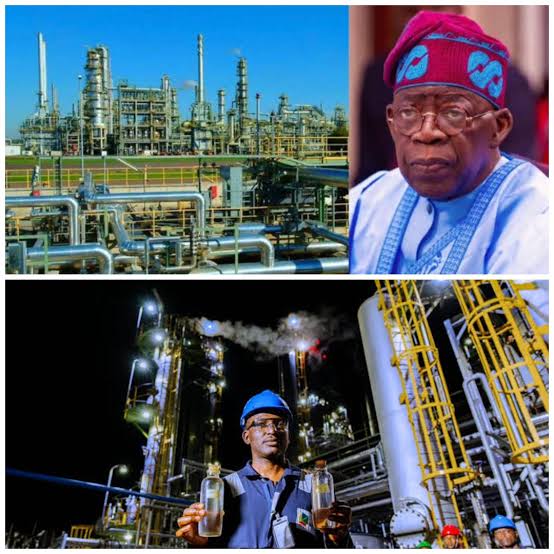
President Bola Tinubu has reaffirmed the Federal Government’s commitment to rehabilitating and repositioning Nigeria’s dormant national refineries, declaring that the facilities will not be allowed to become stranded assets.
Tinubu was represented by the Permanent Secretary of the Ministry of Petroleum Resources, Mrs Patience Oyekunle, at the 20th OTL Africa Downstream Energy Week in Lagos on Monday.
The President said the government is adopting a more rigorous and commercially sustainable approach to the rehabilitation of the Port Harcourt, Warri and Kaduna refineries.
“At the same time, the government remains committed to ensuring that existing national refining assets are not allowed to become stranded investments,” the statement said.
“We are pursuing a more rigorous, commercially sustainable approach to the rehabilitation and repositioning of our refineries, supported by technical assessment, stronger partnerships, and improved operational discipline.”
The objective, according to the administration, is for Nigeria to refine more of its crude oil, create greater domestic value and become a reliable supplier of energy to Africa.
The national refineries, managed by the Nigerian National Petroleum Company Limited (NNPC), have remained largely inactive for years despite significant spending on turnaround maintenance. The NNPC has signed a memorandum of understanding with Chinese firms as part of ongoing efforts to revive the facilities.
Tinubu also noted the contribution of private refining capacity, particularly the Dangote Refinery, which has reached its 650,000 barrels-per-day nameplate capacity, in strengthening Nigeria’s prospects of becoming a net exporter of refined petroleum products.

-
Politics3 years ago
13 Ondo Assembly Members Disown Endorsement of Aiyedatiwa
-
Politics3 years ago
APC Group, Ondo Govt, Quarrel Over Money for Endorsement
-

 Trending News5 years ago
Stop unsavoury, inciting statements – DSS warns
-

 Others5 years ago
Adron Homes Celebrates 10 Years Of Housing Excellence
-

 Humanity5 years ago
President Buhari Commiserates With Ambassador Maureen Tamuno Over The Loss Of Her Father
-

 Others7 years ago
EX- CUSTOMS BOSS, IBRAHIM MERA’S DWINDLING FAME
-

 Business3 years ago
Bigi Carbonated Soft Drinks Treats 40 Consumers to an Epic Easter Movie Hangout
-

 Business2 years ago
Wema Bank Shines at Global SME Finance Forum Conference Awards 2024 …Awarded: • SME Financier of the Year (Africa) • Platinum Award for Best Financier for Women Entrepreneurs (Africa)