
Opinion
EDITORIAL: Governor Dapo Abiodun’s Politics of Vindictiveness Is Tearing Ogun Apart


Ayo Mojoyin
Governor Dapo Abiodun faces criticism for allegedly using state power to intimidate political opponents and block empowerment programmes in Ogun State

In any democratic society, the power entrusted to an elected governor is meant to serve the people not to threaten them, intimidate them, or suffocate political opponents. Unfortunately, what played out in Ijebu-Igbo this weekend reveals a disturbing pattern that has come to define the leadership style of Governor Dapo Abiodun: a consistent misuse of state power for personal battles, vendettas, and political settling of scores.
Also read: Otu Launches Positive Xmas Free Transport Service in Cross River
The sealing of the Omo-’ilu Foundation Complex in less than 24 hours to BATOGD Movement Empowerment is targeting two different political interests and not governance but state-sponsored intimidation, executed with reckless disregard for the people of Ogun East and with embarrassing pettiness unbecoming of someone occupying the highest office in the state.
Governor Abiodun’s actions were not only hostile to Senator Gbenga Daniel but also to the Kashamu family, even at a time when Hon. Rasheed Kashamu had just joined the APC.
What kind of leader clamps down on new entrants to his own party?
What kind of governor stifles empowerment programmes meant to uplift his citizens simply because they are organized by political figures he feels threatened by?
This is not strength.
This is insecurity masquerading as authority.
It is no secret and it is loudly whispered in political circles that Governor Dapo Abiodun has never been genuinely loyal to President Bola Ahmed Tinubu, despite benefiting enormously from the APC structure built by Tinubu’s political architecture.
Time and again, Abiodun has distanced himself from Tinubu-aligned leaders in Ogun.
He undermines their work, weakens their influence, and uses state machinery to frustrate them.
The events at Ijebu-Igbo only reinforce what many already believe:
Governor Abiodun is committed to no one but himself and his loyalty ends where his personal ambitions begin.
The most disgraceful part of this weekend’s episode is the blatant disregard for the welfare of the people, . Senator Daniel’s empowerment programme which should ordinarily be celebrated became a target simply because it did not originate from Oke-Mosan.
When a governor begins to use state agencies to block community development, sabotage empowerment programmes and victimize private citizens because of political affiliation then democracy is under assault.
Ogun State deserves leadership, not pettiness. It deserves progress, not political hostility. It deserves a governor, not a feudal lord.
The people of Ogun East are not blind. They see the intimidation. They feel the suppression. And they understand clearly where the sabotage is coming from.
By sealing the Omo’ilu Foundation Complex, Governor Abiodun may think he is weakening Senator Daniel or the Kashamu bloc.
But in reality, he is only weakening the trust of the people in his administration and more importantly, he is strengthening the growing belief that he has become the most divisive and self-serving governor Ogun has seen in years.
The people of Ogun State are watching, history is watching and 2027 is not far away, governors come and go, but the will of the people remains undefeated.
The abuse of power displayed this weekend will not be forgotten.
It will not be swept aside and it will not be forgiven lightly.
Also read: Otu Launches Positive Xmas Free Transport Service in Cross River
Governor Dapo Abiodun must be reminded Ogun State is not his personal empire. It is a democratic institution and the people will ultimately pass judgment.


By Bola BOLAWOLE,
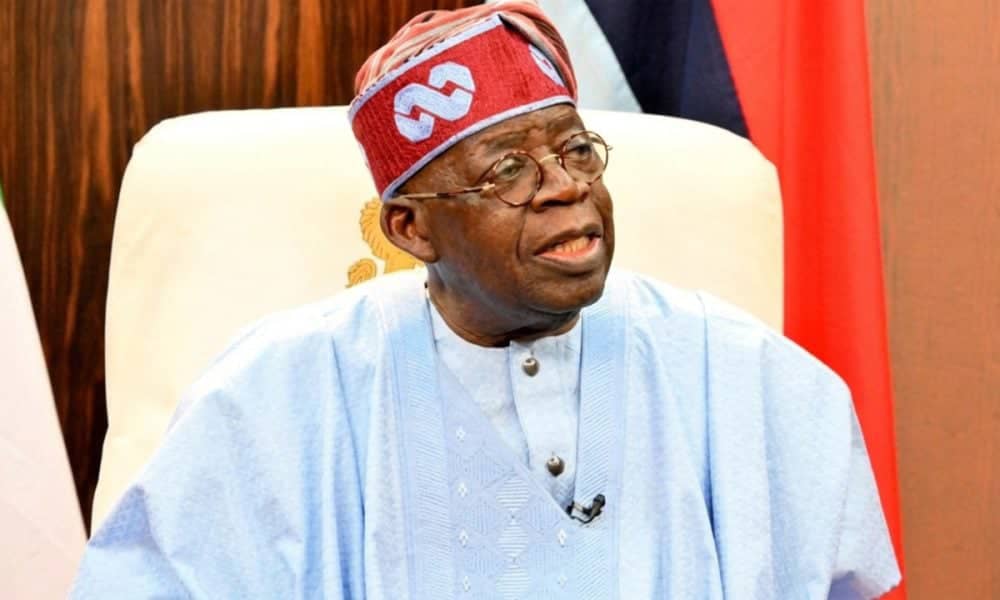
President Bola Ahmed Tinubu’s decision to skip the ongoing 81st session of the United Nations General Assembly, the third such abstention in a row, has raised eyebrows and sparked speculations.
Also read: Governor Dauda Lawal Approves 95% Salary Increase for Health Workers
Expectedly, opposition politicians have wasted no time in feasting on the official announcement that the vice-president, Kashim Shettima, will, once again, stand in for the president.
This trumps an earlier announcement by Jimoh Ibrahim, the country’s Ambassador to the United States/Permanent Representative to the United Nations, that not only would the president attend the annual meeting of world leaders at the UN headquarters in New York, USA, but that a vantage position had been secured for him to sit very close to the maverick United States’ president, Donald Trump!
Since he assumed the country’s leadership in 2023, Tinubu has yet to attend a single UNGA meeting; so also has he yet to pay either official or private visit to the United States despite that he has reportedly embarked, so far, on 52 foreign trips. He has visited at least 30 different countries across Europe, Asia, Africa, and the Americas, spending approximately 261 days.
As we speak, the president is out of the country on holidays, first to the UK after which he is expected in France. So, is there anything that aileth Tinubu about the United States? That is where the speculation begins; however, it does not end there!
Is President Tinubu deliberately avoiding the United States? Has it got anything to do with the unending controversy and legal battles over the FBI files and Tinubu’s past activities in the United States? He schooled there; he also worked there before returning to Nigeria decades back.
During the giddy days of the Sani Abacha military dictatorship, the US provided succour and a safe haven for Tinubu and many other pro-democracy activists. What has since changed is the question to ask if the suspicion is that the president is deliberately avoiding the United States.
Or has it got anything to do with the unpredictability of President Trump and the activities of anti-Tinubu politicians here at home and the paid groups doing their bidding in the US? Who dare put anything beyond a president that organized the storming, arrest, and rendition of a sitting foreign leader, hauling him and his wife to the US for trial on drug-related charges, with the country of the leader concerned and the international community as a whole helpless to do anything about it! “What if” then becomes the question should Tinubu set foot on US soil! Is it not better, then, to err on the side of caution?
Another school of thought is that Tinubu’s health might need attention. Unlike in much of the Western world, the secrecy that surrounds the health conditions of Nigerian, nay, African leaders makes it difficult to speak authoritatively on their health conditions.
And this is not new. Babangida, Abacha, Abdulsalami, Yar’Adua all had rumours swirling around their health conditions while in office. Abacha and Yar’Adua died in office. Buhari spent close to one-third of his tenure shuttling between the country and his doctors in the UK. It has been said, this time around, that Tinubu’s doctors are in France.
With part of his holiday reportedly scheduled to be spent in Charles de Gaulle’s country, could this holiday be another disguised medical tourism? Health is wealth, as they say, and prioritizing one’s health and wellbeing over and above a meeting, no matter how important, can be justified, especially when we have been told that the president can be (adequately?) represented at the UNGA.
Then I asked Google: Is it compulsory that the president lead his country’s delegation to the UNGA? The answer is: No, it is not compulsory for a president or prime minister to lead their country’s delegation to the UNGA.
Alternatively, the president or prime minister can be represented by the vice president or deputy prime minister, the foreign affairs minister or the country’s permanent representative at the UN who can speak, vote and act on behalf of the country or member-state concerned.
History records that many world leaders have frequently failed to personally attend UNGA due to divergent reasons, such as pressing domestic issues, disasters or local crises needing their personal attention or for health reasons.
Super-power rivalry and politics, and the need to remain non-committal or stay neutral from taking sides on volatile issues have also been known to compel foreign leaders to skip personally attending UNGA.
When a country’s leader attends the United Nations General Assembly (UNGA) in person, it provides several distinct strategic, diplomatic, and political advantages that cannot be replicated through virtual participation or lower-level delegation.
Some of these advantages are: High-level bilateral diplomacy (the “Margin” meetings); spontaneous networking whereby leaders hold informal, face-to-face meetings on the sidelines (the “margins”) of the assembly, allowing them to resolve disputes or advance treaties quickly.
It also affords the opportunity of building rapport. Personal presence helps build trust and personal relationships between heads of state, which can be critical during international crises.
Other advantages include enhanced global visibility and influence as UNGA gives leaders a global or world stage to operate from.
A speech delivered in person by a head of state commands significantly more international media attention and diplomatic weight than a pre-recorded video or speech read by a representative.
Some world leaders have been noted for setting agendas on issues of national, regional or international importance at UNGA. Leaders can directly pitch their nation’s foreign policy priorities, economic opportunities, or security concerns to a global audience.
Personal attendance at UNGA also helps to facilitate efficient multilateral engagement or what is called “mini-Summits” among leaders.
Leaders can participate in localized, high-level side events or regional summits (such as G7, BRICS, or regional blocs like the EU and the African Union) that have been known to convene in New York during the UNGA week. When leaders attend UNGA in person, direct access to decision-makers is made possible.
Smaller or developing nations also can seize the opportunity to have direct, unmediated access to leaders of superpower nations as well as heads of major international organizations like the UN itself, the World Bank and IMF. We can go on and on!
At the level of individual nations, attending UNGA is said to project an image of strength, global respect, and statesmanship to citizens back at home.
Newly-elected leaders especially use UNGA to announce themselves to the international community to garner support and recognition, to state their goals and set agendas as well as make profound statements on their administration’s foreign policy direction.
UNGA also serves as a formal introduction to the international community and signals the leader’s commitment to global cooperation.
From the above, it is, without doubt, a disadvantage when leaders absent themselves from UNGA. No matter how “powerful” a substitute representation is, it cannot be the same as when the president or prime minister of a country leads it.
There is what is called “bragging rights” among leaders. Presidents prefer to deal with presidents; vice presidents or foreign ministers will be shuffled down the ladder to discuss with their equivalents or counterparts.
The reverse is the case, however, where presidents of less powerful countries queue or consider it a privilege to have an audience with the foreign affairs minister or envoy of powerful countries such as the US, China, Russia, etc.
One narrative for Tinubu’s recurring absence at UNGA being spinned by his detractors is the fear of the unknown over the FBI files and Tinubu’s alleged past encounter with the US judicial system.
But a man, once tried and acquitted of criminal charges, cannot be tried again on the same offence except fresh evidence pops up that possesses the likelihood of affecting the outcome of the trial in the opposite direction.
Furthermore, can any harm come the way of a visiting president attending UNGA? Or, put more directly and blatantly, can a foreign leader attending UNGA in New York, USA be arrested for any reason whatsoever by the US authorities? The answer is, no; leaders attending UNGA cannot be arrested, charged or tried in the US because they enjoy immunity.
Under the UN Headquarters Agreement, the United States has an international obligation to allow accredited representatives entry and transit to the UN as well as respect their diplomatic inviolability.
In like manner, no US state, city, local government or county official possesses the legal power to arrest a protected visiting foreign leader.
From the above, it is most unlikely that President Tinubu stands the risk of being arrested in the US if he chooses to personally attend UNGA.
What may happen is that demonstrators may mass at the UN headquarters venue of UNGA, organize protests and heckle him and his delegation.
That will be embarrassing enough. For sure, it will portray the country in bad light and dent its image – which all Nigerians, including the president’s adversaries, will suffer from.
Also read: Governor Dauda Lawal Approves 95% Salary Increase for Health Workers
To avoid such an embarrassment and the deleterious effects it may have on the country’s image appears as the most germane reason why Tinubu has kept away – and may continue to keep sway – from UNGA until, maybe, a more predictable president mounts the saddle in the United States. And the losers? – Nigeria and Nigerians!
(Published in the TREASURES column on the back page of the NEW TELEGRAPH newspaper edition of Wednesday, 23 September, 2026).
Opinion
Agege APC Stakeholders Write to State Party Leaders to take action on defected members, their supporters

By Daniel Oluwatobiloba Popoola,
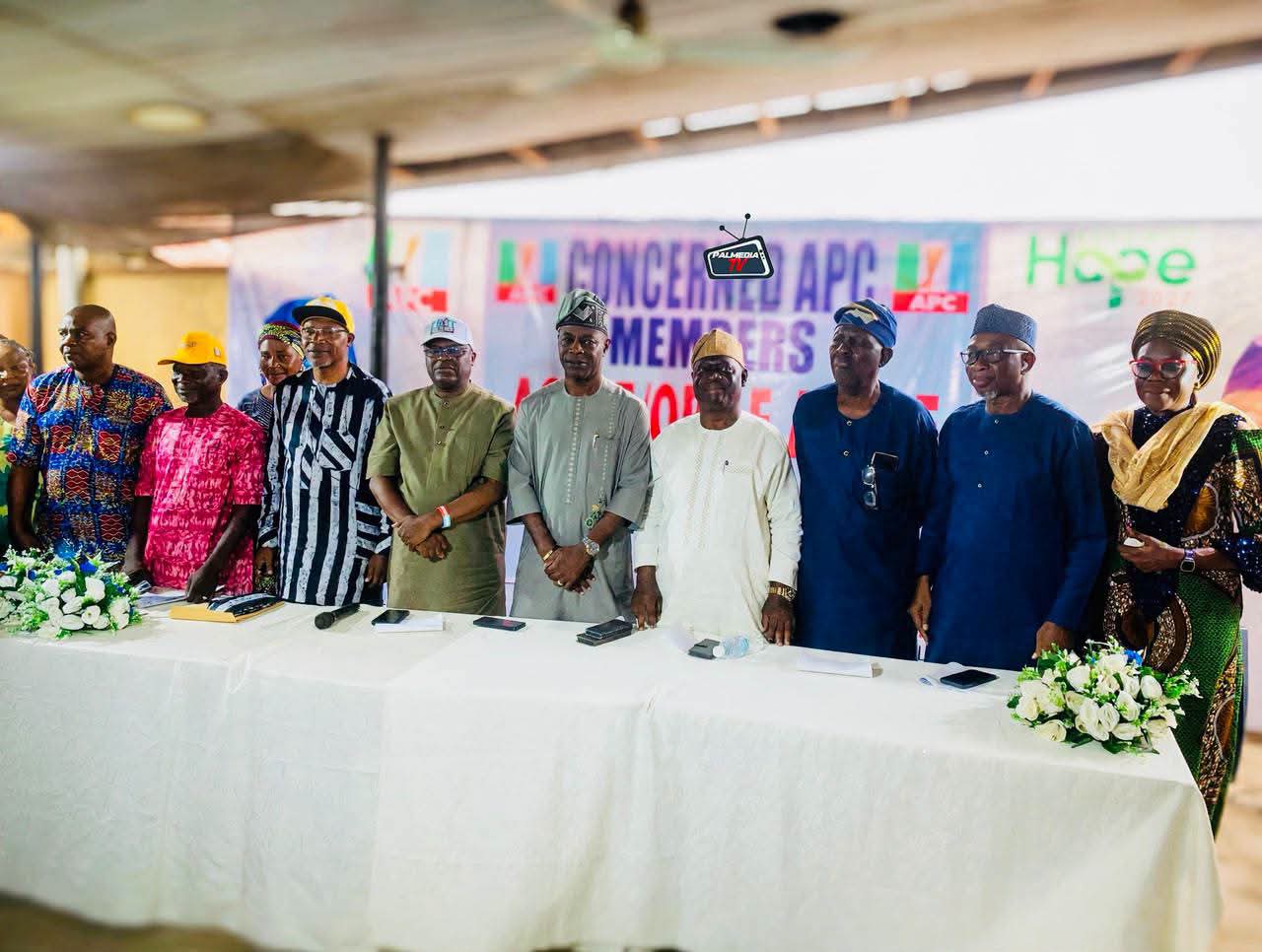
Concerned leaders and members of the All Progressives Congress (APC) in Agege Federal Constituency have petitioned the Lagos State Chairman of the party over the defection of two former House of Assembly aspirants to the Allied Peoples Movement (APM).
Also read: FG Threatens Lagos Coastal Highway Shutdown Over Safety Breaches
The petition dated Sunday, 20 September, 2026, was addressed to the state chairman at the APC secretariat in Lagos by stakeholders operating from 103 Orile Road, Orile Agege.
In the letter, the concerned leaders reported that Hon. Ganiyu Kola Egunjobi and Mr. Azeez Yusuf, who contested the last primaries for Agege State Constituencies 01 and 02, have defected to the APM and emerged as candidates of the party.
The group said the development has implications for stability, unity and electoral planning ahead of the 2027 general elections if urgent action is not taken.
According to the petition, the movement may extend beyond the two defectors to include elements of APC structures linked to them, including executives and stakeholders at local government and ward levels.
The stakeholders recalled three previous correspondences on the matter, including a letter dated February 19, 2026, by concerned APC Agege stakeholders, another dated May 18, 2026, on alleged marginalisation of Justice Forum members and disregard for party-approved appointments in Agege and Orile-Agege, and a petition on alleged disregard of party directives in the screening and swearing-in of nominated supervisors.
Furthermore, the letter expressed worry over reports that some serving councillors, supervisors, Secretaries to Local Government, Local Government Chairmen and other political appointees at state level are involved in activities associated with the APM structure.
The petitioners warned that the situation could create divided loyalty and confusion, with APC structures controlled by persons now contesting under another platform, thereby weakening coordination and mobilisation.
The group also alleged possible diversion and misuse of party and local government resources to support candidates of another party, noting that structures at ward and LGA levels were being deployed except for resistance from loyal members.
The stakeholders cited the recent controversy over appointment and screening of supervisors in Agege and Orile-Agege as evidence of the need to uphold party directives and constituted authority.
The letter further recalled a petition dated July 31, 2026, by Concerned Agege Leaders, alleging that some members duly appointed by the governor and party leaders as supervisors were denied their positions while others were sworn in by the chairmen of Agege LG and Orile-Agege LCDA.
The forum argued that retaining unresolved party structures whose principal actors have shifted loyalty to the APM could hamper grassroots mobilisation, communication and election coordination.
The petition added that the development could discourage loyal members and weaken discipline, thereby encouraging further fragmentation beyond Agege Federal Constituency.
Consequently, the concerned leaders urged the state leadership and appropriate organs of the party to conduct an urgent, impartial and comprehensive review of affected structures across Agege with a view to taking disciplinary action.
The group also called for corrective measures in the interest of the party, its State Assembly candidates, loyal members and supporters.
The stakeholders appealed to the leadership to treat the matter with urgency, stressing that the objective is not to create division or target individuals, but to protect unity, discipline, integrity and electoral organisation.
Also read: FG Threatens Lagos Coastal Highway Shutdown Over Safety Breaches
The petition noted that early action and reconstitution of unresolved structures would prevent internal confusion, restore confidence among loyal members and ensure the APC approaches the 2027 elections with committed and accountable grassroots structures.


Nigeria’s growing digital workforce is opening a new channel for cross-border trade as software developers, consultants, financial professionals, educators and other service providers increasingly work from the country for clients across Africa, Europe and North America.
The development is expanding the country’s non-oil economic activity beyond the traditional export of physical goods, with high-speed telecommunications enabling professionals to deliver services internationally without moving people or physical products across borders.
Industry experts said the trend is also increasing the economic importance of sustained investment in telecommunications infrastructure, as unreliable connectivity can directly affect the ability of digital businesses and remote professionals to meet international contracts and delivery schedules.
They spoke during an economic dialogue co-hosted by financial planner Kalu Aja and chartered accountant Oluwatosin Olaseinde, founder of digital investment platform Ladda, on Sunday, September 20, 2026.
Olaseinde said telecommunications investment was creating productive capacity for the wider economy by enabling Nigerians to participate in increasingly decentralised forms of work.
“On a retail level, it’s not just them investing in capital expenditure—it’s actually creating economic capacity, productive capacity for the Nigerian economy,” she said.
She pointed to the growing number of Nigerians working remotely for clients and organisations outside their immediate locations.
“Remote workers can actually work. People are sitting in Lagos with clients in Nairobi, New York, London. Online tutoring—somebody sitting in Lagos tutoring children in Kaduna, in Nairobi, just all over,” Olaseinde said.
According to her, greater access to connectivity also exposes Nigerian professionals to international markets and standards, potentially improving the quality of services delivered from the country.
“It also raises the level of competence and service delivery in Nigeria… The excellence level goes up,” she insisted.
The expansion of cross-border digital services, however, places greater emphasis on network reliability. For professionals whose work depends on international clients, interruptions to connectivity can affect online meetings, project delivery, cloud applications, payments and other business processes.
Aja said the scale of investment required to maintain that connectivity was often underestimated because much of the infrastructure supporting the digital economy remained largely invisible to consumers.
Citing MTN Nigeria’s financial disclosures, he pointed to cumulative capital expenditure of about ₦1.62 trillion, covering network infrastructure and related investments.
“In every local government area in Nigeria there is an MTN somewhere,” Aja said, adding “You’ll either find a tower or you’re going to find someone selling recharge cards. That’s the depth and level of their contribution to Nigeria so far… If that all goes away, it’s a massive hole nobody can fill.”
The discussion highlighted the wider relationship between telecommunications investment and economic activity as businesses increasingly depend on digital platforms to reach customers, process transactions and deliver services.
Nigeria’s telecommunications sector accounted for 9.19 percent of GDP in the first quarter of 2026, according to the official figure cited during the discussion, underscoring the sector’s growing contribution to economic output.
Beyond domestic commerce, the growth of remote work and digitally delivered services provides Nigerian professionals with access to markets where contracts and payments are denominated in foreign currencies. It also allows firms to expand their client base without establishing physical operations in every market they serve.
Olaseinde also drew a distinction between foreign direct investment and foreign portfolio investment, arguing that long-term capital commitments can have a broader effect on employment and productive capacity.
“FPI is like a one-night stand. FDI is like a marriage,” she said, arguing that direct investment tends to involve longer-term commitments and can create jobs and productive capacity.
The experts also discussed the contribution of large corporates through taxes, dividends and continued investment. MTN Nigeria, for instance, paid ₦419.9 billion in dividends and ₦429 billion in taxes in 2025, according to the figures cited during the discussion.
For the expanding digital-services economy, the implications extend beyond the telecommunications industry. Developers, consultants, online educators, financial professionals, creators and other service providers increasingly depend on connectivity to participate in markets beyond Nigeria.
The development suggests that as Nigeria seeks to diversify its economy and expand non-oil sources of income, the ability to deliver services digitally could become an increasingly important component of its international economic activity.
For businesses operating in that space, reliable connectivity is therefore becoming less a convenience than a basic requirement for maintaining access to customers and markets across borders.
-
Politics3 years ago
13 Ondo Assembly Members Disown Endorsement of Aiyedatiwa
-
Politics3 years ago
APC Group, Ondo Govt, Quarrel Over Money for Endorsement
-

 Trending News5 years ago
Stop unsavoury, inciting statements – DSS warns
-

 Others5 years ago
Adron Homes Celebrates 10 Years Of Housing Excellence
-

 Humanity5 years ago
President Buhari Commiserates With Ambassador Maureen Tamuno Over The Loss Of Her Father
-

 Others7 years ago
EX- CUSTOMS BOSS, IBRAHIM MERA’S DWINDLING FAME
-

 Business2 years ago
Bigi Carbonated Soft Drinks Treats 40 Consumers to an Epic Easter Movie Hangout
-

 Business2 years ago
Wema Bank Shines at Global SME Finance Forum Conference Awards 2024 …Awarded: • SME Financier of the Year (Africa) • Platinum Award for Best Financier for Women Entrepreneurs (Africa)