
Opinion
How Governor Dauda Lawal Rescued Zamfara State from the Abyss


By: Oladapo Sofowora

Three years ago, Zamfara State was not merely a place on the Nigerian map; it was a global byword for the darkest extremes of human and governance failure. To call the name “Zamfara” in any public gathering, anywhere across the world was to invite a sharp intake of deep breath followed by an unassuming shake of the head. It was formerly a state where school gates had become rusted relics, where hospitals were hollowed-out shells dilapidated and where the only booming economy was the dark, bloody trade of banditry and insurgency.
But when Dr Dauda Lawal placed his hand on the Holy Qur’an on May 29, 2023, he did not inherit a government; he inherited a graveyard of unfulfilled promises. The civil service was a ghost of itself; unstructured and underperforming, groaning under the weight of unpaid salaries and gratuities stretching back over a decade. The state’s treasury had been bled dry, with an astonishing backlog of debt, including a suffocating ₦2.7 billion owed to the West African Examinations Council (WAEC) and the National Examinations Council (NECO); a debt that had cruelly barred thousands of innocent Zamfara State pupils from sitting for their final exams and progressing to tertiary education.
Insecurity was apocalyptic; rural communities had been abandoned, entire local government areas were under the effective control of non-state actors and the proud agrarian identity of the state ‘Farming is Our Pride’ had been replaced by the grovel of internally displaced persons begging for a handful of grains. This was the hellscape that Lawal walked into for the first few months, even his most optimistic supporters wondered if the former banker had made a catastrophic error in judgment. Instead of complaining and playing the blame game as many of his peers do, he folded his sleeves and went straight into the rescue mission. Rebuilding brick by brick, reforming strategically and effecting holistic change across board, three years later, as the sun rises over the newly constructed terminal of the Gusau International Airport and the sound of children reciting lessons echoes from over five hundred renovated schools, the verdict is undeniable: Dauda Lawal did not come to manage Zamfara; he came to rescue it and he has delivered a performance so startling that it has forced even his fiercest political rivals to stand and applaud him for a job well done. What seemed like an Herculean task was a piece of cake for him because he came with a will and can-do spirit, and his love for his people helped him navigate the tides.
Let us start with the most brutal wound; security. When Lawal campaigned on the promise of a “Rescue Mission,” the cornerstone was his vow to dismantle the ‘banditry economy’ that had turned farming into a death sentence. The previous approach had been a confusing mess of negotiations with criminals, which only emboldened the outlaws. Lawal, bringing the precision of a forensic auditor to the battlefield, did something unprecedented; he treated security like a strategic investment portfolio; he gave teeth to the security apparatus. The Governor dramatically raised the stakes by operationalising and heavily funding the Zamfara Community Protection Guards, known locally as Askarawan Zamfara. These were not vigilantes; they were a disciplined, state-backed auxiliary force recruited from local communities who knew the terrain very well, the caves and the escape routes of the bandits. To support them and the regular military, Lawal’s administration donated over 140 brand-new, high-capacity operational vehicles equipped with modern communication gadgets, ensuring that for the first time, security agents could match the mobility of the criminals. He invested in sophisticated intelligence-gathering technology, creating a situation room in Gusau that monitors real-time movements across the fourteen local government areas. The results have been staggering. Within eighteen months, the bandits lost their strategic freedom of action. Farmers who had not seen their ancestral lands in four years were suddenly escorted back by combined teams of soldiers and guards, clutching subsidized seedlings and bags of fertilizer provided by the government for wet-season and dry-season farming.
The famous rice and maize fields of Maradun and Anka which were once deserted are now green with harvest. The Governor understood a basic truth you cannot eat security, but you cannot farm without it. By breaking the siege on rural Zamfara, Lawal did not just save lives; he resurrected the state’s economy from the root upwards. The wailing of mothers who had lost sons to banditry has not stopped entirely, but it has been largely replaced by the hum of grinding machines and the laughter of children playing in villages that were once classified as “no-go areas.”
But what is a secure community without an educated mindset? The statistics Lawal met upon arrival were enough to make any compassionate leader weep. Thousands of students had been locked out of their futures because the previous administration simply refused to pay examination fees. Young girls, in particular, had been pushed into early marriage because their parents saw no point in sending them to dilapidated, teacher-less schools. Lawal declared a State of Emergency in Education on his second day in office and unlike the hollow declarations of the past, he backed it up with actions and the state’s treasury. The first thunderbolt was the payment of the ₦2.7 billion WAEC and NECO debt, a move that instantly liberated the results of over 45,000 students. That single act of fiscal responsibility changed the trajectory of an entire generation as students’ results were released. But Lawal did not stop at paying debts. He launched a massive, unprecedented infrastructural blitz. In three years, over 500 schools from primary to secondary have been either completely reconstructed, renovated or equipped with modern furniture and learning aids, replacing the broken chairs and mouldy chalkboards with over 9,542 new two-seater desks. He went further, recruiting over 2,000 qualified teachers, ending the absurdity of one teacher managing a class of 120 students. He also tackled the rot in tertiary institutions; the Zamfara State University and the College of Health Sciences and Technology received not just facelifts but functional laboratories, libraries and hostels.
The 2025 budget, a towering ₦79.6 billion allocation to education, is not an expense; it is a declaration that Zamfara will never again be a state of illiterates; rather it will be a state where intellectual giants and sound minds will be moulded.
Parallel to the educational revolution, Lawal launched a surgical strike on the healthcare sector, which had become a death trap for the poor. When he toured the General Hospitals in Gusau and Anka shortly after inauguration, what he saw reportedly upset his stomach. Maternity wards without mattresses, operating theatres without power supply and pharmacies without a single tablet of medication. The Governor’s response was a systematic, ward-by-ward renovation of the state’s health infrastructure. The Yariman Bakura Specialist Hospital in Gusau has been transformed into a gleaming referral centre, equipped with digital X-ray machines, a functional dialysis unit, an MRI Machine deployment and a steady supply of essential medications. General hospitals in Kaura Namoda, Maru and Maradun have been similarly upgraded, ensuring that a sick person no longer has to travel 200 kilometres to Sokoto, Kano, Kaduna and Abuja for a simple surgery. But perhaps the most humane intervention has been the health insurance rollout for the poorest citizens. Lawal’s administration has enrolled over 150,000 vulnerable women and children into the state’s health insurance scheme, meaning that for the first time, a poor mother in a remote village can take her child to a primary health centre and receive treatment without being asked for a dime. This singular act has slashed the maternal mortality rate in the local governments by a significant margin.
Then there is the quiet revolution happening in the civil service, a sector often ignored by politicians but which Lawal understood as the engine room of government. He met a workforce that had lost all hope. Retired professors and permanent secretaries were dying without collecting their gratuities, leaving their families in penury. The backlog of unpaid pensions and death benefits stood at an astronomical ₦13 billion. In a move that sent shockwaves through the state’s bureaucracy, Lawal cleared that entire backlog within his first 15 months in office. He didn’t stop there; he introduced a 13th-month salary bonus for all active workers, a rare gesture that boosted morale and productivity. He also cleared the previously unpaid cooperative deductions that had been stolen from workers’ salaries, an act that made him a hero in the corridors of the secretariat. By treating civil servants with dignity, Lawal ensured that the machinery of government began to move again, processing files, issuing permits and collecting revenue with an efficiency that saw the state’s Internally Generated Revenue (IGR) skyrocket from a pitiful ₦80 million per month to over ₦5 billion. This financial discipline allowed him to fund his infrastructure ambitions without begging for federal bailouts. The signature project of this ambition is the ongoing construction of the Gusau International Airport, a massive, visionary project that will open Zamfara to global trade, connect local farmers to export markets and drastically reduce the cost of transportation for businesses. Complementing this airborne gateway, Lawal unveiled 50 modern mass transit buses, equipped with free Wi-Fi and digital fare collectors, slashing the cost of commuting for the average worker and student while modernizing the chaotic transport sector.
As the sun sets on the third year of this remarkable tenure yesterday the 29th of May, the political landscape has shifted seismically. The opposition, which spent the first two years mocking Lawal has run out of insults. The evidence is too overwhelming. The students just received their WAEC results after a three-year delay, retired civil servants who finally received their ₦6 million gratuity after waiting for eight years are not going to vote for a return to the old ways. This is why the recent political development the endorsement of Governor Dauda Lawal as the consensus candidate of the All Progressives Congress (APC) for the 2027 election is not a surprise. What is stunning is the unanimity. In a rare, almost unprecedented show of political maturity, four former governors of Zamfara State Ahmed Yarima, Mahmuda Shinkafi, Abdulaziz Yari and Bello Matawalle gathered in Gusau to throw their weight behind Lawal’s second-term bid. These are men who have not agreed on a single issue in the past twenty years, yet they agree on Dauda Lawal’s re-election. This consensus is a powerful signal to the electorate that the era of destructive political rivalry is over and the era of collective development has begun.
But why should the people of Zamfara re-elect Dauda Lawal for another four years? The answer lies in the unfinished symphony of his rescue mission. He has laid the foundation but the house is not yet completed. He has secured the rural areas but the bandits have not been annihilated; a second term would allow him to consolidate the security gains and finally flush out the remaining bandits from their hideouts. He has built the schools, but the first cohort of his revolutionary education reforms is just now entering their final year; a second term would see them graduate and move into the new technical colleges he plans to build. He has started the airport, but it needs to be completed and operationalized to attract the foreign direct investment that will turn Zamfara from a consumer state to a producer state especially in the agricultural value chain. He has cleared the pension backlog but he needs another term to build a sustainable pension fund that ensures no future retiree ever suffers again. To abort the rescue mission now would be like a surgeon stopping a life-saving operation halfway through because the patient is breathing again. The patient, ‘Zamfara’ is breathing but it is not yet running. Dauda Lawal is a goal-getter not a goal-celebrator. He has shown that he has the vision, the discipline, the grit, the capacity and the courage to stare into the abyss and command it to close. The choice for the people of Zamfara in 2027 is the simplest binary in Nigerian politics; return to the dark, bloody, bankrupt stagnation of the pre-2023 era or move forward with the man who proved that a rescue mission is not a slogan; it is a reality. If the last three years are a sample of what Dauda Lawal can do, then another four years will not just complete the good work; they will turn Zamfara into a beacon a testament to the power of determined leadership.


By Nosa Osaikhuiwu,
Nigeria’s teeming population should be viewed not as a burden but as an enormous economic asset that can and must be harnessed for national economic transformation and sustainable development.
Also read: South African Businesses Struggle as Foreign Workers and Traders Leave
With a population already exceeding 200 million and projected to approach 300 million by the end of the century, Nigeria cannot afford to continue responding only to the challenges of today. We must begin implementing policies that anticipate the economic, social and employment challenges of tomorrow.
One of Nigeria’s most urgent challenges is unemployment, particularly among young people. This problem affects both graduates and the much larger segment of our population without formal education or marketable technical skills. The fundamental question, therefore, is not simply how government can create jobs, but how government can create the economic conditions under which millions of sustainable jobs can be created by the private sector.
Recognizing the Necessary Economic Reforms
Before addressing job creation, it is important to acknowledge some of the major economic reforms undertaken by the current administration.
While these policies have been unpopular in some quarters and have imposed significant hardship on households and businesses, the removal of fuel subsidies and the move toward greater alignment of foreign-exchange rates were, in my view, necessary steps toward restoring some degree of economic stability.
The manner and timing of implementation can certainly be debated. However, it is difficult to dispute that maintaining a system in which government could no longer sustainably finance fuel subsidies, while simultaneously maintaining significant distortions in the foreign-exchange market, was becoming increasingly untenable.
The immediate consequences have been severe for millions of Nigerians. Nevertheless, if these reforms are properly managed and followed by policies that stimulate production, investment and employment, Nigeria can ultimately emerge stronger.
However, some of the noise in some political quarters about reversing the fuel subsidy removal is not only disingenuous, it is playing to the gallery of public sentiments which betrays a lack of seriousness on their part.
The next phase, therefore, must be about growth, production and job creation. Manufacturing Is Essential: But Manufacturing Alone Is Not Enough
I strongly agree with the position repeatedly expressed by Nigerian industrialist Aliko Dangote that manufacturing is critical to job creation in Nigeria.
Manufacturing creates direct employment in factories, but its impact extends far beyond the factory floor. It creates demand for raw materials, transportation, logistics, warehousing, engineering, maintenance, packaging, distribution, financial services and countless other activities.
However, I would take this argument one step further, because a sustainable manufacturing industry requires demand.
A factory can produce thousands of beds, furniture sets, refrigerators, or other locally manufactured products, but production cannot continue indefinitely if consumers lack the purchasing power to buy those products. This is where government policy must become more sophisticated.
Rather than government attempting to employ everyone directly, it should create an economic environment in which production generates employment and employment generates purchasing power, which in turn creates demand for more production. That is the economic cycle Nigeria must deliberately build.
Creating a National Credit Economy
One of the most powerful instruments available to us is a properly regulated consumer and business credit system. In advanced economies, access to responsible credit has played an important role in improving living standards and expanding economic activity.
Consumers do not necessarily have to possess the full amount of money required to purchase a house, vehicle, furniture or other durable goods before making the purchase.
Properly structured credit allows them to acquire those goods today and pay over time. That creates immediate demand for manufactured products.
The manufacturer receives payment. The factory continues producing. Workers retain their jobs. Suppliers receive orders. Transporters move products.
Financial institutions earn interest. Government receives taxes. Employees spend their income elsewhere in the economy. One transaction can therefore generate an economic chain far larger than the original purchase.
The Following Steps Are Essential
- Establish a Unified National Database
Nigeria needs a comprehensive national database integrating biometric information and a unique National Identification Number for every citizen and legally resident person. A reliable identity infrastructure is fundamental to modern financial services, taxation, credit assessment, social programs and economic planning.
- Reform the Credit Bureau System
Credit bureau legislation should be strengthened and modernized, allowing banks and regulated financial institutions to play a greater role in developing a robust credit-information ecosystem, subject to strong government regulatory oversight. Every Nigerian who participates in the formal financial system should gradually develop a verifiable credit history. Good financial behavior should have benefits. Persistent default should have consequences.
- Accelerate the Transition to a Cashless Economy
Nigeria should establish a realistic but ambitious transition toward a predominantly cashless economy within 36 months. This should not be about punishing Nigerians who use cash. It should be about creating a transparent, traceable and efficient financial system that reduces the size of the informal cash economy and makes it easier to assess income, spending, creditworthiness and tax obligations.
- Gradually Restrict Excessive Cash Transactions
Government should consider progressively restricting large cash withdrawals and transactions, with appropriate exemptions for legitimate businesses and special circumstances. Such a policy must, however, be carefully designed so that it does not inadvertently harm small businesses or citizens who remain outside the formal banking system. The objective should be financial inclusion and transparency, not financial exclusion.
- Expand Consumer and Manufacturer Financing
Legislation and regulation should facilitate financing arrangements through which manufacturers can sell locally produced goods to consumers on credit while financial institutions assume and manage the repayment risk. Imagine a Nigerian family being able to purchase locally manufactured furniture, beds, household appliances or other durable goods and pay over 12, 24 or 36 months.
The manufacturer gets paid.
The consumer gets the product.
The bank earns legitimate interest.
The factory continues producing.
Workers remain employed.
And the economy expands.
This is the kind of demand-induced economic growth Nigeria should pursue.
But Credit Requires Culture Change
There is, however, a major obstacle to implementing such a system in Nigeria. Credit cannot function effectively without trust, integrity and a culture of repayment.
This brings us directly to what I have identified in my previous writings as the QUAD – four interconnected cultural problems that continue to undermine Nigeria’s development:
- Unethical behavior
- Greed
- Lack of integrity
- Permissiveness—the “Oga Abeg” culture
Too many Nigerians have historically viewed loans and government-supported credit schemes as free money that should not necessarily be repaid. That mindset must change.
If a person obtains a bank loan to purchase locally manufactured furniture, a vehicle, equipment or other goods, repayment is not optional. It is a contractual obligation. Failure to repay should affect the individual’s ability to access future financial services.
A properly integrated financial architecture should ensure that a poor credit record follows a borrower across regulated financial institutions and digital financial platforms, subject to due process and appropriate consumer protections.
Banks, fintech companies and regulated payment platforms should be able to participate in a credible national credit-information ecosystem.
But this cannot be achieved through regulation alone. Nigeria needs a massive national public-awareness campaign on the meaning of credit, contractual obligations and financial responsibility. This is another example of why economic transformation without culture change will remain incomplete.
Rethinking Youth Employment
We cannot continue producing millions of graduates who are jobless while simultaneously importing technicians and skilled workers and leaving young Nigerians without practical skills or employment opportunities.
The recent initiative by the Federal Government of Nigeria under the Tinubu/Shettima Administration to reform the National Youth Service Corps (NYSC) is commendable.
However, the reform of the NYSC will be incomplete if it does not transition NYSC into a National Skills and Apprenticeship Program that will help train and equip our young men and women with skills that will help them earn a living as entrepreneurs or be gainfully employed.
Nigeria must also rethink the purpose of education. I would advocate an optional SECOND year of National Service dedicated specifically to skills acquisition and apprenticeship.
Young Nigerians could receive structured training in areas such as:
- Automobile technology and diagnostics
- Electrical installation and maintenance
- Construction management
- Fashion and design
- Collision repair and auto bodywork
- Agriculture and poultry operations
- Welding and fabrication
- Firefighting and emergency services
- Computer hardware and maintenance
- Software development
- App development
- Coding and programming
- Artificial intelligence
- Renewable energy technology
- Plumbing
- Refrigeration and air-conditioning
- Industrial maintenance
The program should be developed in partnership with private-sector employers, manufacturers, technical institutions and professional bodies.
At the end of the program, participants should receive a nationally recognized industry certification demonstrating basic professional competence.
This would transform NYSC from merely a national service program into a major national workforce-development and apprenticeship system.
The Automobile Sector Alone Offers Enormous Opportunities
Consider the automobile sector. Nigeria has millions of vehicles on the road, yet many mechanics operate without formal training. At the same time, modern vehicles are increasingly computerized and technologically sophisticated.
The mechanic of tomorrow will need to understand electronics, diagnostics, computer systems, sensors and software, not merely engines and mechanical components.
A national automotive apprenticeship program could therefore create hundreds of thousands of skilled technicians over time while reducing dependence on foreign expertise.
The same principle applies to virtually every technical occupation. Nigeria does not have a shortage of work. Nigeria has a shortage of properly organized opportunities to convert work into productive employment and enterprise.
Ethanol: Turning Agriculture into Energy and Employment
Another opportunity lies in the development of an ethanol-blended fuel program. Nigeria should seriously consider adopting a national ethanol-blending policy, potentially beginning with a 10 percent blend and progressively evaluating higher blends based on technical and economic feasibility. Such a policy could stimulate demand for cassava, maize and other suitable feedstocks.
That demand would create opportunities for farmers, agricultural aggregators, and brokers, processing companies, logistics operators, transporters, equipment suppliers and storage facilities.
The economic impact would therefore extend far beyond the ethanol plant itself. Rather than importing every unit of energy we consume, Nigeria could create a domestic agricultural-energy value chain.
With the right policies, this could generate substantial employment over time. The precise number of jobs should, of course, be determined through detailed feasibility studies, but the principle is compelling: energy policy can simultaneously become agricultural policy, industrial policy and employment policy.
Security and Employment
Nigeria’s security crisis also requires a fundamentally different approach. We need to build a much stronger human-intelligence capability at the community level.
A large national network of trained intelligence personnel could provide communities, security agencies and government with timely information about criminal activity, kidnapping networks, banditry and terrorism.
Such a program would need to be carefully structured, professionally trained, legally regulated and integrated with existing security agencies. It must not become an uncontrolled vigilante system.
The objective should be to create a professional intelligence architecture in which ordinary citizens can become an additional source of reliable information for national security.
Security itself can therefore become an area of structured employment while simultaneously strengthening the country’s ability to prevent crime.
Government Should Stop Trying to Be the Entrepreneur
Another important component of Nigeria’s economic transformation should be a gradual reduction in government’s ownership and management of commercial enterprises.
Government’s principal responsibility should be to provide:
- Clear regulations
- Infrastructure
- Security
- Efficient taxation
- Reliable identity systems
- Access to finance
- Fair competition
- Effective institutions
The private sector should increasingly be allowed to serve as the primary engine of production, innovation and employment. Government does not have to own every factory in order to create jobs. It needs to create the enabling environment in which thousands of factories can be profitably established and operated by Nigerians and investors.
Thus, I recommend that the Tinubu/Shettima Administration completely privatize the NNPCL refineries and if there no takers decommission them as they have become a source waste, fraud and abuse.
Affordable Housing as an Economic Engine
Housing provides another powerful example of demand-induced growth. Nigeria should develop long-term mortgage financing, initially targeting public servants such as police officers and members of the armed forces, with mortgage payments deducted directly from salaries.
A properly structured 10 to 15-year mortgage scheme could allow workers to acquire homes while creating demand across an enormous range of industries.
A single housing project requires:
- Cement
- Steel
- Doors and windows
- Electrical equipment
- Plumbing materials
- Tiles
- Furniture
- Roofing materials
- Engineering services
- Architects
- Surveyors
- Lawyers
- Transporters
- Laborers
- Security services
Housing finance therefore does much more than provide shelter. It creates an economic ecosystem. Once properly established and proven, such schemes could be expanded to the wider population, with government providing the regulatory framework while private financial institutions and developers provide the capital and expertise.
The Bigger Picture
Nigeria’s unemployment problem cannot be solved by government simply announcing another recruitment exercise. Nor can it be solved by distributing temporary cash transfers indefinitely.
We need to create an economic system in which people have the skills to work, businesses have the capacity to produce, consumers have the purchasing power to buy, financial institutions can responsibly provide credit, and borrowers understand that credit must be repaid.
That requires simultaneous reforms in education, finance, manufacturing, agriculture, energy, housing, security and culture.
Most importantly, it requires a change in mindset. We must move away from the belief that government is responsible for providing everything and toward a system in which government creates the conditions for citizens and businesses to become productive economic participants.
Nigeria’s population should not frighten us, but should inspire us. Two hundred million Nigerians represent two hundred million potential consumers, workers, entrepreneurs, farmers, engineers, technicians, inventors and business owners.
If properly educated, properly organized and connected to functioning markets and financial systems, this population can become one of Nigeria’s greatest economic advantages.
But population alone is not an asset. A productive population is an asset. And productivity requires skills, integrity, and access to capital, infrastructure, security and demand.
That is why Nigeria’s next economic strategy should not focus exclusively on increasing production. We must also deliberately create the purchasing power that sustains production.
The objective should be simple:
Produce more.
Buy more.
Employ more.
Earn more.
Invest more.
Produce even more.
That is the cycle of demand-induced economic growth that Nigeria must build. And ultimately, none of these reforms will be sustainable without the cultural transformation that underpins them.
Economic transformation requires culture change. Without ethics, integrity, responsibility and a rejection of the “Oga Abeg” mentality, even the best economic policies will continue to produce disappointing results.
Also read: South African Businesses Struggle as Foreign Workers and Traders Leave
Nigeria therefore needs not merely a new economic policy.
Nigeria needs a new economic culture.

By Seun Oloketuyi,
Former Kogi State Governor Alhaji Yahaya Bello believes one of the biggest lessons from his political experience is that money alone does not win elections. For him, where that money is directed can make all the difference.
Also read: Gbenga Daniel Urges Stronger Security at Freedom Online 7th Annual Lecture
Bello shares this perspective in Seun Oloketuyi’s forthcoming book, How to Win an Election in Nigeria, where he reflects on the political strategy behind his electoral successes in Kogi State.
According to him, campaigns should focus less on handing money directly to voters and more on building a strong political structure capable of mobilising support at the grassroots. “Fund your structure, not the voter’s pocket,” Bello said.
He argued that last-minute cash distribution should not be mistaken for a winning strategy, stressing that genuine political strength is built long before election day.
For Bello, the people and networks supporting a candidate are more important than simply having money to spend when voting is around the corner.
His experience in Kogi, he said, showed the importance of having a well-organised structure that could translate political support into actual votes.
Bello’s reflections offer a different perspective on the role of money in Nigerian elections, particularly the difference between spending to build political strength and spending simply to influence voters at the last minute.
Also read: Gbenga Daniel Urges Stronger Security at Freedom Online 7th Annual Lecture
More of his thoughts on electoral strategy, grassroots politics and the lessons from his years in Kogi politics are featured in Seun Oloketuyi’s How to Win an Election in Nigeria, scheduled for release on September 6.
Opinion
The Zamfara Masterminds: Loyalty, Structure and the Unstoppable Engine of the 2027 APC Campaign

By Adeola Agoro,
When in 2011 Abdulaziz Yari became the governorship candidate for the All Nigeria Peoples Party (ANPP) in Zamfara State just after one term of Alhaji Mahmud Aliyu Shinkafi, many political observers were not surprised.
Also read: Governor Dauda Lawal woos investors, highlights Zamfara’s economic opportunities at CEO Forum
Although Mahmud Shinkafi, former deputy governor to His Excellency Senator Ahmed Sani Yerima was one of the few deputy governors to ever be solidly supported by their former bosses to succeed them in 2007, political realignments and party shifts altered the dynamic relationship after a short while in office.
So it was no surprise when Abdulaziz Yari, a deeply loyal protégé and key political strategist of Yerima got the party ticket and won the Zamfara governorship election in April 2011.
Over the years, both Yerima and Yari have worked together to make the state a formidable political stronghold and a reference point for administrative continuity.
Unlike most states carved out of older states, which often grapple with initial structural hurdles, Zamfara State, since its creation from the old Sokoto State in October 1996 and its democratic consolidation under Senator Yerima’s pioneer executive tenure starting in 1999, has continued to stand tall and maintain a distinct, independent presence on the political map of Nigeria.
The Political Strengths of Yerima and Yari
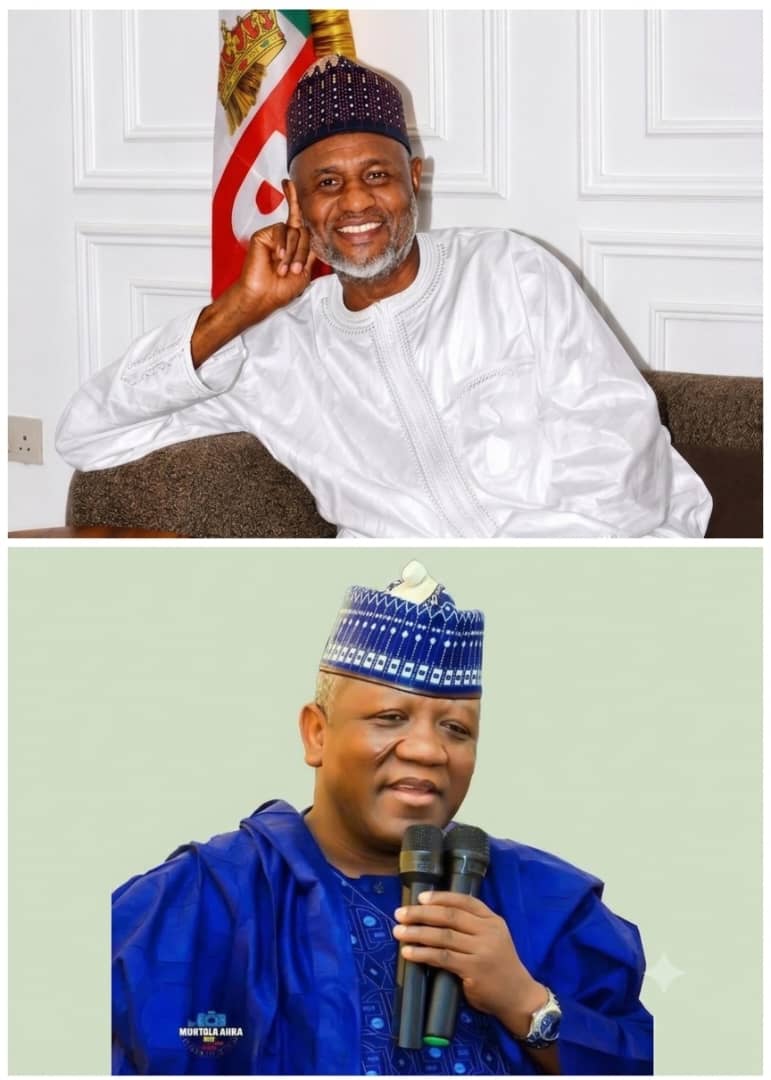
Senator Ahmed Sani Yerima (The Godfather & Stakeholder Mobilizer): A consummate strategist and the undisputed patriarch of grassroots mobilization in Northern Nigeria, Yerima’s ability to build bridges across political, traditional and religious institutions gives him an extraordinary capacity to unite diverse interest groups and command deep-rooted loyalty at ground zero.
Senator Abdulaziz Yari (The Master Tactical Administrator & DG): A seasoned political organizer who served as ANPP State Chairman, House of Representatives member, two-term Governor of Zamfara State (2011–2019) and Chairman of the Nigeria Governors’ Forum (NGF), Yari brings fierce operational discipline, tactical executive coordination and national consensus-building skills to the table.
That both men who are undisputed political gladiators are now positioned at the core of the 2027 APC Presidential Campaign Council, with His Excellency Senator Abdulaziz Yari serving as Director-General and His Excellency Senator Ahmed Sani Yerima serving as Stakeholder Mobilizer, is a masterstroke in political planning, strategic alignment and electoral organization.
To understand the political weight behind the All Progressives Congress (APC) Presidential Campaign Council, one must look at the unique narrative of Zamfara State – a political domain built on deep-rooted loyalty, strategic leadership and administrative continuity.
When the political landscape was redrawn during Nigeria’s return to democracy in 1999, Zamfara stood ready to chart its own course.
Under the executive leadership of His Excellency, Senator Ahmed Sani Yerima, the state established a distinct identity, proving that it could stand tall, independent and politically formidable on the national stage.
The Unbroken Bond
Long before stepping into executive leadership, Abdulaziz Yari had built a reputation as an exceptionally loyal party administrator and key strategist.
Throughout these roles, Yari viewed Yerima not just as a leader, but as a political mentor.
Unlike many political dynamics across the country where mentor-protégé relationships fray over time, the bond between Yerima and Yari has remained unbroken.
Their connection is built on deep-rooted mutual respect: Yari has consistently maintained absolute loyalty to his mentor, while Yerima has always respected Yari’s sharp administrative mind and organizational capacity.
A Strategic Masterstroke for 2027
Today, the inclusion of these two formidable leaders at the core of the APC Presidential Campaign Council brings that exact same spirit of loyalty, structure and strategic brilliance to the national stage.
With His Excellency, Senator Abdulaziz Yari bringing his tactical discipline, administrative efficiency and nationwide consensus-building skills to the campaign as Director-General and His Excellency, Senator Ahmed Sani Yerima deploying his legendary grassroots influence and bridge-building capabilities as Stakeholder Mobilizer, President Bola Ahmed Tinubu’s re-election campaign possesses an unbeatable leadership engine.
While Yari coordinates the national operational machinery as Campaign DG, Yerima engages high-level stakeholders, political blocs, traditional institutions and grassroots groups across all 36 states.
Their combined track record, vast national networks and deep popularity bring an unbeatable structural shield to the presidential campaign, guaranteeing a sweeping, decisive victory for the APC.
Also read: Governor Dauda Lawal woos investors, highlights Zamfara’s economic opportunities at CEO Forum
Their story stands as living proof that when loyalty, strength, administrative genius and mutual respect come together, political success naturally follows.
-
Politics2 years ago
13 Ondo Assembly Members Disown Endorsement of Aiyedatiwa
-
Politics2 years ago
APC Group, Ondo Govt, Quarrel Over Money for Endorsement
-

 Trending News5 years ago
Stop unsavoury, inciting statements – DSS warns
-

 Others5 years ago
Adron Homes Celebrates 10 Years Of Housing Excellence
-

 Humanity5 years ago
President Buhari Commiserates With Ambassador Maureen Tamuno Over The Loss Of Her Father
-

 Others7 years ago
EX- CUSTOMS BOSS, IBRAHIM MERA’S DWINDLING FAME
-

 Business2 years ago
Bigi Carbonated Soft Drinks Treats 40 Consumers to an Epic Easter Movie Hangout
-

 Business2 years ago
Wema Bank Shines at Global SME Finance Forum Conference Awards 2024 …Awarded: • SME Financier of the Year (Africa) • Platinum Award for Best Financier for Women Entrepreneurs (Africa)