ENERGY
Jubril Adewale Tinubu: Nigeria’s Most Consequential Energy Guru Isn’t Done Yet!

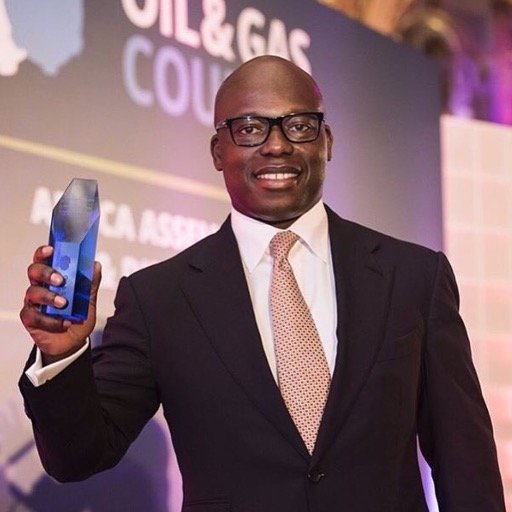
By Adebayo Adeoye

By the time most entrepreneurs have found their footing, Jubril Adewale Tinubu CON, had already begun reshaping the contours of Africa’s energy landscape. Three decades on, the Group Chief Executive of Oando Group shows no signs of slowing down.
There is a particular kind of leader who does not merely respond to circumstances but bends them to his will. Jubril Adewale Tinubu — fondly referred to in energy circles as the “King of African Oil” — is precisely that kind of leader. Methodical where others are reactive, visionary where others are cautious, and relentlessly forward-looking where others pause to celebrate, Tinubu has spent the better part of three decades building one of Africa’s most consequential indigenous energy enterprises.
As he approaches his 59th birthday, the Oando Group chief executive can reflect on a career that has been, by any credible measure, extraordinary. Yet those who know him well will tell you that reflection, for Tinubu, is never an end in itself. It is simply preparation for what comes next.
To appreciate the scale of what Tinubu has achieved, one must first appreciate the environment in which he achieved it. Nigeria’s oil and gas sector is not for the faint-hearted. It is a terrain defined by regulatory complexity, infrastructure deficits, geopolitical uncertainty, and the ever-present volatility of global commodity markets. Businesses have risen and collapsed within it; reputations have been made and unmade.
Against this backdrop, Tinubu has guided Oando from a fledgling indigenous player into one of Africa’s leading integrated energy companies — expanding its footprint across the continent and attracting the kind of institutional confidence that does not come cheaply. The journey has demanded not only financial acumen and sector expertise, but also what might best be described as a refined instinct for risk — knowing when to advance, when to consolidate, and when to absorb short-term pain in pursuit of long-term positioning.
That instinct, refined over decades, has distinguished him from a generation of peers and earned him a reputation that extends well beyond Nigeria’s borders.
A Philosophy of Perpetual Ascent
What drives a man who has already, by conventional standards, arrived? Those close to Tinubu suggest the question itself misunderstands him. In his worldview, every milestone is not a destination but a vantage point — a higher elevation from which the next horizon becomes visible.
This philosophy of perpetual ascent has shaped both his personal conduct and his corporate strategy. Oando under his stewardship has never been content to consolidate around comfortable positions. It has consistently sought new markets, new models, and new opportunities — even when the prevailing climate counselled restraint.
It is a disposition that has earned him international recognition and, more importantly, sustained the kind of institutional credibility that endures long after individual transactions are forgotten.
Philanthropy Without Fanfare
Beyond the boardroom, Tinubu’s legacy is being quietly written in communities far removed from the world of billion-dollar negotiations. His philanthropic commitments, grounded in personal faith, are characteristically understated — a deliberate choice that reflects a deeply held conviction that genuine generosity neither seeks nor requires public validation.
The beneficiaries of his support span education, healthcare, and community development — interventions that speak to a belief that enterprise, at its best, must create value beyond the balance sheet. In this regard, he embodies a model of business leadership that Nigeria, and indeed the continent, urgently needs: one in which commercial success and social responsibility are not competing priorities but complementary imperatives.
Oando and the Renewable Energy Frontier
Perhaps the most consequential chapter of Tinubu’s career is only now beginning to be written. As Nigeria grapples with a chronic power deficit that continues to constrain economic growth, Oando is positioning itself at the centre of the country’s energy transition. The company is making significant investments in the renewable energy sector, with a strategic vision aimed squarely at transforming Nigeria’s power generation landscape.
The move reflects both sound commercial logic and a broader sense of responsibility. Nigeria’s energy challenge is also its single greatest economic opportunity, and Tinubu appears determined that Oando will be among those who define how that opportunity is realised.
For a leader who has spent three decades navigating one of the world’s most demanding business environments, it is, in many ways, a fitting next frontier.



By Adebayo Adeoye
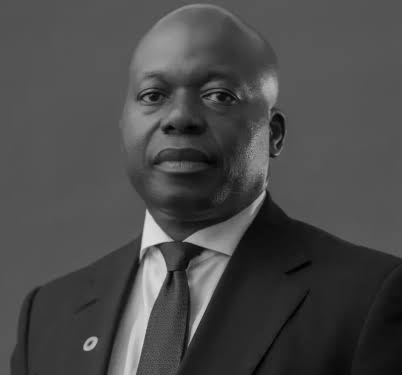
For Jubril Adewale Tinubu, the story of Nigerian oil is also a story of personal reinvention.
From co-founding Ocean and Oil in the 1990s to leading Oando through some of the most significant indigenous acquisitions in Nigeria’s petroleum industry, Tinubu has spent more than three decades building a business model around a simple but consequential proposition: Nigerian companies should not remain peripheral participants in an industry built around the country’s most important natural resource.
That ambition has shaped his career.
Tinubu was central to the transformation of Ocean and Oil from an indigenous trading company into Oando, an integrated energy group. The company’s subsequent expansion into petroleum marketing, gas and power, international trading and upstream exploration and production was not simply corporate diversification. It reflected Tinubu’s strategy of progressively moving Nigerian capital closer to the ownership and control of strategic energy assets.
The decisive moment came in 2014, when Tinubu led Oando Energy Resources in the approximately $1.8 billion acquisition of ConocoPhillips’ Nigerian businesses. The transaction fundamentally altered Oando’s position in the industry, moving it from a company with substantial downstream interests into one of Nigeria’s significant indigenous upstream players.
But Tinubu’s most consequential test came a decade later.
In 2024, Oando completed its acquisition of Eni’s Nigerian Agip Oil Company. The transaction gave Oando a significant percent working interest in OMLs 60–63 and operatorship of the joint venture, while substantially increasing the company’s reserves. Tinubu described the deal as the culmination of a decade-long strategy that began with the ConocoPhillips acquisition.
This is where Tinubu’s personal role becomes particularly important.
The significance of the NAOC transaction is not merely its financial value. It placed Tinubu and his management team in the more demanding position of having to demonstrate that an indigenous company can operate complex assets at scale. Ownership creates an investment position; operatorship creates accountability for production, infrastructure, costs, security, technical execution and relationships with host communities.
The early operating numbers provide an important measure of that transition. In the first half of 2026, Oando reported average production of 42,789 barrels of oil equivalent per day, a 16 per cent year-on-year increase, while production operating costs fell by 18 per cent and facility uptime rose to 92 per cent. Tinubu attributed the performance to drilling, well interventions, improved reliability and operational discipline.
Those figures do not settle the wider debate about indigenous operators. But they illustrate the shift in the challenge facing Tinubu: the question is no longer whether Nigerian entrepreneurs can acquire major petroleum assets. It is whether they can extract sustainable operational value from them.
That distinction is central to understanding his industry impact.
Tinubu has also increasingly positioned himself as an advocate for the institutional conditions that allow African businesses to grow. Speaking at the Royal African Society in London, he argued that stronger corporate governance, transparency and professional management are necessary if African companies are to attract long-term international capital. His own experience with Oando’s international listing has become part of that argument.
His public interventions at the 81st United Nations General Assembly in New York broadened the argument further.
Writing from an operator’s perspective on energy access, Tinubu argued that energy should be treated as foundational infrastructure for health, education, agriculture, manufacturing and employment. He cited Oando-linked gas and power projects as examples of how energy infrastructure can generate development outcomes beyond the energy sector itself.
At the US-Nigeria Council breakfast, he turned to another potential engine of Nigerian growth: the creative economy. Tinubu argued that Nigeria should regard its creative output as an export industry capable of generating foreign exchange, jobs and scalable businesses, pointing to the international reach of Afrobeats and the country’s growing creative economy.
The common thread in these interventions is the idea of value capture.
Whether the asset is crude oil, natural gas or intellectual property, Tinubu’s argument is that Africa must become better at owning the businesses and infrastructure through which its resources and talent are commercialised.
That proposition also explains the evolution of his own career.
Tinubu began as an entrepreneur in petroleum trading. He subsequently became an architect of an integrated energy company, then an upstream asset owner and operator, and increasingly a public voice on capital, energy access and African enterprise.
The next measure of his legacy will therefore be larger than Oando’s balance sheet.
It will be whether the model he has pursued demonstrates that African entrepreneurs can mobilise capital, acquire strategic assets, operate them efficiently, build institutions around them and retain a greater share of the value generated from Africa’s resources.
That is what makes Tinubu’s personal journey relevant beyond the oil industry.
This is the larger story behind the man known as ‘ King of African oil’ : not merely the accumulation of energy assets, but the continuing attempt to build an African enterprise capable of owning more of the continent’s economic future.
ANOH Gas inaugurates its HCDT Board, setting a new course for sustainable community development, transparency and accountability under the PIA
-
Politics3 years ago
13 Ondo Assembly Members Disown Endorsement of Aiyedatiwa
-
Politics3 years ago
APC Group, Ondo Govt, Quarrel Over Money for Endorsement
-

 Trending News5 years ago
Stop unsavoury, inciting statements – DSS warns
-

 Others5 years ago
Adron Homes Celebrates 10 Years Of Housing Excellence
-

 Humanity5 years ago
President Buhari Commiserates With Ambassador Maureen Tamuno Over The Loss Of Her Father
-

 Others7 years ago
EX- CUSTOMS BOSS, IBRAHIM MERA’S DWINDLING FAME
-

 Business3 years ago
Bigi Carbonated Soft Drinks Treats 40 Consumers to an Epic Easter Movie Hangout
-

 Business2 years ago
Wema Bank Shines at Global SME Finance Forum Conference Awards 2024 …Awarded: • SME Financier of the Year (Africa) • Platinum Award for Best Financier for Women Entrepreneurs (Africa)