
Business
Jubril Adewale Tinubu’s Bold Path for Oando

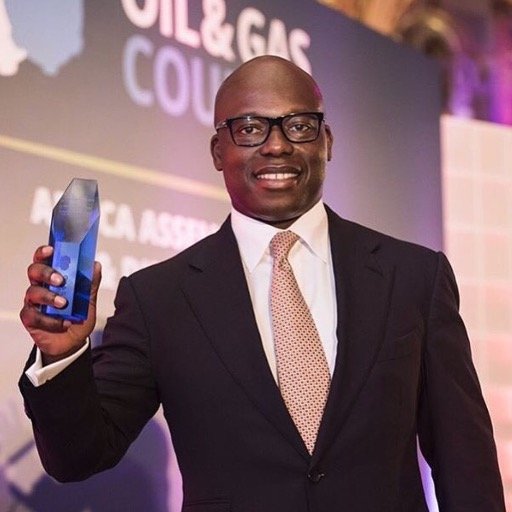

Last year, Oando Plc celebrated 30 years of phenomenal growth in the Nigerian oil industry, setting the stage for its future. As the company is set to unveil its plan for the next journey, analysts believe that under Jubril Adewale Tinubu’s visionary leadership, Oando PLC is set to redefine Africa’s energy landscape, evolving from an oil giant into a global force driving sustainability, innovation, and prosperity over the next two decades, writes Festus Akanbi
In compiling the recent landmark developments in the Nigerian business scenes, one story that cannot be waived aside is that of the phenomenal growth of the only indigenous oil giant in Nigeria, Oando Plc.
Analysts have described the organisation as the pride of Africa. By solidifying its eminent position in the Nigerian oil industry, it is winning more ground and breaking barriers.
It was this landmark that signposted the 30th anniversary of the company which was marked with pomp and ceremony at the tail end of 2024.
The truth is that Oando continued to turn the corner in terms of profitability which it recorded in 2023 and 2024, and which has spurred a series of decisions that have rewarded shareholders and employees for their loyalty, resilience, and steadfastness.
It was this chain of achievements that formed the theme of the celebration called ‘Symphony of Success,’ described as a grand celebration of Oando’s journey from a small oil trading business to a multi-billion-dollar energy giant.
In writing about Oando’s rise to the pinnacle of the Nigerian oil industry, one cannot but talk about its Group Chief Executive Officer, Mr. Wale Tinubu, whose transformative leadership has been the cornerstone of Oando’s meteoric rise from a modest oil marketing firm to a continental energy powerhouse.
With unparalleled vision and audacious strategy, he orchestrated landmark acquisitions, such as Agip Nigeria and ConocoPhillips’ Nigerian assets, securing Oando’s dominance in upstream oil exploration and production. His relentless drive for diversification integrated the company’s operations across the energy value chain, while bold investments in natural gas infrastructure positioned Oando as a critical player in Africa’s energy transition.
Tinubu’s mastery of complex financial engineering and commitment to sustainability has not only ensured the company’s resilience amidst volatile markets but also redefined it as a symbol of African excellence on the global stage. Under his stewardship, Oando has become a beacon of innovation, ambition, and enduring success.
Having marked its 30th anniversary to the admiration of its stakeholders, the question one is tempted to ask is can this rising organisation maintain this trajectory in the next 20 years?
Analysts explained that the future of Oando PLC shimmers like a sunrise over Africa’s boundless horizons, brimming with promise and transformation.
They argued that over the next two decades, the company stands poised to transcend its legacy, evolving into a titan of sustainable energy that marries innovation with impact.
According to industry analysts, like a river carving new paths, Oando will channel its ingenuity into harnessing the sun, wind, and earth’s latent power, becoming a vanguard of Africa’s green revolution.
“Its reach will extend beyond Nigeria’s borders, weaving a network of energy solutions that electrify industries, empower communities, and ignite dreams across the continent. Anchored by a bold commitment to environmental stewardship and guided by technological brilliance, Oando’s journey will be one of resilience and reinvention. It will not merely adapt to a changing world but shape it, standing tall as a beacon of progress, a harbinger of hope, and a testament to the indomitable spirit of Africa.
A Profitable Performance in 2024
To Oando, Nigeria’s leading indigenous energy group listed on both the Nigerian and Johannesburg Stock Exchanges, the proof of the pudding is in the eating as it ended last year on a spectacular note when it released its nine-month performance results.
As a consolidation of its impressive showing in 2023, Oando Plc’s nine-month results showed a 36 per cent increase in revenue, as it declared N3.2trillion for the period in 2024 as against N2.3 trillion posted in the corresponding period of 2023.
Operating Profit for the period declined by 23%, primarily driven by an increase in administrative expenses mainly due to foreign exchange losses from the revaluation of payables and borrowings.
Profit-after-tax for the period was N76.3 billion, a decline of 31% from N110.2 billion in the same period of 2023, driven by foreign exchange losses and net finance costs.
The performance was also affected by the rising cases of pipeline vandalism and theft in the Niger Delta.
The positive performance, according to Tinubu is a testament to the company’s resilience amidst a challenging environment. He said: “Our performance for the nine months ended September 30, 2024, reflects our resilience and unwavering focus on delivering value amidst a challenging operating environment. We achieved a 36% increase in revenue to N3.2 trillion and a Profit After Tax of N76.3 billion, despite ongoing pipeline vandalism, sabotage, theft in the Niger Delta, and foreign exchange volatility.
“Since the acquisition of NAOC, we have increased production by 40%, growing from 22,000 boepd pre-acquisition to 30,675 boepd currently. This progress has been driven by the deployment of quick-win strategies that have enhanced operational efficiencies and demonstrated the transformative potential of the acquisition.
“The integration process is advancing smoothly, and our immediate focus remains on executing strategic initiatives to maximise the value of our expanded portfolio. With this stronger foundation and a clear roadmap for growth, we are confident in our ability to deliver long-term, sustainable value to all stakeholders.”
Looking at the figures reeled out by the company, the operating environment was unfavourable, but with a tested hand like Tinubu on the saddle, Oando Plc was able to weather the tide and set an audacious target for the company in the new year.
During the nine months ended September 30, 2024, the average production was 20,560 boe/day, compared to 21,529 boe/day in 2023. In 2024, production consisted of 6,525 bbls/day of crude oil, 254 bbl/day of NGLs, and 13,782 boe/day of natural gas. Production decrease was a result of increased shut-in wells for repairs from sabotage and theft-related activities.
No Going Back on Development of Oil, Gas Infrastructure
Despite the challenging environment, Oando’s management did not just fold its hands as it continued the development of oil and gas assets and exploration activities. According to its financial statement, during the nine months to September 30, 2024, the Group incurred $12.7 million in capital expenditure related to the development of oil and gas assets and exploration and evaluation activities, compared to $47.4 million in the nine months to September 30, 2023.
Oando has been able to build the largest indigenous integrated energy company in Sub-Saharan Africa.
These comprised Oando Marketing Limited, one of the largest downstream petroleum marketing companies in Nigeria with over 500 retail outlets across Nigeria, Ghana, and Togo. There’s also Oando Supply and Trading Limited, incorporated in 2004, one of the largest independent traders of crude and refined petroleum products in sub-Saharan Africa.
Besides, Oando Gas & Power Limited, incorporated in 2004, is a pioneer in the development of Nigeria’s foremost gas distribution network, spanning 264 km and serving over 150 industrial and commercial customers in Lagos, Calabar, and Port Harcourt. Oando Energy Services Limited, incorporated in 2005, is Nigeria’s largest indigenous oilfield services provider, enhancing indigenous participation with a fleet of five rigs, while Oando Energy Resources is regarded as one of Nigeria’s foremost indigenous upstream oil and gas companies.
Give it to the company’s chief executive, over the years, he has demonstrated expertise in structuring complex financing deals, often involving partnerships with global institutions, to fund Oando’s growth.
His financial acumen ensured the company remained competitive despite Nigeria’s challenging business environment.
The company also focuses on gas to power in the quest to make Nigeria environmentally friendly. Oando has invested heavily in natural gas infrastructure, becoming a key player in Nigeria’s domestic gas market. This move aligns with the global energy transition and positions the company as a contributor to Nigeria’s energy security.
Talking about the future of Oando, observers said with the global push for decarbonisation, Oando is likely to increase investments in renewable energy sources like solar, wind, and green hydrogen. The company could evolve into a leading player in Africa’s clean energy transition.
Oando may also expand its operations beyond West Africa, leveraging its experience to tap into opportunities in other emerging markets. One also expects the company to focus on digital transformation with increased technology adoption, such as AI, IoT, and blockchain, which could optimize operations, improve efficiency, and enhance customer experiences.
Culled from Thisday.


TotalEnergies and Nigerian independent energy company AMNI International have taken the Final Investment Decision on the $800 million Ima Gas Project, more than five decades after the gas field was discovered.
The Ima Gas Project, located in shallow waters across Oil Mining Leases 112 and 117 near Bonny Island, Rivers State, is expected to begin production in 2028 and reach a plateau of 350 million cubic feet of gas per day.
The development is expected to play a major role in supplying feed gas to Nigeria LNG, with the Ima field projected to provide about one-third of the additional gas required for the ongoing Train 7 expansion.
Train 7 is expected to increase Nigeria LNG’s liquefaction capacity from 22 million tonnes per annum to 30 million tonnes per annum, strengthening Nigeria’s capacity to process and export liquefied natural gas.
The Ima field was discovered in 1973 but remained undeveloped for more than 50 years. The Final Investment Decision provides the commercial and financial basis for finally developing the long-dormant resource.
Under the development plan, TotalEnergies will operate the project with a 40 per cent interest, while AMNI will hold the remaining 60 per cent.
The field will be developed using a single offshore platform connected to Nigeria LNG’s facility on Bonny Island through a 22-kilometre pipeline.
TotalEnergies said its investment in the project is more than $600 million, while the Federal Government described the overall Final Investment Decision as an $800 million investment.
At the FID signing ceremony in Abuja, TotalEnergies Exploration and Production Nigeria Managing Director, Mathieu Bouyer, described the decision as the culmination of a development process that had stretched across several decades.
He said the project reflected increased confidence in Nigeria’s investment environment and highlighted reforms targeting the non-associated gas sector as part of the factors that helped make the development commercially viable.
President Bola Tinubu welcomed the investment, saying the project demonstrated the potential of reforms introduced to reduce the cost and time required to develop oil and gas projects.
The President said the government had introduced incentives aimed specifically at unlocking onshore and shallow-water gas projects that had remained undeveloped for years.
He said the Ima development would create opportunities for Nigerian businesses, engineers, technicians and contractors, while generating jobs, economic activity in host communities and additional export earnings.
The project is also expected to have a strong Nigerian content component. TotalEnergies said all key contractors for the development would be Nigerian companies, while about 60 per cent of the workforce during the development phase is expected to come from host communities.
The development will incorporate measures aimed at reducing emissions. TotalEnergies said the platform would receive electricity from shore, operate without routine flaring and use permanent methane detection and monitoring systems.
The Federal Government said the project is part of efforts to turn Nigeria’s large natural gas reserves into productive assets capable of supporting industrialisation, energy supply, jobs and export earnings.
Special Adviser to the President on Energy, Olu Verheijen, said the Ima development illustrated the importance of creating commercial and investment conditions that allow previously stranded resources to be developed.
The government also noted that Nigerian financial institutions arranged 77 per cent of the project’s financing, further highlighting the participation of domestic financial institutions in the development.
For Nigeria LNG, the project comes as the company continues work on the Train 7 expansion, which is designed to increase the Bonny Island plant’s liquefaction capacity and strengthen the country’s position in the global LNG market.


The Dangote Group is pursuing a $45bn investment programme across its businesses as it targets annual revenue of $100bn by 2030, with Dangote Cement expected to play a major role in funding the conglomerate’s next phase of expansion.
The group’s expansion strategy covers cement, refining, fertiliser, gas, infrastructure and other industrial businesses as it seeks to increase production capacity and strengthen its presence across African markets.
Dangote Cement, described as the group’s largest cash-generating business, is targeting an increase in annual production capacity from its current 55 million tonnes to more than 80 million tonnes as part of the growth programme.
The cement company said its expansion strategy would rely substantially on internally generated cash, reflecting the strength of its existing operations and cash-generating capacity.
In the 12 months to June 2026, Dangote Cement recorded revenue of $3.1bn, representing a 22 per cent year-on-year increase. Its cash conversion stood at 89 per cent, while return on capital employed reached 68 per cent during the period.
The company’s financial performance has also remained strong in naira terms. For the first half of 2026, Dangote Cement reported profit before tax of N981.39bn, up 34.43 per cent from N730.03bn recorded in the corresponding period of 2025. Profit after tax rose 22.69 per cent to N638.53bn.
The group’s wider investment plan is expected to include further expansion of the Dangote Refinery, with its capacity targeted to rise towards 1.4 million barrels per day. The company is also pursuing gas and LNG projects and additional industrial investments across Africa.
Dangote Cement’s expansion includes projects such as the proposed six-million-tonne-per-year plant at Itori in Ogun State, which is expected to strengthen the company’s production base as demand for cement and construction materials grows across the continent.
The group is also increasingly positioning its businesses around export earnings and geographically diversified operations. Management expects a larger share of revenue to be generated in foreign currency as its African expansion gathers pace.
The scale of the investment programme is underpinned by the group’s broader Vision 2030 strategy, which includes a target of more than $30bn in adjusted earnings before interest, taxes, depreciation and amortisation by 2030 alongside the $100bn revenue objective.
For Dangote Cement, the strategy represents a combination of capacity expansion and financial discipline, with strong operating cash flows expected to support investment while maintaining the company’s balance-sheet strength.
The wider Dangote Group is therefore positioning its 2030 strategy around expanding industrial capacity, increasing exports and using the cash generated by established businesses to finance further growth across Africa.
-
Politics3 years ago
13 Ondo Assembly Members Disown Endorsement of Aiyedatiwa
-
Politics3 years ago
APC Group, Ondo Govt, Quarrel Over Money for Endorsement
-

 Trending News5 years ago
Stop unsavoury, inciting statements – DSS warns
-

 Others5 years ago
Adron Homes Celebrates 10 Years Of Housing Excellence
-

 Humanity5 years ago
President Buhari Commiserates With Ambassador Maureen Tamuno Over The Loss Of Her Father
-

 Others7 years ago
EX- CUSTOMS BOSS, IBRAHIM MERA’S DWINDLING FAME
-

 Business2 years ago
Bigi Carbonated Soft Drinks Treats 40 Consumers to an Epic Easter Movie Hangout
-

 Business2 years ago
Wema Bank Shines at Global SME Finance Forum Conference Awards 2024 …Awarded: • SME Financier of the Year (Africa) • Platinum Award for Best Financier for Women Entrepreneurs (Africa)