
Education
Yet Another Feather on Wale Tinubu’s Cap, As UNILAG confers him with Honorary Doctorate


UNILAG confers honorary Doctorate of Business on Wale Tinubu for leadership in business, energy, and education, highlighting his philanthropic impact
The University of Lagos (UNILAG) has conferred an honorary Doctorate Degree of Business (Honoris Causa) on Mr. Adewale “Wale” Tinubu, Group Chief Executive of Oando Group, during its 56th Convocation Ceremonies.
Also read: Energy Tycoon Wale Tinubu Praises Otedola and Elumelu for Landmark Deals

The conferment recognised Tinubu’s exceptional leadership in the business, energy, and education sectors. A letter from UNILAG stated:
“On behalf of the Governing Council, Management, Staff, and Students of the University of Lagos, I am pleased to inform you that the Governing Council, in recognition of your exceptional leadership in business, energy and education, has approved the Senate’s recommendation for the conferment of the Honorary Doctorate Degree of Business (Honoris Causa) on you.”
During the ceremony, Tinubu delivered a speech on behalf of other awardees.
Philanthropic Contributions to Education
Wale Tinubu has played a pivotal role in advancing quality education in Nigeria through the Oando Foundation, an independent charity supporting the government’s Universal Basic Education (UBE) programme.
The Foundation’s flagship Adopt-a-School Initiative (AASI) addresses student and teacher needs through:
- Infrastructure development and classroom renovations
- Establishment of ICT and creative centres
- Early childhood care and development programmes
- Teacher capacity-building initiatives
- Scholarships for under-served children
Notable achievements include adopting over 100 public primary schools, enrolling over 100,000 out-of-school children, distributing 30,000+ teaching aids, and enabling students to complete secondary education through scholarship awards.
Also read: Wale Tinubu Leads Oando’s global energy expansion
Tinubu explained that the Foundation aims to eradicate poverty of the mind, ensuring every Nigerian child has access to quality education and opportunities to uplift themselves from poverty.


Nigerian universities global rankings could improve from 2027, Peter Okebukola says, citing research citations, competition and new assessment criteria
Nigerian universities could achieve record-breaking performances in global rankings from 2027, according to the Chairman of the Nigerian Tertiary Education and Research Analysis Committee, Emeritus Professor Peter Okebukola, who cited increased institutional competition, growing research citations and a new national ranking framework.
Also read: Tinubu: Strong Corporate Governance Must Go Beyond Compliance to Secure Institutional Future
Okebukola made the projection at a meeting of NiTERAC and directors of academic planning on Wednesday, October 21, 2026, according to a statement issued on Thursday.
He attributed the anticipated gains partly to the Federal Government’s efforts to strengthen how tertiary institutions are assessed, including a mandatory national ranking exercise introduced by the Minister of Education, Dr Tunji Alausa, on September 1, 2026.
According to Okebukola, the exercise is encouraging federal, state and private universities to publicise their achievements in teaching, research and community service.
He said the initiative had intensified competition among institutions, including those that had previously done little to showcase their performance.
“This mandatory directory has caused mass mobilisation of tertiary institutions in the country to gear up for the 2026 national ranking exercise,” he said.
The NiTERAC chairman also pointed to the growing participation of Nigerian academics on Google Scholar and other citation-tracking platforms as a potential driver of improved international visibility.
He said increased participation had expanded the country’s available citation data, which could contribute to stronger performances in international university rankings from 2027.
Research output and citations feature directly or indirectly in several global ranking systems, although the extent to which they affect an institution’s position varies by ranking provider and methodology.
Okebukola identified the design of the 22 indicators for the 2026 national rankings as another important factor.
He said the indicators drew on four leading international ranking systems, exposing Nigerian institutions to performance measures used globally.
He added that the national ranking exercise had reached the 12th stage of a 17-step process, while assessments of polytechnics and colleges of education were also progressing.
The committee expects to complete the rankings for all categories by December 15, 2026. Okebukola said the results would be published after the Minister of Education approves NiTERAC’s recommendations.
Beyond the 2026 exercise, the committee plans to introduce thematic rankings from 2027, with a stronger emphasis on how tertiary institutions contribute to Nigeria’s development priorities.
The proposed approach would assess not only conventional academic performance but also the practical application of knowledge, graduate capabilities and innovations that address real-world challenges.
Okebukola said the indicators could include innovations developed within the preceding two years, such as patents secured, new products created and processes introduced to tackle national development problems.
He linked the proposal to calls for graduates who can apply their knowledge competently and ethically to create value for society.
He cited United Nigeria Airlines Chairman, Professor Obiora Okonkwo, who made a similar argument during the 14th convocation lecture of Afe Babalola University in Ado-Ekiti.
According to Okebukola, the proposed thematic rankings could also offer a model for other African countries pursuing the African Union’s Agenda 2063, the continent’s long-term development framework.
The initiative comes amid continuing pressure on Nigerian universities to improve research productivity, international visibility, graduate employability and their contribution to economic and social development.
However, the projected improvement in global rankings remains an expectation rather than a confirmed outcome.
Also read: Tinubu: Strong Corporate Governance Must Go Beyond Compliance to Secure Institutional Future
Actual performance will depend on universities’ results and the methodologies applied by international ranking organisations.

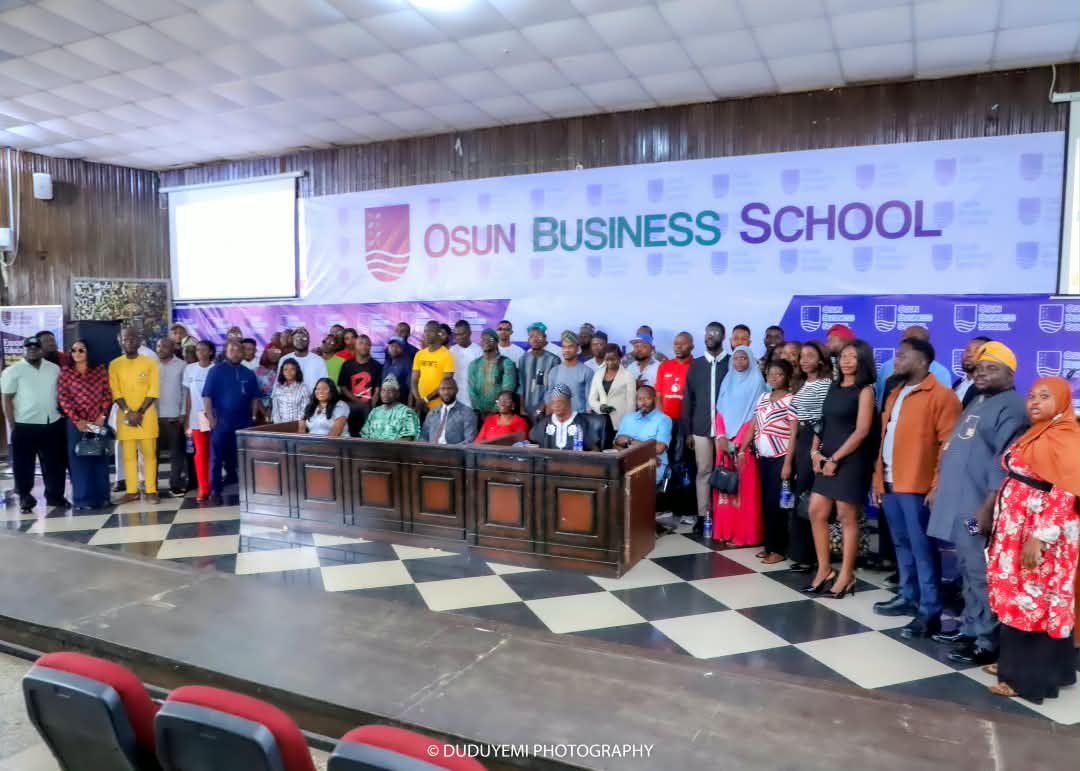

Five thousand Nigerian public-school teachers have completed the latest cycle of the MTN-SAIL Teachers Fellowship with new approaches to teaching, digital skills and, for the first time in the programme, formal training in artificial intelligence-assisted teaching.
But as the teachers return to their classrooms, the more significant question is what those new skills will mean for the pupils they teach.
The second cohort of the fellowship was trained in Inquiry-Based Learning, learner-centred teaching approaches, digital pedagogy and emerging technologies. From the 5,000 teachers who participated in the first phase, 500 were selected for a more intensive three-month training programme and graduated in September.
The programme is designed to move teaching beyond the conventional transmission of information, encouraging pupils to ask questions, investigate problems, think critically and use technology as part of the learning process.
For the organisers, however, the training is only the beginning.
Co-founder of SAIL Empowerment Foundation, Feyisola Abiru, said the fellowship was built around the belief that the teacher remains the critical link between education policy and the child in the classroom.
“When SAIL started this Fellowship in 2022, we began from a simple observation. Between every education policy and every Nigerian child stands one person: the teacher,” Abiru said at the graduation of the latest cohort.
She said the current cohort was deliberately made up entirely of public-school teachers because the public education system serves the majority of Nigerian children.
The latest programme also introduced artificial intelligence-assisted teaching to the curriculum, with Microsoft contributing the AI component through the MTN Foundation. The training focused on responsible use of AI rather than simply introducing teachers to the technology.
That development is significant as schools increasingly confront the opportunities and challenges created by digital technology.
Yet exposure to technology does not automatically translate into better learning.
A teacher may complete a digital-skills programme without subsequently integrating those tools into lessons. Equally, a pupil may have access to an online learning platform without having a teacher capable of using digital resources effectively in the classroom.
That makes the period after training particularly important.
The organisers have encouraged the graduating teachers to apply what they learned in their classrooms, share their knowledge with colleagues and remain connected through the SAIL alumni network.
SAIL has also indicated plans for a “Where Are You Now?” campaign to reconnect with former fellows. Such follow-up could provide a clearer picture of how many teachers continue to use digital and AI-assisted tools, how frequently those tools appear in lessons and whether the training is influencing classroom engagement.
The scale of the programme has expanded considerably since its earlier editions.
In 2024, THISDAY reported that 4,000 educators graduated from an earlier SAIL Teachers Fellowship programme after more than 6,000 teachers underwent virtual training and 400 selected participants received intensive mentorship.
SAIL now says the fellowship has trained more than 10,000 Nigerian public-school teachers across the 36 states and the Federal Capital Territory since 2022. The figure is broader than the MTN Foundation’s reported 8,704 teachers impacted by the MTN-backed programme from 2024 to date, reflecting different reporting periods and programme framing.
The latest intervention also comes as the country tackles another major barrier to digital education: the cost of connectivity.
The Nigerian Communications Commission recently launched its Zero-Rated Data Access to Educational Platforms and Content initiative, under which participating mobile operators provide eligible users with up to 100MB of free daily data for access to approved educational platforms.
The allowance amounts to about 3GB a month, or up to 36.5GB a year, for educational content. The NCC said the initiative is intended to widen access to digital learning and reduce the cost barrier facing learners.
The two interventions therefore address complementary parts of the digital-learning challenge.
One seeks to equip teachers with the skills to use technology more effectively. The other seeks to make it easier for learners to reach approved digital educational resources.
For Nigeria’s public schools, bringing those two elements together could help close a gap that training or connectivity alone cannot resolve.
But the evidence of impact will ultimately have to move beyond the number of teachers trained.
SAIL estimates that if each of the 5,000 teachers in the current cohort reaches an average of 80 pupils in a year, the potential indirect reach could be about 400,000 children.
That is a projection of possible reach, not a verified count of pupils whose learning outcomes have already improved.
The distinction matters.
The 5,000 teachers demonstrate the scale of participation. The 500 who completed the intensive second stage demonstrate progression within the programme. What remains to be established is how many of them translate the training into sustained changes in classroom practice.
That could mean more inquiry-based lessons, greater use of digital learning resources, responsible application of AI, stronger pupil participation or teachers sharing new methods with colleagues.
Three outstanding graduates were recognised for their commitment and classroom application of the training and received laptops and laptop bags from the SAIL Empowerment Foundation.
Those individual examples offer a glimpse of what the programme hopes to achieve. The larger test, however, will be whether such classroom changes continue beyond the graduation ceremony and spread across the schools where the teachers work.
For the teachers, the fellowship may end with a certificate.
For their pupils, that is where the real work begins
-
Politics3 years ago
13 Ondo Assembly Members Disown Endorsement of Aiyedatiwa
-
Politics3 years ago
APC Group, Ondo Govt, Quarrel Over Money for Endorsement
-

 Trending News5 years ago
Stop unsavoury, inciting statements – DSS warns
-

 Others5 years ago
Adron Homes Celebrates 10 Years Of Housing Excellence
-

 Humanity5 years ago
President Buhari Commiserates With Ambassador Maureen Tamuno Over The Loss Of Her Father
-

 Others7 years ago
EX- CUSTOMS BOSS, IBRAHIM MERA’S DWINDLING FAME
-

 Business2 years ago
Bigi Carbonated Soft Drinks Treats 40 Consumers to an Epic Easter Movie Hangout
-

 Business2 years ago
Wema Bank Shines at Global SME Finance Forum Conference Awards 2024 …Awarded: • SME Financier of the Year (Africa) • Platinum Award for Best Financier for Women Entrepreneurs (Africa)