
Event
Lagos Emerges as Africa’s Tech Beacon at GITEX 2025


Lagos Tech Innovation cements Africa’s digital rise at GITEX 2025, showcasing resilience, startups, and government-backed digital transformation

Lagos, the pulsating heart of Africa, recently captivated the global technology community, asserting its position as a powerhouse of innovation at the GITEX Nigeria Tech Expo and Future Economy Conference and the GITEX Nigeria Startup Festival.
Also read: Lagos tops global ranking as fastest-growing tech ecosystem in 2025
Hosted concurrently on 3-4 September 2025 at the Eko Hotel Convention Centre and Landmark Centre respectively, these landmark events heralded a new era for Nigeria’s digital aspirations, firmly placing Lagos, and indeed the entire nation, on the global innovation map.
The city, a vibrant tapestry of cultures and ambitions, buzzed with an electrifying energy as over 20,000 visitors, 3,000 tech professionals, and nearly 1,000 startups converged.
It was, as described by the Lagos State Governor, Babajide Sanwo-Olu, “the commercial economic now centre of our country, the beating heart of Africa, the digital and becoming renters of our time”.
A Crucible of Unicorns and Innovation
Lagos’s meteoric rise in the tech world is undeniable. Between 2019 and 2024, the state attracted over $6 billion in direct foreign tech startup funding, accounting for more than 70% of Nigeria’s total tech inflows.
This massive investment underscores its appeal as Africa’s innovation capital and a launchpad for the continent’s future.
The city is not merely growing; it’s burgeoning, adding approximately 2,000 new residents daily, making it one of the fastest-growing cities globally.
Lagos has earned its reputation as a “factory of unicorns”. Currently, it is home to five unicorns, including Flutterwave, Interswitch,Paystack, Kuda Bank, and Opay, propelling its ecosystem valuation to approximately $15 billion – a staggering 11.6 times increase since 2017.
These companies, born from solving “real African challenges,” now compete on a global scale. The Commissioner for Innovation & Technology, Tubosun Alake, confirmed that by October 2024, 2,000 startups now call Lagos home, and in 2024 alone, Nigerian startups raised over $400 million.
Furthermore, 23 of Nigeria’s 28 fastest-growing companies, as recognised by the Financial Times, are based in Lagos.
This dynamism has led to Lagos being ranked the fastest emerging technology city in the world by deal.com earlier this year.
Dr. Bosun Tijani, the Minister of Communications, Innovation, and Digital Economy, further highlighted that Nigeria’s Information and Communication Technology (ICT) sector has become the country’s fastest-growing contributor to GDP, consistently contributing between 16-18% today, up from less than 5% a decade ago.
He confidently projected this figure to reach 21-22% by 2027, already surpassing the oil and gas sector.
Dr. Dahlia Khalifa, Regional Director at the International Finance Corporation (IFC), described Lagos as “one of the most dynamic hubs of innovation in Africa and dare I say the world,” a place that “represents creativity, resilience and ambition and it delivers”.
Indeed, the city hosts hyperscale data centres, submarine cables, and extensive fibre infrastructure.
Resilience: The Driving Force
The spirit of Lagos and its people is marked by extraordinary resilience. Trixie LohMirmand, EVP of Dubai World Trade Centre and CEO of KAOUN International, organisers of GITEX Nigeria, noted that while startups in other economies “innovate because they want to, it’s nice to have,” here, “the startups and the SMEs are creating solutions to problems that is born out of necessity and survival”.
This “resilience DNA,” she stated, is “world class,” enabling businesses to thrive despite challenges such as power outages, currency fluctuations, and developing infrastructure.
This tenacity is deeply ingrained in Lagosians, who view problems as common denominators and opportunities for innovation. Governor Sanwo-Olu celebrated the city’s diversity, stating, “It’s only in Lagos that you can dream as an Hausa boy.
You can code in whatever language, you can pitch in yoruba and you can still understand English fluently”. This melting pot fosters a startup ecosystem now ranked among the most vibrant globally.
Investing in the Future: Youth and Government Support
The youthful population is Lagos’s greatest competitive advantage. With over 50% of Africans under the age of 25, the continent boasts one of the largest pools of digital natives worldwide.
The Lagos State Government actively nurtures this talent through initiatives like the Lagos State Science and Innovation Council (LASIC), which provides grants of up to N80 million annually for startups.
The Deputy Governor, Dr. Obafemi Hamzat, recounted the success of “She Mobility,” an app developed by young Nigerians to provide structured funding for car sales, which has raised nearly $100 million.
The government’s vision, as articulated by Governor Sanwo-Olu, is that “governance in the 21st century must be digital, inclusive and data-driven”.
This approach is not new; the Commissioner for Innovation & Technology highlighted that foundational work was laid years ago with the successful implementation of one of Nigeria’s first government Enterprise Resource Planning (ERP) systems using Oracle database, a feat many Fortune 500 companies failed to achieve.
This demonstrated a long-standing commitment to leveraging technology for governance.
Innovations like the integrated transport payment card, designed by 27-28 year olds, now used by over 6.5 million Lagosians across rail, waterways, buses, and taxis, exemplify this commitment. Lagos, with an estimated metro population of over 22 million people, offers unmatched access to a vast and digitally engaged market.
The city’s density, proximity to institutions, scale, and public sector friendliness make it easier to build businesses.
The national government, under President Bola Ahmed Tinubu, has also embraced the digital economy as a key driver of inclusive growth, ensuring technology expands opportunities and reduces inequality for all Nigerians.
The 3MTT initiative, a global programme, is preparing young people not just for Nigerian jobs, but for global opportunities.
The Lagos Pavilion: A Hub of Homegrown Innovation
During the Expo, the Lagos State Government showcased its commitment to fostering local talent and innovation at its dedicated Lagos Pavilion.
Ministries and agencies, including the Ministry of Innovation, Science & Technology, Ministry of Tourism, Arts & Culture, Ministry of Health, and others, demonstrated their latest innovations that have streamlined governance and positioned the state at the forefront in Africa.
The pavilion served as a dynamic platform for discovery, inviting all attendees to witness firsthand the possibilities of digital transformation.
Critically, the Lagos State Government also organised its own startup pitches at the pavilion, featuring young entrepreneurs presenting solutions across diverse sectors such as Fintech, Foodtech, healthcare, and education.
The government affirmed its plans to support these startups with funding, leveraging initiatives like the Lagos State Science Research and Innovation Council (LASRIC) and the Lagos State Employment Trust Fund (LSETF).
This direct engagement allowed visitors to see why Lagos is considered not just a city for today, but a launchpad for Africa’s tomorrow.
A Cultural Extravaganza
Beyond its technological prowess, Lagos leveraged GITEX Nigeria to showcase its rich cultural heritage. Attendees were treated to vibrant cultural displays, traditional music, and dance performances that filled the air with excitement.
The welcome reception dinner, hosted by the Lagos State Government at the JK Randle Centre for Yoruba Culture & History, delighted guests with local cuisines like Jollof rice, suya, egusi soup, and pounded yam. Many guests, experiencing this cultural fusion for the first time, expressed eagerness to return and explore further.
As Mrs. Toke Benson-Awoyinka, Commissioner for Tourism, Arts & Culture, remarked, “Lagos stands tall as a global destination blessed with a rich cultural and historic heritage, diverse traditions, a thriving art scene, an energetic nightlife and culinary experiences that capture the true essence of creativity”.
This cultural fusion, coupled with the global impact of Nollywood and Afrobeat, highlights Lagos not just as a tech hub, but as Africa’s “creative fast”.
GITEX: A Bridge to Global Opportunity
The journey of GITEX to Nigeria began when Governor Sanwo-Olu, “wowed” by GITEX Africa in Marrakesh two years prior, challenged organisers to bring the international conference to Lagos. National Information Technology Development Agency (NITDA), DG Kashifu Inuwa proudly declared,
“Today we are delivering on your challenge. For me, GITEX Nigeria is not just another conference. It is a declaration that Nigeria, we are ready to lead in the future economy”.
Trixie LohMirmand affirmed GITEX’s commitment to providing access to “underserved, understated but yet very auspicious and inspiring communities” like Nigeria, asserting that GITEX does not shy away from challenges.
The event, she explained, is “turning the attention of the world towards Nigeria,” offering young Nigerians invaluable exposure to international investors, benchmarking against global competitors, and mentorship opportunities that would otherwise be inaccessible.
The Deputy Governor highlighted the immense support received, noting that despite initial trepidation, 78 countries participated, making it “amazing”.
The Commissioner for Innovation & Technology underscored that Lagos’s pace, ambition, and innovation are actively “redefining Africa’s tech narrative,” inviting visitors to be “collaborators in Nigeria’s tech revolution”.
GI.TEX Nigeria 2025 stands as a testament to the nation’s bold ambition and strategic vision. As Peter Drucker, a renowned management consultant, once said, “the best way to predict the future is to create it”.
Also read: Prestige Excellence Award to Celebrate Impact in Lagos, 11 October 2025
With the successful hosting of GITEX, Lagos and Nigeria are not just predicting the future; they are actively building it, demonstrating an unwavering resolve to lead Africa’s digital transformation and contribute significantly to the global economy. As Commissioner Alake concluded, “Lagos, as you well know, is ready to lead”.



Wema Bank unveils 21 Hackaholics 7.0 finalists ahead of the November 6 grand finale in Lagos, following a nationwide innovation contest
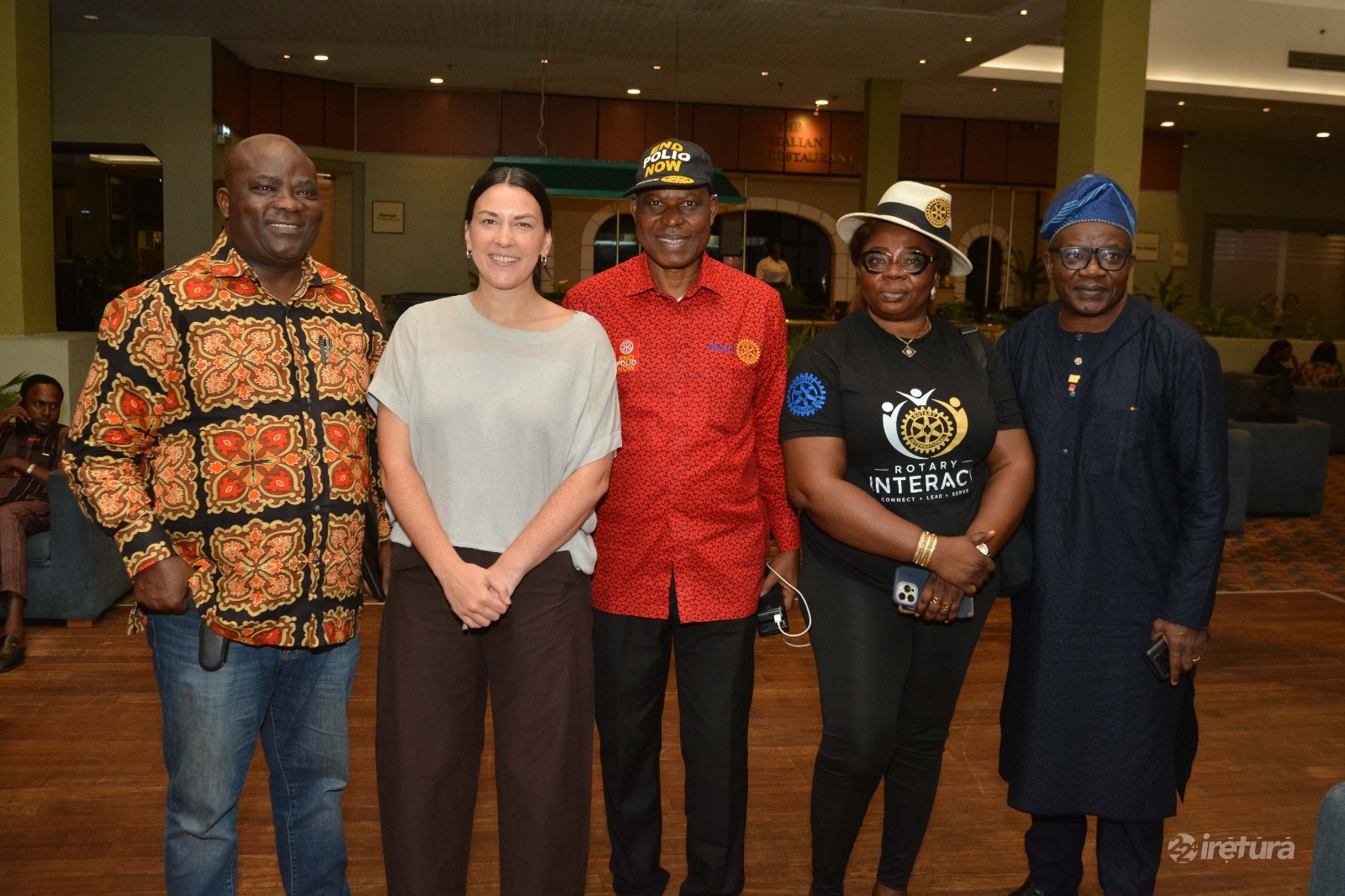
Lea Perekrests arrives in Lagos ahead of the Rotary Peace Summit, urging inclusive governance and community action to build lasting peace

Mrs. Bola Tinubu has underscored the need for stronger corporate governance anchored on board accountability, ethical leadership, effective risk oversight and long-term value creation, warning that the durability of institutions depends on the quality of decisions made in their boardrooms today.
In a message ahead of the Corporate Governance Triangle Annual Colloquium scheduled for Thursday, October 22, Country Managing Partner, DLA Piper Africa said corporate governance must be understood as more than adherence to regulations, stressing that it is fundamental to building resilient institutions, protecting stakeholder interests and sustaining investor confidence.
“Good governance is not simply about compliance. It is about leadership, accountability and making the right decisions for the future,” she said.
The colloquium, convened by the Nigerian Bar Association Section on Business Law (NBA-SBL), the Convention on Business Integrity’s Centre for Leadership and Governance (CloD Nigeria), and the Nigerian Exchange Group (NGX), is themed “Governing for the Future.”
The gathering comes at a time when corporate boards face increasing pressure to demonstrate stronger oversight, transparent decision-making and the capacity to navigate economic volatility, technological disruption and evolving stakeholder expectations.
Tinubu’s position places board effectiveness at the centre of the corporate governance conversation, emphasising that compliance with statutory requirements, while indispensable, is not sufficient to guarantee institutional integrity or sustainable performance.
Effective corporate governance requires boards to establish clear accountability structures, exercise independent judgement, challenge management assumptions and ensure that corporate strategy is aligned with the long-term interests of shareholders and other stakeholders.
It also demands robust internal controls, credible financial reporting, ethical conduct and risk management frameworks capable of identifying threats before they undermine organisational stability.
“At a time of rapid change and growing uncertainty, the quality of board leadership matters more than ever,” She said.
As a Keynote Speaker at the event, statement highlights the strategic responsibility of directors to look beyond short-term earnings and immediate operational pressures to consider the broader implications of their decisions for institutional continuity, reputation and value creation.
For companies operating in Nigeria’s evolving business environment, these responsibilities have significant implications for investor confidence and access to capital. Investors increasingly assess not only financial performance but also the quality of oversight, transparency of disclosures, protection of minority shareholders and the ability of boards to manage material risks.
Weak governance can expose companies to financial mismanagement, conflicts of interest, reputational damage and regulatory sanctions. Conversely, credible governance structures can strengthen market confidence, improve accountability and create the conditions for sustainable business growth.
Tinubu stressed that boards must demonstrate the courage and discipline required to prepare institutions for challenges beyond their immediate operating environment.
“Boards must look beyond today’s challenges and have the courage, foresight and discipline to build institutions that will stand the test of time,” she stated.
This approach places a premium on forward-looking board oversight. Directors must interrogate business assumptions, monitor emerging risks, evaluate management performance and ensure that succession planning, capital allocation and corporate strategy support institutional resilience.
It also reinforces the importance of board independence and diversity of experience in strengthening deliberations and preventing excessive concentration of decision-making authority. Effective oversight depends on directors who can exercise sound judgement, ask difficult questions and hold management accountable without compromising their fiduciary responsibilities.
Beyond individual companies, stronger corporate governance has implications for the wider Nigerian economy. Transparent and well-governed companies are better positioned to attract long-term investment, deepen capital markets and support the development of a business environment in which capital is allocated with greater confidence.
The collaboration among the NBA-SBL, CloD Nigeria and NGX in convening the colloquium also reflects the importance of a coordinated approach to governance. Legal standards, leadership development, market discipline and professional accountability must work together to translate governance principles into measurable institutional outcomes.
The challenge, therefore, is not simply to establish governance codes or satisfy regulatory expectations, but to embed accountability and ethical conduct in everyday corporate decision-making.
Tinubu expressed optimism about the discussions expected at the colloquium, noting that the demands of contemporary leadership require sustained reflection on how institutions are governed and prepared for the future.
“I look forward to a thought-provoking conversation on what this demands of us as leaders,” she added.
As corporate governance increasingly shapes investor perceptions and institutional credibility, the central question for boards is whether their decisions merely address today’s obligations or build the foundations for tomorrow’s success.
The distinction, ultimately, lies in the ability to translate compliance into a culture of accountability, oversight into strategic value and leadership into lasting institutional strength.
-
Politics3 years ago
13 Ondo Assembly Members Disown Endorsement of Aiyedatiwa
-
Politics3 years ago
APC Group, Ondo Govt, Quarrel Over Money for Endorsement
-

 Trending News6 years ago
Stop unsavoury, inciting statements – DSS warns
-

 Others5 years ago
Adron Homes Celebrates 10 Years Of Housing Excellence
-

 Humanity5 years ago
President Buhari Commiserates With Ambassador Maureen Tamuno Over The Loss Of Her Father
-

 Others7 years ago
EX- CUSTOMS BOSS, IBRAHIM MERA’S DWINDLING FAME
-

 Business3 years ago
Bigi Carbonated Soft Drinks Treats 40 Consumers to an Epic Easter Movie Hangout
-

 Business2 years ago
Wema Bank Shines at Global SME Finance Forum Conference Awards 2024 …Awarded: • SME Financier of the Year (Africa) • Platinum Award for Best Financier for Women Entrepreneurs (Africa)