Sport
Arteta Confirms: Myles Lewis-Skelly Stays at Arsenal

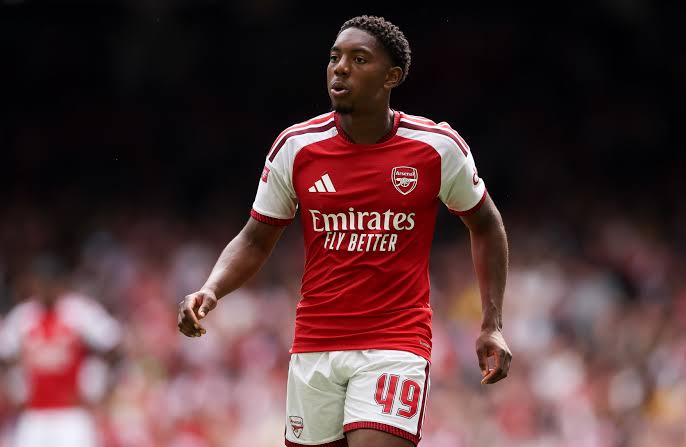
Lewis-Skelly stays at Arsenal, Mikel Arteta insists, ending fresh transfer speculation surrounding the 19-year-old England international
Arsenal manager Mikel Arteta has given a firm and positive update on 19-year-old Myles Lewis-Skelly’s future at Arsenal in London on Thursday, August 20, 2026, insisting that the England international will remain with the club despite recent transfer speculation.
Also read: Chelsea Complete £21m Pep Chavarría Transfer Agreement

Arteta was unequivocal when asked about the youngster’s future, telling reporters: “Myles Lewis-Skelly STAYS. I am 100% sure.”
The emphatic statement comes after a turbulent few weeks for Lewis-Skelly, whose position at Arsenal had been the subject of considerable transfer discussion.
Manchester United have been monitoring the versatile youngster as they look to strengthen their left-back options, while Chelsea have also made enquiries about his availability.
Reports earlier this month suggested Arsenal had been prepared to listen to offers for the teenager, with a figure of around £45 million mentioned in some reports.
The possibility of a move appeared particularly plausible following Arsenal’s £75 million acquisition of Bruno Guimarães.
However, the latest developments paint a considerably different picture.
Arteta’s declaration that Lewis-Skelly stays is consistent with earlier reports that Arsenal had no intention of allowing the academy graduate to join a direct Premier League rival.
Football Insider previously reported that Arteta regarded Lewis-Skelly as an important part of his plans for the 2026/27 campaign.
The teenager’s remarkable rise also provides important context.
Lewis-Skelly emerged from Arsenal’s Hale End academy and made his senior breakthrough during the 2024/25 season. He subsequently signed a new long-term contract in June 2025 after making 23 Premier League appearances during that campaign.
His development took another significant step last season. Although playing time was limited at points, he eventually established himself in midfield and became an important part of Arsenal’s run-in.
That resurgence was particularly striking because Lewis-Skelly had initially fallen down the pecking order at left-back, with Piero Hincapié and Riccardo Calafiori competing for the position.
By the end of the campaign, however, the youngster had become a regular starter and featured in the Champions League final.
His versatility remains one of his greatest assets. Lewis-Skelly can operate at left-back or in midfield, giving Arteta tactical flexibility during a demanding season.
The 19-year-old also provided a timely reminder of his quality in Arsenal’s recent Community Shield victory over Manchester City.
Lewis-Skelly started the match and registered an assist inside the opening minute as Arsenal secured a convincing 3-0 victory.
The performance strengthened the argument that Arsenal would be reluctant to part with a player who has already demonstrated that he can perform on major occasions.
Arteta had previously suggested that interest from rival clubs was itself a positive indication of Lewis-Skelly’s development.
“We attract attention,” the Arsenal manager said earlier this month, reflecting on the interest in the young player.
There has also been evidence that Lewis-Skelly himself has been keen to remain in north London.
Sky Sports reported that the teenager wanted to stay at Arsenal and concentrate on establishing himself in Arteta’s first-team plans.
For Arsenal, keeping the youngster would preserve one of the most promising products of their academy while also maintaining valuable homegrown depth.
With the Premier League season approaching and the transfer window still open, speculation may continue until the deadline.
But Arteta’s latest intervention offers a powerful indication of the club’s immediate position.
Also read: Chelsea Complete £21m Pep Chavarría Transfer Agreement
For now, the message from Arsenal’s manager is unmistakable: Myles Lewis-Skelly is staying.

Mourinho La Liga award celebrates Real Madrid’s perfect October, including victories over Villarreal, Sevilla and Barcelona

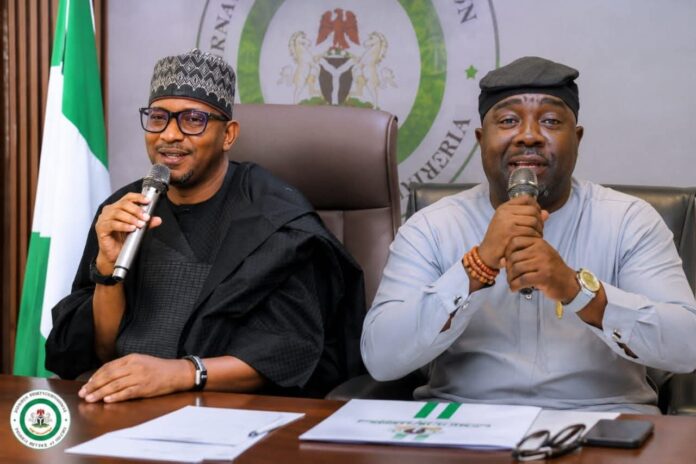

By Michael Soyebo
The corridors of the National Sports Commission (NSC) in Abuja have long echoed with grand promises, administrative bottlenecks, and the heavy weight of unfulfilled potential. Yet, every so often, a rare synergy of competence, passion, and strategic vision cuts through the bureaucratic noise to rewrite history.
Such a watershed moment has arrived, courtesy of the dynamic leadership pairing of NSC Chairman Mallam Shehu Dikko and Director-General Hon. Bukola Olopade. Working in lockstep, these two technocrats have once again thrust Nigeria onto the global pedestal, orchestrating a monumental milestone that has forever altered the landscape of women’s football in the country and across the African continent.
To understand the magnitude of this recent feat is to look back at the historical labyrinth that has long characterized Nigerian sports administration. For decades, talent has never been in short supply; Nigeria’s football fields, from the dusty pitches of rural towns to bustling urban academies, overflow with raw, unadulterated genius.
However, the missing link has consistently been structured institutional support, visionary leadership, and proactive welfare management. When President Bola Ahmed Tinubu reconstituted the National Sports Commission and entrusted its apex leadership to Dikko and Olopade, skeptics wondered if it would be business as usual. They have answered with actions that speak louder than any policy document.
The crown jewel of this administrative masterclass is rooted in the unprecedented triumph of Nigeria’s women’s football framework, brilliantly highlighted by historic global conquests and backed by a revolutionized administrative machinery. Under the watchful eyes of Dikko and Olopade, the National Sports Commission has transitioned from a reactive agency to a proactive catalyst.
Gone are the days when athletes’ morale was dampened by administrative red tape or delayed entitlements. This leadership duo recognized early that sustainable glory on the pitch begins with absolute institutional backing off it.
A prime testament to this new dawn was witnessed when the nation’s female football representatives shattered decades-old glass ceilings on the world stage. Displaying tactical discipline, breathtaking flair, and an unyielding winning mentality, Nigeria’s young Amazons conquered giants, outclassed traditional powerhouses, and lifted a historic global trophy that had eluded the entire African continent until now.
It was a moment of pure national ecstasy—an explosion of green and white confetti that reminded the world why Nigeria remains a sleeping giant of global sports when properly awakened.
Crucially, what makes this “first” so profound is not just the trophy hoisted under the floodlights, but the immaculate precision with which the NSC handled the backend of the triumph. In a sharp departure from past eras defined by post-tournament controversies over unpaid bonuses and neglected allowances, the Presidency, channeled seamlessly through the proactive intervention of the NSC under Dikko and Olopade, ensured that every financial incentive, bonus, and welfare package was cleared with military promptness.
From preliminary qualification rounds right through to the final glory, the players’ hard-earned dues were prioritized, setting a golden standard for athlete treatment.
This meticulous attention to detail did not go unnoticed by the corporate world and well-meaning stakeholders. The historic victory catalyzed an unprecedented wave of national celebration and financial rewards, anchored by patriotic patrons like Alhaji Saleh Ahmadu, who instantly doled out monumental cash gifts to the players and technical crew.
Comptroller-General of the Customs Service Bashir Adewale Adeniyi and other top dignitaries rallied around the team, creating an ecosystem of support where success is lavishly celebrated and heavily incentivized.
At the heart of this operational success is the distinct administrative chemistry shared by Shehu Dikko and Bukola Olopade. Dikko, a globally respected sports economy expert and administrator, brings to the table a deep-seated structural blueprint, navigating macro-policies with legislative and executive finesse.
Olopade, a grassroots marketing guru and quintessential hands-on manager, infuses the commission with an unmatched street-smart urgency and operational zeal. Together, they form a complementary powerhouse—the brain and the heartbeat of modern Nigerian sports rebirth.
Their leadership philosophy discards armchair administration in favor of active engagement. Olopade’s immediate immersion into the trenches upon assumption of office—visiting staff, aligning visions with Dikko, and cutting through red tape—set the tone for a target-driven commission.
Every department within the NSC was re-oriented to realize that the athlete is the most vital asset in the sports value chain. This empathetic yet fiercely professional approach has breathed fresh air into national team camps.
Furthermore, this historic milestone in women’s football serves as a powerful psychological breakthrough for the girl-child across Nigeria. When young girls see the nation’s leaders treating female athletes with utmost reverence, prioritizing their welfare, and celebrating their continental and global “firsts”, it validates their dreams.
Dikko and Olopade have inadvertently transformed the women’s national team into a symbol of national pride and gender empowerment, proving that excellence knows no gender when the right environment is provided.
The ripple effects of this triumph extend far beyond the shores of Nigeria, elevating the nation’s diplomatic footprint through sports. International sports bodies and FIFA stakeholders have taken note of Nigeria’s renewed administrative stability.
By restoring absolute credibility to the management of national teams, the NSC has opened doors for deeper international partnerships, technical grants, and global respect. Investors who previously shied away from Nigerian sports due to administrative instability are beginning to knock on a newly repositioned door.
Yet, for all the pomp and pageantry of recent receptions, both Dikko and Olopade remain acutely aware that a single victory is merely a stepping stone. In their ongoing briefings and strategic policy rollouts, the emphasis has quickly shifted from celebration to sustainability.
The blueprint is already being drawn to replicate this success across all age grades and sports disciplines, ensuring that grassroots talent pipelines are continuously fed, scouted, and professionally nurtured.
The duo understands that maintaining a “first” position is infinitely harder than achieving it. Plans are reportedly underway to institutionalize the structural frameworks that guaranteed this recent success, insulating future campaigns from the whims of political transitions or administrative apathy.
Capacity building for local coaches, improvement of domestic women’s league infrastructure, and sports science integration are front and center in the NSC’s master plan.
As history looks back at this era, the names Shehu Dikko and Bukola Olopade will undoubtedly be written in gold as the architects who proved that Nigerian sports can, indeed, run like a well-oiled corporate machine. They took over a system plagued by historical baggage and turned it into an incubator of global champions.
Ultimately, scoring another first for Nigeria in women’s football is not merely about a trophy etched in silver or gold. It is about a paradigm shift—a resounding testament to what happens when competence meets passion, when leadership serves the athlete, and when two visionary patriots decide that second best is never an option for Nigeria.

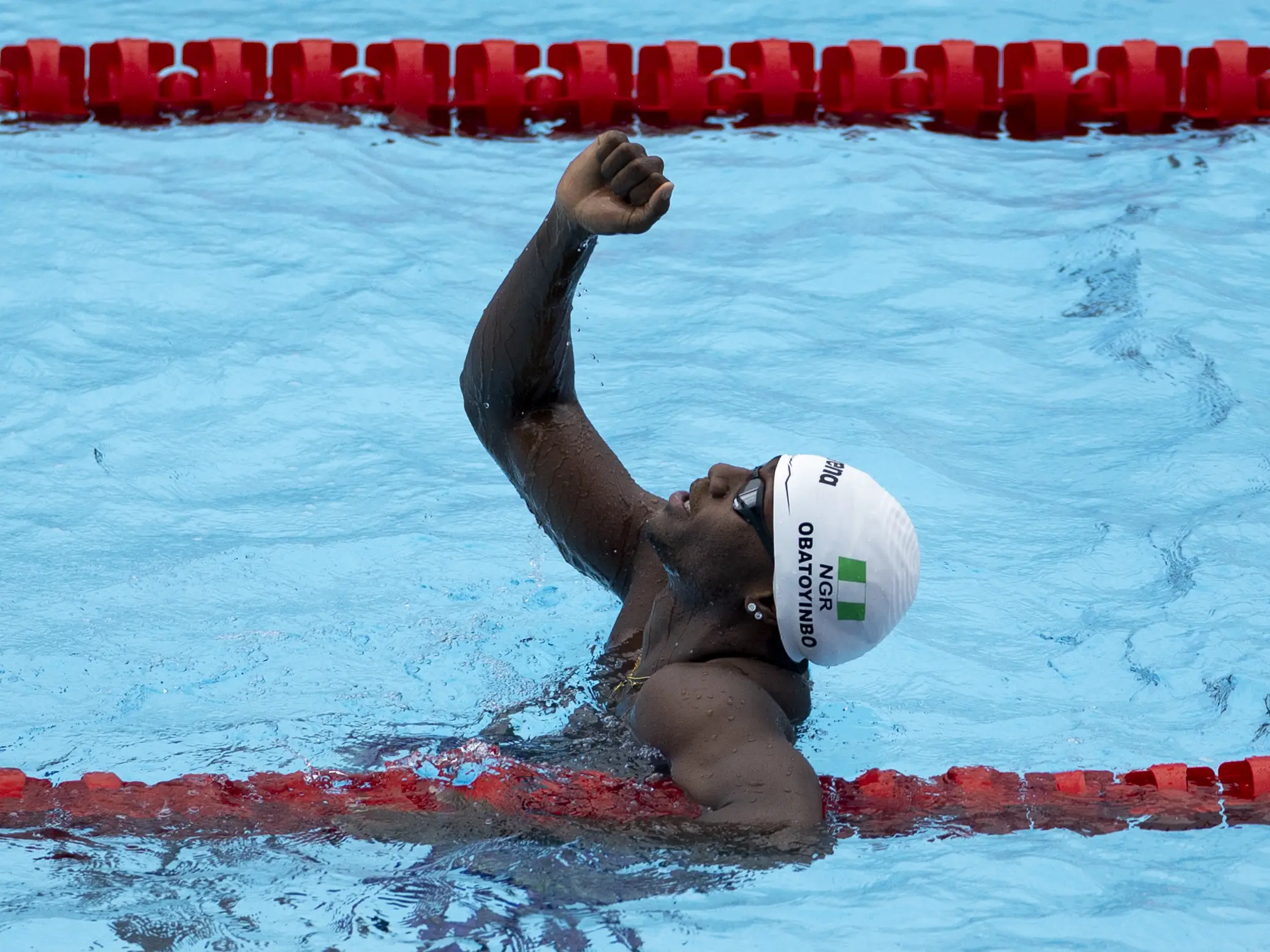
Nigeria ends its Dakar 2026 swimming campaign without a medal as Kashope Obatoyinbo makes history with a sixth-place final finish
-
Politics3 years ago
13 Ondo Assembly Members Disown Endorsement of Aiyedatiwa
-
Politics3 years ago
APC Group, Ondo Govt, Quarrel Over Money for Endorsement
-

 Trending News6 years ago
Stop unsavoury, inciting statements – DSS warns
-

 Others5 years ago
Adron Homes Celebrates 10 Years Of Housing Excellence
-

 Humanity5 years ago
President Buhari Commiserates With Ambassador Maureen Tamuno Over The Loss Of Her Father
-

 Others7 years ago
EX- CUSTOMS BOSS, IBRAHIM MERA’S DWINDLING FAME
-

 Business3 years ago
Bigi Carbonated Soft Drinks Treats 40 Consumers to an Epic Easter Movie Hangout
-

 Business2 years ago
Wema Bank Shines at Global SME Finance Forum Conference Awards 2024 …Awarded: • SME Financier of the Year (Africa) • Platinum Award for Best Financier for Women Entrepreneurs (Africa)