
Politics
Ajulo Reveals Why Mai Mala Boni Should Step-Down Immediately


Kayode Ajulo a legal practitioner has revealed why the All Progressives Congress (APC) National Chairman and Governor of Yobe State, Mai Mala Buni, immediately resign from his position.

In a communique made available to Crystal News, Ajula stated that “It’s no news that the Supreme Court by a split of 4-3 dismissed the Petition filed by the People’s Democratic Party’s Aspirant for the 2020 Ondo State Governorship Election, Eyitayo Jegede SAN against the incumbent Governor of Ondo State and the All Progressives Congress.
“Without prejudice to the ratio decidendi of the majority decision of the Court, it is imperative to state prestissimo and very clearly too that with the unanimous position of the Apex Court that it appears the actions of the All Progressives Congress in permitting a sitting Governor as the Interim Chairman of the Party is in violation of the Constitution of the Federal Republic of Nigeria, it is my sincere view that the Interim Chairman of the All Progressive Congress should immediately step down.
“My humble but cosmic review of the judgment comes with an indication that the Governor of Yobe State, Mai Mala Buni has to vacate his seat, as the Chairman of APC with immediate effect.
“The provision of Section 183 of the 1999 Constitution of the Federal Republic of Nigeria (as amended) is clear and unambiguous to the effect that “The Governor shall not, during the period when he holds office, hold any other executive office or paid employment in any capacity whatsoever.”
“As a former National Secretary of Labour Party, I am quite aware and it is unassailable that the National Chairman and the National Secretary are the alter egos of a political party chartered with the day-to-day running of the party.
“It is, therefore, incontrovertible that the continuous stay of the Governor as Chief Executive Officer of the All Progressives Congress runs contrary to the provision of the Constitution and as such may be an albatross on the party, as all he had done before would be null and void, including the nomination of candidates within the period of his so-called Leadership of the party.
“In lending my two cents, it is apposite to assuage and hint the leadership of the party by reminding same of the decision of Lord Denning of over 5 decades in the case MACFOY v. UAC LIMITED (1961) 3 ALL E.R where the Learned Jurist held that: “If an act is void, then it is in law a nullity. It is not only bad but incurably bad. There is no need for an order of the court to set it aside.”
“Whichever way this issue is being tilted, permitting a Governor of a State to hold another executive office may create cravings in some Governors to become the State Chairman of their Political Parties as being recently tinkered by some of them.
“In order to nip this looming inglorious kismet in the bud, I thereby admonish that the acting Chairman of the All Progressives Congress should immediately step down as a stitch in time saves nine!”



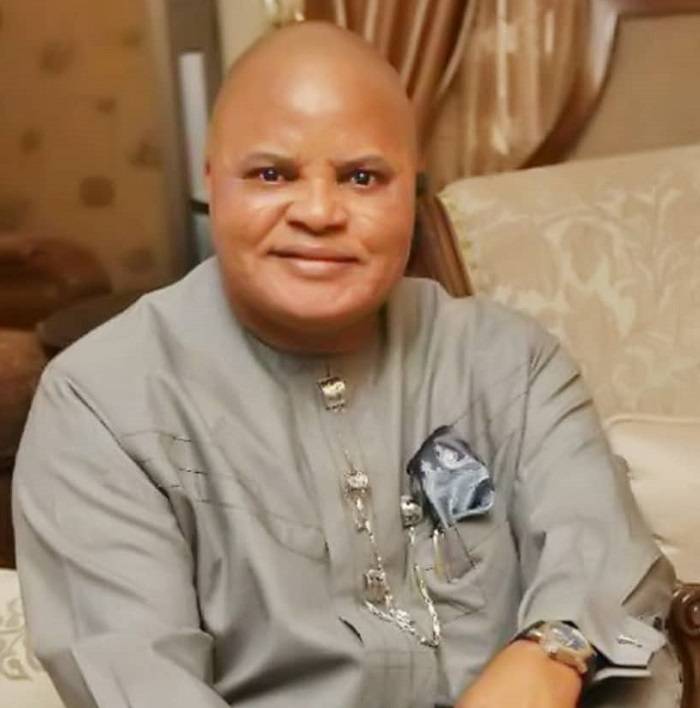
A group, the Imo First Group (IFG) has described the purported Magistrate court order to arrest Senator Ifeanyi Araraume and the former governor of Imo State, Rochas Okorocha, over alleged criminal conspiracy and forgery, as a ruse and fake news
The group stated this in a statement issued on Saturday in Abuja.
IFG challenged those peddling the fake news to make the court order public.
The statement reads ” The fabricated and concocted story was first posted on social media by Hon. Ambrose Nwaogwugwu, a media aide to Governor Hope Uzodimma, before it was picked up by other media outfits, including Arise TV.
According to the statement, those behind the report claimed that a Senior Magistrate Court sitting in Abuja issued a Bench Warrant dated September 9, 2026, following a petition written by the Resident Electoral Commissioner (REC) in Imo State, Barr. Chukwuemeka Ibejiako, to the Police and DSS on October 8, 2026, over alleged presentation of fake APC primary results.
The Group debunked the existence of any such order.
“We want to state categorically and unequivocally that no jSenior Magistrate ordered or issued any bench warrant for the arrest of Araraume”
IFG however challenged anyone in possession of the purported court order to publish it.
“If you claim to have a court order present same for the public to see,
“This fabricated bench warrant contain in the report is filled with inconsistencies, the bench warrant was dated September 9, 2026, while the REC’s petition that supposedly triggered it was dated October 8, 2026, with case number CR/M/084/2026.
The statement further stated that the purveyors and harbinger of the fake news tried to trick the magistrate via exparte order but was rebuked
“The magistrate bluntly refused to grant their exparte and threatened to arrest them, yet they carried their falsehood about. What’s the problem of occupants of office that never won free and fair elections and tried to destroy reputable Imo sons that have won elections. We challenge anyone in this macabre surugede dance to show the court order or warrant of arrest. It’s preposterous to blackmail decent Imo sons on the altar of dirty politics.”


-
Politics3 years ago
13 Ondo Assembly Members Disown Endorsement of Aiyedatiwa
-
Politics3 years ago
APC Group, Ondo Govt, Quarrel Over Money for Endorsement
-

 Trending News5 years ago
Stop unsavoury, inciting statements – DSS warns
-

 Others5 years ago
Adron Homes Celebrates 10 Years Of Housing Excellence
-

 Humanity5 years ago
President Buhari Commiserates With Ambassador Maureen Tamuno Over The Loss Of Her Father
-

 Others7 years ago
EX- CUSTOMS BOSS, IBRAHIM MERA’S DWINDLING FAME
-

 Business2 years ago
Bigi Carbonated Soft Drinks Treats 40 Consumers to an Epic Easter Movie Hangout
-

 Business2 years ago
Wema Bank Shines at Global SME Finance Forum Conference Awards 2024 …Awarded: • SME Financier of the Year (Africa) • Platinum Award for Best Financier for Women Entrepreneurs (Africa)