
Business
NERC orders TCN to cut transmission losses urgently

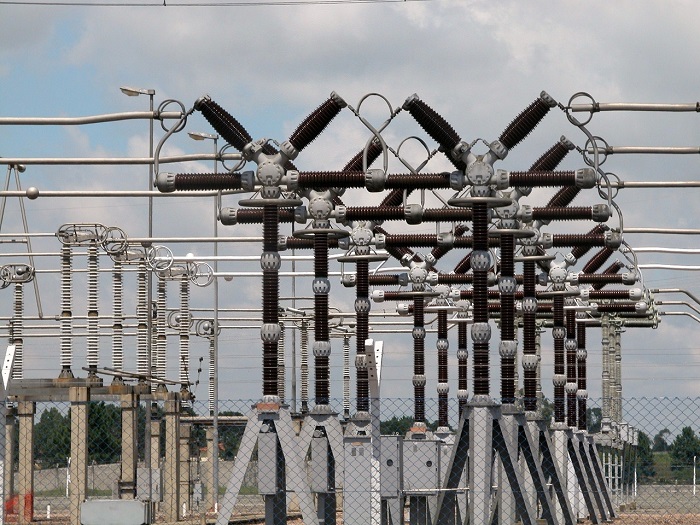
NERC transmission loss directive orders TCN to cut grid losses to 6.5% by 2026 to improve efficiency and stability in Nigeria’s power sector

The Nigerian Electricity Regulatory Commission (NERC) and the Transmission Company of Nigeria (TCN) in Abuja on Monday, April 13, 2026, confirmed a new regulatory directive aimed at significantly reducing inefficiencies in the national power grid, as the regulator ordered TCN to cut transmission losses to not more than 6.5 per cent by December 2026.
Also read: Tinubu Appoints Musiliu Oseni NERC Chairman
The directive, contained in Order No. NERC/2026/026 and published on the Commission’s official X handle, forms part of ongoing reforms to improve efficiency and stability within the Nigerian Electricity Supply Industry.
Under the new framework, the NERC transmission loss directive sets a stricter performance benchmark for grid operators, building on previous targets under the Multi-Year Tariff Order framework, which had set allowable losses at around 7 per cent.

Data from the Nigerian Independent System Operator shows that transmission losses have gradually improved in recent years, declining from 8.71 per cent in 2024 to 7.24 per cent in 2025.
Despite this progress, the regulator said the current level remains above acceptable efficiency thresholds and requires further corrective action.
The order, issued on April 8, 2026, also introduces enhanced reporting requirements for regional Transmission Loss Factors across the national grid operated by the Transmission Company of Nigeria.
It is expected to improve transparency and accountability in power transmission operations.
As part of implementation measures, the Nigerian Independent System Operator has been directed to install smart meters at all regional interconnection points by December 2026.
The initiative is aimed at improving accuracy in measuring energy flows and identifying system inefficiencies across transmission corridors.
The system operator is also required to monitor and document energy flow at transmission substations and submit quarterly reports detailing regional transmission losses to the Commission.
In addition, the Transmission Company of Nigeria must submit an action plan by July 2026 outlining practical steps to ensure transmission losses are reduced to within approved regulatory benchmarks.
The NERC transmission loss directive is grounded in provisions of the Electricity Act 2023, which empowers the regulator to enforce efficiency standards and ensure accountability across the power sector value chain.
Also read: BPE Plans IPO for DisCos, GenCo on Nigerian Exchange
NERC stated that the new measures are designed to strengthen operational discipline within the transmission network and improve overall grid reliability, with a focus on delivering more stable electricity supply nationwide.



Fidelity Bank CEO Amuchie takes over in January 2027 as Nneka Onyeali-Ikpe exits after five years of strong earnings, expansion and transformation


Oando Plc, under the leadership of its Group Chief Executive, Jubril Adewale Tinubu, has recorded a significant improvement in its operating performance, returning to profitability at the operating level as revenue rose to ₦2.78 trillion in the first nine months of 2026.
The indigenous energy company reported revenue of ₦2.776 trillion for the nine months ended September 30, 2026, representing a nine per cent increase from the ₦2.541 trillion recorded during the corresponding period of 2025.
The latest unaudited results, released on October 30, also showed a substantial recovery in gross profit, which increased to ₦174.5 billion from ₦29.8 billion in the previous year.
One of the most notable developments was the company’s return to operating profit. Oando recorded an operating profit of ₦159.7 billion, reversing the operating loss of ₦109.7 billion reported in the corresponding period of 2025.
The improvement reflects stronger performance across its operations, supported by higher production volumes, improved realised prices and the absence of a significant fair value loss recorded in the previous year.
The figures provide an indication of the progress made by the company as it continues to pursue its expansion and operational efficiency objectives under Tinubu’s leadership.
Oando’s production performance also improved during the reporting period. Average daily production increased by 14 per cent to 42,985 barrels of oil equivalent per day, compared with 37,614 barrels in the corresponding period of 2025.
The growth was supported by higher output from crude oil, natural gas and natural gas liquids operations.
The company also reported a 22 per cent reduction in production operating costs, which fell to $15.39 per barrel of oil equivalent from $19.67 recorded a year earlier.
Facility uptime improved to 96.1 per cent from 85 per cent, indicating greater reliability across its production infrastructure.
These improvements reflect the impact of drilling activities, workover programmes and efforts to restore previously constrained facilities. Oando said the measures helped increase production and improve operational efficiency across its enlarged asset base.
During the period, the company generated ₦285 billion in cash from operations and invested ₦110.7 billion in capital expenditure, with a significant portion directed towards drilling activities across its operated OML 60–63 assets.
Its seven-well drilling programme for 2026 also progressed, with two new wells completed and brought on stream, while workovers and additional drilling activities continued.
Oando further reported an improvement in its debt position, with total borrowings declining by 20 per cent from ₦2.70 trillion at the end of December 2025 to ₦2.16 trillion as of September 30, 2026.
Net debt also fell by ₦286 billion to ₦1.99 trillion during the nine-month period.
The reduction forms part of the company’s broader capital management strategy, which is aimed at lowering acquisition-related debt, reducing financing costs and strengthening its balance sheet.
Despite the stronger operating performance, however, Oando’s profit after tax declined by 47 per cent to ₦106.5 billion, compared with ₦201.3 billion recorded in the corresponding period of 2025.
The company attributed the decline largely to the swing from net finance income in the previous year to net finance costs in 2026, alongside the continuing burden of acquisition-related debt.
Its results showed finance costs of ₦244.2 billion during the period, while the company also recognised a tax credit of ₦181.1 billion arising from the reversal of previously recognised tax provisions.
The figures underline the distinction between Oando’s improved operating performance and the financial pressure it continues to face from its debt obligations.
Nevertheless, the return to operating profitability, higher production, lower unit operating costs and declining borrowings represent important developments in the company’s financial and operational position.
For Tinubu, who has remained central to Oando’s corporate transformation, the latest results provide further evidence of the company’s efforts to consolidate its position in Nigeria’s energy industry and expand its presence across Africa.
The company has also outlined plans to continue its seven-well development programme, sustain production reliability and strengthen its financial position through an equity-raising initiative.
With its operating performance improving and debt reduction remaining a priority, Oando’s next challenge will be to translate its production and revenue growth into stronger bottom-line earnings while managing the cost of financing its expansion.

Ehi Braimah urges Afreximbank and AfDB to strengthen Africa’s economic integration through trade finance, infrastructure and industrial investment
-
Politics3 years ago
13 Ondo Assembly Members Disown Endorsement of Aiyedatiwa
-
Politics3 years ago
APC Group, Ondo Govt, Quarrel Over Money for Endorsement
-

 Trending News6 years ago
Stop unsavoury, inciting statements – DSS warns
-

 Others5 years ago
Adron Homes Celebrates 10 Years Of Housing Excellence
-

 Humanity5 years ago
President Buhari Commiserates With Ambassador Maureen Tamuno Over The Loss Of Her Father
-

 Others7 years ago
EX- CUSTOMS BOSS, IBRAHIM MERA’S DWINDLING FAME
-

 Business3 years ago
Bigi Carbonated Soft Drinks Treats 40 Consumers to an Epic Easter Movie Hangout
-

 Business2 years ago
Wema Bank Shines at Global SME Finance Forum Conference Awards 2024 …Awarded: • SME Financier of the Year (Africa) • Platinum Award for Best Financier for Women Entrepreneurs (Africa)