
Business / Economy
Osun Business School Begins Mission to Build African Business Leaders

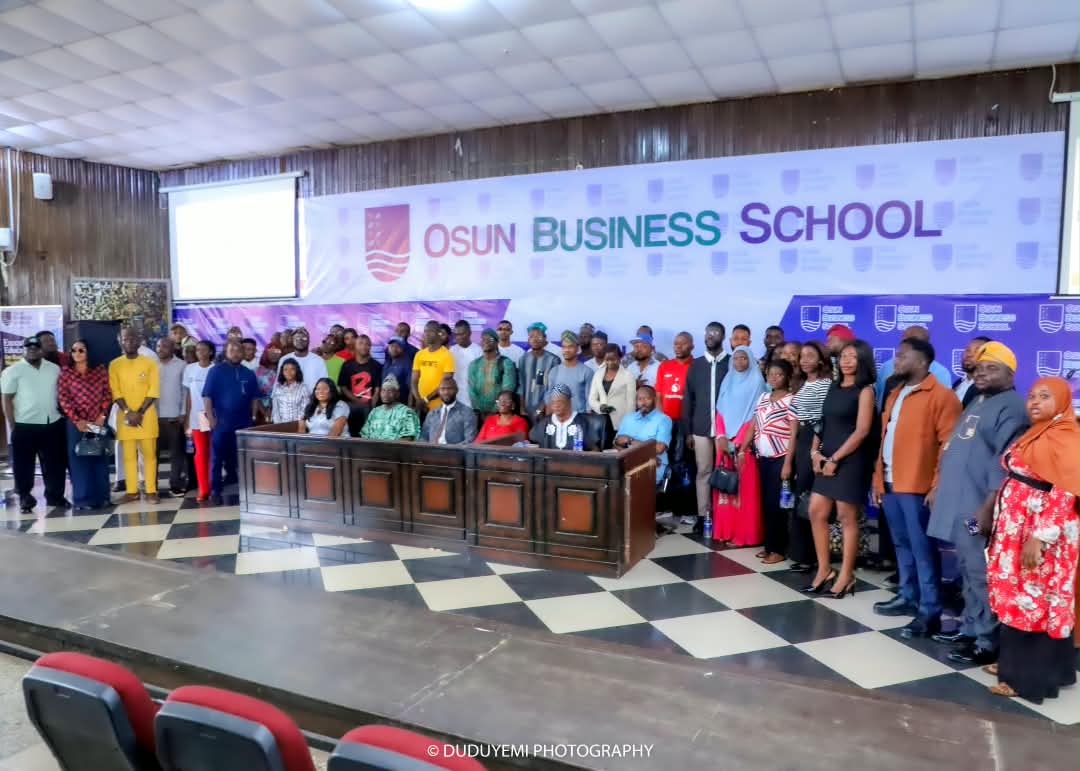
Osun Business School launches its first cohort as founder Dr. Adegboyega Adebayo seeks an Osun government PPP to drive entrepreneurship and job creation
Osun Business School has been officially inaugurated in Osun State, with founder Dr. Adegboyega Musthofa Adebayo calling for a strategic partnership with the state government to strengthen entrepreneurship, human capital development and job creation.
Also read: MOPA 2026: Momentous Magazine Set to Honour Outstanding Personalities in Lagos

The inauguration, which featured the institution’s inaugural symposium, marked the beginning of what Adebayo described as a deliberate effort to develop the skills, enterprise capacity and leadership needed to support sustainable economic growth in Osun State, Nigeria and across Africa.

Speaking at the event, Adebayo said the launch was “more than the opening of another institution”, explaining that Osun Business School was established to bridge the gap between business education and the realities of running enterprises.
The institution is designed as an executive and entrepreneurship-focused school serving business owners, executives, professionals, public-sector leaders and emerging entrepreneurs through practical training, mentorship and business networks.
Its philosophy is built around three words, “Learn. Grow. Connect.”
Adebayo said the institution’s ambition goes beyond awarding certificates, stressing that its programmes are intended to produce people capable of building and sustaining businesses.
“The objective is not simply to produce certificate holders,” he said, adding that the school aims to develop “business thinkers, enterprise builders, responsible leaders, innovators and employers of labour.”

The school’s programmes will combine academic knowledge with practical business experience, incubation and access to investment networks. Areas of focus include entrepreneurship, leadership, management, financial markets, business strategy, financial management, innovation and digital business.
Osun Business School also plans to establish partnerships with universities, financial institutions, industry leaders and international organisations to provide participants with mentorship, global exposure and opportunities for cross-border learning.
Adebayo said Osun already possesses a strong enterprise culture, pointing to the state’s traders, farmers, artisans, innovators and business owners as evidence of its entrepreneurial potential.
However, he argued that entrepreneurial energy must be supported by knowledge, strategic planning, technology, access to finance, mentorship, markets and strong professional networks.

He said this was the gap Osun Business School was established to address.
Adebayo also urged the Osun State Government to consider a strategic Public-Private Partnership with the institution, stressing that the proposal was not an attempt to seek government funding for a private school.
“This is not a request for government to simply fund a private institution,” he said, describing the proposed partnership instead as a platform through which government and the private sector could jointly advance human-capital development, entrepreneurship and economic transformation.
According to him, such a partnership could support MSME capacity development, youth entrepreneurship, women-owned businesses, business incubation and acceleration, financial literacy, digital entrepreneurship and business formalisation.
It could also support investment-readiness programmes, research, policy development and job creation, with government contributing policy support, institutional reach and access to development priorities.

In return, Osun Business School would provide private-sector responsiveness, business expertise, training infrastructure and industry partnerships.
Adebayo said the proposed collaboration should be built around measurable outcomes rather than training for its own sake.
“We want to move beyond training people for the sake of training,” he said, pointing to entrepreneurs returning to their businesses with stronger strategies and financial systems, young people establishing viable enterprises, and local businesses becoming investment-ready and creating more jobs.
He also highlighted the need for Osun to respond to rapid changes driven by digital transformation, artificial intelligence and financial technology.
“Osun cannot afford to be left behind,” he said.
Beyond government, Adebayo invited financial institutions, corporate organisations, development partners, investors, universities and international institutions to support the initiative.
He said the long-term vision was for Osun to be recognised not only for its cultural heritage and entrepreneurial spirit, but also as a destination for executive business education and enterprise development.
Addressing the pioneer participants, Adebayo urged them to take ownership of the institution’s development and history.

“You are the first generation of OBS alumni,” he said, adding that the participants would “help write the first chapter of our history.”
He described the inauguration as “the beginning of a new chapter”, pledging that Osun Business School would continue investing in people, ideas, leadership and enterprises as part of efforts to build a stronger and more innovative Osun State and Nigeria.
Also read: MOPA 2026: Momentous Magazine Set to Honour Outstanding Personalities in Lagos
“We are ready to contribute to building the next generation of African business leaders,” Adebayo said.


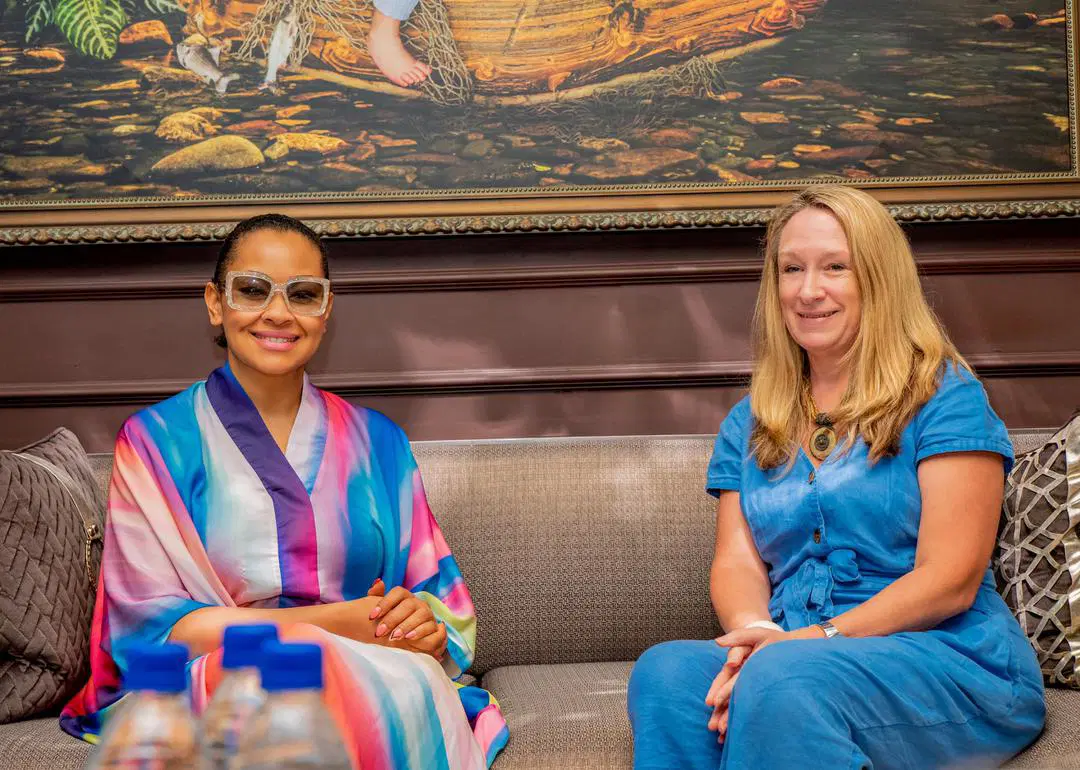
Kogi investment tour led by Natasha Akpoti-Uduaghan brought four European ambassadors to explore the state’s tourism, cultural heritage and local industries
Senator Natasha Akpoti-Uduaghan, representing Kogi Central, has hosted ambassadors from Belgium, Denmark, Italy and Spain on a tour of Kogi State aimed at attracting investment, promoting tourism and showcasing local industries.
Also read: Lula Wins Historic Fourth Term as Bolsonaro Challenges Brazil Vote
The visit featured tours of historical landmarks, cultural activities and interactions with artisans and community members, with discussions focused on potential investment and humanitarian partnerships that could create jobs, support local businesses and improve livelihoods.
According to a statement issued by the senator’s media aide, Mike Idoko, in Abuja on Monday, the delegation visited several attractions in the state to explore its economic potential and gain insight into the traditions and hospitality of the Ebira people.
The tour began at Lord Lugard’s Rest House on Mount Patti in Lokoja before the delegation visited the confluence of the Niger and Benue rivers.
The ambassadors subsequently travelled to Kogi Central for cultural activities and meetings with local communities.
Italy’s Ambassador to Nigeria, Roberto Mengoni, described the confluence as a symbol of national unity and expressed optimism about opportunities for collaboration with the state.
“Kogi is very rich, and we look forward to partnership,” Mengoni said, thanking Akpoti-Uduaghan for facilitating the visit.
Belgium’s Ambassador, Pieter Leenknegt, praised the experience, particularly a hiking expedition around the historic hills of Ihima.
He commended the opportunity to explore the region’s landscape, culture and local cuisine.
The cultural programme also included a visit to Obeiba Hill, where the diplomats sampled traditional foods, including akara, apapa and akamu.
The delegation observed indigenous production processes such as shea butter and palm kernel oil extraction, black soap making, pottery and traditional Ebira cloth weaving.
A masquerade performance further introduced the visitors to the community’s cultural identity and artistic traditions.
Denmark’s Ambassador, Jens Hansen, expressed admiration for the skills of local artisans, particularly women engaged in pottery, traditional clothing and other crafts.
He said the locally made products reflected the creativity and determination of the artisans, adding that their work offered opportunities for enterprise development and access to wider markets.
Addressing the delegation, Akpoti-Uduaghan said the tour was intended to demonstrate that Kogi Central’s economic prospects extended beyond tourism to include indigenous industries, skilled workers and entrepreneurial communities.
She said discussions with the ambassadors covered investment and humanitarian opportunities, expressing hope that the engagement would lead to partnerships with lasting benefits for residents.
“To attract investment, we must give people the chance to see our strengths for themselves: our skills, our enterprise, our culture and our people,” the senator said.
However, a planned visit to the Ajaokuta Steel Company did not take place because access to the facility was reportedly not approved, despite a written request by the senator.
Akpoti-Uduaghan said the delegation could only view the complex from outside its gates.
She expressed disappointment over the development and reiterated her call for the revival of the steel plant, describing it as essential to Nigeria’s industrial ambitions.
“Ajaokuta remains central to the industrial future we want for our people, and I will continue to advocate for its revival,” she said.
The Ajaokuta steel complex has long represented Nigeria’s unfulfilled industrial ambitions.
Its revival has been viewed as a potential avenue for expanding manufacturing, creating employment and strengthening domestic supply chains.
Despite successive government efforts to complete and operationalise the facility, the plant has yet to fulfil its intended role as a major driver of industrialisation.
The senator thanked community leaders, residents and artisans for welcoming the delegation, saying their hospitality had helped introduce the Ebira nation to an international audience.
She also thanked the four ambassadors, identifying them as Pieter Leenknegt of Belgium, Jens Hansen of Denmark, Roberto Mengoni of Italy and Félix Costales Artieda of Spain, for accepting the invitation and engaging with local communities.
Also read: Lula Wins Historic Fourth Term as Bolsonaro Challenges Brazil Vote
Akpoti-Uduaghan said the visit had provided an opportunity to promote Kogi Central’s tourism assets, cultural heritage and indigenous enterprises, expressing hope that the exposure would attract investment and partnerships to the area.

-
Politics3 years ago
13 Ondo Assembly Members Disown Endorsement of Aiyedatiwa
-
Politics3 years ago
APC Group, Ondo Govt, Quarrel Over Money for Endorsement
-

 Trending News5 years ago
Stop unsavoury, inciting statements – DSS warns
-

 Others5 years ago
Adron Homes Celebrates 10 Years Of Housing Excellence
-

 Humanity5 years ago
President Buhari Commiserates With Ambassador Maureen Tamuno Over The Loss Of Her Father
-

 Others7 years ago
EX- CUSTOMS BOSS, IBRAHIM MERA’S DWINDLING FAME
-

 Business3 years ago
Bigi Carbonated Soft Drinks Treats 40 Consumers to an Epic Easter Movie Hangout
-

 Business2 years ago
Wema Bank Shines at Global SME Finance Forum Conference Awards 2024 …Awarded: • SME Financier of the Year (Africa) • Platinum Award for Best Financier for Women Entrepreneurs (Africa)