Business
Nigeria Auto Industry Summit Demands Local Content Boost

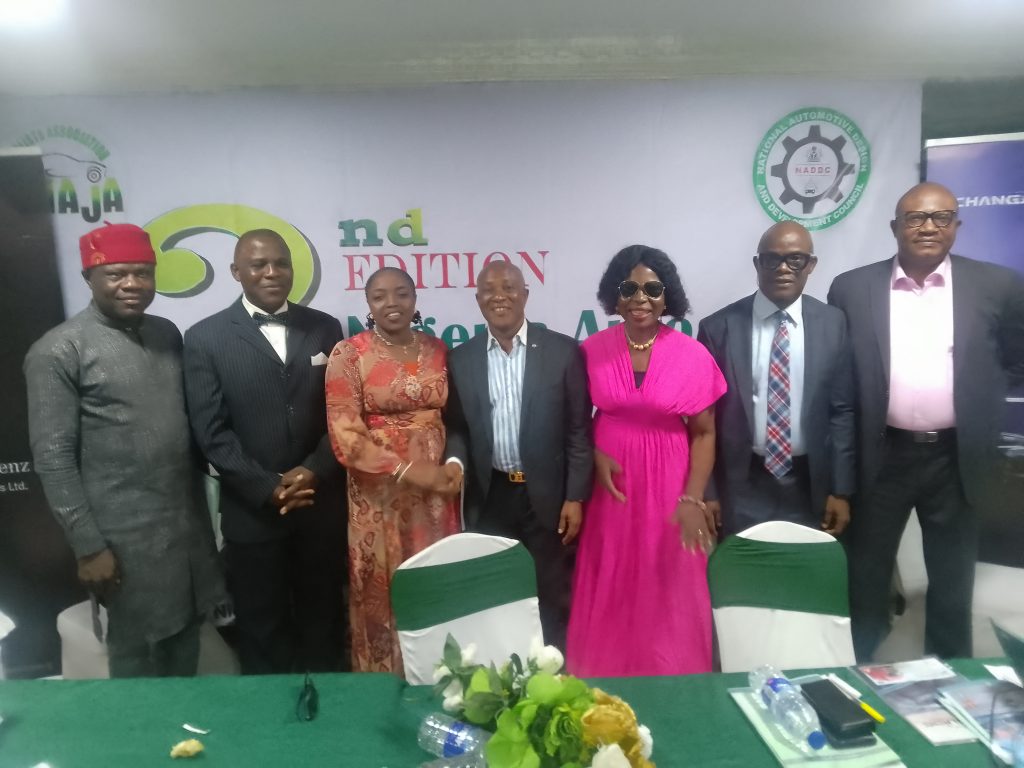
Nigeria Auto Industry Summit urges local content boost to drive industrialization, job creation, and stronger GDP under the “Nigeria First” agenda

Nigeria Auto Industry Summit has renewed urgent calls for strategic investment in local content development to power the nation’s industrial growth.
Also read: Nigeria Oil Production 2025 Surges Past 1.8m bpd, Boosting Budget Hopes
At its second edition in Lagos, themed “Nigeria First: Local Content as Catalyst for Automotive Economy,” the summit gathered government officials, regulators, manufacturers, financiers, and global partners to chart a sustainable path for Nigeria’s automotive future.
NAJA Chairman, Mr. Theodore Opara, set the tone with a powerful message: “If Nigeria must industrialize, the auto sector must lead. If the auto sector must thrive, local content must be the engine.”
He decried the country’s overreliance on imported vehicles and components despite Nigeria’s rich resources and skilled workforce.
Director General of NADDC, Mr. Joseph Osanipin, described local content as a strategic imperative, urging collaboration to tackle challenges like access to finance, power supply, and raw material processing. He highlighted NADDC initiatives on incentives, skills training, and R\&D to support domestic manufacturers.
The FRSC, represented by Assistant Corps Marshal Ann Oladayo, emphasized that localisation must go hand in hand with road safety and environmental standards, while pledging support for ethical and innovative manufacturing.
Delivering the keynote, Victoria Backhaus-Jerling, CEO of the African Association of Automotive Manufacturers (AAAM), stressed that Nigeria’s auto policy must be legally entrenched.
Without it, she warned, the country risks falling behind peers like Morocco, South Africa, and Egypt. “Africa is the world’s last automotive frontier—and Nigeria holds a powerful place in that future,” she said.
Resolutions from the summit included: fast-tracking NAIDP legislation, creating financing models for consumers, enforcing quality control to curb substandard imports, and educating consumers to embrace made-in-Nigeria vehicles.
The event closed with cautious optimism, as stakeholders agreed to compile recommendations into a communiqué for the Presidency, National Assembly, and MDAs.
Also read: Nigeria Upstream Oil Resurgence Boosts Output, Revenue, Investor Trust
“Let us not leave this summit with just communiqués and handshakes. Let us leave with commitments, partnerships, and a shared resolve to make ‘Nigeria First’ not just a slogan—but a strategy for economic transformation,” Opara concluded.



Shoreline Group today announced that African Export-Import Bank (Afreximbank) has approved a US$200 million facility in favour of Shoreline Power Company Limited and co-borrowers including Arkad S.p.A., Shoreline’s majority-owned engineering and construction platform.
Approved in June 2026, the facility was arranged and provided by Afreximbank as sole mandated lead arranger and lender. It provides bonding and working-capital capacity for Arkad’s delivery of the Hassi Bir Rekaiz project and supports Shoreline and its affiliates in developing further pipeline and infrastructure
projects in Nigeria and other permitted jurisdictions.
“This is a defining transaction for Shoreline and Arkad. We built Arkad as an African- sponsored engineering platform capable of competing at the highest level, and it is now delivering against a billion-dollar energy contract. Afreximbank’s US$200 million commitment gives the platform the financial strength to match its engineering capability and pursue further major infrastructure mandates. It demonstrates that African enterprises can assemble the capital, capability and partnerships required to compete for infrastructure at international scale.”
Hassi Bir Rekaiz Phase 2a Arkad holds 44 per cent of the approximately US$1 billion EPCCS-1 contract awarded by Groupement
Hassi Bir Rekaiz (GHBR) to an unincorporated consortium led by Egypt’s Petrojet, which holds 56 percent. EPCCS-1 covers engineering, procurement, construction, commissioning and start-up for the Phase 2a central processing facility and related infrastructure at the Hassi Bir Rekaiz field in Algeria’s Berkine
Basin.
GHBR is the joint operating entity for the licence, held by Sonatrach with 51 per cent and Thailand’s PTTEP with 49 per cent. The project includes a new crude oil processing facility with capacity of 31,500 barrels per day, facilities for associated gas and produced-water treatment, approximately 217 kilometres
of pipelines and the brownfield modifications required to integrate existing Phase 1 infrastructure.
The facilities are designed to support later expansion to 63,000 barrels per day under Phase 2b.
“This financing addresses the instruments that determine whether an EPC contractor can execute at scale: performance guarantees, advance payment guarantees and working capital through the project cycle. Hassi Bir Rekaiz is a demanding scope, combining a new central processing facility, associated treatment systems, pipelines and brownfield integration. With Petrojet, and with the support of Shoreline and Afreximbank, Arkad is focused on disciplined delivery against the project’s safety, quality and schedule requirements.”
The transaction was structured under Afreximbank’s Engineering, Procurement and Construction Initiative, which supports African engineering and construction firms with the financial instruments required to compete for and execute large infrastructure contracts. Afreximbank also supported the Arkad-Petrojet partnership through its EPC twinning work at the Intra-African Trade Fair held in Algiers
in 2025.
According to Afreximbank, the transaction is its first support for a Sub-Saharan African contractor undertaking a major infrastructure project in North Africa. For Shoreline, it demonstrates a practical model for combining African ownership and capital with established international engineering andindustrial capability.
-
Politics2 years ago
13 Ondo Assembly Members Disown Endorsement of Aiyedatiwa
-
Politics2 years ago
APC Group, Ondo Govt, Quarrel Over Money for Endorsement
-

 Trending News5 years ago
Stop unsavoury, inciting statements – DSS warns
-

 Others5 years ago
Adron Homes Celebrates 10 Years Of Housing Excellence
-

 Humanity5 years ago
President Buhari Commiserates With Ambassador Maureen Tamuno Over The Loss Of Her Father
-

 Others7 years ago
EX- CUSTOMS BOSS, IBRAHIM MERA’S DWINDLING FAME
-

 Business2 years ago
Bigi Carbonated Soft Drinks Treats 40 Consumers to an Epic Easter Movie Hangout
-

 Business2 years ago
Wema Bank Shines at Global SME Finance Forum Conference Awards 2024 …Awarded: • SME Financier of the Year (Africa) • Platinum Award for Best Financier for Women Entrepreneurs (Africa)