
Economy
Experts Urge Nigeria to Adopt Crop-Specific Fertilisers to Boost Food Production

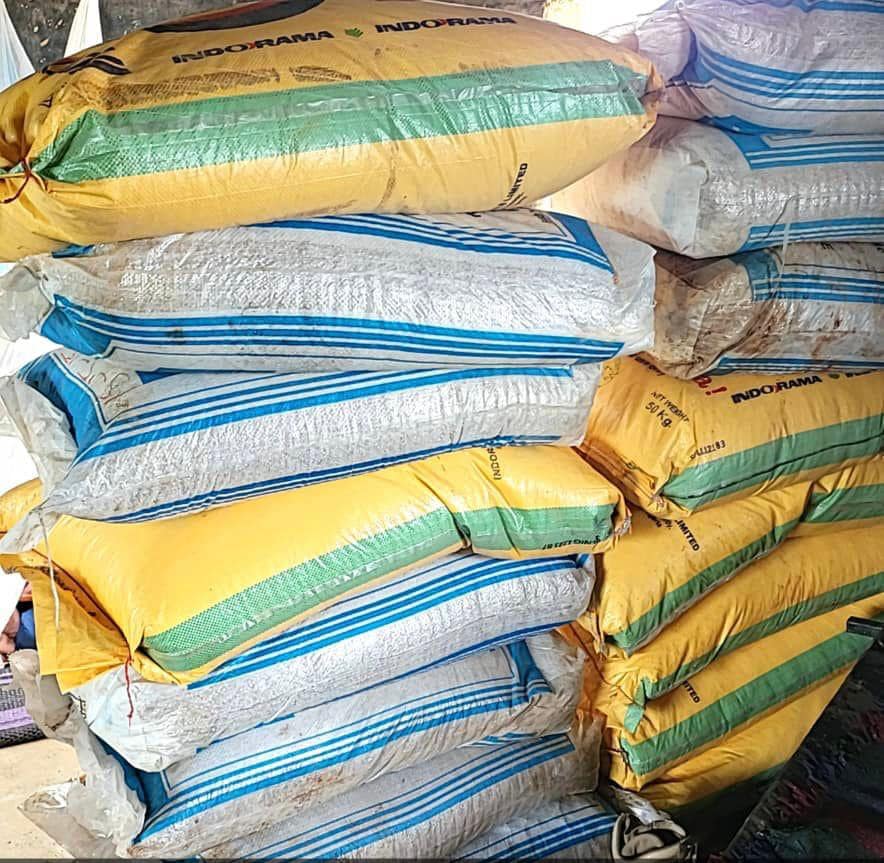
Experts have urged Nigeria to shift from general fertilisers to crop-specific solutions to improve yields, reduce waste and strengthen food security
Agricultural experts have called on Nigeria to move away from general-purpose fertilisers and adopt crop-specific solutions to improve productivity and strengthen food security.
Also read: Ogun Senator Adeola Cautions Supporters Over Early 2027 Campaign Billboards

They say fertilisers tailored to specific crops and soil types can help farmers achieve higher yields, reduce waste, and improve overall soil health.
The global market for specialised fertilisers is projected to grow significantly, rising from about $37.78 billion to $64.81 billion by 2033, representing an annual growth rate of about 6.18 percent.
Specialised fertilisers are designed to enhance nutrient efficiency and crop performance.
Unlike conventional products, they release nutrients slowly or in controlled forms and are often customised for specific crops and soil conditions.
These include micronutrient blends, slow-release fertilisers, and formulations enriched with plant growth enhancers.
Experts say they help farmers maximise nutrient use while reducing environmental impact.
In the Middle East and Africa, the market is also expanding, with projections showing growth from $4.93 billion to $7.22 billion by 2031, driven by government food security initiatives, irrigation systems, and modern farming techniques.
Policies such as Saudi Arabia’s Vision 2030, Morocco’s phosphate industry strategy, and South Africa’s climate-smart agriculture programmes are supporting this expansion.
Globally, consumption of specialised fertilisers reached 18.8 million tons in 2024, a 5 percent increase from the previous year, with water-soluble fertilisers recording the fastest growth at 12 percent.
These products are widely used because they dissolve easily in water and can be applied through irrigation systems or foliar spraying, making them more efficient and practical for farmers.
In Nigeria, experts argue that shifting to crop-specific fertilisers is essential for improving food production and reducing import dependence.
The Managing Director of OCP Africa Fertilizers Nigeria Limited, Caleb Usoh, said fertiliser use must be based on soil and crop requirements to achieve optimal results.
He noted that research has already identified ideal nutrient combinations for crops such as rice, maize, tomato, cocoa, and wheat, but many farmers still rely on general fertilisers like 20-10-10 or 15-15-15.
Usoh called on the government to promote the use of specialised fertilisers, especially in public agricultural programmes, to boost national output.
He also warned that poor soil management could hinder Nigeria’s ability to meet rising food demand, noting that wheat consumption is projected to reach about 6.8 million tons while local production remains low.
Meanwhile, global fertiliser producer OCP Group has announced planned maintenance work at some of its facilities, which could reduce output by up to 30 percent in the second quarter.
Also read: Ogun Senator Adeola Cautions Supporters Over Early 2027 Campaign Billboards
The company also cited supply constraints, including shortages of sulphur and ammonia, as well as weather-related disruptions affecting port operations.





-
Politics3 years ago
13 Ondo Assembly Members Disown Endorsement of Aiyedatiwa
-
Politics3 years ago
APC Group, Ondo Govt, Quarrel Over Money for Endorsement
-

 Trending News5 years ago
Stop unsavoury, inciting statements – DSS warns
-

 Others5 years ago
Adron Homes Celebrates 10 Years Of Housing Excellence
-

 Humanity5 years ago
President Buhari Commiserates With Ambassador Maureen Tamuno Over The Loss Of Her Father
-

 Others7 years ago
EX- CUSTOMS BOSS, IBRAHIM MERA’S DWINDLING FAME
-

 Business2 years ago
Bigi Carbonated Soft Drinks Treats 40 Consumers to an Epic Easter Movie Hangout
-

 Business2 years ago
Wema Bank Shines at Global SME Finance Forum Conference Awards 2024 …Awarded: • SME Financier of the Year (Africa) • Platinum Award for Best Financier for Women Entrepreneurs (Africa)