
Politics
Nigeria Defends Religious Freedom After U.S. Criticism


Nigeria defends religious freedom after U.S. lawmaker Riley Moore labels it “deadliest” for Christians. Presidency calls claims ignorant and unfounded.

Nigeria religious freedom has come under renewed international scrutiny after U.S. Congressman Riley Moore described the country as “the deadliest place in the world for Christians.”
Also read: Bosun Tijani declares AI vital to Nigeria’s economic future
But the Nigerian Presidency has strongly dismissed the allegations, branding them ignorant and disconnected from reality.
Presidential aide Olusegun Dada issued a blistering response via a post on X (formerly Twitter) on Tuesday, saying Moore’s remarks betray a complete lack of understanding about Nigeria’s religious dynamics.
“Firstly, let me say, Congressman Riley, you are ignorant — if not more ignorant than Ted Cruz — about Nigeria,” Dada wrote.
Dada asserted that no faith is under siege in the country, stressing Nigeria’s legacy as a diverse and resilient nation, where churches, mosques, and traditional shrines coexist peacefully across communities.

“Our churches, mosques, and traditional shrines stand side by side — not as rivals, but as symbols of the unity that binds us,” he said.
The rebuke follows Riley Moore’s call on U.S. Secretary of State Marco Rubio to designate Nigeria a “Country of Particular Concern,” citing reports of religious violence, including the deaths of over 50,000 Christians and the destruction of 19,000 churches since 2009.
Moore also alleged that some Nigerian state officials have tolerated or facilitated violence through enforcement of anti-blasphemy laws.
In support of Moore’s claims, Senator Ted Cruz made similar remarks earlier in the year, accusing the Nigerian government of complicity in religiously motivated violence.
However, Dada maintained that such narratives misrepresent the complex realities of Nigeria’s multi-faith society and downplay ongoing efforts by local authorities to address insecurity and protect all communities.
“Nigeria is a proud, sovereign nation built on the faith and resilience of its people,” he added.
Dada criticised the tendency of U.S. politicians to oversimplify foreign conflicts, referencing Ted Cruz’s past ignorance about Iran’s population and cultural dynamics.
“Same level of total ignorance now applied to Nigeria,” he concluded.
The clash underscores growing diplomatic sensitivity around international assessments of Nigeria’s human rights and religious climate.
Also read: Nigerian Marketing Awards Gains Prestigious NIPR Endorsement for 2025
While the Nigerian government continues to face internal security challenges, it firmly maintains that freedom of religion remains a constitutional right upheld across the country.

Politics
Governor Dauda Lawal Signs Peace Accord Ahead of 2027 Elections, Reaffirms Commitment to Peaceful Poll

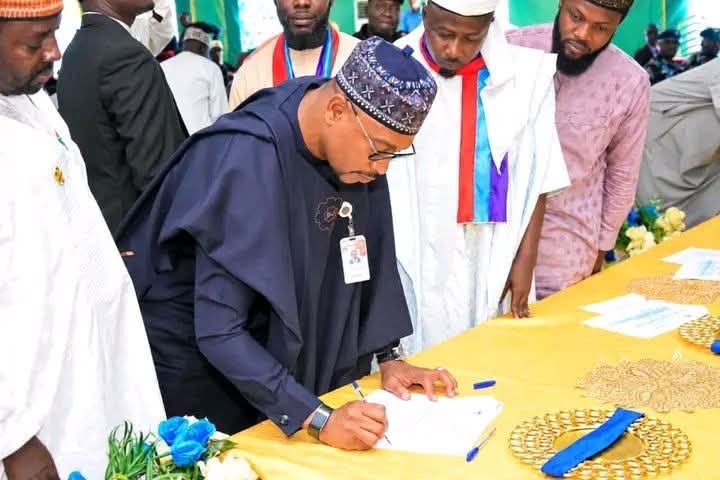
Zamfara State Governor, Dr Dauda Lawal, has signed a peace accord ahead of the 2027 general elections, reaffirming the importance of peaceful political participation, mutual respect, and democratic responsibility.
The signing, which took place at the invitation of the Nigeria Police at its headquarters in Gusau Zamfara State, brought together all candidates contesting in the forthcoming elections. Speaking to newsmen after the exercise, Governor Lawal described himself as a peace-loving person and expressed satisfaction with the process, expressing optimism that the 2027 election would be violence-free.
“We need to understand where we are and the responsibility on us that are running for the election,” the Governor said.
He advised youths to stay clear of violence and warned them against allowing themselves to be used as tools by politicians to foment chaos during the election season.
“It is important to know that violence is not the way forward; going round carrying weapons is not the way forward. We should be able to conduct ourselves peacefully during the campaign and election period,” he said.
Governor Lawal also appealed to politicians across the country to remain law-abiding, noting that doing so makes the electoral process seamless.
As political activities gather momentum, the message from the signing remains clear: political competition must never come at the expense of peace, unity and the safety of citizens. Zamfara, according to the Governor’s camp, deserves an election defined by ideas, credible processes, and the will of the people not violence, intimidation or division.
The Governor’s supporters expressed optimism that his achievements will speak for him, stressing that good governance and the dividends of democracy should never be taken for granted. They argued that Zamfara needs continuity to consolidate the gains already made and sustain the progress being recorded across the state.

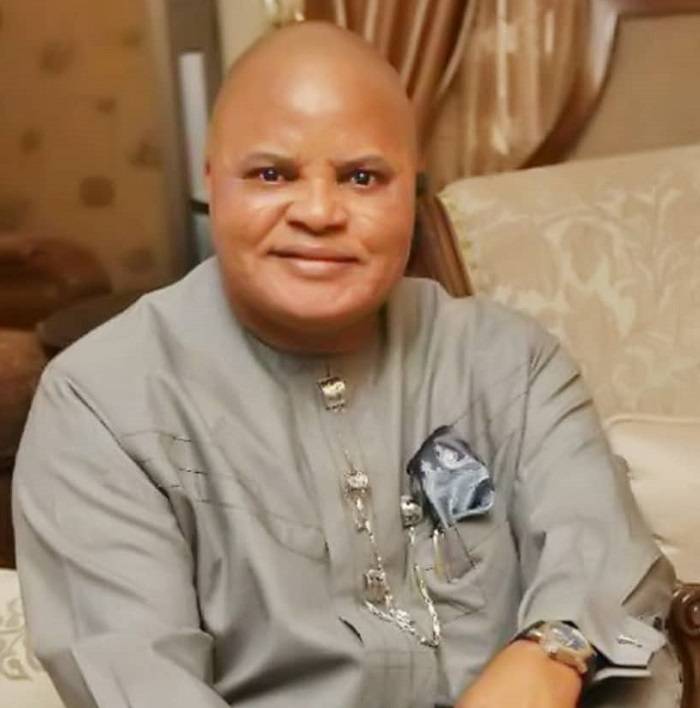
A group, the Imo First Group (IFG) has described the purported Magistrate court order to arrest Senator Ifeanyi Araraume and the former governor of Imo State, Rochas Okorocha, over alleged criminal conspiracy and forgery, as a ruse and fake news
The group stated this in a statement issued on Saturday in Abuja.
IFG challenged those peddling the fake news to make the court order public.
The statement reads ” The fabricated and concocted story was first posted on social media by Hon. Ambrose Nwaogwugwu, a media aide to Governor Hope Uzodimma, before it was picked up by other media outfits, including Arise TV.
According to the statement, those behind the report claimed that a Senior Magistrate Court sitting in Abuja issued a Bench Warrant dated September 9, 2026, following a petition written by the Resident Electoral Commissioner (REC) in Imo State, Barr. Chukwuemeka Ibejiako, to the Police and DSS on October 8, 2026, over alleged presentation of fake APC primary results.
The Group debunked the existence of any such order.
“We want to state categorically and unequivocally that no jSenior Magistrate ordered or issued any bench warrant for the arrest of Araraume”
IFG however challenged anyone in possession of the purported court order to publish it.
“If you claim to have a court order present same for the public to see,
“This fabricated bench warrant contain in the report is filled with inconsistencies, the bench warrant was dated September 9, 2026, while the REC’s petition that supposedly triggered it was dated October 8, 2026, with case number CR/M/084/2026.
The statement further stated that the purveyors and harbinger of the fake news tried to trick the magistrate via exparte order but was rebuked
“The magistrate bluntly refused to grant their exparte and threatened to arrest them, yet they carried their falsehood about. What’s the problem of occupants of office that never won free and fair elections and tried to destroy reputable Imo sons that have won elections. We challenge anyone in this macabre surugede dance to show the court order or warrant of arrest. It’s preposterous to blackmail decent Imo sons on the altar of dirty politics.”
-
Politics3 years ago
13 Ondo Assembly Members Disown Endorsement of Aiyedatiwa
-
Politics3 years ago
APC Group, Ondo Govt, Quarrel Over Money for Endorsement
-

 Trending News5 years ago
Stop unsavoury, inciting statements – DSS warns
-

 Others5 years ago
Adron Homes Celebrates 10 Years Of Housing Excellence
-

 Humanity5 years ago
President Buhari Commiserates With Ambassador Maureen Tamuno Over The Loss Of Her Father
-

 Others7 years ago
EX- CUSTOMS BOSS, IBRAHIM MERA’S DWINDLING FAME
-

 Business2 years ago
Bigi Carbonated Soft Drinks Treats 40 Consumers to an Epic Easter Movie Hangout
-

 Business2 years ago
Wema Bank Shines at Global SME Finance Forum Conference Awards 2024 …Awarded: • SME Financier of the Year (Africa) • Platinum Award for Best Financier for Women Entrepreneurs (Africa)