Business
Nigeria Becomes Key Energy Import Partner for India


Nigeria Energy Import Partner India grows as India diversifies crude, LPG, and LNG imports from Africa amid geopolitical tensions

Nigeria is increasingly emerging as a strategic energy partner for India as the Asian nation intensifies efforts to diversify its import sources and reduce reliance on traditional supply routes affected by geopolitical tensions in West Asia.
Also read: FG Lifts Petrol Import Ban as Nigeria Approves New Licences Amid Supply Concerns
The growing importance of Nigeria Energy Import Partner India relations comes as India expands its procurement of crude oil, liquefied petroleum gas and liquefied natural gas from African countries, including Nigeria, Algeria and Angola, in response to disruptions linked to tensions involving Israel, the United States and Iran.
According to reports attributed to officials and cited by the Times of India, India has been actively broadening its energy supply network across multiple regions to ensure stability in fuel availability.
This shift has seen increased engagement with suppliers in Africa alongside traditional partners such as the United States, Russia, Canada and Norway.
For liquefied natural gas, discussions and shipments are also underway with countries including Cameroon, Equatorial Guinea and Mozambique, with some cargoes already secured and others at advanced negotiation stages.
The move reflects a broader strategy to strengthen supply resilience and reduce dependence on the Strait of Hormuz, a critical global energy chokepoint.
India currently imports between 5.5 and 5.6 million barrels of crude oil per day, with a significant portion previously routed through the Strait of Hormuz.
Prior to the recent tensions, about 40 to 45 per cent of these imports passed through the corridor, highlighting its strategic importance and vulnerability to disruption.
Officials noted that India has significantly diversified its crude sourcing base over the past decade, expanding from 27 countries to 41, while reducing reliance on the Strait of Hormuz to roughly 30 per cent.
This diversification has been supported in part by increased imports from African producers, strengthening Nigeria’s role in India’s evolving energy mix.
Liquefied petroleum gas imports also remain heavily dependent on external sources, with nearly 60 per cent of India’s annual demand of about 31 million tonnes met through imports.
A large share of these shipments previously transited through the Strait of Hormuz, further reinforcing the need for alternative supply routes.
Despite global uncertainties, Indian authorities have maintained that domestic inventories remain sufficient, with no major supply disruptions reported.
While there has been a temporary increase in LPG delivery timelines due to higher demand, officials expect normalisation as conditions stabilise.
Also read: Senator Jibrin Barau: Why he is North West’s most important political force
Overall, India’s strategy of diversifying its energy imports, coupled with growing engagement with African suppliers such as Nigeria, is positioning the country to better manage external shocks while maintaining steady access to critical energy resources.


Banking
Theparkpay Technologies Limited Strengthens Global Payments Infrastructure with UK FCA Licence


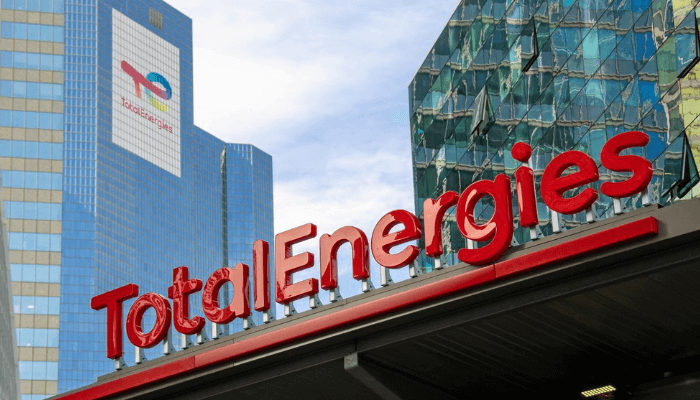
TotalEnergies and Nigerian independent energy company AMNI International have taken the Final Investment Decision on the $800 million Ima Gas Project, more than five decades after the gas field was discovered.
The Ima Gas Project, located in shallow waters across Oil Mining Leases 112 and 117 near Bonny Island, Rivers State, is expected to begin production in 2028 and reach a plateau of 350 million cubic feet of gas per day.
The development is expected to play a major role in supplying feed gas to Nigeria LNG, with the Ima field projected to provide about one-third of the additional gas required for the ongoing Train 7 expansion.
Train 7 is expected to increase Nigeria LNG’s liquefaction capacity from 22 million tonnes per annum to 30 million tonnes per annum, strengthening Nigeria’s capacity to process and export liquefied natural gas.
The Ima field was discovered in 1973 but remained undeveloped for more than 50 years. The Final Investment Decision provides the commercial and financial basis for finally developing the long-dormant resource.
Under the development plan, TotalEnergies will operate the project with a 40 per cent interest, while AMNI will hold the remaining 60 per cent.
The field will be developed using a single offshore platform connected to Nigeria LNG’s facility on Bonny Island through a 22-kilometre pipeline.
TotalEnergies said its investment in the project is more than $600 million, while the Federal Government described the overall Final Investment Decision as an $800 million investment.
At the FID signing ceremony in Abuja, TotalEnergies Exploration and Production Nigeria Managing Director, Mathieu Bouyer, described the decision as the culmination of a development process that had stretched across several decades.
He said the project reflected increased confidence in Nigeria’s investment environment and highlighted reforms targeting the non-associated gas sector as part of the factors that helped make the development commercially viable.
President Bola Tinubu welcomed the investment, saying the project demonstrated the potential of reforms introduced to reduce the cost and time required to develop oil and gas projects.
The President said the government had introduced incentives aimed specifically at unlocking onshore and shallow-water gas projects that had remained undeveloped for years.
He said the Ima development would create opportunities for Nigerian businesses, engineers, technicians and contractors, while generating jobs, economic activity in host communities and additional export earnings.
The project is also expected to have a strong Nigerian content component. TotalEnergies said all key contractors for the development would be Nigerian companies, while about 60 per cent of the workforce during the development phase is expected to come from host communities.
The development will incorporate measures aimed at reducing emissions. TotalEnergies said the platform would receive electricity from shore, operate without routine flaring and use permanent methane detection and monitoring systems.
The Federal Government said the project is part of efforts to turn Nigeria’s large natural gas reserves into productive assets capable of supporting industrialisation, energy supply, jobs and export earnings.
Special Adviser to the President on Energy, Olu Verheijen, said the Ima development illustrated the importance of creating commercial and investment conditions that allow previously stranded resources to be developed.
The government also noted that Nigerian financial institutions arranged 77 per cent of the project’s financing, further highlighting the participation of domestic financial institutions in the development.
For Nigeria LNG, the project comes as the company continues work on the Train 7 expansion, which is designed to increase the Bonny Island plant’s liquefaction capacity and strengthen the country’s position in the global LNG market.
-
Politics3 years ago
13 Ondo Assembly Members Disown Endorsement of Aiyedatiwa
-
Politics3 years ago
APC Group, Ondo Govt, Quarrel Over Money for Endorsement
-

 Trending News5 years ago
Stop unsavoury, inciting statements – DSS warns
-

 Others5 years ago
Adron Homes Celebrates 10 Years Of Housing Excellence
-

 Humanity5 years ago
President Buhari Commiserates With Ambassador Maureen Tamuno Over The Loss Of Her Father
-

 Others7 years ago
EX- CUSTOMS BOSS, IBRAHIM MERA’S DWINDLING FAME
-

 Business2 years ago
Bigi Carbonated Soft Drinks Treats 40 Consumers to an Epic Easter Movie Hangout
-

 Business2 years ago
Wema Bank Shines at Global SME Finance Forum Conference Awards 2024 …Awarded: • SME Financier of the Year (Africa) • Platinum Award for Best Financier for Women Entrepreneurs (Africa)