
Business
Nigeria Eurobonds Surge as Investor Confidence Improves Strongly


Nigeria Eurobonds investor sentiment strengthens as yields fall to 6.72%, driven by rising oil prices and improved global risk appetite

Nigeria’s Eurobonds have recorded renewed investor demand as improving sentiment across global fixed-income markets drives a fresh rally in African sovereign debt, pushing yields lower and signalling stronger appetite for emerging market assets.
Also read: Ehi Braimah: Nigeria Investor Confidence Growing Even with Security Threats
The latest market movement shows Nigeria’s dollar-denominated bonds benefiting from a broader upswing across African issuers, as investors respond to improving global risk perception and more favourable conditions for oil-linked economies.
Recent trading data indicates that the average yield on Nigeria’s Eurobonds declined by 7 basis points to 6.72%, reflecting sustained buying interest from international investors seeking higher returns amid ongoing global macroeconomic uncertainty.
Market analysts at AIICO Capital Limited attributed the positive momentum to improving global risk sentiment, even as volatility continues to shape commodity markets and geopolitical developments.
A key factor supporting the rally has been the strong performance of crude oil, which has reportedly surged by about 100 per cent since February, driven largely by geopolitical tensions involving the United States and Iran.
The rise in oil prices has strengthened fiscal expectations for oil-producing African countries such as Nigeria, as higher export revenues improve external buffers and enhance sovereign credit appeal.
This development has increased demand for African sovereign bonds linked to oil revenues, with investors positioning for potentially stronger fiscal balances across the region.
Yield compression was particularly notable in Nigeria’s mid-curve instruments, with bonds maturing in June 2031 and February 2032 each recording an 11 basis point decline amid heightened investor interest.
Despite the bullish tone, analysts warned that market sentiment remains fragile, citing ongoing geopolitical uncertainty and unresolved conflict risks that continue to weigh on long term risk appetite.
Later trading sessions reflected some caution among investors, as uncertainty around global stability and ceasefire prospects tempered the earlier wave of optimism.
In the broader global context, United States Treasury yields also declined, reflecting increased demand for safe-haven assets as investors reassessed inflation and interest rate expectations.
The yield on the 10-year US Treasury note fell to 4.3280 per cent, while the 2-year note dropped to 3.8469 per cent, and the 30-year bond eased to 4.9204 per cent.
Analysts say the combination of falling US yields and improving demand for African sovereign debt places Nigeria’s Eurobonds in a cautiously positive position within global fixed income markets.
Also read: NGX CEO Says Nigeria’s Capital Market Gains Global Investor Interest
Looking ahead, market observers expect selective buying to continue, with investor sentiment likely to be shaped by oil price movements, fiscal stability indicators, and global interest rate trends in the coming weeks.


Banking
Theparkpay Technologies Limited Strengthens Global Payments Infrastructure with UK FCA Licence



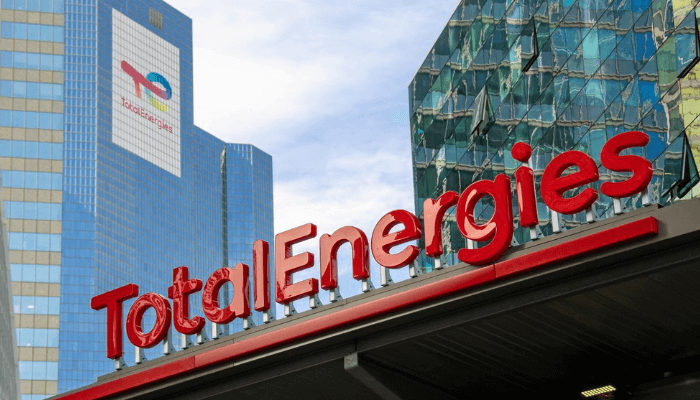
TotalEnergies and Nigerian independent energy company AMNI International have taken the Final Investment Decision on the $800 million Ima Gas Project, more than five decades after the gas field was discovered.
The Ima Gas Project, located in shallow waters across Oil Mining Leases 112 and 117 near Bonny Island, Rivers State, is expected to begin production in 2028 and reach a plateau of 350 million cubic feet of gas per day.
The development is expected to play a major role in supplying feed gas to Nigeria LNG, with the Ima field projected to provide about one-third of the additional gas required for the ongoing Train 7 expansion.
Train 7 is expected to increase Nigeria LNG’s liquefaction capacity from 22 million tonnes per annum to 30 million tonnes per annum, strengthening Nigeria’s capacity to process and export liquefied natural gas.
The Ima field was discovered in 1973 but remained undeveloped for more than 50 years. The Final Investment Decision provides the commercial and financial basis for finally developing the long-dormant resource.
Under the development plan, TotalEnergies will operate the project with a 40 per cent interest, while AMNI will hold the remaining 60 per cent.
The field will be developed using a single offshore platform connected to Nigeria LNG’s facility on Bonny Island through a 22-kilometre pipeline.
TotalEnergies said its investment in the project is more than $600 million, while the Federal Government described the overall Final Investment Decision as an $800 million investment.
At the FID signing ceremony in Abuja, TotalEnergies Exploration and Production Nigeria Managing Director, Mathieu Bouyer, described the decision as the culmination of a development process that had stretched across several decades.
He said the project reflected increased confidence in Nigeria’s investment environment and highlighted reforms targeting the non-associated gas sector as part of the factors that helped make the development commercially viable.
President Bola Tinubu welcomed the investment, saying the project demonstrated the potential of reforms introduced to reduce the cost and time required to develop oil and gas projects.
The President said the government had introduced incentives aimed specifically at unlocking onshore and shallow-water gas projects that had remained undeveloped for years.
He said the Ima development would create opportunities for Nigerian businesses, engineers, technicians and contractors, while generating jobs, economic activity in host communities and additional export earnings.
The project is also expected to have a strong Nigerian content component. TotalEnergies said all key contractors for the development would be Nigerian companies, while about 60 per cent of the workforce during the development phase is expected to come from host communities.
The development will incorporate measures aimed at reducing emissions. TotalEnergies said the platform would receive electricity from shore, operate without routine flaring and use permanent methane detection and monitoring systems.
The Federal Government said the project is part of efforts to turn Nigeria’s large natural gas reserves into productive assets capable of supporting industrialisation, energy supply, jobs and export earnings.
Special Adviser to the President on Energy, Olu Verheijen, said the Ima development illustrated the importance of creating commercial and investment conditions that allow previously stranded resources to be developed.
The government also noted that Nigerian financial institutions arranged 77 per cent of the project’s financing, further highlighting the participation of domestic financial institutions in the development.
For Nigeria LNG, the project comes as the company continues work on the Train 7 expansion, which is designed to increase the Bonny Island plant’s liquefaction capacity and strengthen the country’s position in the global LNG market.
-
Politics3 years ago
13 Ondo Assembly Members Disown Endorsement of Aiyedatiwa
-
Politics3 years ago
APC Group, Ondo Govt, Quarrel Over Money for Endorsement
-

 Trending News5 years ago
Stop unsavoury, inciting statements – DSS warns
-

 Others5 years ago
Adron Homes Celebrates 10 Years Of Housing Excellence
-

 Humanity5 years ago
President Buhari Commiserates With Ambassador Maureen Tamuno Over The Loss Of Her Father
-

 Others7 years ago
EX- CUSTOMS BOSS, IBRAHIM MERA’S DWINDLING FAME
-

 Business2 years ago
Bigi Carbonated Soft Drinks Treats 40 Consumers to an Epic Easter Movie Hangout
-

 Business2 years ago
Wema Bank Shines at Global SME Finance Forum Conference Awards 2024 …Awarded: • SME Financier of the Year (Africa) • Platinum Award for Best Financier for Women Entrepreneurs (Africa)