
Economy
Nigeria Food Inflation Rises Amid Skyrocketing Fuel Prices

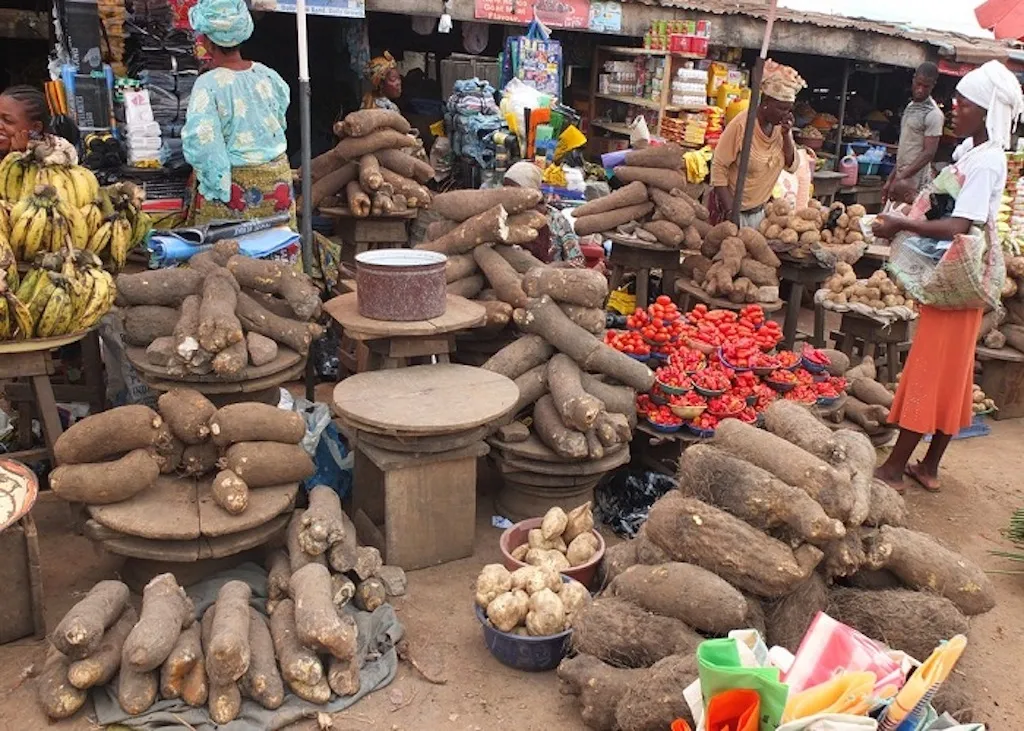
Nigeria food inflation rises to 12.12% in February 2026 as fuel and energy costs surge, worsening household cost of living

Nigerians are grappling with rising living costs as food inflation climbed to 12.12 percent in February 2026, up from 8.89 percent in January, according to data released by the National Bureau of Statistics (NBS).
Also read: Inflation: Real reason Indomie reduced Prices of Popular Staple Food item Revealed
The rise comes amid soaring petrol and energy prices, with fuel retail rates in Abuja reaching N1,330 per litre in some stations following multiple hikes by Dangote Refinery, which last week raised its gantry petrol price to N1,175 per litre.
This prompted a N100 per litre increase at MRS filling stations and N50 at Optima, while other stations including NNPC, Raniol, AA Rano, Empire Energy, and NIPCO charge between N1,261 and N1,330 per litre.
NBS attributed the food inflation spike to price increases in staples including beans, carrots, okazi leaf, cassava tuber, crayfish, millet flour, yam flour, snails, ogbono, and cowpeas.
While overall headline inflation fell slightly by 0.04 percentage points to 15.06 percent, experts warn that this offers little relief for households, as the cost of essential goods continues to rise.
Economic analyst Ayo Teriba described February’s food price surge as influenced by seasonal factors.
“After the holidays in January, economic activity picks up, and prices typically rise in February,” he said, adding that short-term volatility could either signal a new inflationary trend or normal seasonal fluctuations.
Professor of accounting and finance Godwin Oyedokun said the modest decline in headline inflation is largely statistical and provides minimal comfort.
“Food inflation is particularly concerning because it constitutes the largest share of household expenditure,” he explained, noting that rising prices directly erode purchasing power and deepen poverty.
Oyedokun highlighted structural challenges in agriculture, energy, and logistics as key drivers.
“High petrol and electricity costs increase production and transport expenses. Insecurity disrupts farming, while post-harvest losses and logistical issues constrain supply,” he said.
He described the situation as cost-push inflation, where rising production costs are passed on to consumers.
Oyedokun called for stronger policy actions, including improving agricultural security, investing in storage and transport infrastructure, and providing targeted energy and logistics support.
“The government must focus not only on inflation figures but also on household welfare, purchasing power, and food accessibility. Sustainable inflation control requires fiscal, monetary, and structural reforms,” he said.
Also read: Nigeria Inflation Eases to 15.06% in February 2026
With fuel and energy costs continuing to rise amid global geopolitical tensions, economists warn that ordinary Nigerians may face persistent hardship unless targeted interventions are implemented.


By Daniel Oluwatobiloba Popoola
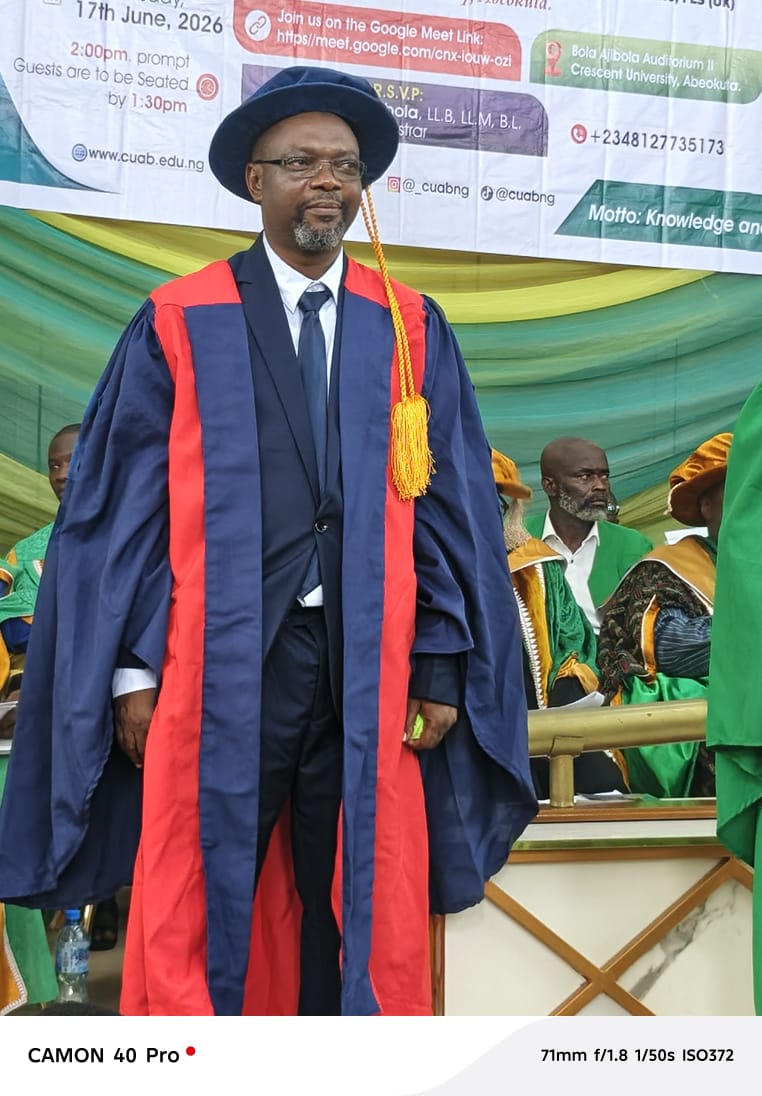
Professor Rasaki Olufemi Kareem has identified efficient management of resources, rather than their abundance, as the key to Nigeria’s economic transformation and sustainable development.
Speaking at the first ever Inaugural Lecture of the Crescent University, Abeokuta, titled, “Resource Efficiency Vs. Economic Development: Whither Nigeria”, the renowned economist argued that although Nigeria is richly endowed with oil, gas, solid minerals, fertile land and a rapidly growing population, millions of citizens still live in poverty because resources have not been effectively managed and deployed.
Professor Kareem, also the Deputy Vice Chancellor of the University, explained that while Resource Economics focuses on the efficient and sustainable use of scarce resources, Development Economics seeks to improve living standards, reduce poverty and promote economic growth.
According to him, resource efficiency enhances productivity, lowers production costs, stimulates innovation, protects the environment and lays the foundation for long-term development.
Professor Kareem also highlighted the phenomenon known as the Dutch Disease or Resource Curse, noting that countries blessed with abundant natural resources often fail to attain corresponding economic progress because of poor governance, corruption, weak institutions and excessive dependence on resource revenues.
“Nigeria’s challenge is not the absence of resources, but the inefficient management and utilisation of those resources,” he said.
The Professor maintained that sustainable development in Nigeria would depend largely on effective resource management, strong institutions, sound governance, investment in infrastructure, technology and human capital, consistent development policies and active community participation.
Drawing from decades of research in fisheries, agriculture, economic growth, poverty, governance, food security and climate change, Professor Kareem demonstrated that efficient resource use has a direct impact on productivity, economic growth and citizens’ welfare.
He stressed that transparency and responsibility remain indispensable to sustainable development.
“Sustainable economic development can only be achieved when resources are utilised efficiently, transparently and responsibly,” he stated.
The scholar added that resource efficiency is critical to poverty reduction, food security, job creation and the attainment of the Sustainable Development Goals.
As part of measures to reposition the economy, he recommended diversification beyond oil, stronger institutions, improved governance and a more robust anti-corruption framework.
He also advocated increased investment in agriculture and food security, greater support for research, innovation and technology, adoption of sustainable resource management practices and enhanced public awareness on the importance of resource efficiency.
Professor Kareem summed up his message with a call for a paradigm shift in the country’s development strategy.
“Nigeria’s future prosperity depends not on the abundance of its resources, but on how effectively and efficiently those resources are managed for the benefit of all citizens,” he declared.
He urged policymakers and stakeholders to embrace resource efficiency as a pathway to inclusive growth, poverty reduction, food security and sustainable national development.

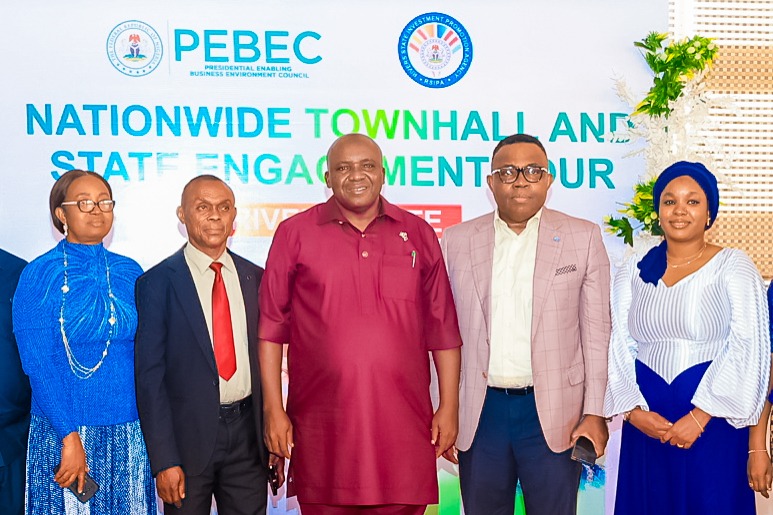
Fubara reaffirms commitment to business-friendly reforms as Rivers State seeks to attract investment, create jobs and boost economic growth
Kano Drainage Crackdown as government halts construction and seals buildings over illegal structures blocking waterways and causing flood risk
-
Politics2 years ago
13 Ondo Assembly Members Disown Endorsement of Aiyedatiwa
-
Politics2 years ago
APC Group, Ondo Govt, Quarrel Over Money for Endorsement
-

 Trending News5 years ago
Stop unsavoury, inciting statements – DSS warns
-

 Others4 years ago
Adron Homes Celebrates 10 Years Of Housing Excellence
-

 Humanity4 years ago
President Buhari Commiserates With Ambassador Maureen Tamuno Over The Loss Of Her Father
-

 Others7 years ago
EX- CUSTOMS BOSS, IBRAHIM MERA’S DWINDLING FAME
-

 Business2 years ago
Bigi Carbonated Soft Drinks Treats 40 Consumers to an Epic Easter Movie Hangout
-

 Business2 years ago
Wema Bank Shines at Global SME Finance Forum Conference Awards 2024 …Awarded: • SME Financier of the Year (Africa) • Platinum Award for Best Financier for Women Entrepreneurs (Africa)