Connect with us

Business

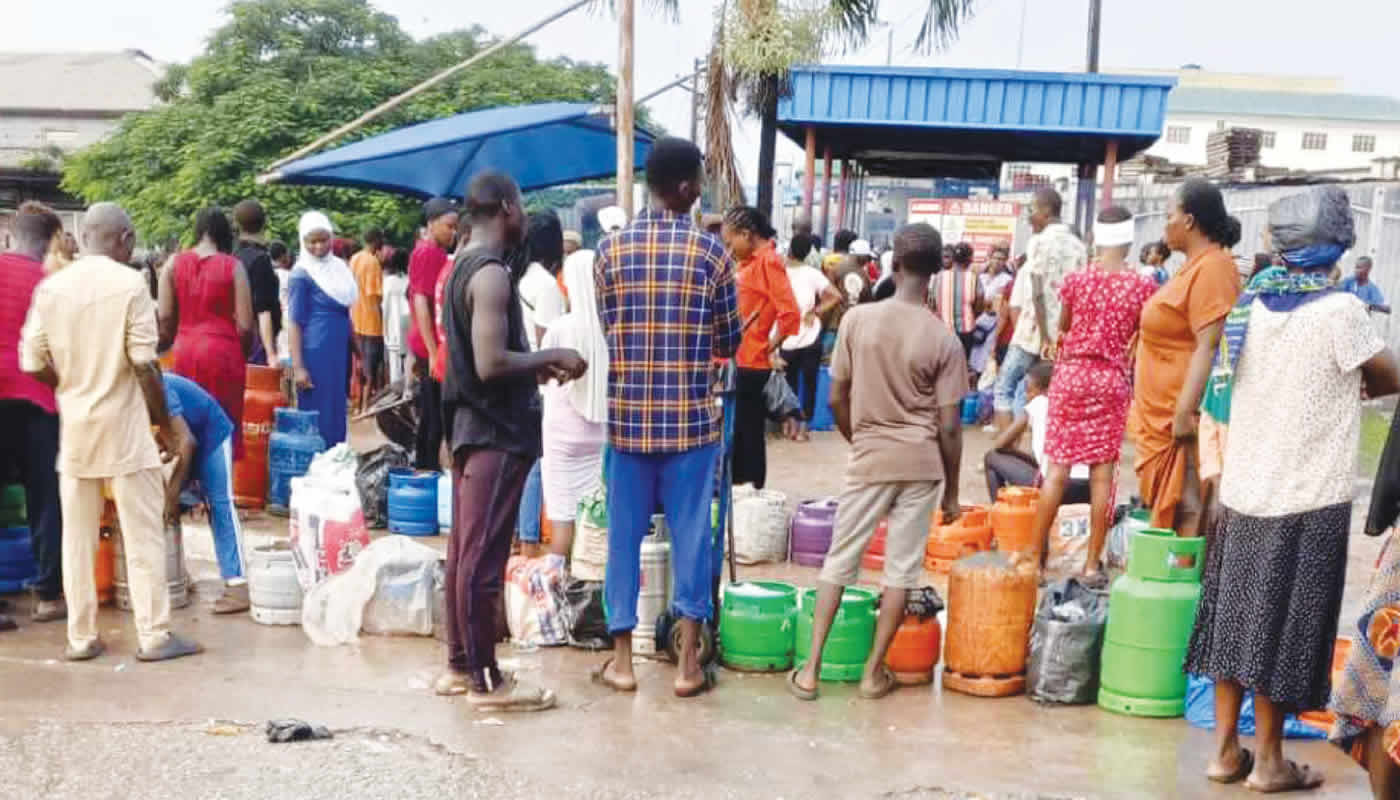
Nigeria LPG Supply Falls Amid Rising Prices and Middle East Crisis

Published

on

LPG

Nigeria’s LPG supply and consumption decline in February 2026 amid rising global oil prices, pushing cooking gas prices higher nationwide

adron lemon friday

The supply of Liquefied Petroleum Gas (LPG), commonly known as cooking gas, fell by 8.5 per cent month-on-month to 4.7 metric tonnes per day in February 2026 from 5.1 metric tonnes per day in December 2025, according to the Nigerian Midstream and Downstream Petroleum Regulatory Authority (Nigerian Midstream and Downstream Petroleum Regulatory Authority) February 2026 Factsheet.

Also read: UTM Offshore FLNG Achieves Global Recognition as Top 20 Energy Project

The report also showed that domestic LPG consumption decreased by 20 per cent to 4,194 metric tonnes per day in February from 5,050 metric tonnes per day in January.

Analysts attributed the decline to the recent Middle East crisis, which drove crude oil prices to approximately $84 per barrel, affecting petroleum product prices across the country.

A survey of gas stations in Lagos indicated that retail prices for a kilogram of LPG now range between N1,050 and N1,300, with some stations charging up to N1,500 per kg.

The NMDPRA report noted that February retail prices per kg ranged from N980 to N1,500, compared with N950 to N1,550 in January.

Wholesale supply also declined slightly, with total LPG supplied standing at 4.771 BSCF per day in February 2026, down from 4.837 BSCF per day in January.

Average daily gas supplied to the domestic market decreased to 1.763 BSCF per day from 1.906 BSCF per day during the same period.

Also read: UTM Offshore CEO, Julius Rone,  Others to Speak at AEW2024

The agency warned that continued international market volatility could further affect domestic supply and pricing, with implications for households relying on LPG for cooking.

66 / 100 SEO Score

Banking

Theparkpay Technologies Limited Strengthens Global Payments Infrastructure with UK FCA Licence

Published

on

Theparkpay

Theparkpay UK FCA licence strengthens the fintech’s global payments infrastructure as it expands regulated cross-border services across key markets (more…)

74 / 100 SEO Score
Continue Reading

Business

Wale Tinubu Says Nigeria’s Creativity Can Drive Exports

Published

on

Wale Tinubu

Wale Tinubu says Nigeria’s creativity can become a major export industry, creating jobs, attracting foreign exchange and building sustainable businesses (more…)

63 / 100 SEO Score
Continue Reading

Business

TotalEnergies, AMNI Approve $800m Ima Gas Project

Published

on

TotalEnergies and Nigerian independent energy company AMNI International have taken the Final Investment Decision on the $800 million Ima Gas Project, more than five decades after the gas field was discovered.

adron lemon friday

The Ima Gas Project, located in shallow waters across Oil Mining Leases 112 and 117 near Bonny Island, Rivers State, is expected to begin production in 2028 and reach a plateau of 350 million cubic feet of gas per day.

The development is expected to play a major role in supplying feed gas to Nigeria LNG, with the Ima field projected to provide about one-third of the additional gas required for the ongoing Train 7 expansion.

Train 7 is expected to increase Nigeria LNG’s liquefaction capacity from 22 million tonnes per annum to 30 million tonnes per annum, strengthening Nigeria’s capacity to process and export liquefied natural gas.

The Ima field was discovered in 1973 but remained undeveloped for more than 50 years. The Final Investment Decision provides the commercial and financial basis for finally developing the long-dormant resource.

Under the development plan, TotalEnergies will operate the project with a 40 per cent interest, while AMNI will hold the remaining 60 per cent.

The field will be developed using a single offshore platform connected to Nigeria LNG’s facility on Bonny Island through a 22-kilometre pipeline.

TotalEnergies said its investment in the project is more than $600 million, while the Federal Government described the overall Final Investment Decision as an $800 million investment.

At the FID signing ceremony in Abuja, TotalEnergies Exploration and Production Nigeria Managing Director, Mathieu Bouyer, described the decision as the culmination of a development process that had stretched across several decades.

He said the project reflected increased confidence in Nigeria’s investment environment and highlighted reforms targeting the non-associated gas sector as part of the factors that helped make the development commercially viable.

President Bola Tinubu welcomed the investment, saying the project demonstrated the potential of reforms introduced to reduce the cost and time required to develop oil and gas projects.

The President said the government had introduced incentives aimed specifically at unlocking onshore and shallow-water gas projects that had remained undeveloped for years.

He said the Ima development would create opportunities for Nigerian businesses, engineers, technicians and contractors, while generating jobs, economic activity in host communities and additional export earnings.

The project is also expected to have a strong Nigerian content component. TotalEnergies said all key contractors for the development would be Nigerian companies, while about 60 per cent of the workforce during the development phase is expected to come from host communities.

The development will incorporate measures aimed at reducing emissions. TotalEnergies said the platform would receive electricity from shore, operate without routine flaring and use permanent methane detection and monitoring systems.

The Federal Government said the project is part of efforts to turn Nigeria’s large natural gas reserves into productive assets capable of supporting industrialisation, energy supply, jobs and export earnings.

Special Adviser to the President on Energy, Olu Verheijen, said the Ima development illustrated the importance of creating commercial and investment conditions that allow previously stranded resources to be developed.

The government also noted that Nigerian financial institutions arranged 77 per cent of the project’s financing, further highlighting the participation of domestic financial institutions in the development.

For Nigeria LNG, the project comes as the company continues work on the Train 7 expansion, which is designed to increase the Bonny Island plant’s liquefaction capacity and strengthen the country’s position in the global LNG market.

56 / 100 SEO Score
Continue Reading

Trending News