
health
Nigeria urges registration for National Health Fellows


Nigeria urges applicants to register for the National Health Fellows Programme, strengthening primary healthcare and youth workforce development.

ABUJA, Nigeria, 27 November 2025– The Federal Government of Nigeria has urged applicants for the second cohort of the National Health Fellows Programme (NHF Programme) to complete their registrations ahead of the November 30, 2025, deadline.
Also read: Nigeria Launches New Drive for Young Health Fellows Amid Workforce Gaps
The NHF Programme, domiciled in the Sector Wide Approach Coordination Office under the Office of the Coordinating Minister of Health and Social Welfare, is designed to strengthen primary healthcare delivery and expand the capacity of Nigeria’s health workforce.
The programme recruits young professionals, provides remuneration, and equips them with the tools needed to drive positive change across local health systems.
Fellows are trained and deployed to serve in all 774 local government areas, addressing community-level healthcare gaps and supporting grassroots interventions.
The first cohort, admitted in January 2025, successfully completed structured training and has been deployed nationwide to assist with disease surveillance, community health initiatives, and primary healthcare strengthening.
Applications for the second cohort are open to Nigerians aged 25 to 35 who hold degrees in health sciences, information technology, social sciences, or related fields.
Candidates must demonstrate the capacity and willingness to serve in community environments and contribute to public health improvement.
The selection process is merit-based and transparent, involving application screening, competency reviews, and interviews.
Fellows receive structured training in public health principles, leadership, community engagement, disease prevention, and data reporting, followed by supervised field placements in primary healthcare settings.
Coordinating Minister of Health and Social Welfare, Prof Muhammad Pate, said the fellowship is “designed to develop a new generation of healthcare leaders through capacity building, practical field engagement, and sustained professional development.”
He added that the success of the first cohort highlights the potential of young Nigerians to contribute meaningfully to national development when given structured opportunities.
The government emphasised that admission remains strictly merit-based and encouraged interested applicants to complete their applications ahead of the November 30 deadline.
Also read: NHIS Unveils National Health Insurance Research Agenda
Further information is available through the official channels of the National Health Fellows Programme.


health
Governor Dauda Lawal Announces Nationwide Nutrition Emergency, National Intervention Fund at Addis Ababa Summit

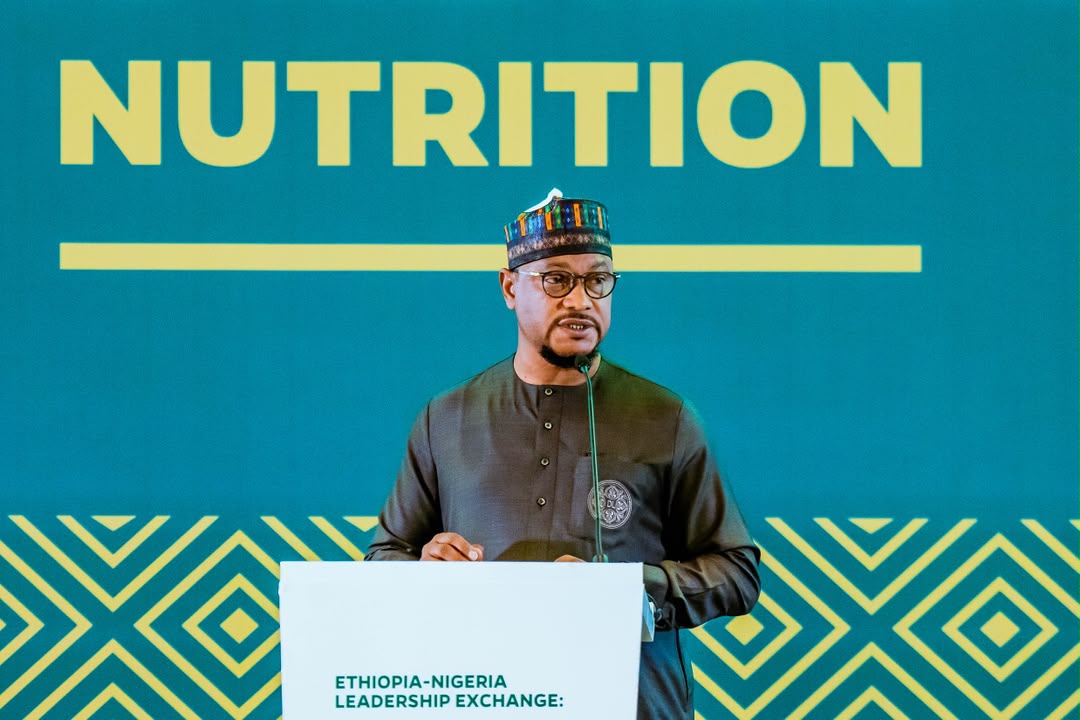
The 36 state governors have declared a nationwide nutrition emergency and resolved to establish a National Nutrition Intervention Fund to drive the implementation of the Nutrition 774 Initiative across all local government areas in the country.
Zamfara State Governor, Dr Dauda Lawal, announced the commitment on Friday in Addis Ababa, Ethiopia, while reading the Nigeria Governors’ Forum (NGF) Addis Ababa Commitment on Nutrition at the Nigeria Country Session.
The commitment followed a three-day Nigeria-Ethiopia Nutrition Leadership Exchange, where the Nigerian delegation led by Vice President Senator Kashim Shettima studied Ethiopia’s experience in nutrition delivery, particularly through its Seqota Declaration.
While reading the NGF commitment at the session themed “From Lessons to Commitment: Accelerating Implementation of the Nutrition 774 Initiative,” the governors also pledged to strengthen domestic financing, deepen accountability at the grassroots and institutionalise a unified framework for nutrition planning and budgeting, drawing lessons from Ethiopia’s experience in tackling malnutrition.
Speaking on behalf of the NGF, Lawal said the exchange had reinforced the importance of sustained political leadership, effective multisectoral coordination, ownership at all levels of government, predictable financing and the systematic use of data to drive decisions and accountability.
He noted that Nigeria’s Nutrition 774 Initiative already embodied many of Ethiopia’s principles, adding that the exchange provided practical lessons to strengthen the programme and deliver measurable results.
According to him, the key lessons included the need for a unified approach to planning and budgeting, stronger coordination across sectors, bottom-up planning, predictable financing and the use of data and scorecards to measure performance.
“We are encouraged that Nigeria’s N774 Initiative already embodies many of the principles we have seen here in Ethiopia. This leadership exchange has, however, provided important practical lessons on how these principles can be further strengthened and translated into results,” he stated.
The NGF also identified matching financing between the Federal Government and states as an important mechanism for aligning priorities, encouraging subnational investment and reinforcing shared accountability for nutrition outcomes.
Lawal recalled that, in the presence of Vice President Shettima, the three tiers of government signed the Nutrition Compact on February 20, 2025, to establish a common commitment to tackling malnutrition.
He said the compact was signed by the Chairman of the NGF on behalf of the 36 states, the President of the Association of Local Governments of Nigeria (ALGON) on behalf of the 774 local governments, and the Minister of Budget and Economic Planning on behalf of the Federal Government.
He explained that the latest commitment would reinforce the existing compact by adapting lessons from Ethiopia to Nigeria’s circumstances and translating them into concrete actions across the three tiers of government.
Under the commitments, the governors resolved to declare nutrition a national emergency, establish a National Nutrition Intervention Fund to catalyse implementation of the compact and institutionalise “One Goal, One Plan and One Budget” for nutrition.
The proposed fund is expected to incentivise state-level leadership, encourage increased domestic investment, reward effective implementation and support measurable improvements in nutrition outcomes.
The governors also pledged to strengthen bottom-up planning by ensuring that nutrition priorities reflect needs at community and ward levels before being incorporated into local government, state and national plans.
They further committed to extending the National Nutrition Scorecard beyond the state level to include local government and ward-level performance indicators, strengthening accountability throughout the delivery chain.
The NGF also resolved to institutionalise the use of data for decision-making and performance management, including state-specific surveys and assessments to provide timely evidence for planning, resource allocation and corrective action.
-
Politics3 years ago
13 Ondo Assembly Members Disown Endorsement of Aiyedatiwa
-
Politics3 years ago
APC Group, Ondo Govt, Quarrel Over Money for Endorsement
-

 Trending News5 years ago
Stop unsavoury, inciting statements – DSS warns
-

 Others5 years ago
Adron Homes Celebrates 10 Years Of Housing Excellence
-

 Humanity5 years ago
President Buhari Commiserates With Ambassador Maureen Tamuno Over The Loss Of Her Father
-

 Others7 years ago
EX- CUSTOMS BOSS, IBRAHIM MERA’S DWINDLING FAME
-

 Business2 years ago
Bigi Carbonated Soft Drinks Treats 40 Consumers to an Epic Easter Movie Hangout
-

 Business2 years ago
Wema Bank Shines at Global SME Finance Forum Conference Awards 2024 …Awarded: • SME Financier of the Year (Africa) • Platinum Award for Best Financier for Women Entrepreneurs (Africa)